Translate

Thursday, July 13, 2017

GE Needs A New Strategy And A New CEO by Adam Hartung, Forbes

My Thoughts: I've never been a fan of GE as I believe the company represents everything that's wrong with Corporate America today with it's profit-at-any-price, throw-the-baby-out-with-the-bathwater mentality. I post this article from Forbes more as an example of how NOT to run a company where profits come before people. Also, GE is a good example of why bigger is not always better; historically, smaller, more agile companies outperform huge conglomerates. GE under the leadership of Jack Welch and Jeff Immelt shows that eventually, you'll reap what you sow. As of this writing, GE announced Immelt will be retiring on August 1st, and John Flannery will be assuming the role. Personally, I'm rooting for the vultures that want to come in and tear GE up into smaller, more bite-sized pieces.  - Bryan Neva 7/13/17

GE Needs A New Strategy And A New CEO


I cover business growth & overcoming organizational obstacles. 


I'm an expert on business growth and overcoming organizational obstacles to success. I do keynote speaking at conferences and management meetings, and a workshop leader for companies wanting to find their next growth engine. I am the author of "Create Marketplace Disruption: How to Stay Ahead of the Competition," a contributing editor for International Journal of Innovation Science and a leadership columnist for CIOMagazine and ComputerWorld. I currently serve as audit chair for 6D Global, and am CEO of Soparfilm Energy E&P company as well as Content Laboratory. I previously headed business development for Pepsico and Dupont, and was a consultant with The Boston Consulting Group. I have a Harvard MBA and live in Chicago.

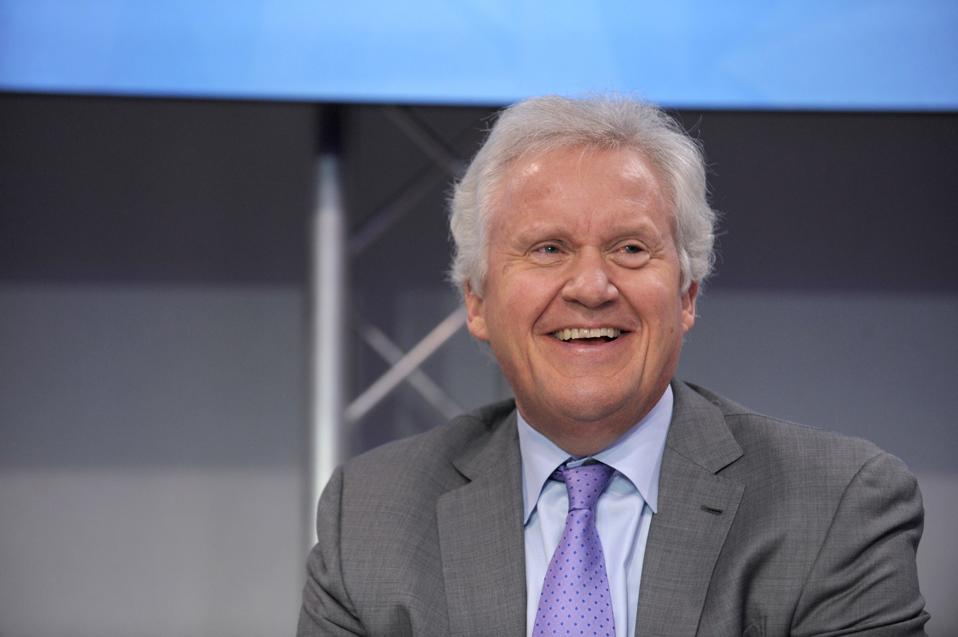
General Electric CEO Jeffrey Immelt (ERIC PIERMONT/AFP/Getty Images)
General Electric stock had a small pop recently when investors thought CEO Jeffrey Immelt might be pushed out. Obviously more investors hope the CEO leaves than stays. And it appears clear that activist investor Nelson Peltz of Trian Partners thinks it is time for a change in CEO atop the longest running member of the Dow Jones Industrial Average (DJIA.)
You can't blame investors, however. Since he took over the top job at General Electric in 2001 (16 years ago) GE's stock value has dropped 38%. Meanwhile, the DJIA has almost doubled. Over that time, GE has been the greatest drag on the DJIA, otherwise the index would be valued even higher! That is terrible performance — especially as CEO of one of America's largest companies.
But, after 16 years of Immelt's leadership, there's a lot more wrong than just the CEO at General Electric these days. As the JPMorgan Chase analyst Stephen Tusa revealed in his analysis, these days GE is actually overvalued, "cash is weak, margins/share of customer wallet are already at entitlement, the sum of the parts valuation points to a low 20s stock price." He goes on to share his pessimism in GE's ability to sell additional businesses, or create cost lowering synergies or tax strategies.

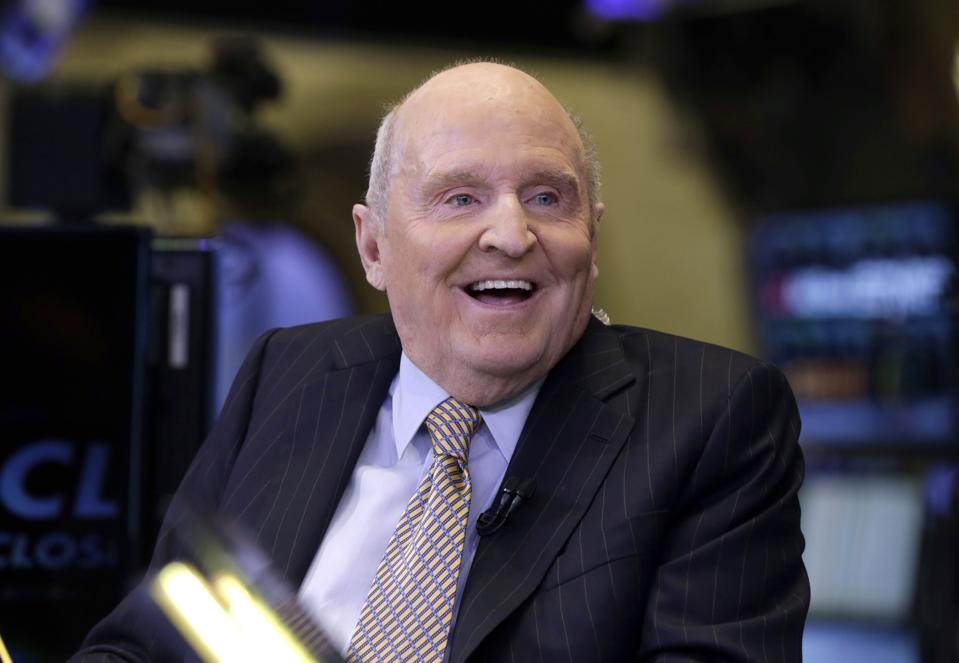
Former Chairman and CEO of General Electric Jack Welch. (AP Photo/Richard Drew)
What went so wrong under Immelt? Go back to 1981. GE installed Jack Welch as its new CEO.  Over the next 20 years there wasn't a business Neutron Jack wouldn't buy, sell or trade. CEO Welch understood the importance of growth. He bought business after business, in markets far removed from traditional manufacturing, building large positions in media and financial services. He expanded globally, into all developing markets. After businesses were  acquired the pressure was relentless to keep growing. All had to be no. 1 or no. 2 in their markets or risk being sold off. It was growth, growth and more growth.
Welch's focus on growth led to a bigger, more successful GE. Adjusted for splits, GE stock rose from $1.30 per share to $46.75 per share during the 20 year Welch leadership. That is an improvement of 35 times - or 3,500%. And it wasn't just due to a great overall stock market.  Yes, the DJIA grew from 973 to 10,887 — or about 10.1 times. But GE outperformed the DJIA by 3.5 times (350%).  Not everything went right in the Welch era, but growth hid all sins — and investors did very, very, very well.
Under Welch, GE was in the rapids of growth. Welch understood that good operating performance was not enough. GE had to grow. Investors needed to see a path to higher revenues in order to believe in long term value creation. Immediate profits were necessary but insufficient to create value, because they could be dissipated quickly by new competitors. So Welch kept the headquarters team busy evaluating opportunities, including making some 600 acquisitions. They invested in things that would grow, whether part of historical GE, or not.
Jeff Immelt as CEO took a decidedly different approach to leadership. During his 16 year leadership GE has become a significantly smaller company. He sold off the plastics, appliances and media businesses — once good growth providers — in the name of "refocusing the company." Plans currently exist to sell off the electrical distribution/grid business (Industrial Solutions) and water businesses, eliminating another $5 billion in annual revenue. He has dismantled the entire financial services and real estate businesses that created tremendous GE value, because he could not figure out how to operate in a more regulated environment. And cost cutting continues. In the GE Transportation business, which is supposed to remain, plans have been announced to double down on cost cutting, eliminating another 2,900 jobs.
Under Immelt GE has focused on profits. Strategy turned from looking outside, for new growth markets and opportunities, to looking inside for ways to optimize the company via business sales, asset sales, layoffs and other cost cutting. Optimizing the business against some sense of an historical "core" caused nearsighted — and shortsighted — quarterly actions, financial gyrations and transactions rather than building a sustainable, growing revenue stream. Under Immelt sales did not just stagnate, sales actually declined while leadership pursued higher margins.
By focusing on the "core" GE business (as defined by Immelt) and pursuing short term profit maximization, leadership significantly damaged GE. Nobody would have ever imagined an activist investor taking a position in Welch's GE in an effort to restructure the company. Its sales growth was so good, its prospects so bright, that its P/E (price to earnings) multiple kept it out of activist range.
But now the vultures see the opportunity to do an even bigger, better job of whacking up GE — of tearing it into small bits while killing off all R&D and innovation — like they did at DuPont. Over 16 years Immelt has weakened GE's business —what was the most omnipresent industrial company in America, if not the world - to the point that it can be attacked by outsiders ready to chop it up and sell it off in pieces to make a quick buck.
Thomas Edison, one of the world's great inventors, innovators and founder of GE ,would be appalled. That GE needs now, more than ever, is a leader who understands you cannot save your way to prosperity, you have to invest in growth to create future value and increase your equity valuation.
In May, 2012 (five years ago) I warned investors that Immelt was the wrong CEO. I listed him as the fourth worst CEO of a publicly traded company in America. While he steered GE out of trouble during the financial crisis, he also simply steered the company in circles as it used up its resources. Then was the time to change CEOs, and put in place someone with the fortitude to develop a growth strategy that would leverage the resources, and brand, of GE. But, instead, Immelt remained in place, and GE became a lot smaller, and weaker.
At this point, it is probably too late to save GE. By losing sight of the need to grow, and instead focusing on optimizing the old business while selling assets to raise cash for reorganizations, Immelt has destroyed what was once a great innovation engine. Now that the activists have GE in their sites it is unlikely they will let it ever return to the company it once was - creating whole new markets by developing new technologies that people never before imagined. The future looks a lot more like figuring out how to maximize the value of each piece of meat as it's carved off the GE carcass.

Links to more Info:

Saturday, June 24, 2017

Changing Corporate Culture

Changing Corporate Culture
by Bryan J. Neva, Sr.


Captain Jean-Luc Picard (played by actor Patrick Stewart) after he
was assimilated into "The Borg."

"Resistance is futile...you will be assimilated!" was the phrase often spoken by "The Borg" which were fictional antagonistic aliens in the Star Trek franchise.  The phrase worked its way into the popular lexicon of the "nerd" culture in the late 1990s and early 2000s for any unstoppable force against which "resistance was futile."  Metaphorically, "The Borg" represents the futility of trying to change an organizational or corporate culture.  Like “The Borg,” corporate culture cannot be reasoned with; it cannot be appealed to; it's relentless, and nothing can stop it except its own demise.

Anyone who has ever studied organizational management has learned about the difficulty in changing corporate culture.  In fact, unless you are highly placed within an organization, stay there for a very long time, and relentlessly work at it, it's almost impossible to change an organization's culture.  Why is this?


First of all the culture of an organization is closely linked to the culture of a society.  "When in Rome, do as the Romans do." the old proverb says.  In other words, behave like those around you; conform to the larger society; and respect the beliefs, customs, and practices of a local culture.  Since the employees of an organization are part of the larger society, their behaviors will reflect the society as a whole. A Japanese company will generally behave as the Japanese do; an American company will generally behave as the Americans do, and a German company will generally behave as the Germans do.  So trying to force a Japanese company to behave like an American or a German company is next to impossible.  This is also true for regional differences within the United States.  A West Coast company will generally behave like Westerners do; a Midwestern company will generally behave like Midwesterners do, and an East Coast company will generally behave like Easterners do.  Los Angeles, Chicago, and New York are as culturally different as Japan, America, and Germany.


In this age of globalization, mergers and acquisitions (M&A), and multinational corporations the problem of culture clash has become even more prevalent.  After PHILIPS (a Netherlands based company) acquired ATL (a Seattle based company) in the late 1990s, there was an inevitable clash of corporate cultures.  And it was exacerbated when PHILIPS acquired Agilent Technologies’ Healthcare Solutions Group  (a Massachusetts based company) in the early 2000s and merged the two former competitors.

The problem with merging ATL and Agilent was that the business and regional rivalries didn’t magically go away.  It was like putting two rival cats into a bag: they’ll keep fighting until one of the cats is subdued.  PHILIPS had to hold a “shotgun wedding” to combine the two firms; there was political infighting, some employees and managers won battles and others lost, but PHILIPS eventually won the war.

The Dutch have a reputation in business for being "penny wise and pound foolish" which clashes with the American business culture of "it takes money to make money."  From an American point of view, "saving money doesn't make you money!"  In other words, when you focus too much on your costs, you'll miss the bigger picture of making money.  So you have to balance the two.  A dollar spent today could earn or save you two dollars next week.  For example, if you spend money on your products, services, or employees today to improve them, it could pay huge dividends in a year or two through either increased sales, decreased costs, or higher productivity. There's always a hidden cost to everything including the cost of being a cheapskate.


The second reason why it's nearly impossible to change corporate culture is generational differences.  The older people get and the longer they've been working for an organization, the more reluctant they are to change. Whereas young people are enthusiastic and full of fresh new ideas, which could help an organization change for the better and keep pace with societal and technological changes.  But when a young person is hired into an organization his superiors are older, more experienced people who naturally stifle fresh and innovative ideas.  So a young person has to adapt to the corporate culture if they want to get ahead.  And by the time the young person does move up, they’ve become the older, more experienced people who are resistant to change.  So in the long run, the corporate culture never really changes.


This is most prevalent within the local, state and federal government as an entrenched bureaucracy snuffs out new and innovative ideas. For managers within the government, it's not about being more efficient and saving tax dollars, it's all about holding on to power and getting their next raise.  The government is essentially "a self-licking popsicle."  In other words, it's a self-perpetuating system that has no other purpose than to sustain itself.  For a young person, getting a government job holds the promise of job security, great benefits, and a good retirement, but they have to endure the corporate culture of the government for decades.  The only way to incrementally change the corporate culture of the government is to be elected mayor, governor, or president, and even then the entrenched bureaucracy will survive long past your term in office.


If an organization is to change its corporate culture, then it has to unlearn old, ineffective ways before it can learn new, more effective ways of doing business.  Learning new things is painful, especially for those who have been there awhile, and there's naturally going to be resistance maybe even passive aggressiveness.  It's natural to want stability and predictability in our lives.  Riding a roller coaster is fun once a year at the county fair, but riding it every day would be too stressful for most of us.

The third reason it’s so difficult to change corporate culture is regulatory issues.  For example, if you worked in the financial services industry, there are government rules and regulations you must follow.  And in case you forget the rules and regulations, there are people that have been sent to prison who can remind you.  Rules and regulations naturally create a corporate bureaucracy that becomes the proverbial “self-licking popsicle.”  Consider what the 2008 financial meltdown did to our economy?  There are good reasons for rules and regulations, and experience has taught us that when you reduce or stop enforcing the rules and regulations bad things eventually will happen.


As previously discussed, the government is a heavily regulated organization which creates a corporate bureaucracy.  The local, state and the federal government must follow the rules, regulations, and laws created by lawmakers.  Lawmakers want their government bureaucracy to be more efficient, but that's difficult to do when the bureaucracy has to implement all the "red tape" created by lawmakers. It's a dichotomy. There are so many checks and balances that oftentimes it costs more to prevent fraud, waste, and abuse that it does to just ignore it.  For example, the federal government will typically spend about $10 to $20 in oversight for every $1 it spends on actual goods and services.  Taxpayers are appalled when they learn the government spent $500 for a hammer they could have bought at Home Depot for $25; but when you factor in all the required "oversight" they demanded from their lawmakers, it's little wonder the hammer costs the taxpayers $500!


A fourth reason it’s so difficult to change corporate culture is because of the personalities of the firm’s founders.  The personalities of the firm’s founders are imprinted in the organization’s DNA.  Look at the corporate culture of Microsoft and you can see the personality of Bill Gates; look at Apple and you can see the personality of Steve Jobs; look at Hewlett-Packard and you can see the personalities of Bill Hewlett and Dave Packard; look at Disney and you can see the personality of Walt Disney; look at Berkshire Hathaway and you can see the personality of Warren Buffett.  This is because the founders heavily influenced the corporate culture in its infancy much like parents influence their children’s personalities.  And this segues into how to change corporate culture.

Changing corporate culture has to start at the very top of an organization and flow down to the bottom.  Furthermore, the person at the top has to see the need to change the corporate culture, be committed to changing it, and stay in their position for a very long time in order to affect change.  If there’s constant change in leadership at the top, the corporate culture will not change. 

Look at GE.  When Jack Welch took over the company in 1981, GE was a stodgy, bloated, industrial organization with 411,000 employees and a value of about $13 billion.  When Welch retired in 2001, GE had just 70,000 employees and a value of about $300 billion!  Welch was certainly a very controversial CEO with his "profit-at-any-price, throw the baby out with the bathwater" business strategy, but there’s no denying his effect on the corporate culture of GE.  But Welch wouldn’t have been able to change the corporate culture at GE without the support of GE’s board of directors and his trusted management team who unquestionably followed his orders.  The way Jack Welch changed the corporate culture of GE was he essentially fired everyone and brought in new talent which is why he earned the nickname "Neutron Jack" (in reference to the neutron bomb, he eliminated all the people but the buildings were left intact). Recall previously that corporate culture is so relentless that nothing can stop it except its own demise, and that was likely what Welch was thinking when he ruthlessly fired people!

Changing the corporate culture of any organization requires a clear vision and business strategy from the top.  What is it you’re trying to accomplish?  Do you want "profits-at-any-price" like Jack Welch?  Or do you want long-term steady gains like Warren Buffett?  If you’ve worked your way to the top of an organization, never try to change the corporate culture until you know exactly what it is you want to accomplish.  Does the corporate culture support what you want to accomplish?  If it does, then only minor tweaks will be needed, but if it doesn’t, then you have to develop a strategy for slowly changing it to support your vision and goals. 

Moreover, even if some elements of the corporate culture are dysfunctional, you should never “throw the baby out with the bathwater” as Welch did at GE.  Every organization has its strengths and weaknesses.  Is there a way to play on the organization’s strengths and work on improving its weaknesses over the long term?

If you’re an individual contributor within your organization, you can certainly try to be a light in the darkness, but honestly, there’s little if anything you can do to change the corporate culture.  That has to come from the very top.  So if you’re unhappy with the dysfunctional corporate culture of the organization you work for, don’t even bother trying to be an agent of change, either just accept it and be absorbed into "The Borg" or just quietly start looking for another organization you’ll be more happy working for (inside or outside the organization).

Like “The Borg” in Star Trek, corporate culture cannot be reasoned with; it cannot be appealed to; it's relentless, and nothing can stop it except its own demise.


Featured Post

Capitalism vs. Socialism vs. Distributism

Capitalism vs. Socialism  vs. Distributism by Bryan J. Neva, Sr. Since ancient times, people have bought, sold, and traded land,...