Translate

Friday, March 31, 2017

Ten Unmistakable Signs of A Bad Place To Work by Liz Ryan, Forbes

Ten Unmistakable Signs of A Bad Place To Work 
by Liz Ryan, Forbes

I talk to job-seekers every day. Some of them have target lists of companies they’d like to learn more about, and almost all of them have lists of companies they would never work for, no matter what.
Where did they get their lists of companies they would never, ever work for? They either worked for those companies in the past or have friends who did. People talk, and they tell their friends “No matter how badly you need a job, don’t go to work for this company and that company. It’s worse working there than being unemployed, by a mile!”
An employee handbook is a window to the corporate soul. Reading the employee handbook will give you enormous clues to the company’s culture. If they won’t give you a handbook, run away then and there!
Here are ten unmistakable signs that a company you are interviewing with is not a good place to work.
1. No-Moonlighting Policy
If you read the company’s employee handbook and you find a No-Moonlighting Policy, that’s your cue to back out of the recruiting process, fast! A No-Moonlighting policy is a rule that says that if you work for this company, you can’t have another, part-time job. Why would that be any of their business, if you’re showing up to work and getting your work done
You should not have to ask permission to spin records at weddings as a DJ or to work part-time at your uncle’s catering company. A No-Moonlighting policy is exactly the type of overreaching, Big-Brotherish practice that corporations only employ when they believe that their team members are insignificant cogs in their machine.
2. No-References Policy
You won’t find this policy in the employee handbook, so it is important that you ask your interviewer about it. Ask them whether the company’s managers are allowed to provide references for their former employees. In many large organizations, they are not.
Even if your old manager wanted to give you a glowing reference, he or she wouldn’t be allowed to do so. Your manager would have to send the inquiry to HR, and all they’d be allowed to do is to verify your dates of employment and your job titles. What a slap in the face to the employee who did a tremendous job, and deserves a good reference!
Ask the question this way:
“I am very interested in the culture of any organization I think about joining. I hope that if we end up working together, that relationship lasts for a good period of time but I also know that people don’t walk into companies anymore and retire from the same company thirty years later. Does your company allow managers to give references for their employees, or are those inquiries sent to HR?”
Only fearful leaders put No-Reference Policies in place. They couldn’t care less whether the No-Reference Policy makes it harder for their former teammates to get a new job. No-Reference Policies are unethical and should be illegal but they’re not, so proceed with caution!
3. Progressive Discipline
If the handbook talks about Progressive Discipline, get out of Dodge immediately! You are an adult. You are not a wayward third-grader who needs to worry about getting sent to the principal’s office. Progressive Discipline policies that line out the punishments employees will receive for a first infraction, second infraction, etc. are holdovers from the Industrial Revolution and have no place in the Knowledge Economy we are working in now.
4. Payroll Deductions
Some old-school companies will take money out of your paycheck for stupid things. You will see these policies written out in the employee handbook if they have them in place. We got a call in our office from a young woman who works for an accounting firm in Chicago. Her boss had asked her to order pizza for the team one day.
The young woman ordered $120 worth of pizza for the group and told her manager about it. Her manager got mad. He said, “$120? You could have gotten a better price!” The young employee was freaked out. She went back to her desk and started researching cheaper pizza options online.
She placed another pizza order with a different restaurant. This time the bill was $89. Unfortunately, in her nervous state she forgot to cancel the first pizza order, so both pizza orders arrived.
Her boss said “I’m going to take the $120 out of your paycheck!” Of course, the team ate all the pizza — both orders. Any company that wants to take money out of your paycheck (for a piece of equipment that breaks while you’re using it, e.g.) is not a place you want to work for.
5. Dictated Hours
I collect employee handbooks. At least 30% of the 100 or so employee handbooks on my hard drive specify the number of hours the company expects you to work — and I’m talking about salaried employees who do not get paid a penny for overtime!
Some companies specify, for instance, that ‘staff-level’ employees should expect to work 45 hours per week (for the price of 40!), supervisors should expect to work 50 hours per week and management folks should plan on working 55 or more.

Smart companies know that what’s important is that the work gets done – not how many hours people work. If you see this kind of language in an employee handbook, do not take the job — because you will hate it if you do!
6. Managers Control Internal Transfers
In good companies, employees bid on internal jobs they are interested in. If they get the job, then their new manager and their old manager will talk about a transition plan to get the employee into their new position without leaving the former manager in the lurch.
In bad companies, managers control their employees’ internal transfer and promotion opportunities. They haven’t figured out that if an employee is thwarted in his or her desire to move to a new position inside the company, they’ll just find a new position in another company!
Companies that don’t understand the difference between machines that can be controlled by humans, and talented employees who can’t be controlled, don’t deserve your talents.
7. Formal Performance Management
Performance Management is the name of a popular HR hoax and scam that turns any job into a series of tasks and goals that you’ll be held accountable for on a daily, weekly and monthly basis. No job worth doing breaks down into tiny, measurable parts.
Good jobs are whole. You know what your mission is and you work toward your mission every day, checking in with your manager as appropriate. Run away from any company that surrounds you with yardsticks and measurements. Working in a place like that would only raise your blood pressure and destroying your mojo.
8. No Casual Time
When you read a potential employer’s employee handbook, pay special attention to the section of the handbook that focuses on paid time off. Good companies understand that in addition to scheduled vacation time and unscheduled sick time, normal adults need occasional days off to deal with real life.
You might have to take your cat to the vet one day or be called into a meeting at your kids’ school without notice. Good companies have personal time or casual time you can use for those real-life situations. If the only kinds of time off your prospective employer offers are vacation time, sick time and holidays, keep job-hunting! There is a better employer for you than these folks.
9. Pay Grades Make the Man (or Woman)
Also pay close attention to the discussion of pay grades in the employee handbook you are reading, and listen on your job interviews when people talk about pay grades and levels. In some companies, status and title are everything. These companies are not populated by fun, smart and creative people!
In some organizations you hear people say “Don’t call him — he’s an E5, and he won’t answer your call because you’re only an E3.” They say these things without irony. They think it’s normal to rank and evaluate people based on their title and pay grade. Don’t work with people like that! You have a brilliant career to lead, and bureaucratic, fearful organizations will not help you get there.
10. Interview Process
Last on our list of bad-company giveaways is the interviewing process itself. If people return your calls and email messages, treat you kindly during the interview process and generally seem to value your time and talents, that’s a great thing.
If they leave you waiting for weeks between each contact, give you endless tests and assignments and behave as though they are members of the royal family and you are a piece of dirt under their feet, don’t stick around!
No employer will ever love you more than they do at the point where they are trying to hire you. If the signals you get during the interview process are negative, don’t expect things to get better once you have the job.
The world is big, and there are lots of good organizations to work for. Don’t you deserve to work for one of them? Invest the time and energy to find a company where you can bring yourself to work. We are cheering you on!

Thursday, March 30, 2017

Choose Life!

Choose Life!
by Bryan J. Neva, Sr.


In 1981, teenagers George Kyriacos Panayiotou (professionally known as George Michael) and Andrew John Ridgeley formed a musical duo in Hertfordshire, England. Calling themselves Wham!, they meteorically rose to the top (with a few bumps along the way) and eventually sold more than 28 million records by the time they broke up in 1986.

Their most memorable hit, "Wake Me Up Before You Go-Go," was released in 1984 and rose to #1 in the UK and the US; it was subsequently ranked #28 by VH1's 100 greatest hits of the 1980s. In the music video, the duo wore designer T-shirts with the slogans, "CHOOSE LIFE" printed on them.

In hindsight, the "CHOOSE LIFE" T-Shirts worn in their music video was rather ironic as Michael and Ridgeley embraced the hedonistic lifestyle of most music stars. Their idea of "Choosing Life" was simply uninhibited personal freedom, having fun, and doing whatever feels good. That was living life to the fullest. Ridgeley eventually settled down to a more normal lifestyle, but Michael continued to live a debauched lifestyle which probably contributed to his untimely death in December 2016 at the age of 53. 

Ask anyone who's fighting a terminal illness if they "Choose Life" and they'll give you an unequivocal "Yes!" Healthcare comprises about 20% of the U.S. economy, so most of us want to stay alive. But staying alive is quit different from having a high quality of life. We all exist but how many of us truly live? 

More than 3000 years ago, the Prophet Moses gave an inspirational speech to the people of Israel about "Choosing Life" (Deuteronomy 30:11-20): 
Surely what I'm telling you today is not at all hard, nor is it too far away. It's not up in heaven that you should say, "Who'll go up to heaven for us to learn about it so that we can live by it?" Neither is it something beyond the sea that you should say, "Who'll cross the seas for us to learn about it so that we can live by it?" No, not at all, what I'm telling you today is actually very near to you...it's in your mouth and it's in your heart. What I'm telling you today is life and prosperity; it's death and adversity! All you must do is obey the commandments of the Lord your God by loving Him, walking in His ways, and observing all that He has taught you, then you'll live and prosper and the Lord your God will bless you. But if you turn away and do not obey Him, then you'll perish and die. So I call upon heaven and earth today to bear witness to what I have told you; I have set before you life and death, blessings and curses. Choose life so that you and your family may live and prosper!
Moses' taught that to "Choose Life" was to obey God's commandments by loving Him, walking in His ways, and following His teachings. And by doing these you'll prosper and God'll bless you. Not doing these is simply to "Choose Death" and curses.   

God has given all of us the freedom to choose how we want to live our lives. If we want to live a hedonistic lifestyle, that's our right. God's not going to stop us. But God has revealed to us the way to a have a truly abundant life simply by loving Him, walking in His ways, and following His teachings. The choice is between life and death; it's between blessings and curses. So "Choose Life" so that you and your family may live and prosper!

Saturday, March 25, 2017

Trust

TRUST
by Bryan Neva

trust (trəst)
noun
A firm belief in the reliability, truth, ability, or strength of someone or something. "relations have to be built on trust"
synonyms: confidence, belief, faith, certainty, assurance, conviction, credence, reliance
verb
A belief in the reliability, truth, ability, or strength of. "I should never have trusted him"
synonyms: rely on, depend on, bank on, count on, be sure of


Trust is such a simple word with such a deep meaning. Think about this for a moment: without trust we cannot have meaningful relationships with others; we cannot conduct commerce with others; we cannot safely live our lives; we cannot even live in a civilized society without trust. Trust has all but disappeared in most underdeveloped countries. All of us who've lost friendships, romantic relationships, gone through divorces, or quit lousy jobs can agree that a violation of trust was a major factor. Trust is essential to everything we do.

Because too many people in our world are untrustworthy, countries must maintain a military to defend themselves; communities must maintain a police force to keep the peace; businesses must install burglar alarms and hire security guards to prevent theft; and individuals must lock their doors and arm themselves to remain safe. I'd guess that the world probably spends trillions of dollars every year protecting itself from the untrustworthy.

I believe the root cause of our lack of trust is primarily safety and security; we all want to remain physically, emotionally, and economically safe and secure. This is human nature and thousands of years evolution where our brains are hardwired for fight or flight. Until proven otherwise, it's best to be distrustful of others. Trust is very hard to earn, it's easy to lose, and it takes forever to repair. 

In organizations with low trust environments, I believe the cause is similar to people but it's probably more economically driven. When organizations have a survival-of-the-fittest mentality along with an inordinate love of money they tend to become distrustful of their employees, suppliers, and customers. They develop an over reliance on hierarchical management, bureaucracy, and redundancy. These, in turn, result in employees becoming disengaged in their work, productivity declines, and employee, supplier, and customer turnover increases. The bottom line is that it's very expensive to run a business when trust has gone out the window.

Stephen M. R. Covey (son of the late Dr. Stephen R. Covey) makes the case in his 2006 book, The Speed of Trust, that there are 13 behaviors individuals and organizations can do to build trust:

1) Talk Straightsay what you mean and mean what you say; don't be duplicitous; your word is your bond; show humility and intellectual honesty.

2) Demonstrate Respect - follow the Golden Rule: treat others the way you'd like to be treated; follow the Platinum Rule: treat others the way they'd like to be treated; be respectful even if someone is disrespectful to you (don't sink to their level); constructively deal with reality and differences with others; don't personally attack others if you have different points of view; embrace diversity; be a good team player.

3) Create Transparency - everything should pass the "Newspaper Headline" test; that is, would your family, friends, neighbors, and colleagues be shocked if your activities were printed on the front page of the newspaper? Conduct all affairs with integrity just as if a reporter were looking over your shoulder. 

4) Right Wrongs - apologize and atone for the sins we've committed against others; forgive others for the sins they've committed against us; work at reconciliation; be a peacemaker. 

5) Show Loyalty - speak about others as if they were present; don't behave like high school kids by gossiping about others in the workplace; it's pathetic to see sophomoric behavior among adults.  

6) Deliver Results - or you'll lose your credibility and you'll get a reputation for being all talk and no action; your employer hired you to do a job, so do your job to the best of your abilities.

7) Get Better - lifelong learning and personal improvement are essential to staying relevant in your work and in your life; don't hang your brain at the door when you come to work; there's nothing more pathetic as an adult who never grew up nor could put their childish ways behind them.

8) Confront Reality - don't sweep problems under the rug; it shows real character and intestinal fortitude to admit when things have gone south; don't be a Pollyanna and believe that life is just rainbows and butterflies; face facts and be willing to call a spade a spade!

9) Clarify Expectations - or you'll leave people guessing; don't try to be a mind reader and try to guess what others are thinking; only they can tell you.

10) Practice Accountability - don't play the blame game; hold yourself and others to high moral and ethical standards; don't play favorites and look the other way; if it's in your power, then reward good behavior and punish bad behavior.

11) Listen First - a good judge listens to all the facts before rendering a decision; seek first to understand then to be understood; God has given us all two ears and one mouth so we should listen twice as much as we talk.

12) Keep Commitmentskeep your implicit and explicit promises; your word is your bond; be on time for appointments, and apologize in advance if you have to break an appointment; be reliable. 

13) Extend Trust - to those who have earned or are sincerely trying to earn your trust; don't be gullible, but at the same time don't be a control freak or micromanager who doesn't trust anyone; just because a few people violated your trust in the past does not mean that you should never trust anyone ever again.

Yes, trust is such a simple word, but a very hard thing to live by.


Thursday, March 23, 2017

The Evil That Men Do

The Evil That Men Do
by Bryan J. Neva, Sr.


"The evil that men do is remembered long after their deaths, but the good is often buried with them."  - William Shakespeare (Julius Caesar, Act III, Scene 2 - modern translation)  


Black Elk was born around December 1863 to an Olgala Lakota (Sioux) Native American family somewhere along the Little Powder River in present day Wyoming or Montana. He became a famous Lakota Medicine or Holy Man, was the cousin of the famous War Chief Crazy Horse, he participated in the Battle at Little Bighorn (aka Custer's Last Stand), and he fought at the Wounded Knee Massacre. After the Indian Wars, Black Elk went on to tour throughout America and Europe with Buffalo Bill's Wild West Show and another lesser known western show; at one point he even performed for Queen Victoria herself.


In this award winning Biography of Black Elk, Joe Jackson recounts in great detail the life of this legendary Native American and the clash of cultures between the modern European Americans and the hunter-gatherer Native Americans of the Great Plains during the 19th century. Like Helen Hunt Jackson's 1881 book A Century of Dishonor, and Dee Brown's 1970 book Bury My Heart at Wounded Knee, Jackson's 2016 Biography Black Elk puts a face to a name in this gut wrenching story of the sufferings of the Native Americans of the Great Plains. He recounts the systematic genocidal actions of the U.S. federal government and their agents to eradicate the Native American people and destroy their culture, way of life, and their spirituality through total warfare, the decimation of the North American buffalo, a string of broken promises and treaties, forced relocations, the denial of citizenship and constitutional rights, negligence, starvation, fraud, waste, abuse, and numerous other injustices perpetrated on the Native Americans.

With 20/20 hindsight we can look back and condemn that generation of Americans who perpetrated these grave injustices on the Native Americans in the name of Manifest Destiny and social Darwinism (the hidden agenda being power, greed, and racism). In the white man's eyes these aboriginal people were stone-age Neanderthals who needed to be brought into the modern age. The most notable of all these injustices was the Wounded Knee Massacre where around 300 men, women, children, and infants were slaughtered by the U.S. Army. Even after a formal investigation, shockingly no one was ever held accountable and over twenty men were awarded the Congressional Medal of Honor! (Their standards for awarding the Medal of Honor were quite low back then.)

However, we must temper our condemnation of that generation by taking into account the misguided culture of their times, and we need to admit that the Native Americans themselves were not innocent bystanders in all these disputes either. The various aboriginal tribes warred amongst themselves for centuries, and the Lakota especially were a dominate warlike people pushing the less powerful tribes like the Crow out. The Crow, as longtime enemies of the Lakota, worked as scouts for the U.S. Army.

At what percentage you place the blame is debatable, but it's safe to say that hatred and prejudice ran high on both sides of the dispute. Like all human beings, there were good and bad actors on both sides. For the Native Americans, it was a losing battle to continue fighting the overwhelming numbers of whites with their superior weaponry; their pride simply got in the way of their common sense. For the whites, it was an immoral war, and they proved time and time again that they couldn't be trusted to keep their promises as treaties were torn up at a whim, and like the Native Americans, their pride got in the way of their common sense, but more importantly, their basic humanity. Like most wars, this conflict was just senseless. But to the victor go the spoils and to the vanquished goes ignominy. 

Black Elk was a mystic who felt a deep calling since childhood to save his people. Maybe that was why he became a Medicine Man who administered herbal medicine along with a little hocus pocus to heal people. Black Elk's first wife, Katie War Bonnet, converted to Catholicism and raised all her children in the Catholic faith. After Katie's death in 1903, Black Elk converted to Catholicism too and took on the name Nicholas Black Elk at his baptism. He subsequently spent the rest of his life as a Catholic lay minister, teacher, and evangelist trying to heal men's souls. He also continued to practice herbal medicine and many times he was more successful than the physicians of his time. (Only in the last several decades has the west embraced traditional herbal medicinal cures as a viable alternative or adjunct to modern pharmaceuticals; in fact, many of the most successful drugs we have today were synthesized from herbs.)  

I'd like to believe that Black Elk somehow found peace and hope in the midst of all of his sufferings through his faith in Jesus Christ who, like Black Elk, also suffered at the hands of evil men. Black Elk was truly a great American. He died at the age of 86 at the Pine Ridge Indian Reservation in South Dakota on August 19th, 1950.


Saturday, March 18, 2017

Micromanagement

Micromanagement

"Micromanagement: That school of management that allows you to focus on each individual detail with such precision and clarity that you forget what you are doing!" - Allen Laudenslager


Friday, March 17, 2017

Curating by Allen Laudenslager

Curating
by Allen Laudenslager


We see the word “curating” bandied about the Web regularly but most of us have only a vague idea what the word means:

Curating: to pull together, sift through, and select for presentation, as music or website content: “We curate our merchandise with a sharp eye for trending fashion,” the store manager explained.

It’s the kind of thing Amazon does with targeted advertising when they track your shopping history to send you ads related to the kinds of products you have either bought in the past or are looked for on their site. I’ve noticed recently that my Google searches are starting to show ads for more of the same things I've shopped for.

For most people that’s a good thing. If I was searching for extra wide shoes (I wear a 4E width and those are very hard to find in my local stores) I will see ads for wide shoes when I make my next search on Google or Amazon. Even if I’m now searching for hardware for my vintage trailer, those ads will continue until I do enough searches for some other item to boot them off.

There is a movement to do the same thing with your news feeds. The concept is that if you read articles about the latest presidential candidates you would like to read more articles about them. That actually sounds like a pretty good service, right?

The scary part is that if you begin to focus on just one candidate that same system may focus its future recommendations on that one candidate as well. If you focus on things favorable to one candidate you might see only favorable articles. This naturally narrows your reading to what your “curation” software is spoon-feeding you. It's kind of like limiting your social interactions to just the people you know.

A television news show has a large and varied audience that has equally varied tastes, so it presents a collection of unrelated news stories. Some of them are very interesting to you others not so much, BUT if you watch the whole half hour news report you'll get a range of information about a variety of subjects. In other words, you'll get a rounded view of what is happening. If on the other hand you only listen to a news station that reports on a narrow range of topics from a single view point you won't get fresh ideas.

Most of us know that guy at the gym or office that only listens to an extreme political talk show and whose entire world is bounded by a single point of view. They're the one who is always talking about conspiracy theories and never accepts that sometimes it’s just a coincidence. So in in order to not be like "that guy", I like to use a news aggregator that requires me to manually add news feeds and doesn’t look at what I am currently reading and make recommendations about similar sources. I like it that way because I prefer an eclectic collection of sources so I get a broad range of subjects and viewpoints.

Dudley Field Malone, co-counsel for the defense of John T. Scopes in the famous "Monkey Trial" in 1925, responded to William Jennings Bryan's argument against admitting scientific testimony when he said, "I have never learned anything from any man who agreed with me!" Malone gave arguably the best speech of the trial in defense of academic freedom and his quote became famous.

In exactly the same way, your world of ideas can be circumscribed and limited by software that tries to show you more information that supports what you are already reading. Fresh and new ideas that challenge your existing concepts and accepted wisdom are the food of intellectual thought. Yes, after you read an opposing viewpoint you may well decide that you were right the first time. But unless you continually challenge what you think you know how can you grow and learn?

Sitting in a classroom being presented with new facts or viewpoints all of us have experienced the awakening that new information gives us. That moment when we think “Oh, if that’s true then this is true too! I never thought about it like that before.”

The latest improvements in artificial intelligence can allow this kind of curation and while it can lead you to many things you might not find on your own. On the other hand if it’s poorly done, it can become a straitjacket that limits your ideas to what you already know.

Monday, March 13, 2017

What Makes Your Dog Your Hero by Allen Laudenslager

What Makes Your Dog Your Hero
by Allen Laudenslager

My dog is my hero without doing the things that most people would think of as heroic. All he did was be a dog. Like all dogs he delivered unconditional love at a time when I felt very unlovable.

Why I felt unlovable really doesn't matter. In fact, it didn't matter to Nanuq either. All he cared about was that he was with me and that walks and meals were more or less on time.

Just by needing my care and attention, somebody had to let him out to do his business, someone had to get the food into his food bowl and put down fresh water. He can't do it for himself - no thumbs.

I couldn't indulge myself in self-pity while he needed to be cared for. As you can see from the picture, it's hard to be sad when faced with that smile.

Everyday he just kept being himself. Interested in every new smell and demanding long walks (at least longer than I wanted) to explore the new place we found ourselves living. He helped force me beyond my comfort zone and by just expecting me to take care of him taught me that my limits were not real, only self imposed false limitations.

When he wakes me up at 2 a.m. barking at the thunder and I can't go back to sleep I have to get out of myself and love him because his barking is just his fear of that strange noise. All he needs is my reassurance that he is safe and protected.

In reassuring him and protecting him I reassured and protected myself. Without his unconditional love I would have taken much longer to heal.

Besides any dog that will do things like this will always make me cheer up!

Postscript: Nanuq was a gift for my 60th birthday; I had him for nine years. In 2014 Nanuq passed away from liver cancer. If there's a doggy heaven, he certainly deserved to go there. 

Sunday, March 12, 2017

Why Bad Things Happen to Good People?

Why Bad Things Happen to Good People?
by Bryan J. Neva, Sr.

Job was a good and righteous man who devoutly worshiped God, he had ten children, and was quite wealthy. One day Satan appeared before God in heaven and God asks him what he thinks about the righteous man Job? Satan replied that the only reason Job remained faithful was because God protected him from harm and heaped blessings on him. So if God were to remove his protective care over Job he'd curse God and lose his faith. God agrees and in one day Job loses all his possessions and children. Job is devastated. He shaves his hair, tears his clothes, and laments, "Naked I came into this world, and naked I'll return, the Lord gives and the Lord takes away, blessed is the name of the Lord!"

After all the misfortune that befell Job, Satan again appears in heaven and God asks him what he thinks of the righteous man Job? Satan replied that if Job were to lose his health then he'd curse God and lose his faith. After all, people will give up everything just to save themselves. So God agrees and Job loses his health. Job is pushed to utter dispair, and he sits on a pile of ashes and scrapes his painful sores. Unfortunately Job's wife, believing God to be unjust, offers no encouragement but tells Job to just "curse God and die!" But Job is undeterred and corrects her saying, "Should we receive the good that God gives and not the bad?"

Next Job's three friends hear about all his misfortune, and wanting to console him, they went and sat with Job in the ash heap for a week not saying a word. Finally Job speaks and in his deep despair curses the day he was ever born, but surprisingly he never curses God or accuses God of injustice towards him but rather he accepts his plight as God's will. 

Instead of encouraging him, Job's friends suggest that Job's troubles were because God is punishing him for something he did wrong. Job doesn't buy these arguments because he knows deep down inside that he hasn't done anything wrong. He can't explain why all these bad things happened to him, but he continues to trust in God. 

At last God interrupts their conversation and explains to them that people cannot comprehend God's plans or actions or why He allows bad things to happen to good people.

We all know that if we behave badly, we'll eventually reap the consequences. If we heavily smoke our whole lives and wind up with lung cancer or heart disease can we honestly blame the tobacco companies? Or if we drink heavily and get liver cirrhosis can we reasonably blame the bartender? If we run up huge debts, have our vehicles repossessed and lose our home to foreclosure, can we blame the bank for our financial troubles?  If we cheat on our spouse and end up divorced can we blame them for the breakup? If we abuse our children can we blame them if they grow up to hate us? If we commit a serious crime and end up in prison can we blame the judge or jury? 

But what if we're like Job and try our best to live good and decent lives yet bad things still happen to us good people, how do we make sense of that? Certainly, Job nor his three friends couldn't. During Jesus' time, he gave us a clue about why bad things might happen to good people. He met a man who was blind from birth (John 9), and his disciples asked him, "Teacher, who sinned, this man or his parents, that he should be born blind?" Jesus answered them, "Neither this man nor his parents sinned; he was born blind that God's works might be revealed in him." Even in the book of Job, there's a backstory we're told about a test of Job's faith that God allowed.
  
Our health fails and we are diagnosed with a chronic or terminal illness, and our prayers for a miracle cure go unanswered. Our spouse leaves us, and our prayers for a reconciliation are ignored. We lose our jobs and livelihoods, and our prayers for new employment go unanswered. God essentially says, "No!" or "Not Now!" to all our prayers for salvation. So what are we supposed to do? Do we stop praying? Do we stop trusting in God? Do we stop believing? Job would tell us, "Should we receive the good that God gives and not the bad?"

I wish I could tell you I have an answer for you, but like Job and his three friends I do not. Furthermore, many learned scholars have speculated but don't really know either. The only solace I can offer is that I believe there's a reason for everything that happens. (I know that sounds cliche, but I believe scripture and most religious scholars would support that assertion.)  We probably won't know the reason in our lifetimes, but maybe we'll be told in the next and it'll all make sense to us then. Job's only response to all the bad things that happened to him was to keep on trusting God. I think that somehow deep inside him he knew that God was with him in all his struggles. So the big lesson we can take away from Job is not to lose hope or our faith in God when bad things happen to us good people. 

Wednesday, March 8, 2017

The Map is Not the Territory by Allen Laudenslager

The Map is Not the Territory
by Allen Laudenslager


Anyone who has tried to find where they are on a map knows that it is not always as easy as it sounds. In a city where there are cross streets and street signs it can be fairly simple. In the wilds, off road it can be very hard to be sure you know where you are. Once you do know where you are on the map and where your destination is, it’s still not all that easy to pick a good route. If you are using a regular road map in the wild all you will see is improved roads and maybe some important features like a lake or mountain. The problem is that there may be hills that you’d really rather go around than climb or small streams or ravines that you’d rather avoid if you can.

A regular highway map will not show differences in elevation. For that you need a topographical map that has elevation lines. Topographical maps are wonderful in the backcountry but not much use in a city. The details of streets on top of the elevation lines will get extremely confusing very quickly so generally you only use the street map in the city and the topographic in the country. In addition to these are nautical maps, which are ideal for navigating on the water but useless on the land. Furthermore, a GPS system only works when you have the right maps programmed into the device. If your GPS device only has maps for North America, it won't do you any good if you bring it to Europe, or if you venture out into the ocean.

When you take a map reading class, a good one will teach you how to read all maps and how to decide which one is most useful in which circumstance. One of the important things that any navigator learns is that no single map contains all the information you need. In fact all the types of maps together may not have all the information that you might want. And many times the information you want is too small in detail to be included or the mapmaker didn’t think anyone would need to have that particular point listed. The key here is not that the map is useless, but rather that it is not reality; it is only a representation of reality.

So what do maps have to do with business? The principles, concepts, and mathematics of business are a kind of map. It shows you where you are and can help you clearly state where you want to go. The problem is that while those numbers can present a clear picture, it is first and foremost a snapshot, and second, like that map, may not present all the information you need to pick your route. In the same way, your mathematical business model is only an approximation of what is happening with your business. In fact, most of the time in business, your data is old by the time you analyze it. For example, a company's annual report is old information by the time it's published. 

If it sounds like I am claiming that the arithmetic is wrong, I’m not. 1 + 1 will always equal 2, but people tend to expect more than the mathematics can deliver, or they use the mathematics incorrectly. Let me explain. Dr. John Nash (who won the 1994 Nobel Prize in Economics) is generally credited with the mathematics (game theory) that led to financial derivatives. These were the same financial derivatives that led to The Great Recession of 2008. Was Nash’s mathematics wrong, or was it misused? In hindsight, I believe that the people who used Nash’s mathematical formulas didn’t understand its strengths or weaknesses in the same way many people don’t understand a map's strengths or weaknesses. Nash's mathematics, like a map, is only a representation of reality and doesn’t cover all the important things you need to know and account for in business transactions. The best gambler who understands the odds can still lose in Las Vegas.

So, what is the cure? There's an old military adage that goes like this: "What is the most dangerous thing on a battlefield?"... "A second lieutenant with a map!” The idea being that an inexperienced, partially trained person with a map can often create more problems than he solves because they think they fully understand. This is a take off on the old Alexander Pope (1688-1744) quotation, "A little knowledge is a dangerous thing." So the cure is simply the filter of experience. After making enough mistakes to recognize that the map is not the territory, the map is incomplete, and there will be differences between the map and reality, a good experienced officer will use their best judgment to adjust to reality.

Just as John Nash’s mathematics told the truth, but not the whole truth, your experience and judgment should add those missing elements to your mathematical business models. To be sure, numbers don't lie, but they don't tell the whole story either. So I'll draw your attention the the famous quote by Dr. William Bruce Cameron who wrote, "It would be nice if all of the data which sociologist require could be enumerated because then we could run them through IBM machines and draw charts as the economist do. However, not everything that can be counted counts, and not everything that counts can be counted." So it’s experience and judgment that recognizes the things that can be counted that don’t really matter and fills in the things that matter but can’t be (easily) counted.

Featured Post

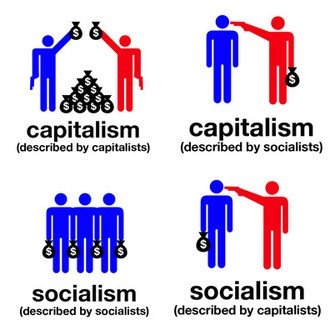
Capitalism vs. Socialism vs. Distributism

Capitalism vs. Socialism  vs. Distributism by Bryan J. Neva, Sr. Since ancient times, people have bought, sold, and traded land,...