
Saturday, July 30, 2016
Sunday, July 24, 2016
Technology has Rocked the Publishing Industry: The Case for Self-Publishing by Todd Neva
Technology has Rocked the Publishing Industry: The Case for Self-Publishing by Todd F. Neva
At some point, the publishing industry ceased to be curators of good literature and instead became evaluators of marketing plans.
The secret to getting published today is to have a platform of thousands of followers on Facebook, a congregation of over five thousand, a famous last name, or prior moderate success at a small publisher.
Small publishers still evaluate the work of first-time authors, but a marketing plan is as important as the writing. Large publishers are mostly concerned that you can sell at least 10,000 books.
And now, after years playing gatekeepers for what ends up on bookstore shelves, major technology changes have rocked the industry.
1) Online sales: In 2015, about 570 million paper book were sold of which about 60% were sold online. Amazon alone sold about 40% of paper books.
2) E-books: It literally takes only hours to format a book for sale for Kindle or Nook readers. E-books make up 30% of all book sales, and Amazon has 65% share of that format.
So all told, online sales make up over 70% of the market, and I suspect well over 95% of book sales from small publishers.
3) Direct print: It takes mere days to format a book for sale as a print on demand paperback, and the quality is outstanding. And no inventory is required.
Publishers used to make metal plates for offset printing, and they had to run thousands of copies to gain economies of scale. But a huge upfront investment is no longer required. With digital print on demand, a reader orders a book, and Amazon literally prints one copy, collating the pages in a massive machine, binding it with a freshly printed cover, and mailing it minutes later.
If self-publishing is so easy given e-books and print on demand, and if the driving factor for getting a publishing contract is your marketing plan, and if you can get virtually the same distribution, why not cut out the middleman and self-publish?
I would say two reasons. First, going through a small publisher forces you to get your book to a standard that at least one other person would accept, and second, you can say you've been published. There's no chance of getting in with the big publishing houses without paying your dues. And once with a big publisher, you'll have access to a large public relations and marketing machine that can sell books.
But interestingly, several well-established authors are leaving the big houses for self-publishing. Why give the publishing houses three-fourths of the royalties when you can sell just as many books without them. Even if self-published authors sell half as many books, they can make twice as much money.
Additionally, self-publishing gives the author more artistic control. Publishing houses, particularly Christian publishers, impose standards on their authors. One literary agent wrote in a blog, "Write by the most conservative standards. . . . Imagine writing for your very strict grandmother or an aunt who's easily shocked."1
If that is indeed your narrow market, then that particular agent and the publishers she represents would be a good fit. Otherwise, you would face different restrictions with another agent or publisher.
Here is the strongest case for self-publishing, if you really think your book is something special, then you should be the first to take a chance on it and reap all of the benefits.
Sources:
1. http://www.stevelaube.com/whats-wrong-book/#sthash.6OrK9pZr.dpuf, accessed July 22, 2016.
TODD F. NEVA grew up on the Iron Range of Northern Minnesota. He earned a BS in Business Marketing and an MBA from the University of Minnesota's Carlson School of Management. He worked in marketing research, finance, and manufacturing for over 16 years with large, consumer goods companies in the Midwest before becoming permanently disabled with ALS. He co-authored with his wife Kristin Heavy, available in print on demand and e-book through Amazon, and he blogs at NevaStory.com to give hope to those who suffer from ALS as well as all of us who struggle with life's burdens. Todd is a six year survivor of ALS and lives in the Upper Peninsula of Michigan with his wife and two children. He speaks occasionally at Evangel Baptist Church in Houghton, Michigan. You can find his sermons by following this link.


Sunday, July 17, 2016
HOW CAN YOU CHANGE THE WORLD?
HOW CAN YOU CHANGE THE WORLD?
by Bryan J. Neva, Sr.
Note: This article is a long, overdue follow-up to some previous articles I've written on changing the world: “Change Yourself and You’ll Change the World”; “How Can You Become A BetterPerson?”; and “What is Truth?”
It’s obvious we live in a broken world. Just listen to the nightly news or read your favorite Internet news site, and you’ll learn about another horrific, terrorist attack on innocent people; you’ll learn about the unspeakable crimes people commit; and you’ll learn about ongoing wars, violence, oppression, injustice, hunger, starvation, disease, poverty, prejudice, government and corporate corruption—and many others.
Politicians campaign to win elected office promising to help change our society and world for the better in order to solve the pressing problems we all face; some are more successful than others, but it’s a thankless job, and people spend more time criticizing them than in trying to help improve things.
THE TRUTH

When I first started working as a field engineer, I was told by management and sales, “Perception is reality!” In other words, a customer’s perception of the truth is what they believe to be true; every customer has their own truth or beliefs (right or wrong) in which they view the world (everything is relative). Consequently, you as a field engineer have to accept, conform, and cater to your customer’s perception of reality.
As an engineer, I was taught to always seek the truth through research and science so this statement was anathema to me. I’d always push back when a manager or salesman told me this by replying, “Reality is reality!” And I spent my entire eighteen-year career in field service trying to convince my customers, managers, and salesmen of the truth.
Simply put, the truth is the way the world really is! It’s not any more complicated that that. People make it more complicated than it really is, but it’s really not. In other words, a statement is true if it accurately corresponds to the reality of the world; otherwise it’s simply not true. Scientist, engineers, physicians, and other scholars spend their entire careers looking for the truth because we believe that the truth will set us free and help us solve the pressing problems we face today. If someone does not want to accept the truth, they’re deluding themselves and choosing to believe a lie.
Moreover, the truth can be discovered. This was the main conflict Socrates and his protégé Plato had with the other Greek philosophers of their day, the Sophists. The Sophists did not believe that the truth was knowable, while Socrates rightfully argued that the truth could be known with certainty. We all live in the same world, so there can’t be different truths for different people. There’s only one truth, and the truth is the same for everyone.
One way we can help change the world for the better is to have the courage to stand up for the truth. Standing up for the truth takes real moral courage and intestinal fortitude, and it may mean being ostracized from others. It’s not easy. Oftentimes it’s far easier to go along to get along than to stand for the truth. But if you stand up for the truth in an honest, respectful way, I believe that in the long-term you’ll be vindicated.
So why are there so many different perceptions of the truth? I think what it really means is that most fair-minded people agree on the reality of a situation—or the truth—but they have different views and beliefs about what the truth means, the importance of the truth, and how best to solve the problems we all face. Once we can all agree on what is in fact true, then we can debate on solutions to solve the problems we have.
Take for example the different political parties: most fair minded politicians agree on what is true, what they disagree on is how best to solve the problems, and that is what they debate over. Some politicians will purposely lie about something, so it's important to check the facts before you believe them. Some political pundits will make a mountain out of a molehill or vice versa. Once again check the facts and decide for yourself. Moral issues are another area of debate as moral relativism is quite rampant in our world today. All you can really do in these cases is to have the courage to stand for what you believe in as you cannot force someone else to believe as you do. But I think if you stand for what you believe, in the long-term, you'll be proven right.
The truth can be a demanding taskmaster. Living a life of truth can be a hard, rocky, and difficult path to follow. Falsehood is easy. Committing yourself to the truth can cost you a lot; it can mean the difference between worldly success or failure, fame or obscurity, fortune or poverty, pleasure or pain, reward or sacrifice, life or death, etcetera.
So why live by the truth if living by lies and falsehood is so much easier and rewarding? That is a question each one of us must answer for ourselves; but it’s probably why so few of us actively pursue and live by the truth. Personally, I believe that being committed to the truth is its own reward, and being a follower of Jesus Christ demands that one live according to the truth and not lies. Being truthful in all that we say and do, being discrete and not divulging secrets, and being careful not to be duplicitous or hypocritical are virtues worth striving for. St. Thomas Aquinas once said, “Men could not live with one another if there were not mutual confidence that they were being truthful to one another.”
INDIFFERENCE

When I was a child one of my favorite books was: Pierre: A Cautionary Tale in Five Chapters and a Prologue by Maurice Sendak (pub Jan 1, 1962). (Follow this link to listen to the story on youtube.) Pierre was indifferent and always said, “I don’t care!” And it took something really bad to happen to him before he finally learned to care.
Most of the people in the world today are indifferent to the problems we face in our world today. They’re just looking out for themselves rather than for others, their neighbors. Standing up to indifference takes real courage in a world that tells you to just worry about yourself and not make waves.
Martin Niemöller (1892–1984) was a prominent Protestant pastor who emerged as an outspoken public foe of Adolf Hitler and spent the last seven years of Nazi rule in concentration camps. Niemöller is perhaps best remembered for this quotation:

First they came for the Socialists and Communists, and I did not speak out—Because I was not a Socialist or Communist.
Then they came for the Trade Unionists, and I did not speak out— Because I was not a Trade Unionist.
Then they came for the Gypsies, and I did not speak out— Because I was not a Gypsy.
Then they came for the Jehovah Witnesses , and I did not speak out— Because I was not a Jehovah Witness.
Then they came for the Catholics, and I did not speak out— Because I was not a Catholic.
Then they came for the Jews, and I did not speak out— Because I was not a Jew.
Then they came for me—and there was no one left to speak for me.
His point was that Germans had been complicit through their silence in the Nazi imprisonment, persecution, and murder of millions of people.
Another way we can help change the world for the better is to have the courage to stand up to indifference. We have to keep our priorities straight in life. We should put God first, others second, and ourselves third—everything else, especially money, material possessions, or our careers—should be way down on our priority list. We should have the courage to fight for social justice and fairness for everyone even if that means sacrificing our own lives.
WORKS OF MERCY
Finally, one of the ways we can help change the world for the better is by performing works of mercy, or charitable actions by which we come to the aid of our neighbors in their physical and spiritual necessities. Here’s a list:
Corporal Works of Mercy
1. Feed the hungry
2. Give drink to the thirsty
3. Clothe the naked
4. Shelter the homeless
5. Visit the sick
6. Visit the imprisoned and ransom the captives
7. Bury the dead
Spiritual Works of Mercy
1. Instruct the ignorant
2. Counsel the doubtful
3. Admonish sinners
4. Bear wrongs patiently
5. Forgive offences willingly
6. Comfort the afflicted
7. Pray for the living and the dead
It doesn’t matter who you are or where you live, whether or not you’re rich or poor, young or old, educated or uneducated, male or female etcetera. None of that matters, we’re all God’s children called to do our part to help change the world for the better. We may do great things or small things, but we should all try our best to use the talents God has given each of us to help make our world a better place to live in.
Friday, July 1, 2016
The Declaration of Independence and Social Justice
The Declaration of Independence and Social Justice
by Bryan J. Neva, Sr.
“We hold these truths to be self-evident, that all men are created equal, that they are endowed by their Creator with certain unalienable Rights, that among these are Life, Liberty and the pursuit of Happiness. —That to secure these rights, Governments are instituted among Men, deriving their just powers from the consent of the governed, —That whenever any Form of Government becomes destructive of these ends, it is the Right of the People to alter or to abolish it, and to institute new Government, laying its foundation on such principles and organizing its powers in such form, as to them shall seem most likely to effect their Safety and Happiness. Prudence, indeed, will dictate that Governments long established should not be changed for light and transient causes; and accordingly all experience hath shewn, that mankind are more disposed to suffer, while evils are sufferable, than to right themselves by abolishing the forms to which they are accustomed. But when a long train of abuses and usurpations, pursuing invariably the same Object evinces a design to reduce them under absolute Despotism, it is their right, it is their duty, to throw off such Government, and to provide new Guards for their future security.”
—Thomas Jefferson, 1776, “The Declaration of Independence”

These were wonderfully inspired words written by the great Virginian, Thomas Jefferson. But when we look back at our 240-year history, we see a struggle to live up to the ideals Jefferson wrote about in 1776. Here’s some examples: the social injustices of racism, of slavery, of working conditions; the mistreatment of the poor and downcast, of women, children, minorities, immigrants, and Native Americans; the struggle between the rich and the poor, the abuses of greedy capitalist etcetera.
I’ll admit that we’ve made progress in our 240-year history, but there’s still a long way to go. The abuses that Wall Street has inflicted on Main Street remain unresolved. The abuses of our trade agreements and the globalization of our economy remain unresolved. The abuses that corporations have waged against the average working person remain unresolved. The abuses of our tax system—especially by corporations and the rich—remain unresolved. The social bedrock of our society—the family—is under attack. Our moral fabric is decaying. Our freedom to worship as we please is under attack. Agnosticism, atheism, and moral relativism have become the politically correct religions.
I’d challenge you on this 4th of July 2016, to first of all be thankful for what we have and the sacrifices of so many to give us this wonderful country that we live in today. But at the same time, think about what we can do to make our country better for our children and grandchildren.
Happy Independence Day!
Saturday, June 25, 2016
1 in 25 Business Leaders May Be Psychopaths

Based on my own anecdotal research, I think it's much worse than 1
in 25 as this 2011 TIME article suggests. My own non-scientific polling
suggests that bad managers far exceed the good ones by at least 10 to 1.
It's almost the exception to the rule to find a good, honest manager in any organization public or private. All these bad managers may not be certifiable psychopaths but I think in their quest for power at any price they learn that dishonest, unethical, immoral behavior is encouraged and rewarded whereas the opposite is not the case.
It seems the scum always rises to the
top when people are promoted.
Why is this? Well I think it's because promotions have less to do
with merit and more to do with popularity. In most cases, people are
promoted because those in decision making positions personally like them and the amoral compass they live by. And
people tend to like those who are just like themselves; as the old saying
goes, birds of a fetter flock together. So the vicious cycle
continues and good, honest people are consistently passed over for promotions and
relegated to irrelivant positions as worker bees where they cannot do much to affect positive change in their organization.
And in this age of the financialization of
America where Wall Street's demands for quarterly profits coerces business
managers into making short-term financial decisions at the expense of the
long-term viability of their company, who wants to hire a manager with long-term
goals and objectives at the expense of short term gains? Bad management at
all levels in an organization just facilitates Wall Street's demand for a profit at
any price!
Regardless of the type of organization you
work for, start paying attention to who gets promoted and who doesn't; pay attention to the behavior rather than the words of those in management positions; pay attention to the subtleties; and I think you'll confirm for yourself my suspicions that
good managers are few and far between. But read this article and judge for
yourself.
TIME
Study: 1 in 25 Business Leaders May Be Psychopaths
One in 25 bosses may be psychopaths — a rate that’s four times greater than in the general population — according to research by psychologist and executive coach Paul Babiak.
Babiak studied 203 American corporate professionals who had been chosen by their companies to participate in a management training program. He evaluated their psychopathic traits using a version of the standard psychopathy checklist developed by Robert Hare, an expert in psychopathy at the University of British Columbia in Canada.
Psychopaths, who are characterized by being completely amoral and concerned only with their own power and selfish pleasures, may be overrepresented in the business environment because it plays to their strengths. Where greed is considered good and profitmaking is the most important value, psychopaths can thrive.
They also tend to be charming and manipulative — and in corporate America, that easily passes for leadership. But, as the U.K.’s Guardian reported:
In fact, it can be hard spot the psychopath in any crowd (according to Hare, psychopaths make up 1% of the general population). They’re not all ruthless serial killers; rather, psychopaths who grow up in happy, loving homes might end up channeling their energies in a less violent way — say, by becoming a CEO. “Psychopaths really aren’t the kind of person you think they are,” Babiak said.


Szalavitz's latest book isBorn for Love: Why Empathy Is Essential — and Endangered. It is co-written with Dr. Bruce Perry, a leading expert in the neuroscience of child trauma and recovery.
Subscribe to:
Posts (Atom)
Featured Post
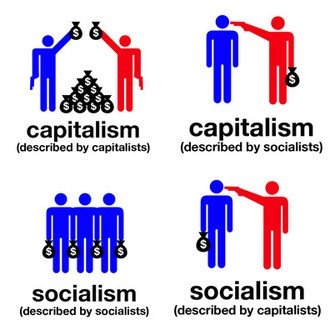
Capitalism vs. Socialism vs. Distributism
Capitalism vs. Socialism vs. Distributism by Bryan J. Neva, Sr. Since ancient times, people have bought, sold, and traded land,...
-
 Whose Ox Is Being Gored? by Bryan J. Neva, Sr. You've probably heard the old cliché, "It all depends on whose ox is...
 -
 The Parable of the Lost Coin LUKE 15 8 “Or what woman, having ten silver coins, if she loses one coin, does not light a lamp and sweep ...
 -
 What Business can Learn from Sheep Herding by Bryan J. Neva, Sr. Business can learn a lot from the business of sheep herding. Sheep her...
 -
Loving Your Enemies by Fritz Chery, Feb 15, 2015, biblereasons.com Bible verses about loving your enemies This topic is something w...
-
 Capitalism vs. Socialism vs. Distributism by Bryan J. Neva, Sr. Since ancient times, people have bought, sold, and traded land,...
 -
 Elijah by Bryan Neva “Shout louder, Baal may be meditating, or retired, or on vacation, or asleep and needs to be awoken.” The grea...
 -
 The Leash Theory of Management by Bryan J. Neva, Sr. Have you ever heard a manager use phrases like, "I have to keep them on a sho...
 -
 The Parable of the Lost Son LUKE 15: 11 And he said, “There was a man who had two sons; 12 and the younger of them said to his fat...
 -
Thing 7 Free-market policies rarely make poor countries rich by Dr. Ha Joon Chang (Book Excerpt from 23 Things They Don't Tel...
