Saturday, September 8, 2018
Thursday, August 16, 2018
Thursday, July 19, 2018
The fall of GE and the legacy of Jack Welch
The fall of GE and the legacy of Jack Welch
by Allen Laudenslager & Bryan Neva
The legacy of John Francis "Jack" Welch Jr. is epitomized in the recent downfall of GE, an American titan of industry. GE was co-founded by Thomas Edison in 1892 and was one of the earliest companies listed on the Dow Jones Industrial Average but was recently dropped due to its falling stock price and loss of value.
The company's difficulties can be traced directly to the management decisions made over the last 38 years beginning with the hiring of Jack Welch as CEO in 1980 and continuing with Jeff Immelt in 2000. GE shifted from a manufacturing company, which created world-class products and developed new and innovative manufacturing methods, into a finance and mergers & acquisitions (M&A) firm.
More than any other person, all those decisions can be traced back to Jack Welch's vision in which he charted the short-term thinking and profit-at-any-price mentality that typified the policies and practices at GE that lead directly and inevitably to it’s current reduced state. And what is most appalling is that so many people saw the trend and publicly warned GE's board of directors that they were building a house of cards that would eventually collapse.
Welch, Immelt, and GE tried to defy the natural law in building their house of cards: if you don't build your house on a firm foundation, eventually, it will collapse! And the other natural law that you'll reap what you sow: you can't plant weeds and expect beautiful flowers to grow; you can't plant ugly, nuisance trees and expect to harvest a bountiful crop of delicious fruit.
Welch and Immelt treated their employees as expendable units-of-production. They didn't take care of the assets that helped generate revenue for the company. Instead, they made money their god. The only thing that mattered to them was their stock price.
While the GE family of employees, customers, and suppliers will now have to pay the bill for all of GE's short-term thinking over the past 38 years, GE's management gets off scot-free with golden parachutes.
by Allen Laudenslager & Bryan Neva
The legacy of John Francis "Jack" Welch Jr. is epitomized in the recent downfall of GE, an American titan of industry. GE was co-founded by Thomas Edison in 1892 and was one of the earliest companies listed on the Dow Jones Industrial Average but was recently dropped due to its falling stock price and loss of value.
The company's difficulties can be traced directly to the management decisions made over the last 38 years beginning with the hiring of Jack Welch as CEO in 1980 and continuing with Jeff Immelt in 2000. GE shifted from a manufacturing company, which created world-class products and developed new and innovative manufacturing methods, into a finance and mergers & acquisitions (M&A) firm.
More than any other person, all those decisions can be traced back to Jack Welch's vision in which he charted the short-term thinking and profit-at-any-price mentality that typified the policies and practices at GE that lead directly and inevitably to it’s current reduced state. And what is most appalling is that so many people saw the trend and publicly warned GE's board of directors that they were building a house of cards that would eventually collapse.
Welch, Immelt, and GE tried to defy the natural law in building their house of cards: if you don't build your house on a firm foundation, eventually, it will collapse! And the other natural law that you'll reap what you sow: you can't plant weeds and expect beautiful flowers to grow; you can't plant ugly, nuisance trees and expect to harvest a bountiful crop of delicious fruit.
Welch and Immelt treated their employees as expendable units-of-production. They didn't take care of the assets that helped generate revenue for the company. Instead, they made money their god. The only thing that mattered to them was their stock price.
While the GE family of employees, customers, and suppliers will now have to pay the bill for all of GE's short-term thinking over the past 38 years, GE's management gets off scot-free with golden parachutes.


Monday, July 16, 2018
What the sad decline of GE tells us about America's cultish CEO worship
What the sad decline of GE tells us about America's cultish CEO worship
The fall of General Electric has been nothing short of spectacular. The world’s most valuable company in 2000, it has been in a state of accelerating decline ever since. It has sold off key units. Just last month it announced plans to spin off its health care division and unload its 62.5 percent stake in an oil field services company. It has also shed value through its declining stock price — more than $150 billion since January 2017. And last month it suffered the indignity of being tossed out of the famed Dow Jones Industrial Average.
Naturally, much of the blame has fallen on Jeff Immelt, CEO of the company from 2001 until last year, and on the GE board of directors that kept him on for so long.
Immelt has an impressive record for bone-headed and ill-timed acquisitions. He took his storied company into the subprime mortgage business in 2004, just as a credit bubble was getting ready to pop. In 2015 he bought the power generation division of French multinational named Alstom. In so doing he expanded GE’s position in coal-fired turbines just as utilities were moving to natural gas and renewables. He also ensnared the company in France’s notoriously rigid regulatory climate.
But there is more to the story than villainizing a corporate villain. The fall of GE is at least in part a story of excess adulation of its erstwhile super CEO, Jack Welch. One of the reasons GE’s valuation has dropped so much is that it was vastly inflated in the 1990s as gullible Wall Street analysts bought into the myth of Welch.
OPPOSING VIEW: CEO destroyed GE he inherited
The company reached a peak market capitalization of $601 billion in 2000 as Welch delivered quarter after quarter of increasing profits. In reality, these profits came by shortchanging capital investments, a move that would hurt the company later, and by tweaking the numbers in the financial unit known as GE Capital. When the financial crisis hit, GE Capital was so undercapitalized that the company needed what was billed as an investment, but was more of a bailout, from Warren Buffett.
This is not to say that Welch was as bad as Immelt. He was not. He did a lot of things right at GE to offset some of the more questionable moves he made.
But it is to say that he was far from the best CEO of his generation, or of the 20th century, as some of his champions proclaimed in the 1990s.
In fact the whole GE story should be an object lesson in the dangers of buying into the idea that the right, extraordinary, CEO can deliver outsize returns. This argument has been used widely to justify excessive compensation packages for senior executives while not delivering promised long-term returns.
On far too many occasions, CEOs have been awarded massive pay packages and retirement deals for returns later shown to be the product of financial engineering or macroeconomic trends they had nothing to do with.
It is time to revisit the cultish search for the super CEO. The GE story shows how overdue that is.
USA TODAY's editorial opinions are decided by its Editorial Board, separate from the news staff. Most editorials are coupled with an opposing view — a unique USA TODAY feature.
Sunday, July 15, 2018
Humanity is more important than money — it’s time for capitalism to get an upgrade
Humanity is more important than money — it’s time for capitalism to get an upgrade
Jul 13, 2018 / Andrew Yang | TEDxWhat capitalism prioritizes, the world does more of. So how can we change capitalism so that it focuses on what humans really want and need? Entrepreneur Andrew Yang has a surprising proposal.
Think of the activities on the list below:
Parenting or caring for loved ones
Teaching or nurturing children
Creating art, music, dance
Working in struggling regions near our hometowns
Preserving the environment
Reading or writing for pleasure or personal growth
Preventative health care
Character-building for your kids, your team, yourself
Building community connections
Having a hobby
Becoming involved in local government
Teaching or nurturing children
Creating art, music, dance
Working in struggling regions near our hometowns
Preserving the environment
Reading or writing for pleasure or personal growth
Preventative health care
Character-building for your kids, your team, yourself
Building community connections
Having a hobby
Becoming involved in local government
Most of us do some or many of these things — and usually, we don’t do them for money. What these activities add up to is what we might call a normal life, a well-rounded life of care and character, rich with community and creativity and balance. When you do these things, you don’t think of yourself as participating in capitalism.
But the fact is, capitalism moves and energizes the modern world. And what capitalism values, our world does more of; what it doesn’t, we do less of. Many of us feel like the activities of a normal life are becoming harder and harder to accomplish. So the question becomes: In a system where capitalism is a prime determinant of value, how can we preserve what we truly value as humans, what matters to us beyond money?
I’m someone who was educated to thrive and dominate in our capitalist system. And my deep conviction now is: it has to change. I’m an Ivy League graduate who followed the 59 percent of my peers into one of the four jobs we all take — lawyer, business consultant, finance, technology — in one of the four US cities we all move to, and in the process abandoning our hometowns and the dreams that first inspired our academic success. I watched the country’s best-educated young people fall into jobs that were designed to harvest and concentrate wealth, working insane hours to pay off insane loans. And my hometown friends who didn’t end up on the Ivy League track are facing a bleaker future, as automation destroys more and more jobs in towns across America, disrupting communities and families. No matter where we stand on the socioeconomic ladder, the future of the “normal life” doesn’t look good.
In the US, and in much of the developed world, our current form of capitalism is failing to produce an increasing standard of living for most of its citizens. It’s time for an upgrade. Adam Smith, the Scottish economist who wrote The Wealth of Nations in 1776, is often regarded as the father of modern capitalism. His ideas — that the “invisible hand” guides the market; that a division of labor exists and should exist; and that self-interest and competition lead to wealth creation — are so deeply internalized that most of us take them for granted.
Today, many people contrast “capitalism” with “socialism,” the social ownership or democratic control of industries. The perception is that capitalism — as embodied by the West and the United States in particular — won the war of ideas by generating immense growth and wealth and elevating the standard of living of billions of people. By contrast, socialism — represented by the Soviet Union, which collapsed in 1991, and China, which moderated its approach in the 1980s — didn’t work in practice and was thoroughly discredited.
This assessment of capitalism triumphing over socialism misses a couple of important points. First, there is no such thing as a pure capitalist system. There have been many different forms of capitalist economies ever since money was invented around 5,000 years ago. The current form of institutional capitalism and corporatism is just the latest of many different versions. Similarly, there are many forms of capitalism in service around the world right now. For example, Singapore is the fourth richest country in the world in terms of per-capita GDP. It’s had an unemployment rate of 2.2 percent or lower since 2009 and is regarded as one of the most free and open, pro-business economies in the world. Yet the government in Singapore routinely shapes investment policy, and government-linked firms dominate telecommunications, finance and media in ways that would be unthinkable in America, Norway, Japan or Canada. Like Singapore, many countries’ form of capitalism is steered not by an unseen hand — but by clear government policy.
Imagine a new type of capitalist economy that’s geared toward maximizing human well-being and fulfillment. These goals and GDP would sometimes go hand-in-hand, but there would be times when they wouldn’t be aligned. For example, an airline removing passengers who’d already boarded a plane in order to maximize its profitability would be good for capital but bad for people. The same goes for a drug company charging extortionate rates for a life-saving drug. Most Americans would agree that the airline should accept the lost revenue and the drug company accept a moderate profit margin. But what if this idea was repeated over and over again throughout the economy? Let’s call it human-centered capitalism — or human capitalism for short.
Human capitalism would have a few core tenets:
1. Humanity is more important than money.
2. The unit of an economy is each person, not each dollar.
3. Markets exist to serve our common goals and values.
1. Humanity is more important than money.
2. The unit of an economy is each person, not each dollar.
3. Markets exist to serve our common goals and values.
In business, there’s a saying that “what gets measured gets managed for,” so we need to start measuring different things. The concepts of GDP and economic progress didn’t exist until the Great Depression. However, when economist Simon Kuznets introduced it to Congress in 1934, he cautioned, “The welfare of a nation can … scarcely be inferred from a measurement of national income as defined above.” It’s almost like he saw income inequality and bad jobs coming.
Our economic system must shift to focus on bettering the lot of the average person. Instead of having our humanity subverted to serve the marketplace, capitalism has to be made to serve human ends and goals.
In addition to GDP and job statistics, the government could adopt measurements like:
Average physical fitness and mental health
Quality of infrastructure
Proportion of the elderly in quality care
Marriage rates and success
Deaths of despair; substance abuse
Global temperature variance and sea levels
Re-acclimation of incarcerated individuals and rates of criminality
Artistic and cultural vibrancy
Dynamism and mobility
Social and economic equity
Civic engagement
Cybersecurity
Responsiveness and evolution of government
Average physical fitness and mental health
Quality of infrastructure
Proportion of the elderly in quality care
Marriage rates and success
Deaths of despair; substance abuse
Global temperature variance and sea levels
Re-acclimation of incarcerated individuals and rates of criminality
Artistic and cultural vibrancy
Dynamism and mobility
Social and economic equity
Civic engagement
Cybersecurity
Responsiveness and evolution of government
It would be straightforward to establish measurements for each of these and update them periodically. It would be similar to what Steve Ballmer (TEDxPennsylvaniaAvenue talk: Our nation in numbers) set up at USAFacts.org. Everyone could see how we’re doing and be galvanized around improvement.
This could be tied into a Digital Social Credit (DSC) system, in which people who help move society in a particular direction might be rewarded. For example, a journalist who uncovered a source of waste or an artist who beautified a city or a hacker who strengthened our power grid could be rewarded with social credits. So could someone who helped another person recover from addiction, or helped acclimate an ex-convict into the workforce. Even someone who maintained a high level of physical fitness and helped others do so could be rewarded and recognized.
Maybe you smile in disbelief at the concept of “social credits,” but it’s based on a system currently in use in about 200 communities around the United States: Time Banking. In Time Banking, people trade time and build credits within their communities by performing various helpful tasks — transporting an item, walking a dog, cleaning up a yard, cooking a meal, providing a ride to the doctor, etc. The idea was championed in the US by Edgar Cahn, a law professor and anti-poverty activist in the mid-1990s as a way to strengthen communities.
Despite the success of Time Banks in some communities, they haven’t caught hold that widely in the US in part because they require a certain level of administration and resources to operate. But imagine a supercharged version of Time Banking backed by the federal government where in addition to providing social value, there’s real monetary value underlying it.
The government could put up significant amounts of DSCs as prizes and incentives for major initiatives. For example, they could allocate 100 million DSCs to reduce obesity levels in Mississippi or 1 billion DSCs to improve high school graduation rates in Illinois, and then let people take various actions to collect it. Companies could help meet goals and create and sponsor campaigns around various causes. Nonprofits and NGOs would generate DSCs based on how much good they do and then distribute it back to volunteers and employees. New organizations and initiatives could be crowdfunded by DSCs instead of money, as people ‘vote’ by sending points in.
We could create an entirely new parallel economy around social good.
The most socially detached would likely ignore all of this, of course. But many people love rewards and feeling valued. I get obsessed with completing the 10-punch card for a free sandwich at my deli. We could spur unprecedented levels of social activity without spending that much. DSCs could become cooler than dollars, because you could advertise how much you have and it would be socially acceptable.
The power of this new marketplace and currency can’t be overstated. Most of the entrepreneurs, technologists and young people I know are champing at the bit to work on our problems. We can harness the country’s ingenuity and energy to improve millions of lives if we could just create a way to monetize and measure these goals.
I’m no fan of big government. The larger an organization is, the more cumbersome and ridiculous it often gets. I’ve also spent time with people at the highest levels of government, and it’s striking how stuck most of them feel. One Congressperson said to me, “I’m just trying to get one big thing done here so I can go home.” He’d been in Congress for 7 years at that point. Another joked that being in DC was like being in Rome, with the marble there to remind you that nothing will change.
But I’ve concluded there’s no other way to make these changes than to have the federal government reorganize the economy. Even the richest and most ambitious philanthropists and companies either operate at the wrong scale or have multiple stakeholders that make big, long-term commitments difficult to sustain. We’re staring at trillion-dollar problems, and we need commensurate solutions. We’re in a slow-moving crisis that is about to speed up.
Excerpted from the new book The War on Normal People: The Truth About America’s Disappearing Jobs and Why Universal Basic Income Is Our Future by Andrew Yang. Copyright © 2018 by Andrew Yang. Used with permission from Hachette Books. All rights reserved.
Watch Andrew Yang’s TEDxGeorgetowntalk here:
Monday, July 9, 2018
Just a Carpenter
Just a Carpenter
by Bryan J. Neva, Sr.
by Bryan J. Neva, Sr.
Jesus returned with his disciples to Nazareth, his hometown. The next Sabbath he went to the town synagogue to teach, and the people were astonished at his wisdom and his miracles because he was just a local man like themselves.
“He’s no better than we are,” they said. “He’s just a carpenter, Mary’s boy, and a brother of James and Joseph, Judas, and Simon. And his sisters live right here among us.” And they were offended!
Then Jesus told them, “A prophet is honored everywhere except in his hometown and among his relatives and by his own family.” And because of their unbelief, he couldn’t do any mighty miracles among them except to place his hands on a few sick people and heal them. And he was amazed at their unbelief.
- Mark 6:1-6
Most all of us have experienced rejection, discrimination, and marginalization at some time in our lives (maybe even by our own families). Maybe we're society's outcasts, minorities, poor, unrefined, uneducated, unattractive, or unimportant.
Being rejected means we're unacceptable: unacceptable to a potential school, employer, client, friend, or love interest. It feels terrible being rejected. Imagine how a salesperson feels being told, "No!" a hundred times before they're ever told, "Yes!"? Imagine how an awkward, unattractive boy at a Junior High School dance must feel after every girl refuses to dance with him, or how that shy, homely girl feels when no one asks her to dance?
At work, people tend to tie their self-worth with being well respected and liked by their superiors and colleagues. They tie it to getting a promotion and moving up the corporate ladder. But when these don't happen, it can be quite discouraging even leading to poor job performance.
An old carpenter had been helping to build houses his entire life. But he was tired and his body ached every day. Working in construction can be quite demoralizing when you're treated as a second-class citizen, your boss and colleagues don't respect you, and you're living from paycheck to paycheck. Sometimes you're even cheated out of your pay by dishonest contractors and customers. And there's usually no benefits or retirement.
Finally, the old carpenter decided to hang up his tools and retire. It would be tough making ends meet only on his social security, but he and his wife would somehow get by. The contractor he had been working for was disappointed he was retiring because he actually believed he was one of the best carpenters he ever had. They were working on the last house in a new subdivision the contractor was building, and he begged him to stay on until they finished the last house. The old carpenter reluctantly agreed as it would only be a couple of more months.
Unfortunately, the old carpenter was so burned out and discouraged that his workmanship really suffered. When the house was completed, the contractor did a final walk-through of the house with the old carpenter. And then he did something completely unexpected: he handed the old carpenter the keys to the house and said, "This is your house now, it's my retirement gift to you."
Being rejected means we're unacceptable: unacceptable to a potential school, employer, client, friend, or love interest. It feels terrible being rejected. Imagine how a salesperson feels being told, "No!" a hundred times before they're ever told, "Yes!"? Imagine how an awkward, unattractive boy at a Junior High School dance must feel after every girl refuses to dance with him, or how that shy, homely girl feels when no one asks her to dance?
At work, people tend to tie their self-worth with being well respected and liked by their superiors and colleagues. They tie it to getting a promotion and moving up the corporate ladder. But when these don't happen, it can be quite discouraging even leading to poor job performance.
An old carpenter had been helping to build houses his entire life. But he was tired and his body ached every day. Working in construction can be quite demoralizing when you're treated as a second-class citizen, your boss and colleagues don't respect you, and you're living from paycheck to paycheck. Sometimes you're even cheated out of your pay by dishonest contractors and customers. And there's usually no benefits or retirement.
Finally, the old carpenter decided to hang up his tools and retire. It would be tough making ends meet only on his social security, but he and his wife would somehow get by. The contractor he had been working for was disappointed he was retiring because he actually believed he was one of the best carpenters he ever had. They were working on the last house in a new subdivision the contractor was building, and he begged him to stay on until they finished the last house. The old carpenter reluctantly agreed as it would only be a couple of more months.
Unfortunately, the old carpenter was so burned out and discouraged that his workmanship really suffered. When the house was completed, the contractor did a final walk-through of the house with the old carpenter. And then he did something completely unexpected: he handed the old carpenter the keys to the house and said, "This is your house now, it's my retirement gift to you."
The old carpenter was surprised and thankful, but secretly, he was ashamed because he knew deep-down that his work was shoddy! It was a blessing and a curse. If he had known he was building his own house, he would have put forth his best efforts in building the house.
So it is with us. We build our lives, one day at a time, but we feel rejected by others and our work becomes mediocre. We tell ourselves, "Why should I kill myself for these ingrates!" And then something happens and we are shocked to learn we have to live in the house we've built. If we could do it over, we’d do it much differently. But we cannot go back.
Our attitudes and choices we make today build the “house” we may live in tomorrow. So we shouldn't let rejection stop us from continuing to do good work.
Saturday, July 7, 2018
Wednesday, July 4, 2018


Subscribe to:
Posts (Atom)
Featured Post
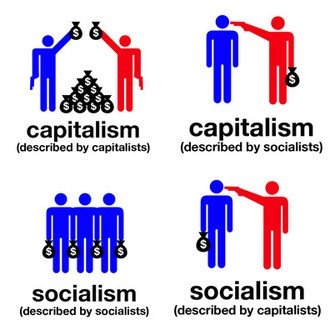
Capitalism vs. Socialism vs. Distributism
Capitalism vs. Socialism vs. Distributism by Bryan J. Neva, Sr. Since ancient times, people have bought, sold, and traded land,...
-
 Whose Ox Is Being Gored? by Bryan J. Neva, Sr. You've probably heard the old cliché, "It all depends on whose ox is...
 -
 The Parable of the Lost Coin LUKE 15 8 “Or what woman, having ten silver coins, if she loses one coin, does not light a lamp and sweep ...
 -
 What Business can Learn from Sheep Herding by Bryan J. Neva, Sr. Business can learn a lot from the business of sheep herding. Sheep her...
 -
Loving Your Enemies by Fritz Chery, Feb 15, 2015, biblereasons.com Bible verses about loving your enemies This topic is something w...
-
 Capitalism vs. Socialism vs. Distributism by Bryan J. Neva, Sr. Since ancient times, people have bought, sold, and traded land,...
 -
 Elijah by Bryan Neva “Shout louder, Baal may be meditating, or retired, or on vacation, or asleep and needs to be awoken.” The grea...
 -
 The Leash Theory of Management by Bryan J. Neva, Sr. Have you ever heard a manager use phrases like, "I have to keep them on a sho...
 -
 The Parable of the Lost Son LUKE 15: 11 And he said, “There was a man who had two sons; 12 and the younger of them said to his fat...
 -
Thing 7 Free-market policies rarely make poor countries rich by Dr. Ha Joon Chang (Book Excerpt from 23 Things They Don't Tel...
