Micromanagement
"Micromanagement: That school of management that allows you to focus on each individual detail with such precision and clarity that you forget what you are doing!" - Allen Laudenslager  |
Saturday, March 18, 2017
Micromanagement


Friday, March 17, 2017
Curating by Allen Laudenslager
Curating
by Allen Laudenslager

We see the word “curating” bandied about the Web regularly but most of
us have only a vague idea what the word means:
Curating: to pull together, sift through, and select
for presentation, as music or website content: “We curate our merchandise with a sharp eye for trending fashion,” the
store manager explained.
It’s the kind of thing Amazon does with targeted advertising when they
track your shopping history to send you ads related to the kinds of products
you have either bought in the past or are looked for on their site. I’ve noticed
recently that my Google searches are starting to show ads for more of the same things I've shopped for.
For most people that’s a good thing. If I was searching for extra wide
shoes (I wear a 4E width and those are very hard to find in my local stores) I
will see ads for wide shoes when I make my next search on Google or Amazon.
Even if I’m now searching for hardware for my vintage trailer, those ads will
continue until I do enough searches for some other item to boot them off.
There is a movement to do the same thing with your news feeds. The
concept is that if you read articles about the latest presidential candidates you
would like to read more articles about them. That actually sounds like a pretty good
service, right?
The scary part is that if you begin to focus on just one candidate that
same system may focus its future recommendations on that one candidate as well.
If you focus on things favorable to one candidate you might see only favorable
articles. This naturally narrows your reading to what your “curation” software
is spoon-feeding you. It's kind of like limiting your social interactions to just
the people you know.
A television news show has a large and varied audience that has equally
varied tastes, so it presents a collection of unrelated news stories. Some of them are very
interesting to you others not so much, BUT if you watch the whole half hour news report you'll get a range of information about a variety of subjects. In other
words, you'll get a rounded view of what is happening. If on the other hand you only listen
to a news station that reports on a narrow range of topics from a single view
point you won't get fresh ideas.
Most of us know that guy at the gym or office that only listens to an
extreme political talk show and whose entire world is bounded by a single point of view.
They're the one who is always talking about conspiracy theories and never accepts that
sometimes it’s just a coincidence. So in in order to not be like "that guy", I like to use a news aggregator that requires me to manually add news feeds and
doesn’t look at what I am currently reading and make recommendations about
similar sources. I like it that way because I prefer an eclectic collection of
sources so I get a broad range of subjects and viewpoints.
Dudley Field Malone, co-counsel for the defense of John T. Scopes in the famous "Monkey
Trial" in 1925, responded to William Jennings Bryan's argument against admitting scientific testimony when he said, "I have never learned anything from any man who agreed with
me!" Malone gave arguably the best speech of the trial in defense of academic freedom and his quote became famous.
In exactly the same way, your world of ideas can be circumscribed
and limited by software that tries to show you more information that supports what you are already reading. Fresh and new ideas that challenge
your existing concepts and accepted wisdom are the food of intellectual
thought. Yes, after you read an opposing viewpoint you may well decide that you
were right the first time. But unless you continually challenge what you think you know
how can you grow and learn?
Sitting in a classroom being presented with new facts or
viewpoints all of us have experienced the awakening that new information gives
us. That moment when we think “Oh, if
that’s true then this is true too! I never thought about it like that before.”
The latest improvements in
artificial intelligence can allow this kind of curation and while it can lead
you to many things you might not find on your own. On the other hand if it’s
poorly done, it can become a straitjacket that limits your ideas to what you
already know.
Tuesday, March 14, 2017

Monday, March 13, 2017
What Makes Your Dog Your Hero by Allen Laudenslager
What Makes Your Dog Your Hero
by Allen Laudenslager
My dog is my hero without doing the things that most people would think of as heroic. All he did was be a dog. Like all dogs he delivered unconditional love at a time when I felt very unlovable.
Why I felt unlovable really doesn't matter. In fact, it didn't matter to Nanuq either. All he cared about was that he was with me and that walks and meals were more or less on time.
Just by needing my care and attention, somebody had to let him out to do his business, someone had to get the food into his food bowl and put down fresh water. He can't do it for himself - no thumbs.
I couldn't indulge myself in self-pity while he needed to be cared for. As you can see from the picture, it's hard to be sad when faced with that smile.

Everyday he just kept being himself. Interested in every new smell and demanding long walks (at least longer than I wanted) to explore the new place we found ourselves living. He helped force me beyond my comfort zone and by just expecting me to take care of him taught me that my limits were not real, only self imposed false limitations.
When he wakes me up at 2 a.m. barking at the thunder and I can't go back to sleep I have to get out of myself and love him because his barking is just his fear of that strange noise. All he needs is my reassurance that he is safe and protected.
In reassuring him and protecting him I reassured and protected myself. Without his unconditional love I would have taken much longer to heal.
Besides any dog that will do things like this will always make me cheer up!

Postscript: Nanuq was a gift for my 60th birthday; I had him for nine years. In 2014 Nanuq passed away from liver cancer. If there's a doggy heaven, he certainly deserved to go there.
by Allen Laudenslager
My dog is my hero without doing the things that most people would think of as heroic. All he did was be a dog. Like all dogs he delivered unconditional love at a time when I felt very unlovable.
Why I felt unlovable really doesn't matter. In fact, it didn't matter to Nanuq either. All he cared about was that he was with me and that walks and meals were more or less on time.
Just by needing my care and attention, somebody had to let him out to do his business, someone had to get the food into his food bowl and put down fresh water. He can't do it for himself - no thumbs.
I couldn't indulge myself in self-pity while he needed to be cared for. As you can see from the picture, it's hard to be sad when faced with that smile.
Everyday he just kept being himself. Interested in every new smell and demanding long walks (at least longer than I wanted) to explore the new place we found ourselves living. He helped force me beyond my comfort zone and by just expecting me to take care of him taught me that my limits were not real, only self imposed false limitations.
When he wakes me up at 2 a.m. barking at the thunder and I can't go back to sleep I have to get out of myself and love him because his barking is just his fear of that strange noise. All he needs is my reassurance that he is safe and protected.
In reassuring him and protecting him I reassured and protected myself. Without his unconditional love I would have taken much longer to heal.
Besides any dog that will do things like this will always make me cheer up!
Postscript: Nanuq was a gift for my 60th birthday; I had him for nine years. In 2014 Nanuq passed away from liver cancer. If there's a doggy heaven, he certainly deserved to go there.
Sunday, March 12, 2017
Why Bad Things Happen to Good People?
Why Bad Things Happen to Good People?
by Bryan J. Neva, Sr.
After all the misfortune that befell Job, Satan again appears in heaven and God asks him what he thinks of the righteous man Job? Satan replied that if Job were to lose his health then he'd curse God and lose his faith. After all, people will give up everything just to save themselves. So God agrees and Job loses his health. Job is pushed to utter dispair, and he sits on a pile of ashes and scrapes his painful sores. Unfortunately Job's wife, believing God to be unjust, offers no encouragement but tells Job to just "curse God and die!" But Job is undeterred and corrects her saying, "Should we receive the good that God gives and not the bad?"
Next Job's three friends hear about all his misfortune, and wanting to console him, they went and sat with Job in the ash heap for a week not saying a word. Finally Job speaks and in his deep despair curses the day he was ever born, but surprisingly he never curses God or accuses God of injustice towards him but rather he accepts his plight as God's will.
Instead of encouraging him, Job's friends suggest that Job's troubles were because God is punishing him for something he did wrong. Job doesn't buy these arguments because he knows deep down inside that he hasn't done anything wrong. He can't explain why all these bad things happened to him, but he continues to trust in God.
At last God interrupts their conversation and explains to them that people cannot comprehend God's plans or actions or why He allows bad things to happen to good people.
We all know that if we behave badly, we'll eventually reap the consequences. If we heavily smoke our whole lives and wind up with lung cancer or heart disease can we honestly blame the tobacco companies? Or if we drink heavily and get liver cirrhosis can we reasonably blame the bartender? If we run up huge debts, have our vehicles repossessed and lose our home to foreclosure, can we blame the bank for our financial troubles? If we cheat on our spouse and end up divorced can we blame them for the breakup? If we abuse our children can we blame them if they grow up to hate us? If we commit a serious crime and end up in prison can we blame the judge or jury?
But what if we're like Job and try our best to live good and decent lives yet bad things still happen to us good people, how do we make sense of that? Certainly, Job nor his three friends couldn't. During Jesus' time, he gave us a clue about why bad things might happen to good people. He met a man who was blind from birth (John 9), and his disciples asked him, "Teacher, who sinned, this man or his parents, that he should be born blind?" Jesus answered them, "Neither this man nor his parents sinned; he was born blind that God's works might be revealed in him." Even in the book of Job, there's a backstory we're told about a test of Job's faith that God allowed.
Our health fails and we are diagnosed with a chronic or terminal illness, and our prayers for a miracle cure go unanswered. Our spouse leaves us, and our prayers for a reconciliation are ignored. We lose our jobs and livelihoods, and our prayers for new employment go unanswered. God essentially says, "No!" or "Not Now!" to all our prayers for salvation. So what are we supposed to do? Do we stop praying? Do we stop trusting in God? Do we stop believing? Job would tell us, "Should we receive the good that God gives and not the bad?"
I wish I could tell you I have an answer for you, but like Job and his three friends I do not. Furthermore, many learned scholars have speculated but don't really know either. The only solace I can offer is that I believe there's a reason for everything that happens. (I know that sounds cliche, but I believe scripture and most religious scholars would support that assertion.) We probably won't know the reason in our lifetimes, but maybe we'll be told in the next and it'll all make sense to us then. Job's only response to all the bad things that happened to him was to keep on trusting God. I think that somehow deep inside him he knew that God was with him in all his struggles. So the big lesson we can take away from Job is not to lose hope or our faith in God when bad things happen to us good people.
Wednesday, March 8, 2017
The Map is Not the Territory by Allen Laudenslager
The Map is Not the Territory
by Allen Laudenslager

Anyone who has tried to find where they are on a map knows
that it is not always as easy as it sounds. In a city where there are cross
streets and street signs it can be fairly simple. In the wilds, off road it can
be very hard to be sure you know where you are. Once you do know where you are on the map and where your
destination is, it’s still not all that easy to pick a good route. If you are
using a regular road map in the wild all you will see is improved roads and
maybe some important features like a lake or mountain. The problem is that there may be hills that you’d really
rather go around than climb or small streams or ravines that you’d rather avoid if you
can.
A regular highway map will not show differences in
elevation. For that you need a topographical map that has elevation lines.
Topographical maps are wonderful in the backcountry but not much use in a city.
The details of streets on top of the elevation lines will get extremely
confusing very quickly so generally you only use the street map in the city and
the topographic in the country. In addition to these are nautical maps, which are ideal
for navigating on the water but useless on the land. Furthermore, a GPS system only works when you have the right maps programmed into the device. If your GPS device only has maps for North America, it won't do you any good if you bring it to Europe, or if you venture out into the ocean.
When you take a map reading class, a good one will teach you
how to read all maps and how to decide which one is most useful in which
circumstance. One of the important things that any navigator learns is that no
single map contains all the information you need. In fact all the types of maps
together may not have all the information that you might want. And many times the information you want is too small in detail
to be included or the mapmaker didn’t think anyone would need to have that
particular point listed. The key here is not that the map is useless, but
rather that it is not reality; it is only a representation of reality.
So what do maps have to do with business? The principles, concepts, and mathematics of business are a kind of map. It shows you where you are and can help you clearly state where you want to go. The problem is that while those numbers can present a clear picture, it is first and foremost a snapshot, and second, like that map, may not present all the information you need to pick your route. In the same way, your mathematical business model is only
an approximation of what is happening with your business. In fact, most of the time in business, your data is old by the time you analyze it. For example, a company's annual report is old information by the time it's published.
If it sounds like I
am claiming that the arithmetic is wrong, I’m not. 1 + 1 will always equal 2, but people tend to expect more than the mathematics can deliver, or they use the mathematics incorrectly. Let me explain. Dr. John Nash (who won the 1994
Nobel Prize in Economics) is generally credited with the
mathematics (game theory) that led to financial derivatives. These were the same financial derivatives that led to The Great Recession
of 2008. Was Nash’s mathematics wrong, or was it misused? In hindsight, I believe that the
people who used Nash’s mathematical formulas didn’t understand its strengths or weaknesses in the same way many people don’t understand a map's strengths or weaknesses. Nash's mathematics, like a map, is only a representation of reality and doesn’t cover all the important things you need
to know and account for in business transactions. The best gambler who understands the odds can still lose in Las Vegas.
So, what is the
cure? There's an old military adage that goes like this: "What is the most dangerous thing on a
battlefield?"... "A second lieutenant with a map!” The idea being that an
inexperienced, partially trained person with a map can often create more
problems than he solves because they think they fully understand. This is a take off on the old Alexander Pope (1688-1744) quotation, "A little knowledge is a dangerous thing." So the cure is simply the
filter of experience. After making enough mistakes to recognize that the map is
not the territory, the map is incomplete, and there will be differences between the map and reality, a good experienced officer will use their best judgment to adjust to reality.
Just as John Nash’s mathematics told the truth, but not the whole truth, your experience and judgment should add those missing
elements to your mathematical business models. To be sure, numbers don't lie, but they don't tell the whole story either. So I'll draw your attention the the famous quote by Dr. William Bruce Cameron who wrote, "It would be nice if all of the data which sociologist require could be enumerated because then we could run them through IBM machines and draw charts as the economist do. However, not everything that can be counted counts, and not everything that counts can be counted." So it’s experience and judgment that recognizes the things that
can be counted that don’t really matter and fills in the things that matter but
can’t be (easily) counted.
Sunday, February 26, 2017
The 1% Rule
The 1% Rule
by Bryan J. Neva, Sr.
Over my lifetime, I've come to realize an important truism I like to call the 1% Rule. And the rule is this: the key to success with 99% of the people in our lives is how we treat the 1%. To put it another way, the key to success with the 99 is how we treat the 1.
For example, there's always going to be about 1% of the people we come into contact with who are going to try our patience. They could be the obnoxious and dangerous drivers we encounter out on the road; they could be the rude people who are disrespectful to us in the stores and parking lots; they could be our neighbors who can't seem to live at peace with us; they could be our colleagues who are difficult to work with; they could be our customers who are too demanding; they could be our employees who give us headaches; they could be our supervisors or managers who bully and micromanage us; they could be our children who disobey and are disrespectful to us; they could be our relatives who drive us crazy; they could be our spouse who doesn't love us; the list could go on and on. But there's also about 99% of the people we interact with who don't normally behave badly towards us.
Here's something to consider: every obnoxious quality is really a cry of pain. Generally speaking, the reason people behave badly towards others is there's deep seated emotional pain. We have no idea what someone else is going through in their lives. They could be going through a divorce or breakup, they could have recently lost their job, they could have recently suffered from a death among their family or friends, they could be suffering from a serious mental or physical illness, they could be suffering from an addiction of some sort, maybe their loved one was just diagnosed with a fatal illness, maybe they had a difficult childhood, maybe they're under a tremendous amount of stress, or maybe they're just simply bad, obnoxious people? We have no idea what others are going through or why they behave the way they do.
In the parable of the lost sheep in Luke 15:4, Jesus said, "What man of you, having a hundred sheep, if he has lost one of them, does not leave the ninety-nine in the wilderness, and go after the one which is lost, until he finds it?" Most people wouldn't even bother with the one who got lost, but God is different, he doesn't want to lose anybody. God loves each of us as if there were only one of us.
So rather than reacting to others' obnoxious behavior, we should strive to act instead. When we react to others obnoxious behavior, we slowly become just like them: obnoxious individuals! And then we slowly become one of the 1%. And when we do so, it'll have a negative effect on 99% of all the others in our lives. But when we choose to act like God does towards each of us by showing patience, kindness, love, and forbearance towards others, we elevate the interaction and it has a positive effect on 99% of all the others in our lives. How we treat the 1 really does matter to the 99.
by Bryan J. Neva, Sr.
Over my lifetime, I've come to realize an important truism I like to call the 1% Rule. And the rule is this: the key to success with 99% of the people in our lives is how we treat the 1%. To put it another way, the key to success with the 99 is how we treat the 1.
For example, there's always going to be about 1% of the people we come into contact with who are going to try our patience. They could be the obnoxious and dangerous drivers we encounter out on the road; they could be the rude people who are disrespectful to us in the stores and parking lots; they could be our neighbors who can't seem to live at peace with us; they could be our colleagues who are difficult to work with; they could be our customers who are too demanding; they could be our employees who give us headaches; they could be our supervisors or managers who bully and micromanage us; they could be our children who disobey and are disrespectful to us; they could be our relatives who drive us crazy; they could be our spouse who doesn't love us; the list could go on and on. But there's also about 99% of the people we interact with who don't normally behave badly towards us.
Here's something to consider: every obnoxious quality is really a cry of pain. Generally speaking, the reason people behave badly towards others is there's deep seated emotional pain. We have no idea what someone else is going through in their lives. They could be going through a divorce or breakup, they could have recently lost their job, they could have recently suffered from a death among their family or friends, they could be suffering from a serious mental or physical illness, they could be suffering from an addiction of some sort, maybe their loved one was just diagnosed with a fatal illness, maybe they had a difficult childhood, maybe they're under a tremendous amount of stress, or maybe they're just simply bad, obnoxious people? We have no idea what others are going through or why they behave the way they do.
In the parable of the lost sheep in Luke 15:4, Jesus said, "What man of you, having a hundred sheep, if he has lost one of them, does not leave the ninety-nine in the wilderness, and go after the one which is lost, until he finds it?" Most people wouldn't even bother with the one who got lost, but God is different, he doesn't want to lose anybody. God loves each of us as if there were only one of us.
So rather than reacting to others' obnoxious behavior, we should strive to act instead. When we react to others obnoxious behavior, we slowly become just like them: obnoxious individuals! And then we slowly become one of the 1%. And when we do so, it'll have a negative effect on 99% of all the others in our lives. But when we choose to act like God does towards each of us by showing patience, kindness, love, and forbearance towards others, we elevate the interaction and it has a positive effect on 99% of all the others in our lives. How we treat the 1 really does matter to the 99.
Wednesday, February 22, 2017
Rock Stars, Teams, and Lousy Managers
Rock Stars, Teams, and Lousy Managers
by Bryan J. Neva, Sr.


With its gritty, soulful, rhythm and blues, rock and roll arrangement of the old, traditional folk song, "The House of the Rising Sun," The Animals became an overnight sensation in Britain and in the U.S. in 1964. They were part of the British Invasion following in the footsteps of The Beatles, The Rolling Stones, and several other musical acts.
The Animals formed around 1962 in the city of Newcastle upon Tyne in Northeastern England. The city played a major role in the Industrial Revolution of the 19th and 20th centuries and was known for its coal mining and manufacturing. The original group members included Eric Burdon (vocals), Alan Price (keyboards), Bryan "Chas" Chandler (bass), Hilton Valentine (guitar), and John Steel (drums). After their transatlantic number 1 hit with Rising Sun, they went on to record several other top 40 hits such as "We Gotta Get Out of This Place," "It's My Life," "I'm Crying," and "Don't Let Me Be Misunderstood."
The Animals 1965 recording of the song "We Gotta Get Out of This Place" (written by New Yorkers, Barry Mann and Cynthia Weil) became an iconic song with American GIs during the Vietnam War. The lyrics are quite fitting for the group's declining mining and industrial hometown:
And adding insult to injury, the group suffered from horrible management even by the low standards of the 1960s when artists were routinely ripped off by lousy managers and dishonest record companies. Despite their phenomenal success, the band members never made much money! Their only consolation prize was the professional recognition they received thirty years later in 1994 when all five of the original band members were inducted into the Rock & Roll Hall of Fame.
The Animals are a good case study on teams. In every company you'll have a few Rock Stars (like Eric Burdon, the lead vocalist). And when there is turmoil in a team what do lousy managers usually do? They rid themselves of the team members rather than the Rock Stars; and they'll continue to do this until their Rock Stars are satisfied with the team. They'll also relinquish their authority to their Rock Stars to the detriment of the team and ultimately the company. But in doing so, they destroy the very essence of what made the original team successful. If The Animals had better leadership and management, they could have been as successful as The Beatles or The Stones.
Eric Burdon's talent was his unique singing style and he probably treated his band mates as easily replaceable cogs in the wheel, but he couldn't play the organ, guitar, or the drums. A one man band is nothing but a circus act. Likewise, Rock Stars in a company may think they're the only ones who matter and everyone else are easily replaceable. In the 1980s, Apple Computer's Rock Star was Steve Jobs. He became so disruptive to the organization that then CEO John Sculley and the Apple Board of Directors wisely rid Apple of Jobs rather than allow Jobs to destroy the company. What made The Beatles or The Stones so successful were good leadership, management, and team cohesion. After The Beatles broke up, the individuals were never as successful as the original group. Had they stayed together, they could have been more successful than The Stones who stayed together and ended up making a lot of money.
Lousy managers tend to think their organization couldn't survive without their Rock Stars and they tend to treat the other team members like chopped liver. A good manager won't play favorites and will treat each of the individual contributors as important to the team.
by Bryan J. Neva, Sr.


With its gritty, soulful, rhythm and blues, rock and roll arrangement of the old, traditional folk song, "The House of the Rising Sun," The Animals became an overnight sensation in Britain and in the U.S. in 1964. They were part of the British Invasion following in the footsteps of The Beatles, The Rolling Stones, and several other musical acts.
The Animals formed around 1962 in the city of Newcastle upon Tyne in Northeastern England. The city played a major role in the Industrial Revolution of the 19th and 20th centuries and was known for its coal mining and manufacturing. The original group members included Eric Burdon (vocals), Alan Price (keyboards), Bryan "Chas" Chandler (bass), Hilton Valentine (guitar), and John Steel (drums). After their transatlantic number 1 hit with Rising Sun, they went on to record several other top 40 hits such as "We Gotta Get Out of This Place," "It's My Life," "I'm Crying," and "Don't Let Me Be Misunderstood."
The Animals 1965 recording of the song "We Gotta Get Out of This Place" (written by New Yorkers, Barry Mann and Cynthia Weil) became an iconic song with American GIs during the Vietnam War. The lyrics are quite fitting for the group's declining mining and industrial hometown:
In this dirty old part of the city
Where the sun refused to shine
People tell me there ain't no use in tryin'
Now my girl you're so young and pretty
And one thing I know is true
You'll be dead before your time is due, I know it
Watch my daddy in bed a-dyin'
Watched his hair been turnin' grey
He's been workin' and slavin' his life away
Oh yes I know it
Yeah He's been workin' so hard
Yeah I've been workin' too, baby
Yeah Every night and day
We gotta get out of this place
If it's the last thing we ever do
We gotta get out of this place
'cause girl, there's a better life for me and you
Unfortunately, the original band members could never get along with lead singer Eric Burdon and they underwent numerous personnel changes between 1965 and 1966 (and into the present day). Dropping like flies, the original band members began quitting first with keyboardist Alan Price in mid 1965, then drummer John Steel in March 1966, and finally with bass guitarist Bryan Chandler and guitarist Hilton Valentine in September 1966. Lead singer Eric Burdon became the captain of the sinking ship and quickly replaced the members with new recruits. (To date there have been 29 current and former band members.)
And adding insult to injury, the group suffered from horrible management even by the low standards of the 1960s when artists were routinely ripped off by lousy managers and dishonest record companies. Despite their phenomenal success, the band members never made much money! Their only consolation prize was the professional recognition they received thirty years later in 1994 when all five of the original band members were inducted into the Rock & Roll Hall of Fame.
The Animals are a good case study on teams. In every company you'll have a few Rock Stars (like Eric Burdon, the lead vocalist). And when there is turmoil in a team what do lousy managers usually do? They rid themselves of the team members rather than the Rock Stars; and they'll continue to do this until their Rock Stars are satisfied with the team. They'll also relinquish their authority to their Rock Stars to the detriment of the team and ultimately the company. But in doing so, they destroy the very essence of what made the original team successful. If The Animals had better leadership and management, they could have been as successful as The Beatles or The Stones.
Eric Burdon's talent was his unique singing style and he probably treated his band mates as easily replaceable cogs in the wheel, but he couldn't play the organ, guitar, or the drums. A one man band is nothing but a circus act. Likewise, Rock Stars in a company may think they're the only ones who matter and everyone else are easily replaceable. In the 1980s, Apple Computer's Rock Star was Steve Jobs. He became so disruptive to the organization that then CEO John Sculley and the Apple Board of Directors wisely rid Apple of Jobs rather than allow Jobs to destroy the company. What made The Beatles or The Stones so successful were good leadership, management, and team cohesion. After The Beatles broke up, the individuals were never as successful as the original group. Had they stayed together, they could have been more successful than The Stones who stayed together and ended up making a lot of money.
Lousy managers tend to think their organization couldn't survive without their Rock Stars and they tend to treat the other team members like chopped liver. A good manager won't play favorites and will treat each of the individual contributors as important to the team.
Tuesday, February 21, 2017
The question of the day? by Allen Laudenslager
The question of the day?
by Allen Laudenslager
Do you spend as much time and money “maintaining” your employees as
you do maintaining your other production equipment? How much time
and effort do you spend each week (on the clock) to service computers,
drill presses, lathes, and the rest of your production tools? How much did
you spend in the same time frame on employee training or retraining?
If you have a computer sitting on a desk without someone to operate it,
it’s just a paperweight. In the movie Conan the Barbarian, James Earl
Jones asked “What is the sword compared to the arm that wields it?” In
the same way what are your tools of production compared to the person
who operates them?
Is it cheaper for your company to go find someone with a particular skill
set or to train current employees? When you bring in someone from the
outside, you send a subtle unspoken message to all your current
employees - this company does not value your experience and knowledge
of our company and product enough to use it at the next level.
If you think of your employees as replaceable and disposable they will
soon think of your company as replaceable and disposable. This means
they will take the value they are adding to your business down the street
to your competitors for the smallest salary increase. If you’ve ever asked,
“Why doesn't that person care about their work?” Perhaps it’s because
the company doesn’t care about them.
by Allen Laudenslager
Do you spend as much time and money “maintaining” your employees as
you do maintaining your other production equipment? How much time
and effort do you spend each week (on the clock) to service computers,
drill presses, lathes, and the rest of your production tools? How much did
you spend in the same time frame on employee training or retraining?
If you have a computer sitting on a desk without someone to operate it,
it’s just a paperweight. In the movie Conan the Barbarian, James Earl
Jones asked “What is the sword compared to the arm that wields it?” In
the same way what are your tools of production compared to the person
who operates them?
Is it cheaper for your company to go find someone with a particular skill
set or to train current employees? When you bring in someone from the
outside, you send a subtle unspoken message to all your current
employees - this company does not value your experience and knowledge
of our company and product enough to use it at the next level.
If you think of your employees as replaceable and disposable they will
soon think of your company as replaceable and disposable. This means
they will take the value they are adding to your business down the street
to your competitors for the smallest salary increase. If you’ve ever asked,
“Why doesn't that person care about their work?” Perhaps it’s because
the company doesn’t care about them.
Thursday, February 9, 2017
What Business can Learn from Sheep Herding
What Business can Learn from Sheep Herding
by Bryan J. Neva, Sr.

Business can learn a lot from the business of sheep herding. Sheep herding is a type of farming or animal husbandry where the revenues come primarily from wool but also from meat and hides. In the U.S. sheep herding is small compared to cattle herding or pig or poultry farming. But in other countries it's still quite large.
Sheep Herding
Sheep herding is one of the oldest businesses in history dating back 10,000 years to the domestication of animals. Sheep were kept for their milk, meat, hides, but most especially for their wool. Since sheep are grazing herbivores and crop plants very close to the root, shepherds must constantly find new pastures for them to graze upon. Shepherding also includes keeping the sheep herd, or flock, together, protecting the flock (with the help of hired-hands and sheepdogs) from predators (like wolves), and bringing them to market.
Sheep are not easy animals to raise or manage. They're stupid and foolish and slow to learn even from very painful lessons. They're awkward, stubborn, and demanding (especially for more grass to eat). Sheep also have a tendency to go astray, be unpredictable, and blindly follow whatever the rest of the herd is doing (if one sheep starts running, they all start to run); this is called the herd mentality.
They're restless animals and tend not to sleep much as they live in constant fear of friction with other sheep, fear of hunger, and fear of predators and death. Sheep don't really have any natural defenses, so they tend to be quite dependent on their shepherd to protect them.
Lessons from the Bible
 Sheep are the most mentioned type of animal throughout the bible. For example, in Exodus chapter 12 the first Jewish Passover was instituted: it involved slaughtering a year-old, unblemished male lamb, sprinkling the blood of the lamb on the doorposts, then eating a meal of roasted, bitter herb spiced lamb in the evening. When the Angel-of-Death came to the house and seen the blood of the lamb sprinkled on the doorposts, he would passover the house and the firstborn would not die. Every year since then, the Jewish people have celebrated the Passover which falls around the same time as Easter in the Spring.
It's no coincidence when the great prophet John the Baptist first seen Jesus he said to everyone, "Here is the Lamb of God who takes away the sin of the world!" (John 1:29).
 David was a shepherd by trade before being made King of Israel by the Prophet Samuel. He was from a small town called Bethlehem, was handsome, the youngest in his family, and he shepherded his father's sheep (1 Samuel 16:1-13). David was a brave young man and once killed a lion and a bear using only his slingshot in defense of his flock (1 Samuel 17:36). David wrote this beautiful song (Psalm 23) that many of us know and love:
 When Jesus was born in Bethlehem, it was to poor shepherds that an Angel (tradition says it was St. Gabriel) who first announced the birth of Jesus to them (Luke 2:8-20):
 During Jesus' ministry, he compared himself to a good shepherd tending his flock of sheep:
 Jesus also told the famous parable of the "Lost Sheep" (Luke 15:4-7):
Analogies to Business
So what analogies can business draw from all this?
The owner of a business is responsible for his employees; they are a big part of his business and without them he simply cannot have a business since they perform the needed tasks. Every business has at least one employee, that is, the owner himself. The overused cliche, "our employees are our greatest assets" actually is quite true...it's just too bad that most businesses don't follow their own advice.
The employees are like sheep in that they too get restless and afraid; they lose sleep over the conflicts they have with other employees or managers in the workplace, and they live in constant fear of losing their jobs and livelihoods. They worry about enemies who may try to harm them or the business in any way.
But employees are not stupid and foolish like sheep are; human beings are at the top of the food chain for a reason: we're the most intelligent of all the animals. But like sheep, we sometimes make stupid and foolish mistakes and don't learn from them either; it's just part of being human.
Like sheep, we too can be pretty stubborn and unwilling to change our ways even when presented with evidence and convincing arguments. Like sheep, we too can be pretty demanding of others and behave wrongly when we don't get our way. Like sheep, we too can physically, emotionally, and spiritually go astray and get lost; and it usually takes someone who cares about us to help us find our way back home. Like sheep, we too can suffer from the herd mentality when we blindly follow what everyone else is doing rather than questioning the ethics and morality of it. Finally, like sheep, we can be defenseless against our enemies; but unlike sheep, our defense is our intelligence.
Unlike the good owner who cares about his employees, bad managers are just looking out for themselves and don't really care about the welfare of the employees; after all, it's not their business. When danger or trouble arises, they'll save themselves before trying to save the employees or the business.
The good and loyal employees and managers who try to protect the business from harm persevere in fighting the enemies of the business. They're often opposed by bad owners, bad managers, and bad employees who are just looking out for themselves. Unfortunately, these good and loyal employees and managers are often the unsung, unrecognized, and unpromoted heros within a business. They're the embodiment of the cliche, "no good deed goes unpunished!"

These sheepdogs of a business will often stick their necks out to fight for what they believe is right. This behavior does not endear them to the bad owners and bad managers, which is why they usually never get promoted. Although hurt by this, they're guided by their own moral compass, and getting ahead at the expense of compromising their values is something they're simply unwilling to do. Unfortunately, these good and loyal employees and managers only make up a small percentage of a business organization.
Finally, the enemies of a business can come from inside or outside an organization. Enemies from within an organization can include bad owners, bad managers, or bad employees. Enemies from without an organization can include competitors or other stakeholders who don't have the best interests of the business in mind.
Lessons for Business
Admittedly, sheep herding lends itself to small business owners and not major corporations owned by shareholders. But that's the point! Small businesses tend to do all the right things that a good shepherd would do. It seems as though the bigger the business or organization the worse it treats its employees and other stakeholders. A small business would never survive for long if it behaved like many major corporations do. Smaller really is better than bigger. The only exception would be a business, like automobile manufacturing, where an economy of scale is a necessity to sell at an affordable price. But not all big businesses behave badly. It seems as though privately held corporations tend to behave better than publicly held corporations. So it is possible for big corporations to behave like a good shepherd would.
If businesses would keep their priorities straight, they'd behave more like a good shepherd would. If they'd start by putting people ahead of profit they'd probably find that they'd become even more profitable. It's counterintuitive. Numerous management studies confirm that if you treat your employees right they'll produce more for you, but if don't then they won't. It's really that simple.
If businesses would strive to always do the right thing regardless of the implications for their business they'd probably find that they'd save money in the long term and the business would survive even longer. And if they'd reward the good, loyal, and courageous employees and managers (sheepdogs) for standing up for what is right and just, then everyone would get the message that honesty and integrity are truly valued in the business. Punishing the messenger just sends the opposite message.
If they'd hold all their bad managers and bad employees accountable for their bad behavior it would instill a sense of justice in all the employees and they'd discover turnover would dramatically decrease and productivity would dramatically increase. Once again, it's counterintuitive.
The enemies of a business will never go away. The wolves of Wall Street with their profit-at-any-price beliefs will always be demanding more. But a good manager (good shepherd) would never allow Wall Street investors to dictate to him how to run their business; he'd courageously stand up to them just like a good sheepdog would. Unfortunately in this era we live in, Wall Street investors have gotten just too brazen just like brazen wolves which incessantly prey on the sheep herd. It would be like telling a shepherd to bring ALL of his sheep to market, scheer their wool, then slaughter them ALL for their meat and hides. The shepherd would no longer be in business. And that essentially is what investors are demanding of publicly traded companies.
Bad managers (hired hands) are like wolves in sheep's clothing and they'll always infiltrate an organization. The important thing here is for a good owner to not look the other way when he sees a pattern of bad behavior, but to hold their bad managers accountable for their bad behavior. And bad employees only lower the moral of the good employees when they too are not held accountable for their bad behavior.
Any business will always have unethical competitors. The important thing is to not sink to their level. Let the customers who are too price driven do business with your unethical competitors and they'll have to learn the hard way that, "nothing in life is free!" In the long run, it'll end up costing them more. Once again, it's counterintuitive. Ultimately people do business with people, and more often than not people will pay more to do business with an honest and ethical business. Unethical businesses rarely survive for long anyway.

In short, business can learn a lot from the simple business of sheep herding which has survived and thrived in one form or another for over 10,000 years!
by Bryan J. Neva, Sr.

Business can learn a lot from the business of sheep herding. Sheep herding is a type of farming or animal husbandry where the revenues come primarily from wool but also from meat and hides. In the U.S. sheep herding is small compared to cattle herding or pig or poultry farming. But in other countries it's still quite large.
Sheep Herding
Sheep herding is one of the oldest businesses in history dating back 10,000 years to the domestication of animals. Sheep were kept for their milk, meat, hides, but most especially for their wool. Since sheep are grazing herbivores and crop plants very close to the root, shepherds must constantly find new pastures for them to graze upon. Shepherding also includes keeping the sheep herd, or flock, together, protecting the flock (with the help of hired-hands and sheepdogs) from predators (like wolves), and bringing them to market.
Sheep are not easy animals to raise or manage. They're stupid and foolish and slow to learn even from very painful lessons. They're awkward, stubborn, and demanding (especially for more grass to eat). Sheep also have a tendency to go astray, be unpredictable, and blindly follow whatever the rest of the herd is doing (if one sheep starts running, they all start to run); this is called the herd mentality.
They're restless animals and tend not to sleep much as they live in constant fear of friction with other sheep, fear of hunger, and fear of predators and death. Sheep don't really have any natural defenses, so they tend to be quite dependent on their shepherd to protect them.
Lessons from the Bible

It's no coincidence when the great prophet John the Baptist first seen Jesus he said to everyone, "Here is the Lamb of God who takes away the sin of the world!" (John 1:29).

The Lord is my shepherd; I shall not want.
He makes me lie down in green pastures; He leads me beside still waters; He restores my soul.
He leads me in right paths for His name sake.
Even though I walk through the valley of of the shadow of death, I will fear no evil, for thou are with me; Your rod and your staff comfort me.
You prepare a table before me in the presence of my enemies; you anoint my head with oil; my cup overflows.
Surely goodness and mercy shall follow me all the days of my life, and I shall dwell in the house of the Lord forever.This famous psalm has a much deeper meaning than one might think; many religious people have spoken and written on the psalm in detail, but you can readily get the main message David is trying to convey that the Lord, like a good shepherd, will take care of us throughout our lives. (A good book to read on this is A Shepherd Looks at Psalm 23 by W. Phillip Kellor.)

In that region there were shepherds living in the fields, keeping watch over their flock by night. Then the angel of the Lord stood before them, and the glory of the Lord shone around them, and they were terrified! But the angel said to them, "Do not be afraid; for see I'm bringing you good news of great joy for all the people: to you is born this day in the city of David a Savior, who is the Messiah, the Lord. This will be a sign for you: you will find a child wrapped in swaddling cloths and lying in a manger." And suddenly there was with the angel a multitude of heavenly host, praising God and singing, "Glory to God in the highest, and on earth peace to people of goodwill!"And, of course, we all know the rest of the story. But this event is quite ironic because Jesus was a direct descendant of King David who probably pastured his sheep in the same fields as these shepherds did.

I am the good shepherd. The good shepherd lays down his life for the sheep. The hired-hand, who is not the shepherd and does not own the sheep, sees the wolf coming and leaves the sheep and runs away—and the wolf snatches them and scatters them. The hired-hand runs away because a hired-hand does not care for the sheep. I am the good shepherd. I know my own and my own know me ... I lay down my life for the sheep. (John 10:11-14).

Which one of you, having a hundred sheep and losing one of them, does not leave the ninety-nine in the wilderness and go after the one that is lost until he finds it? When he has found it, he lays it on his shoulders and rejoices. And when he comes home, he calls together his friends and neighbors, saying to them, "Rejoice with me, for I have found my sheep that was lost." Just so, I tell you, there will be more joy in heaven over one sinner who repents than over ninety-nine righteous persons who need no repentance.Given that sheep are stupid, foolish animals and tend to wander away from the flock, I suspect that most who heard this parable would have thought Jesus' parable was ludicrous. A smart shepherd would never leave his ninety-nine sheep to search for just one of his lost sheep! But Jesus' point in this parable is that God doesn't think like we do: he'll never leave anyone behind or abandon them if they lose their way. The Prophet Isaiah (53:6) famously compared all of us to sheep when he wrote, "All we like sheep have gone astray..."
Analogies to Business
So what analogies can business draw from all this?
- The good shepherd would be analogous to a good owner of a business; whereas a bad shepherd would be analogous to a bad owner;
- good sheep would be analogous to the good employees of a business; whereas bad sheep (aka black sheep) would be analogous to the bad employees;
- hired-hands would be analogous to bad managers of a business, and bad managers are like wolves in sheep's clothing;
- sheepdogs would be analogous to the good and loyal employees and managers who try to protect the business from harm;
- and the wolves would be analogous to the enemies of a business.
The owner of a business is responsible for his employees; they are a big part of his business and without them he simply cannot have a business since they perform the needed tasks. Every business has at least one employee, that is, the owner himself. The overused cliche, "our employees are our greatest assets" actually is quite true...it's just too bad that most businesses don't follow their own advice.
But employees are not stupid and foolish like sheep are; human beings are at the top of the food chain for a reason: we're the most intelligent of all the animals. But like sheep, we sometimes make stupid and foolish mistakes and don't learn from them either; it's just part of being human.
Like sheep, we too can be pretty stubborn and unwilling to change our ways even when presented with evidence and convincing arguments. Like sheep, we too can be pretty demanding of others and behave wrongly when we don't get our way. Like sheep, we too can physically, emotionally, and spiritually go astray and get lost; and it usually takes someone who cares about us to help us find our way back home. Like sheep, we too can suffer from the herd mentality when we blindly follow what everyone else is doing rather than questioning the ethics and morality of it. Finally, like sheep, we can be defenseless against our enemies; but unlike sheep, our defense is our intelligence.
Unlike the good owner who cares about his employees, bad managers are just looking out for themselves and don't really care about the welfare of the employees; after all, it's not their business. When danger or trouble arises, they'll save themselves before trying to save the employees or the business.
The good and loyal employees and managers who try to protect the business from harm persevere in fighting the enemies of the business. They're often opposed by bad owners, bad managers, and bad employees who are just looking out for themselves. Unfortunately, these good and loyal employees and managers are often the unsung, unrecognized, and unpromoted heros within a business. They're the embodiment of the cliche, "no good deed goes unpunished!"

These sheepdogs of a business will often stick their necks out to fight for what they believe is right. This behavior does not endear them to the bad owners and bad managers, which is why they usually never get promoted. Although hurt by this, they're guided by their own moral compass, and getting ahead at the expense of compromising their values is something they're simply unwilling to do. Unfortunately, these good and loyal employees and managers only make up a small percentage of a business organization.
Finally, the enemies of a business can come from inside or outside an organization. Enemies from within an organization can include bad owners, bad managers, or bad employees. Enemies from without an organization can include competitors or other stakeholders who don't have the best interests of the business in mind.
Lessons for Business
Admittedly, sheep herding lends itself to small business owners and not major corporations owned by shareholders. But that's the point! Small businesses tend to do all the right things that a good shepherd would do. It seems as though the bigger the business or organization the worse it treats its employees and other stakeholders. A small business would never survive for long if it behaved like many major corporations do. Smaller really is better than bigger. The only exception would be a business, like automobile manufacturing, where an economy of scale is a necessity to sell at an affordable price. But not all big businesses behave badly. It seems as though privately held corporations tend to behave better than publicly held corporations. So it is possible for big corporations to behave like a good shepherd would.
If businesses would keep their priorities straight, they'd behave more like a good shepherd would. If they'd start by putting people ahead of profit they'd probably find that they'd become even more profitable. It's counterintuitive. Numerous management studies confirm that if you treat your employees right they'll produce more for you, but if don't then they won't. It's really that simple.
If businesses would strive to always do the right thing regardless of the implications for their business they'd probably find that they'd save money in the long term and the business would survive even longer. And if they'd reward the good, loyal, and courageous employees and managers (sheepdogs) for standing up for what is right and just, then everyone would get the message that honesty and integrity are truly valued in the business. Punishing the messenger just sends the opposite message.
If they'd hold all their bad managers and bad employees accountable for their bad behavior it would instill a sense of justice in all the employees and they'd discover turnover would dramatically decrease and productivity would dramatically increase. Once again, it's counterintuitive.
The enemies of a business will never go away. The wolves of Wall Street with their profit-at-any-price beliefs will always be demanding more. But a good manager (good shepherd) would never allow Wall Street investors to dictate to him how to run their business; he'd courageously stand up to them just like a good sheepdog would. Unfortunately in this era we live in, Wall Street investors have gotten just too brazen just like brazen wolves which incessantly prey on the sheep herd. It would be like telling a shepherd to bring ALL of his sheep to market, scheer their wool, then slaughter them ALL for their meat and hides. The shepherd would no longer be in business. And that essentially is what investors are demanding of publicly traded companies.
Bad managers (hired hands) are like wolves in sheep's clothing and they'll always infiltrate an organization. The important thing here is for a good owner to not look the other way when he sees a pattern of bad behavior, but to hold their bad managers accountable for their bad behavior. And bad employees only lower the moral of the good employees when they too are not held accountable for their bad behavior.
Any business will always have unethical competitors. The important thing is to not sink to their level. Let the customers who are too price driven do business with your unethical competitors and they'll have to learn the hard way that, "nothing in life is free!" In the long run, it'll end up costing them more. Once again, it's counterintuitive. Ultimately people do business with people, and more often than not people will pay more to do business with an honest and ethical business. Unethical businesses rarely survive for long anyway.

Subscribe to:
Posts (Atom)
Featured Post
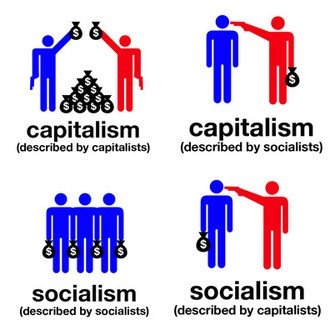
Capitalism vs. Socialism vs. Distributism
Capitalism vs. Socialism vs. Distributism by Bryan J. Neva, Sr. Since ancient times, people have bought, sold, and traded land,...
-
 Whose Ox Is Being Gored? by Bryan J. Neva, Sr. You've probably heard the old cliché, "It all depends on whose ox is...
 -
 The Parable of the Lost Coin LUKE 15 8 “Or what woman, having ten silver coins, if she loses one coin, does not light a lamp and sweep ...
 -
 What Business can Learn from Sheep Herding by Bryan J. Neva, Sr. Business can learn a lot from the business of sheep herding. Sheep her...
 -
Loving Your Enemies by Fritz Chery, Feb 15, 2015, biblereasons.com Bible verses about loving your enemies This topic is something w...
-
 Capitalism vs. Socialism vs. Distributism by Bryan J. Neva, Sr. Since ancient times, people have bought, sold, and traded land,...
 -
 Elijah by Bryan Neva “Shout louder, Baal may be meditating, or retired, or on vacation, or asleep and needs to be awoken.” The grea...
 -
 The Leash Theory of Management by Bryan J. Neva, Sr. Have you ever heard a manager use phrases like, "I have to keep them on a sho...
 -
 The Parable of the Lost Son LUKE 15: 11 And he said, “There was a man who had two sons; 12 and the younger of them said to his fat...
 -
Thing 7 Free-market policies rarely make poor countries rich by Dr. Ha Joon Chang (Book Excerpt from 23 Things They Don't Tel...
