Friday, November 11, 2016
Thursday, October 27, 2016
When Our Dreams Don't Come True
When Our Dreams Don't Come True
by Bryan J. Neva, Sr.
"Other people's interests will prosper, but your own will not succeed. Others will be listened to, but people will pay no attention to what you say. Others will ask and shall receive, but your requests will be refused. Often people will say nice things about others, but never a good word about you. Others will be promoted to positions of trust, but you will be judged unfit."
- The Imitation of Christ by Thomas à Kempis (pub cir 1418, Book 3, Chapter 49)
When we're young, most of us hope and pray that our dreams will come true, but when we're old, most of us lament over our unfulfilled hopes and dreams. We can't understand why life dealt us a such a poor hand to play, or why God said, "No!" to so many of our prayers. Despite our best efforts to be good and diligent, we just can't comprehend why some people succeed and we don't, or why some people are blessed with wealth and honor and we're not? We just don't understand why life's so unfair?
But here are some things to consider: maybe God is trying to prepare us for eternal life with Him in heaven? When He says, "No!", maybe He's trying to help us learn humility and grow in virtue? Maybe all of life is a trial by fire, a form of purgatory, or a time of testing and probation? Maybe God is trying to change us into better people: people who sincerely want God's dreams fulfilled rather than our own dreams to come true? Maybe this is not our permanent home; maybe we're just passing through on our way to the Kingdom of God?
So for those of us who are trying to enter The Kingdom of God, strive to act humbly toward others, and don't pay attention to what others do or say; don't worry if others are praised and exalted and we're not; don't worry if our dreams don't come true; just accept it with good grace and bless others. During our lives, let's be content with what pleases God and brings honor to Him, so that, whether in life or in death, God may be always glorified in us.


Sunday, October 23, 2016
Thousands of California soldiers forced to repay enlistment bonuses a decade after going to war by David S. Cloud, The Los Angeles Times
Thousands of California soldiers forced to repay enlistment bonuses a decade after going to war
by David S. Cloud, October 22, 2016, The Los Angeles Times
Short of troops to fight in Iraq and Afghanistan a decade ago, the California National Guard enticed thousands of soldiers with bonuses of $15,000 or more to reenlist and go to war.
Now the Pentagon is demanding the money back.
Nearly 10,000 soldiers, many of whom served multiple combat tours, have been ordered to repay large enlistment bonuses — and slapped with interest charges, wage garnishments and tax liens if they refuse — after audits revealed widespread overpayments by the California Guard at the height of the wars last decade.
Investigations have determined that lack of oversight allowed for widespread fraud and mismanagement by California Guard officials under pressure to meet enlistment targets.
But soldiers say the military is reneging on 10-year-old agreements and imposing severe financial hardship on veterans whose only mistake was to accept bonuses offered when the Pentagon needed to fill the ranks.
Sunday, October 16, 2016
The Centrality of Salvation by Saint Pope John Paul II
The Centrality of Salvation
by Saint Pope John Paul II (excerpts from the book Crossing the Threshold of Hope, 1994)
[T]he Enlightenment [movement] strikes at the heart of Christian soteriology, that is, [the] theological reflection on salvation and of redemption. "God so loved the world that he gave his only Son, so that everyone who believes in him might not perish but might have eternal life" (Jn 3:16). In this conversation with Nicodemus every word of Christ's response constitutes a point of contention for a mind-set born of the Enlightenment [movement].
Addressing the question, "Why is the history of salvation so complicated?" Actually, it is very simple! We can easily demonstrate its profound simplicity and wonderful internal logic by starting with the words Jesus addressed to Nicodemus. The first affirmation is: "God so loved the world." According to the Enlightenment mentality, the world does not need God's love. The world is self-sufficient. And God, in turn, is not, above all, Love. If anything, He is Intellect, an intellect that eternally knows. No one needs His intervention in the world that exists, that is self-sufficient, that is transparent to human knowledge, that is ever more free of mysteries thanks to scientific research, that is ever more an inexhaustible mine of raw materials for man-the demigod of modern technology. This is the world that must make man happy.
Christ instead says to Nicodemus: "God so loved the world that he gave his only Son, so that everyone who believes in him might not perish" (cf. Jn 3:16). In this way Jesus makes us understand that the world is not the source of man's ultimate happiness. Rather, it can become the source of his ruin. This world which appears to be a great workshop in which knowledge is developed by man, which appears as progress and civilization, as a modern system of communications, as a structure of democratic freedoms without any limitations, this world is not capable of making man happy.
When Christ speaks of the love that the Father has for the world, He merely echoes the first affirmation in the Book of Genesis which accompanies the description of creation: "God saw how good it was.... He found it very good" (Gn 1:12-31). But this affirmation in no way constitutes the absolute assurance of salvation. The world is not capable of making man happy. It is not capable of saving him from evil, in all of its types and forms-illness, epidemics, cataclysms, catastrophes, and the like. This world, with its riches and its wants, needs to be saved, to be redeemed. The world is not able to free man from suffering; specifically it is not able to free him from death.
The entire world is subject to "precariousness," as Saint Paul says in the Letter to the Romans; it is subject to corruption and mortality. Insofar as his body is concerned, so is man. Immortality is not a part of this world. It can come to man exclusively from God. This is why Christ speaks of God's love that expresses itself in the offering of His only Son, so that man "might not perish but might have eternal life" (Jn 3:16). Eternal life can be given to man only by God; it can be only His gift. It cannot be given to man by the created world. Creation-and man together with it-is subject to "futility" (cf. Rom 8:20).
"God did not send his Son into the world to condemn the world, but that the world might be saved through him" (cf. Jn 3:17). The world that the Son of man found when He became man deserved condemnation, because of the sin that had dominated all of history, beginning with the fall of our first parents. This is another point that is absolutely unacceptable to post-Enlightenment thought. It refuses to accept the reality of sin and, in particular, it refuses to accept original sin.
Saint John expresses in the words of Christ, who announced the coming of the Holy Spirit who "will convince the world in regard to sin" (cf. Jn16:8). What else can the Church do? Nevertheless, convincing the world of the existence of sin is not the same as condemning it for sinning. "God did not send his Son into the world to condemn the world, but that the world might be saved through him." Convincing the world of sin means creating the conditions for its salvation. Awareness of our own sinfulness, including that which is inherited, is the first condition for salvation; the next is the confession of this sin before God, who desires only to receive this confession so that He can save man.
To save means to embrace and lift up with redemptive love, with love that is always greater than any sin. In this regard the parable of the prodigal son is an unsurpassable paradigm. The history of salvation is very simple. And it is a history that unfolds within the earthly history of humanity, beginning with the first Adam, through the revelation of the second Adam, Jesus Christ (cf. 1 Cor 15:45), and ending with the ultimate fulfillment of the history of the world in God, when He will be "all in all" (1 Cor 15:28).
At the same time, this history embraces the life of every man. In a certain sense it is entirely contained in the parable of the prodigal son, or in the words of Christ when He addresses the adulteress: "Neither do I condemn you. Go, [and] from now on do not sin anymore" (Jn 8:11).
The history of salvation is synthesized in the fundamental observation of God's great intervention in the history of humankind. This intervention reaches its culmination in the Paschal Mystery-the Passion, Death, Resurrection, and Ascension of Christ to heaven-and is completed at Pentecost, with the descent of the Holy Spirit upon the apostles. This history, while it reveals the redemptive will of God, also reveals the mission of the Church. It is the history of every individual and the entire human family, created in the beginning and then re-created in Christ and in the Church.
Saint Augustine had a profound insight into this history when he wrote The City of God. But he was not the only one. The history of salvation continues to offer new inspiration for interpreting the history of humanity, but also confronts the problem of the meaning of man's existence.
by Saint Pope John Paul II (excerpts from the book Crossing the Threshold of Hope, 1994)
[T]he Enlightenment [movement] strikes at the heart of Christian soteriology, that is, [the] theological reflection on salvation and of redemption. "God so loved the world that he gave his only Son, so that everyone who believes in him might not perish but might have eternal life" (Jn 3:16). In this conversation with Nicodemus every word of Christ's response constitutes a point of contention for a mind-set born of the Enlightenment [movement].
Addressing the question, "Why is the history of salvation so complicated?" Actually, it is very simple! We can easily demonstrate its profound simplicity and wonderful internal logic by starting with the words Jesus addressed to Nicodemus. The first affirmation is: "God so loved the world." According to the Enlightenment mentality, the world does not need God's love. The world is self-sufficient. And God, in turn, is not, above all, Love. If anything, He is Intellect, an intellect that eternally knows. No one needs His intervention in the world that exists, that is self-sufficient, that is transparent to human knowledge, that is ever more free of mysteries thanks to scientific research, that is ever more an inexhaustible mine of raw materials for man-the demigod of modern technology. This is the world that must make man happy.
Christ instead says to Nicodemus: "God so loved the world that he gave his only Son, so that everyone who believes in him might not perish" (cf. Jn 3:16). In this way Jesus makes us understand that the world is not the source of man's ultimate happiness. Rather, it can become the source of his ruin. This world which appears to be a great workshop in which knowledge is developed by man, which appears as progress and civilization, as a modern system of communications, as a structure of democratic freedoms without any limitations, this world is not capable of making man happy.
When Christ speaks of the love that the Father has for the world, He merely echoes the first affirmation in the Book of Genesis which accompanies the description of creation: "God saw how good it was.... He found it very good" (Gn 1:12-31). But this affirmation in no way constitutes the absolute assurance of salvation. The world is not capable of making man happy. It is not capable of saving him from evil, in all of its types and forms-illness, epidemics, cataclysms, catastrophes, and the like. This world, with its riches and its wants, needs to be saved, to be redeemed. The world is not able to free man from suffering; specifically it is not able to free him from death.
The entire world is subject to "precariousness," as Saint Paul says in the Letter to the Romans; it is subject to corruption and mortality. Insofar as his body is concerned, so is man. Immortality is not a part of this world. It can come to man exclusively from God. This is why Christ speaks of God's love that expresses itself in the offering of His only Son, so that man "might not perish but might have eternal life" (Jn 3:16). Eternal life can be given to man only by God; it can be only His gift. It cannot be given to man by the created world. Creation-and man together with it-is subject to "futility" (cf. Rom 8:20).
"God did not send his Son into the world to condemn the world, but that the world might be saved through him" (cf. Jn 3:17). The world that the Son of man found when He became man deserved condemnation, because of the sin that had dominated all of history, beginning with the fall of our first parents. This is another point that is absolutely unacceptable to post-Enlightenment thought. It refuses to accept the reality of sin and, in particular, it refuses to accept original sin.
Saint John expresses in the words of Christ, who announced the coming of the Holy Spirit who "will convince the world in regard to sin" (cf. Jn16:8). What else can the Church do? Nevertheless, convincing the world of the existence of sin is not the same as condemning it for sinning. "God did not send his Son into the world to condemn the world, but that the world might be saved through him." Convincing the world of sin means creating the conditions for its salvation. Awareness of our own sinfulness, including that which is inherited, is the first condition for salvation; the next is the confession of this sin before God, who desires only to receive this confession so that He can save man.
To save means to embrace and lift up with redemptive love, with love that is always greater than any sin. In this regard the parable of the prodigal son is an unsurpassable paradigm. The history of salvation is very simple. And it is a history that unfolds within the earthly history of humanity, beginning with the first Adam, through the revelation of the second Adam, Jesus Christ (cf. 1 Cor 15:45), and ending with the ultimate fulfillment of the history of the world in God, when He will be "all in all" (1 Cor 15:28).
At the same time, this history embraces the life of every man. In a certain sense it is entirely contained in the parable of the prodigal son, or in the words of Christ when He addresses the adulteress: "Neither do I condemn you. Go, [and] from now on do not sin anymore" (Jn 8:11).
The history of salvation is synthesized in the fundamental observation of God's great intervention in the history of humankind. This intervention reaches its culmination in the Paschal Mystery-the Passion, Death, Resurrection, and Ascension of Christ to heaven-and is completed at Pentecost, with the descent of the Holy Spirit upon the apostles. This history, while it reveals the redemptive will of God, also reveals the mission of the Church. It is the history of every individual and the entire human family, created in the beginning and then re-created in Christ and in the Church.
Saint Augustine had a profound insight into this history when he wrote The City of God. But he was not the only one. The history of salvation continues to offer new inspiration for interpreting the history of humanity, but also confronts the problem of the meaning of man's existence.
Thursday, October 13, 2016
Signs that your workplace is toxic by Jennifer Davies, The San Diego Union-Tribune
Signs that your workplace is toxic
By Jennifer Davies The San Diego Union-Tribune
September 11, 2016
Whining about your workplace might not be a God-given right, but it is certainly something that we all have done at some point in our careers. And while everyone complains about their boss or coworkers, there is a difference between a less than ideal job situation and a truly toxic work environment.
Still, it can be hard to trust our instincts when it comes to the workplace. When things aren’t going right at your job, it is easy to turn inward and blame yourself. So how can you tell if it is you or your work environment that needs an adjustment? What are the signs that your workplace is more than just “meh” but actually malignant? Here are a few things to consider:
Stressed out: In this go-go world, avoiding work stress is unrealistic. But there’s a big difference between sporadic stress that comes with deadlines and the pervasive sense of fear and anxiety that is part of a toxic workplace, said Christine DiDonato, founder of Career Revolution, an employee development organization.
“All jobs come with some degree of stress,” she said. “There may be projects or short time periods that require more intense work or hours, but in a toxic environment is always that way.”
Burnout and bullying: Constant stress leads to burnout and meltdowns, said Kolby Goodman, founder of jobhuntr.com and a career coach.
“If you see a lot of people breaking down at work,” he said. “That is a very clear sign something is wrong. If you or your co-workers are berated or bullied, that’s another one.”
All that bad energy won’t just result in tears – it can also begin to affect your health, writes Amy Scholten, MPH, a health communications specialist and holistic wellness educator.
“You and your coworkers develop stress-related physical and/or emotional illnesses,” Scholten explained. “These illnesses can run the gamut from musculoskeletal problems, gastrointestinal upsets, anxiety and depression, to autoimmune diseases, cardiovascular disease, and even cancer.”
Turnover: Another clear indicator that dysfunction and darkness dwells at your workplace is constant and chronic staff turnover.
“Although there's no magic number to indicate that turnover is at a toxic level, you will, however, hear of people leaving abruptly and sometimes without having another job lined up,” DiDonato said.
Goodman said who is leaving can be as instructive as how many people are leaving.
“A big sign is that there is little or no movement in upper management,” he said. “If all the people are leaving are in middle management or lower level employees, it means it is toxic and that it’s probably not going to change.”
If that’s the case, DiDonato said, there is no fixing the situation and her advice is simple: “As soon as a good opportunity comes along, take it.”
Jennifer Davies is the assistant dean of external affairs for UCSD Extension. She can be reached at jadavies@ucsd.edu.
Whining about your workplace might not be a God-given right, but it is certainly something that we all have done at some point in our careers. And while everyone complains about their boss or coworkers, there is a difference between a less than ideal job situation and a truly toxic work environment.
Still, it can be hard to trust our instincts when it comes to the workplace. When things aren’t going right at your job, it is easy to turn inward and blame yourself. So how can you tell if it is you or your work environment that needs an adjustment? What are the signs that your workplace is more than just “meh” but actually malignant? Here are a few things to consider:
Stressed out: In this go-go world, avoiding work stress is unrealistic. But there’s a big difference between sporadic stress that comes with deadlines and the pervasive sense of fear and anxiety that is part of a toxic workplace, said Christine DiDonato, founder of Career Revolution, an employee development organization.
“All jobs come with some degree of stress,” she said. “There may be projects or short time periods that require more intense work or hours, but in a toxic environment is always that way.”
Burnout and bullying: Constant stress leads to burnout and meltdowns, said Kolby Goodman, founder of jobhuntr.com and a career coach.
“If you see a lot of people breaking down at work,” he said. “That is a very clear sign something is wrong. If you or your co-workers are berated or bullied, that’s another one.”
All that bad energy won’t just result in tears – it can also begin to affect your health, writes Amy Scholten, MPH, a health communications specialist and holistic wellness educator.
“You and your coworkers develop stress-related physical and/or emotional illnesses,” Scholten explained. “These illnesses can run the gamut from musculoskeletal problems, gastrointestinal upsets, anxiety and depression, to autoimmune diseases, cardiovascular disease, and even cancer.”
Turnover: Another clear indicator that dysfunction and darkness dwells at your workplace is constant and chronic staff turnover.
“Although there's no magic number to indicate that turnover is at a toxic level, you will, however, hear of people leaving abruptly and sometimes without having another job lined up,” DiDonato said.
Goodman said who is leaving can be as instructive as how many people are leaving.
“A big sign is that there is little or no movement in upper management,” he said. “If all the people are leaving are in middle management or lower level employees, it means it is toxic and that it’s probably not going to change.”
If that’s the case, DiDonato said, there is no fixing the situation and her advice is simple: “As soon as a good opportunity comes along, take it.”
Jennifer Davies is the assistant dean of external affairs for UCSD Extension. She can be reached at jadavies@ucsd.edu.
Saturday, October 1, 2016
Why It Pays to Treat Your Employees Well by Bryan Neva & Allen Laudenslager
Why It Pays to Treat Your Employees Well
by Bryan Neva & Allen Laudenslager
On May 4th, 1965, during the Vietnam War, President Lyndon B. Johnson gave his famous "Hearts and Minds" speech in which he said, "We must be ready to fight in Vietnam, but the ultimate victory will depend upon the hearts and minds of the people who actually live out there."
by Bryan Neva & Allen Laudenslager
 |
| President Lyndon B. Johnson |
 |
| Sergeant Rock |
 |
| Saddam Hussein |
 |
| H. Ross Perot |

Management
by leadership takes work, effort, training, and the right character. Far too many managers were successful
individual contributors before they were promoted beyond their training and abilities; their fallback is an authoritarian management style by fear and intimidation rather than by leadership and influence.
Where
did these managers learn this style? First from their parents who said “Eat all your
green beans or no dessert for you!”, then from their teachers who said, “Sit
still or you will end up in detention!”, and finally from their boss who said “Do
what I tell you or get fired!” Well if these got their attention and made them
conform, why shouldn’t they use it when they become managers?
I (Bryan) once had a manager who used a decision tree he got from some book on how to manage employees. Can you imagine using a "cookbook" approach to managing people? As ridiculous as this sounds (and believe me, I was laughing on the inside), most people promoted into management positions don't have a damn clue on how to actually lead or manage people! We've got news for you ace, leading and managing people is not easy and can't be condensed into a decision tree or a cookbook.
Given our combined decades of experience and management education and training, we're still shocked and appalled whenever we see or hear about managers and companies mistreating their employees through archaic fear and intimidation tactics when all the management research confirms that if you treat your employees well they'll produce more for you, but if you treat them poorly they won't! It's a tried and true profit strategy that has been proven for thousands of years. In fact, you don't even need academic research to prove this: it's just plain common sense for crying-out-loud!
If you think back on your own working career you'll find this to be true: the managers that treated you well you worked harder for (even when they weren't looking), but the managers who treated you poorly you did just enough to get by and not get fired while you privately looked for another job.
Most people who work in hostile working environments where they're treated poorly usually stay just long enough to find another job. The turnover in hostile working environments is usually quite high and it's a clear indicator of poor management at all levels in an organization.
So why are so many companies and managers today regressing to old, ineffective, management tactics by fear and intimidation? We believe that the financialization of corporate America has a lot to do with it. Companies are now so beholden to Wall Street to produce short-term gains at the expense of their long-term viability that they honestly don't care about the morale and wellbeing of their employees or employee turnover; they don't care about the long-term survival and productivity of their companies; they don't care about the wellbeing of their communities where they operate; they don't care about our environment; they just want to make a profit-at-any-price! And they'll (figuratively) crack the whip on the backs of their employees, throw their own mothers under the bus, or make a deal with the devil just to make Wall Street happy!
And if you'd like more proof that treating your employees well pays-off, here's a list of several articles that support our claim:
- A 2012 Business Insider article entitled, "More Proof That Treating Employees Like Humans and Not Machines Is Good for Business," found that companies that treated their employees well had higher operating profits than those that did not.
- A 2014 article in The Atlantic entitled, "A New Business Strategy: Treating Employees Well," provides a lot of anecdotal evidence that treating employees well pays-off.
- In a 2014 Co-Exist article entitled, "The Most Unusual Strike This Year Shows Why It Pays To Treat Employees Well," workers actually went on strike to save the job of their beloved CEO.
- A 2015 Huffington Post article entitled, "Are You Treating Your Employees Like People or Processes?" provides further anecdotal evidence that treating employees well pays-off.
- From an academic standpoint, a December 2015 article in the Harvard Business Review (HBR) entitled, "Proof That Positive Work Cultures Are More Productive," provides scientific evidence that treating employees well results in higher productivity and profits.
- From a marketing standpoint, a May 2016 article in AdWeek entitled, "How Treating Employees Well Boosts Brand Value," shows how companies like Chobani and Starbucks profit from having a reputation as good employers.
- Most recently, in a September 26th, 2016 New York Times article entitled, "Wells Fargo Workers Claim Retaliation for Playing By the Rules," shows that treating employees poorly and setting unrealistic goals can adversely affect the bottom line and the reputation of a company.
Friday, September 23, 2016
The Parable of the Unfaithful Servant (Luke 16:1-13) with commentary by Don Schwager
Jesus said to his disciples, “A rich man had a steward who was reported to him for squandering his property. He summoned him and said, ‘What is this I hear about you? Prepare a full account of your stewardship, because you can no longer be my steward.’
The steward said to himself, ‘What shall I do, now that my master is taking the position of steward away from me? I am not strong enough to dig and I am ashamed to beg. I know what I shall do so that, when I am removed from the stewardship, they may welcome me into their homes.’
He called in his master’s debtors one by one.
To the first he said, ‘How much do you owe my master?’
He replied, ‘One hundred measures of olive oil.’
He said to him, ‘Here is your promissory note. Sit down and quickly write one for fifty.’
Then to another the steward said, ‘And you, how much do you owe?’
He replied, ‘One hundred kors of wheat.’
The steward said to him, ‘Here is your promissory note; write one for eighty.’
And the master commended that dishonest steward for acting prudently. “For the children of this world are more prudent in dealing with their own generation than are the children of light. I tell you, make friends for yourselves with dishonest wealth, so that when it fails, you will be welcomed into eternal dwellings. The person who is trustworthy in very small matters is also trustworthy in great ones; and the person who is dishonest in very small matters is also dishonest in great ones. If, therefore, you are not trustworthy with dishonest wealth, who will trust you with true wealth? If you are not trustworthy with what belongs to another, who will give you what is yours? No servant can serve two masters. He will either hate one and love the other, or be devoted to one and despise the other. You cannot serve both God and mammon.”
-------------------------------------------------------------------------------
Commentary by Don Schwager
How can a bad person possibly give good example? Jesus obviously thought that the example of a rascal would be a perfect illustration for a spiritual lesson about the kingdom of God! What's the point of Jesus's parable? The dishonest steward is commended for his shrewdness. The original meaning of "shrewdness" is "foresight". A shrewd person grasps a critical situation with resolution and foresight. Jesus is concerned here with something more critical than a financial crisis. His concern is that we avert spiritual crisis through the exercise of faith and foresight. If Christians would only expend as much foresight and energy to spiritual matters which have eternal consequences as much as they do to earthly matters which have temporal consequences, then they would be truly better off, both in this life and in the age to come. Ambrose, a 4th century bishop said: The bosoms of the poor, the houses of widows, the mouths of children are the barns which last forever. True wealth consists not in what we keep but in what we give away. Possessions are a great responsibility. The Lord expects us to use them honestly and responsibly and to put them at his service and the service of others. We are God's servants and all that we have belongs to him. He expects us to make a good return on what he gives us. God loves generosity and he gives liberally to those who share his gifts with others. The Pharisees, however, had no room for God or others in their hearts. The gospel says they were lovers of money. Love of money and wealth crowd out love of God and love of neighbor. Jesus makes clear that our hearts must either be possessed by God's love or our hearts will be possessed by the love of something else. What does your heart most treasure?
The steward said to himself, ‘What shall I do, now that my master is taking the position of steward away from me? I am not strong enough to dig and I am ashamed to beg. I know what I shall do so that, when I am removed from the stewardship, they may welcome me into their homes.’
He called in his master’s debtors one by one.
To the first he said, ‘How much do you owe my master?’
He replied, ‘One hundred measures of olive oil.’
He said to him, ‘Here is your promissory note. Sit down and quickly write one for fifty.’
Then to another the steward said, ‘And you, how much do you owe?’
He replied, ‘One hundred kors of wheat.’
The steward said to him, ‘Here is your promissory note; write one for eighty.’
And the master commended that dishonest steward for acting prudently. “For the children of this world are more prudent in dealing with their own generation than are the children of light. I tell you, make friends for yourselves with dishonest wealth, so that when it fails, you will be welcomed into eternal dwellings. The person who is trustworthy in very small matters is also trustworthy in great ones; and the person who is dishonest in very small matters is also dishonest in great ones. If, therefore, you are not trustworthy with dishonest wealth, who will trust you with true wealth? If you are not trustworthy with what belongs to another, who will give you what is yours? No servant can serve two masters. He will either hate one and love the other, or be devoted to one and despise the other. You cannot serve both God and mammon.”
-------------------------------------------------------------------------------
Commentary by Don Schwager
How can a bad person possibly give good example? Jesus obviously thought that the example of a rascal would be a perfect illustration for a spiritual lesson about the kingdom of God! What's the point of Jesus's parable? The dishonest steward is commended for his shrewdness. The original meaning of "shrewdness" is "foresight". A shrewd person grasps a critical situation with resolution and foresight. Jesus is concerned here with something more critical than a financial crisis. His concern is that we avert spiritual crisis through the exercise of faith and foresight. If Christians would only expend as much foresight and energy to spiritual matters which have eternal consequences as much as they do to earthly matters which have temporal consequences, then they would be truly better off, both in this life and in the age to come. Ambrose, a 4th century bishop said: The bosoms of the poor, the houses of widows, the mouths of children are the barns which last forever. True wealth consists not in what we keep but in what we give away. Possessions are a great responsibility. The Lord expects us to use them honestly and responsibly and to put them at his service and the service of others. We are God's servants and all that we have belongs to him. He expects us to make a good return on what he gives us. God loves generosity and he gives liberally to those who share his gifts with others. The Pharisees, however, had no room for God or others in their hearts. The gospel says they were lovers of money. Love of money and wealth crowd out love of God and love of neighbor. Jesus makes clear that our hearts must either be possessed by God's love or our hearts will be possessed by the love of something else. What does your heart most treasure?
Wednesday, September 21, 2016
Wells Fargo CEO pummeled on Capitol Hill over multiyear scam
"Well we hate to say we told you so!" - Bryan & Allen
Wells Fargo CEO pummeled on Capitol Hill over multiyear scam
Wells Fargo CEO pummeled on Capitol Hill over multiyear scam
Wells Fargo’s longtime chief executive John Stumpf endured more than two hours of pummeling Tuesday on Capitol Hill over a scheme in which bank employees created millions of sham accounts to meet aggressive sales goals.
“I have often said that banking is based on trust and that trust was broken at Wells Fargo,” Sen. Richard C. Shelby (R-Ala.), chairman of the Senate Banking Committee, said during the hearing.
Stumpf, who has been at Wells Fargo for more than 30 years, repeatedly apologized for letting down customers. But the questioning was often tense, and Stumpf was interrupted and chastised by lawmakers for not catching the problem sooner.
“I am deeply sorry that we failed to fulfill our responsibility to our customers, to our team members, and to the American public,” Stumpf told the committee. “I have been with Wells Fargo through many challenges, none that pains me more than the one we will discuss this morning.”
The San Francisco-based bank has been in lawmakers’ crosshairs since being fined $185 million earlier this month after thousands of the bank’s employees created up to 2 million fake accounts — from credit cards to checking accounts — to meet sales goals. In some cases, bank customers faced various fees for accounts they didn’t request, or bank employees took money from an authorized account to create a fake one.
Wells Fargo fired 5,300 employees between 2011 and 2016 for the scheme, including some managers and “one area president,” Stumpf said. The bank will review whether the conduct could have occurred before 2011, he said. “We don’t want to leave any stone unturned,” Stumpf said.
But that was not enough for many members of the committee, who grilled Stumpf for details about the scheme and repeatedly expressed astonishment that senior management allowed problems to fester for so long without taking more assertive action.
In one tense exchange, Sen. Elizabeth Warren (D-Mass.) demanded that Stumpf explain why he had not offered to give up any of his compensation — he made $19 million last year — or resigned in the wake of the scandal. She noted that Stumpf repeatedly touted Well Fargo’s ability to sell more and more products to customers in quarterly calls with analysts, and then watched as investors pushed up the bank’s stock price, generating gains that increased his own holding by about $200 million over several years.
“Evidently your definition of accountable is to push the responsibility” to low-level, low-wage workers, Warren said. “It is gutless leadership. You should resign; you should give back the money.”
Stumpf stumbled while trying to respond to Warren.
Wells Fargo’s case has become a new flash point in the debate over whether, eight years after the Great Recession, U.S. regulators are doing enough to hold Wall Street accountable for bad behavior.
“There is simply no place for this kind of outrageous behavior in America,” Democratic presidential candidate Hillary Clinton said in a letter to Wells Fargo customers Tuesday. “Our economy depends on a strong and safe banking system to help keep it moving. But even after Americans spent years working hard to recover from the Great Recession, the culture of misconduct and recklessness that preceded that crisis too often persists.”
During the hearing, Stumpf faced tough questioning from lawmakers about whether the company’s top executives should return some of their bonuses over the misconduct. In particular, lawmakers took aim at Carrie Tolstedt, the former head of the company’s community banking unit.
Tolstedt was told that the company was “going in a different direction,” in part because of the misconduct discovered in her unit, Stumpf said. Tolstedt opted to retire in July. But lawmakers were peeved by reports that Tolstedt, a 27-year veteran of the bank, could leave with more than $100 million in compensation. Tolstedt and other top executives should be forced to give back some of their compensation, they said.
“So, 5,300 team members, earning perhaps $30,000 a year, have lost their jobs, while Ms. Tolstedt walks away with $100 million, give or take,” said Sen. Sherrod Brown (D-Ohio), the ranking minority-party member of the committee. “Despite firing thousands of team members, Ms. Tolstedt seemingly decided it was not important enough to alert the head of the company or the board of directors or anyone else for two years, if ever, even though you both sat on the bank’s board.”
The company’s board is reviewing whether senior executives will face “clawbacks” of their compensation, Stumpf said. Though chairman of the board, Stumpf said he is not part of that discussion, which is being handled by a compensation committee.
Stumpf told lawmakers that he learned of the misbehavior in 2013, but acknowledged the bank did not act quickly enough to remedy the problem. “I want to apologize for violating the trust our customers have invested in Wells Fargo,” Stumpf said. “And I want to apologize for not doing more sooner to address the causes of this unacceptable activity.”
Monday, September 19, 2016
In speech, Pope Francis urges co-ops to promote an 'economy of honesty'

First, the Pope said, co-operatives must continue to be “the motor that uplifts and develops the weakest parts of our local communities and civil society.”
[Note: There has been a movement in a number of U.S. states after the 2008 financial meltdown to allow for Benefit Corporations which could be a better alternative over the current forms we now have. A Benefit or B-Corporation is different from a Cooperative Corporation.]
The first priority is to establish new co-operatives, while developing existing ones, so as to create new employment opportunities, especially among youth, he said.
Second, the Pope urged the co-op movement to be a “protagonist” in proposing new welfare solutions, particularly in the area of healthcare.
As a third point, he spoke of the economy and its relationship with social justice and human dignity. Speaking of the need to “globalize solidarity,” he urged the confederation to bring co-operatives to the “existential peripheries” and to continue to be “prophetic” by “inventing new forms of co-operation.”
The Pope spoke of “a certain liberalism,” which “believes it is first necessary to produce wealth—and it does not matter how—to then promote some state redistribution policy.”
Others think it is up to a company to “bestow the crumbs of accumulated wealth” to those in need to then, in turn, “absolve themselves” of “their so-called ‘social responsibility’,” the Pope said.
“You run the risk of deluding yourself that you are doing good while, unfortunately, you continue only to do marketing,” without ever escaping the “fatal loop” of egoism, “which has the god of money at the centre,” he said.
Instead, the co-operative creates a “new type of economy” that allows “people to grow in all their potential,” socially and professionally, as well as in responsibility, hope and co-operation, he said. The Pope clarified that while he was not saying income growth is not important, it certainly “is not enough.”
Fourth, he said, the co-operative movement can exercise an important role in sustaining, facilitating and encouraging family life, by insisting on work-life balance, which would “help women to realize fully their own vocation and to put into practice their own talents.”
In this way, he said, women are “free to be always greater protagonists, whether at work or in families.”
Fifth, where few resources exist to start up new projects, the Pope urged the co-op movement to “invest well,” in particular by putting together “good resources to realize good works.” He urged more collaboration among credit unions and co-op businesses and the establishment of resources “for families to live with dignity and serenity.”
He also warned against money becoming an idol, citing St Francis of Assisi in calling it “the devil’s dung.”
“When money becomes an idol, it controls man’s choices,” he said. “It makes him a slave.”
He exhorted the co-operative movement to join the global economy to promote both "an economy of honesty" and "a healing economy." He urged them to exercise “the courage and the imagination to build a just path, so as to integrate development, justice and peace in the world.”
He concluded by calling on the members of the Catholic confederation to maintain their Catholic identity and values in their current collaboration with other co-op groups in creating a large national association.
“Live your alliance (with these other groups) as Christians, as a response to your faith and identity, without fear. Faith and identity at the base,” he said.
“And this is also a Christian call to all,” he continued off-the-cuff. “Christian values not only for ourselves. They are to be shared. Share them with those, who do not think as we do but who want the same thing that we want.”
Italy's church-based co-op movement began in the late 19th century, inspired by the encyclical Rerum Novarum, written by Pope Leo XIII. The Confederazione Cooperative Italiane was first founded in 1919. It was suppressed by the Fascist Regime and re-established in 1945.
Subscribe to:
Posts (Atom)
Featured Post
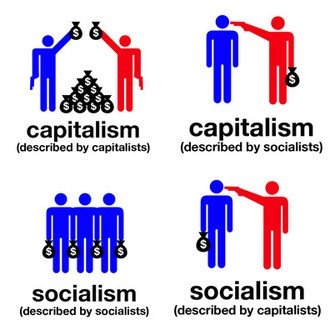
Capitalism vs. Socialism vs. Distributism
Capitalism vs. Socialism vs. Distributism by Bryan J. Neva, Sr. Since ancient times, people have bought, sold, and traded land,...