Translate

Saturday, October 1, 2016

Why It Pays to Treat Your Employees Well by Bryan Neva & Allen Laudenslager

Why It Pays to Treat Your Employees Well
by Bryan Neva & Allen Laudenslager


President Lyndon B. Johnson
On May 4th, 1965, during the Vietnam War, President Lyndon B. Johnson gave his famous "Hearts and Minds" speech in which he said, "We must be ready to fight in Vietnam, but the ultimate victory will depend upon the hearts and minds of the people who actually live out there." 

Sergeant Rock
The troops reaction to President Johnson's speech was best expressed by the Army's newspaper Stars and Stripes in their cartoon called Sergeant Rock (the quintessential hard-corps sergeant). One cartoon had him standing in full field gear holding his M-16 with the caption, “When you’ve got them by the balls, their hearts and minds will follow!" (This quote is actually attributed to President Theodore Roosevelt in 1906.)

Saddam Hussein
While humorous in a military setting, it illustrates the proverbial management dilemma of how to motivate people as it is much easier to use fear, intimidation, and force than it is to persuade and influence and ultimately win the hearts and minds of one's people as Saddam Hussein infamously illustrated in Iraq.

H. Ross Perot
Leadership implies followers and willing followers at that. Leaders are out in front with their followers behind them, while the Sergeant Rock approach is that of a sheepdog herding the unwilling. The famous Texas billionaire businessman, H. Ross Perot, summed up this dilemma quite well when he said, “Lead and inspire people. Don't try to manage and manipulate people. Inventories can be managed but people must be led."


Management by leadership takes work, effort, training, and the right character. Far too many managers were successful individual contributors before they were promoted beyond their training and abilities; their fallback is an authoritarian management style by fear and intimidation rather than by leadership and influence.

Where did these managers learn this style? First from their parents who said “Eat all your green beans or no dessert for you!”, then from their teachers who said, “Sit still or you will end up in detention!”, and finally from their boss who said “Do what I tell you or get fired!” Well if these got their attention and made them conform, why shouldn’t they use it when they become managers?

I (Bryan) once had a manager who used a decision tree he got from some book on how to manage employees. Can you imagine using a "cookbook" approach to managing people? As ridiculous as this sounds (and believe me, I was laughing on the inside), most people promoted into management positions don't have a damn clue on how to actually lead or manage people! We've got news for you ace, leading and managing people is not easy and can't be condensed into a decision tree or a cookbook.

Given our combined decades of experience and management education and training, we're still shocked and appalled whenever we see or hear about managers and companies mistreating their employees through archaic fear and intimidation tactics when all the management research confirms that if you treat your employees well they'll produce more for you, but if you treat them poorly they won't! It's a tried and true profit strategy that has been proven for thousands of years. In fact, you don't even need academic research to prove this: it's just plain common sense for crying-out-loud!

If you think back on your own working career you'll find this to be true: the managers that treated you well you worked harder for (even when they weren't looking), but the managers who treated you poorly you did just enough to get by and not get fired while you privately looked for another job.

Most people who work in hostile working environments where they're treated poorly usually stay just long enough to find another job. The turnover in hostile working environments is usually quite high and it's a clear indicator of poor management at all levels in an organization.

So why are so many companies and managers today regressing to old, ineffective, management tactics by fear and intimidation? We believe that the financialization of corporate America has a lot to do with it. Companies are now so beholden to Wall Street to produce short-term gains at the expense of their long-term viability that they honestly don't care about the morale and wellbeing of their employees or employee turnover; they don't care about the long-term survival and productivity of their companies; they don't care about the wellbeing of their communities where they operate; they don't care about our environment; they just want to make a profit-at-any-price!  And they'll (figuratively) crack the whip on the backs of their employees, throw their own mothers under the bus, or make a deal with the devil just to make Wall Street happy!

And if you'd like more proof that treating your employees well pays-off, here's a list of several articles that support our claim:

Simply put, treating your employees well is a tried and true business, organizational, productivity, and profit strategy that in the long-run pays-off big time, while treating your employees poorly is a business strategy that ultimately fails!

Friday, September 23, 2016

The Parable of the Unfaithful Servant (Luke 16:1-13) with commentary by Don Schwager

Jesus said to his disciples, “A rich man had a steward who was reported to him for squandering his property. He summoned him and said, ‘What is this I hear about you?  Prepare a full account of your stewardship, because you can no longer be my steward.’

The steward said to himself, ‘What shall I do, now that my master is taking the position of steward away from me? I am not strong enough to dig and I am ashamed to beg.  I know what I shall do so that, when I am removed from the stewardship, they may welcome me into their homes.’ 

He called in his master’s debtors one by one. 
To the first he said, ‘How much do you owe my master?’
He replied, ‘One hundred measures of olive oil.’
He said to him, ‘Here is your promissory note. Sit down and quickly write one for fifty.’


Then to another the steward said, ‘And you, how much do you owe?’
He replied, ‘One hundred kors of wheat.’
The steward said to him, ‘Here is your promissory note; write one for eighty.’


And the master commended that dishonest steward for acting prudently. “For the children of this world are more prudent in dealing with their own generation than are the children of light. I tell you, make friends for yourselves with dishonest wealth, so that when it fails, you will be welcomed into eternal dwellings. The person who is trustworthy in very small matters is also trustworthy in great ones; and the person who is dishonest in very small matters is also dishonest in great ones. If, therefore, you are not trustworthy with dishonest wealth, who will trust you with true wealth? If you are not trustworthy with what belongs to another, who will give you what is yours?  No servant can serve two masters. He will either hate one and love the other, or be devoted to one and despise the other. You cannot serve both God and mammon.”
-------------------------------------------------------------------------------
Commentary by Don Schwager 

How can a bad person possibly give good example?  Jesus obviously thought that the example of a rascal would be a perfect illustration for a spiritual lesson about the kingdom of God!  What's the point of Jesus's parable?  The dishonest steward is commended for his shrewdness.  The original meaning of "shrewdness" is "foresight".  A shrewd person grasps a critical situation with resolution and foresight.  Jesus is concerned here with something more critical than a financial crisis.  His concern is that we avert spiritual crisis through the exercise of faith and foresight.  If Christians would only expend as much foresight and energy to spiritual matters which have eternal consequences as much as they do to earthly matters which have temporal consequences, then they would be truly better off, both in this life and in the age to come. Ambrose, a 4th century bishop said: The bosoms of the poor, the houses of widows, the mouths of children are the barns which last forever. True wealth consists not in what we keep but in what we give away. Possessions are a great responsibility. The Lord expects us to use them honestly and responsibly and to put them at his service and the service of others. We are God's servants and all that we have belongs to him. He expects us to make a good return on what he gives us. God loves generosity and he gives liberally to those who share his gifts with others. The Pharisees, however, had no room for God or others in their hearts. The gospel says they were lovers of money. Love of money and wealth crowd out love of God and love of neighbor. Jesus makes clear that our hearts must either be possessed by God's love or our hearts will be possessed by the love of something else. What does your heart most treasure?

Wednesday, September 21, 2016

Wells Fargo CEO pummeled on Capitol Hill over multiyear scam

"Well we hate to say we told you so!" - Bryan & Allen

Wells Fargo CEO pummeled on Capitol Hill over multiyear scam


Wells Fargo’s longtime chief executive John Stumpf endured more than two hours of pummeling Tuesday on Capitol Hill over a scheme in which bank employees created millions of sham accounts to meet aggressive sales goals.
“I have often said that banking is based on trust and that trust was broken at Wells Fargo,” Sen. Richard C. Shelby (R-Ala.), chairman of the Senate Banking Committee, said during the hearing.
Stumpf, who has been at Wells Fargo for more than 30 years, repeatedly apologized for letting down customers. But the questioning was often tense, and Stumpf was interrupted and chastised by lawmakers for not catching the problem sooner.
“I am deeply sorry that we failed to fulfill our responsibility to our customers, to our team members, and to the American public,” Stumpf told the committee. “I have been with Wells Fargo through many challenges, none that pains me more than the one we will discuss this morning.”
The San Francisco-based bank has been in lawmakers’ crosshairs since being fined $185 million earlier this month after thousands of the bank’s employees created up to 2 million fake accounts — from credit cards to checking accounts — to meet sales goals. In some cases, bank customers faced various fees for accounts they didn’t request, or bank employees took money from an authorized account to create a fake one.
Wells Fargo fired 5,300 employees between 2011 and 2016 for the scheme, including some managers and “one area president,” Stumpf said. The bank will review whether the conduct could have occurred before 2011, he said. “We don’t want to leave any stone unturned,” Stumpf said.
But that was not enough for many members of the committee, who grilled Stumpf for details about the scheme and repeatedly expressed astonishment that senior management allowed problems to fester for so long without taking more assertive action.
In one tense exchange, Sen. Elizabeth Warren (D-Mass.) demanded that Stumpf explain why he had not offered to give up any of his compensation — he made $19 million last year — or resigned in the wake of the scandal. She noted that Stumpf repeatedly touted Well Fargo’s ability to sell more and more products to customers in quarterly calls with analysts, and then watched as investors pushed up the bank’s stock price, generating gains that increased his own holding by about $200 million over several years.
“Evidently your definition of accountable is to push the responsibility” to low-level, low-wage workers, Warren said. “It is gutless leadership. You should resign; you should give back the money.”
Stumpf stumbled while trying to respond to Warren.
Wells Fargo’s case has become a new flash point in the debate over whether, eight years after the Great Recession, U.S. regulators are doing enough to hold Wall Street accountable for bad behavior.
“There is simply no place for this kind of outrageous behavior in America,” Democratic presidential candidate Hillary Clinton said in a letter to Wells Fargo customers Tuesday. “Our economy depends on a strong and safe banking system to help keep it moving. But even after Americans spent years working hard to recover from the Great Recession, the culture of misconduct and recklessness that preceded that crisis too often persists.”
During the hearing, Stumpf faced tough questioning from lawmakers about whether the company’s top executives should return some of their bonuses over the misconduct. In particular, lawmakers took aim at Carrie Tolstedt, the former head of the company’s community banking unit.
Tolstedt was told that the company was “going in a different direction,” in part because of the misconduct discovered in her unit, Stumpf said. Tolstedt opted to retire in July. But lawmakers were peeved by reports that Tolstedt, a 27-year veteran of the bank, could leave with more than $100 million in compensation. Tolstedt and other top executives should be forced to give back some of their compensation, they said.
“So, 5,300 team members, earning perhaps $30,000 a year, have lost their jobs, while Ms. Tolstedt walks away with $100 million, give or take,” said Sen. Sherrod Brown (D-Ohio), the ranking minority-party member of the committee. “Despite firing thousands of team members, Ms. Tolstedt seemingly decided it was not important enough to alert the head of the company or the board of directors or anyone else for two years, if ever, even though you both sat on the bank’s board.”
The company’s board is reviewing whether senior executives will face “clawbacks” of their compensation, Stumpf said. Though chairman of the board, Stumpf said he is not part of that discussion, which is being handled by a compensation committee.
Stumpf told lawmakers that he learned of the misbehavior in 2013, but acknowledged the bank did not act quickly enough to remedy the problem. “I want to apologize for violating the trust our customers have invested in Wells Fargo,” Stumpf said. “And I want to apologize for not doing more sooner to address the causes of this unacceptable activity.”

Monday, September 19, 2016

In speech, Pope Francis urges co-ops to promote an 'economy of honesty'

(Vatican Radio) It was another lesson in the economic thought of Pope Francis. In an audience with members of the Confederazione Cooperative Italiane (confederation of Italian co-operatives) on Saturday [2/28/2015], Pope Francis gave the 7,000 people present five practical suggestions for their mission in the context of the current “throwaway culture.”

First, the Pope said, co-operatives must continue to be “the motor that uplifts and develops the weakest parts of our local communities and civil society.” 

[Note: There has been a movement in a number of U.S. states after the 2008 financial meltdown to allow for Benefit Corporations which could be a better alternative over the current forms we now have.  A Benefit or B-Corporation is different from a Cooperative Corporation.]

The first priority is to establish new co-operatives, while developing existing ones, so as to create new employment opportunities, especially among youth, he said.

Second, the Pope urged the co-op movement to be a “protagonist” in proposing new welfare solutions, particularly in the area of healthcare. 

As a third point, he spoke of the economy and its relationship with social justice and human dignity. Speaking of the need to “globalize solidarity,” he urged the confederation to bring co-operatives to the “existential peripheries” and to continue to be “prophetic” by “inventing new forms of co-operation.” 

The Pope spoke of “a certain liberalism,” which “believes it is first necessary to produce wealth—and it does not matter how—to then promote some state redistribution policy.”

Others think it is up to a company to “bestow the crumbs of accumulated wealth” to those in need to then, in turn, “absolve themselves” of “their so-called ‘social responsibility’,” the Pope said.

“You run the risk of deluding yourself that you are doing good while, unfortunately, you continue only to do marketing,” without ever escaping the “fatal loop” of egoism, “which has the god of money at the centre,” he said.

Instead, the co-operative creates a “new type of economy” that allows “people to grow in all their potential,” socially and professionally, as well as in responsibility, hope and co-operation, he said. The Pope clarified that while he was not saying income growth is not important, it certainly “is not enough.”

Fourth, he said, the co-operative movement can exercise an important role in sustaining, facilitating and encouraging family life, by insisting on work-life balance, which would “help women to realize fully their own vocation and to put into practice their own talents.”

In this way, he said, women are “free to be always greater protagonists, whether at work or in families.”

Fifth, where few resources exist to start up  new projects, the Pope urged the co-op movement to “invest well,” in particular by putting together “good resources to realize good works.” He urged more collaboration among credit unions and co-op businesses and the establishment of resources “for families to live with dignity and serenity.”

He also warned against money becoming an idol, citing St Francis of Assisi in calling it “the devil’s dung.”

“When money becomes an idol, it controls man’s choices,” he said. “It makes him a slave.”

He exhorted the co-operative movement to join the global economy to promote both "an economy of honesty" and "a healing economy." He urged them to exercise “the courage and the imagination to build a just path, so as to integrate development, justice and peace in the world.”

He concluded by calling on the members of the Catholic confederation to maintain their Catholic identity and values in their current collaboration with other co-op groups in creating a large national association.

“Live your alliance (with these other groups) as Christians, as a response to your faith and identity, without fear. Faith and identity at the base,” he said.

“And this is also a Christian call to all,” he continued off-the-cuff. “Christian values not only for ourselves. They are to be shared. Share them with those, who do not think as we do but who want the same thing that we want.”

Italy's church-based co-op movement began in the late 19th century, inspired by the encyclical Rerum Novarum, written by Pope Leo XIII.   The Confederazione Cooperative Italiane was first founded in 1919. It was suppressed by the Fascist Regime and re-established in 1945.

Tuesday, September 13, 2016

1 in 5 CEOs are Psychopaths, Australian study finds

In a previous article I posted: 1 in 25 Business Leaders May Be Psychopaths on June 25, 2016, I thought bad managers probably outnumber the good ones by at least 10:1.  I think this article supports my guess, so please read this article and decide for yourself. 


An Australian study has found that about one in five corporate executives are psychopaths – roughly the same rate as among prisoners. 
The study of 261 senior professionals in the United States found that 21 per cent had clinically significant levels of psychopathic traits. The rate of psychopathy in the general population is about one in a hundred.
Nathan Brooks, a forensic psychologist who conducted the study, said the findings suggested that businesses should improve their recruitment screening. 
He said recruiters tend to focus on skills rather than personality features and this has led to firms hiring “successful psychopaths” who may engage in unethical and illegal practices or have a toxic impact on colleagues.
“Typically psychopaths create a lot of chaos and generally tend to play people off against each other,” he said.
“For psychopaths,  it [corporate success] is a game and they don’t mind if they violate morals. It is about getting where they want in the company and having dominance over others.”
The global financial crisis in 2008 has prompted researchers to study workplace traits that may have allowed a corporate culture in which unethical behaviour was able to flourish.
Mr Brooks’s research, conducted with a colleague from Australia’s Bond University and a researcher from the University of San Diego, was based on a study of corporate professionals in the supply chain management industry across the US. 
The findings, presented on Tuesday at the Australian Psychological Society Congress in Melbourne, are due to be published in the European Journal of Psychology.
The researchers have been examining ways to help employers screen for potential psychopaths.
“We hope to implement our screening tool in businesses so that there’s an adequate assessment to hopefully identify this problem - to stop people sneaking through into positions in the business that can become very costly,” Mr Brooks said.

Sunday, September 4, 2016

Sticks and stones may break your bones, but words can never hurt you...unless you let them!

Sticks and stones may break your bones, but words can never hurt you...unless you let them!
by Bryan J. Neva, Sr.

What are words? They're just sound waves that travel through the air, they make vibrations on your eardrum, and are processed in your brain. Words cannot even hurt a stone. Words can only hurt you if you let them! 

If you're innocent and don't deserve someone's unkind words or rebukes, don't let it bother you, don't respond in kind, just don't say anything. But if you are guilty, use it as an opportunity to make amends with others.

If you're too eager to please others and want to be liked, or if you resent being corrected for your faults and give excuses, then the words others say will hurt you because you don't want to be despised by others. This is just silly human pride. It's impossible to please everyone, so don't even try. Rather, strive to be humble of heart and just try to please God.

When you dread being abased and humiliated for your faults, it's clear that you are not truly humble. The reason people criticize others for their faults is because they are full of self-righteousness and human pride. They look at the speck in another's eye, but don't see the log in their own eye. Don't be like them. Don't judge other's weaknesses. Don't even judge your own weaknesses. God knows all our human weaknesses and faults better than we do. He is the judge and discerner of all secrets. So let Him be the judge, and ignore what others say to you or about you! Human judgement is often erroneous, but God's judgement is always true.

Even if all the evils, which the worst human malice can invent, were said about you, what harm can they possibly do you if you pay no attention to them? They cannot take so much as one hair from your head.

God knows how everything is done in the world, and He knows both the one who inflicts injury as well as the one to whom it afflicts. Nothing happens in life without God's permission. (This is a great mystery which theologians have pondered for thousands of years, but it's quite true.) God will judge each one of us according to the words we've spoken and the deeds we have done. So if you put your efforts into just trying to please God and not others, then the words said to you or the deeds done to you won't bother you one bit. 

Saturday, September 3, 2016

Communications by Allen Laudenslager

The military rank of naval Captain carries heavy responsibilities since they are the last authority aboard a warship. A lot of their authority is a carry-over from the days of sailing ships when the ship the Captain commanded was the fastest means of communications in the world.

This meant that the Captain was often dealing with foreign governments without the ability to ask his own government for instructions. He had to be trusted to make decisions on his own. This in the days when his poor judgment could catapult his nation into war!

Communications has changed so much that a Captain now has almost instantaneous communications with his higher command and can check for instructions in real-time. The problem arises when the higher command, relying on a summary, isn’t looking at all the key factors that might be obvious to the Captain on the spot. The following Dilbert cartoon is a prime example.


Have we reached a time when communications are so simple and quick that too many of us are not doing the fundamental research and background reading that good decision making demands? Because we can quickly and easily contact subordinates, we have pulled back their scope of decision-making and restricted their ability to innovate and respond to changing conditions?

Remember that what looks like a bad decision to the person who only reads the summary might be a wise decision to someone else who has access to all the facts and is taking into account the subtleties that a summary is DESIGNED to eliminate.

I remember doing a briefing for a senior manager shortly after I had been promoted from operations to my first “staff” job at the corporate headquarters. The person I was briefing didn’t seem to get my point so I used a whiteboard to illustrate the fact that we were spending a serious amount of time and money maintaining obsolete first and second generation equipment. All the other equipment had either been upgraded or replaced with third generation equipment.

Since all the equipment was customer owned, he asked how that had happened and the answer was quite simply that some equipment had been missed during the upgrades but the contract demanded that we maintain the equipment in its existing generation.

As the conversation progressed, he asked, “why didn’t I know this” and I referred him to the memos I had been filing with my reports asking for guidance on the problem. His reply was illuminating: “I didn’t understand the impact of what you were saying.” He didn’t understand because he was too far from the action. In effect, he could only see the forest but he needed to look at the trees.

He was reading the executive summary and not diving into the supporting details as it was too much information for him. His attitude was summed up by a comment he made earlier in the briefing: “I asked you what time it is and you tell me how to make a watch!”

He did need those details to make an informed decision but his impatience with that level of detail lead him to ignore the supporting information. He also decided that he didn’t need to take the advice of the person on the spot to invest in upgrading the few pieces of equipment to save even more money on the cost of maintenance.

Using the naval Captain analogy, the person closest to the action (in this case me) had the best knowledge of the situation and the best solution.

Senior management’s job is to balance the immediate needs against the long-term needs, but (and this is a critical "but") without meeting the immediate need you may not survive to get to that long-term need.

If higher command is only focused on one aspect of the business (e.g. short-term share price) they are likely to avoid spending money on long-term elements that the person on the spot will recognize as important to the long-term survival of the business.

As we move from promoting operations people to senior management and more and more into hiring managers with deeper academic training and less industry or company experience, then the subtleties can get lost.

Can those non-operations people be effective managers? Of course, but just as the Pointy-Haired Boss in the Dilbert cartoon doesn’t have the knowledge to judge what he needs to know, the key is to trust your subject matter expert. (In this cartoon it was Dilbert.)


When that naval Captain in the age of sailing ships made that decision, he had confidence that his higher headquarters would back him up!

Featured Post

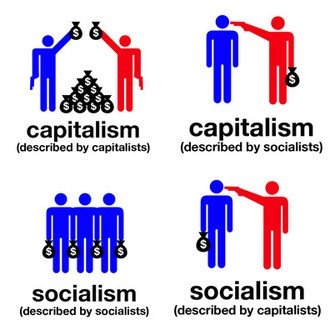
Capitalism vs. Socialism vs. Distributism

Capitalism vs. Socialism  vs. Distributism by Bryan J. Neva, Sr. Since ancient times, people have bought, sold, and traded land,...