
Tuesday, June 7, 2016
Sunday, June 5, 2016
Globalization’s True Believers Are Having Second Thoughts by Rana Foroohar
Globalization’s True Believers Are Having Second Thoughts
The IMF seems to have disavowed—or at least questioned—key parts of neoliberal economics
Early this month, the International Monetary Fund seemed to proclaim that neoliberalism, an economic philosophy that advocates allowing capital to flow where it will (and usually where labor is cheapest), may have been “oversold.” This was rather like hearing the Pope say that catechism may have been “oversold.”
The IMF, after all, has been the primary vehicle for spreading Western, neoliberal economics to emerging markets over the last 40 years. Such policies have helped pull billions of people out of poverty, mainly by opening global trade. But it’s also the reason that financial crises around the world have grown bigger and more damaging. When capital can flow in and out of countries at will, bubbles grow large enough to imperil entire economies. (Russia, a number of Latin American nations and, to a lesser extent, China have struggled to contain hot money flows in recent months.)
Three IMF researchers released a paper arguing that there was substantial evidence that free flows of global capital, and other neoliberal policies like the push for indebted nations to cut deficits quickly, may be hindering economic development. As the researchers put it “the benefits [of such policies] seem fairly difficult to establish when looking at a broad group of countries.”
Meanwhile, the costs–most notably higher inequality within countries–“hurt the level and sustainability of growth.” The brief noted that since 1980 (which is when neoliberal economics started to really take off) there have been about 150 episodes of massive capital inflows to countries, and that 20% of the time these resulted in major financial crises and recessions. That’s because a lot of the money isn’t useful investment, but rather speculative inflows from big global banks and portfolio funds.
Not surprisingly, the paper raised eyebrows. On June 2, the IMF’s chief economist Maury Obstfeld said the paper had been “widely misinterpreted.” Obstfeld framed the issue less as a rejection of neoliberal economics and more of a re-examination in the wake of the financial crisis. “I would describe the process as evolution, not revolution,” he said. Obstfeld added that the paper “does not signify a major change in the Fund’s approach.”
Still, there is good reason this struck a cord. The world’s most prominent banking institution is saying that a major part of globalization as we have known it–the free flow of capital–isn’t working properly. More over, the IMF is affirming that not all investment is created equal—and that a lot of financial flows across countries aren’t about allocating capital to where it’s most needed, but rather are part of a process of what I call “financialization,” that ends up enriching the 1%.
Both of these statements underscore the reason behind the populism we are seeing sweep around the world–from the triumph of Donald Trump, to the possibility of a “Brexit” from Europe, to the rise of nationalism in Germany, France and elsewhere. The paper’s ideas aren’t new–people like former World Bank chief economist Joseph E. Stiglitz have been arguing for years that emerging markets shouldn’t be copying neoliberal policies wholesale. But the fact that they are being heard and debated within the IMF is hugely significant.
Ultimately, it reinforces the notion that we are, as I have argued, at the end of a 40 year cycle of markets-know-best thinking. That puts us also at the beginning of a new paradigm that has yet to be defined–economically or politically.

Foroohar is an assistant managing editor at TIME and the magazine’s economics columnist. She’s the author of Makers and Takers: The Rise of Finance and the Fall of American Business.
Rana Foroohar


Monday, May 30, 2016

Sunday, May 29, 2016
King of Coal: 60 Minutes News Piece by Anderson Cooper
In case you missed it, here's a link to the 60 minutes news piece on the

King of Coal
Coal company CEO's misdemeanor conviction after a disaster that killed 29 miners is a "perversion of justice," says victim's sister

Don Blankenship
GETTY IMAGES
In December, for the first time in U.S. history, a CEO of a major company was convicted of a workplace safety crime. His name is Don Blankenship and he was once known as the "King of Coal." As we first reported earlier this year, the company he ran, Massey Energy, owned more than 40 mines in central Appalachia, including the Upper Big Branch mine, located in Montcoal, West Virginia, a state where coal is the dominant industry.
In 2010, the Upper Big Branch Mine was the site of the worst mining disaster in the U.S. in 40 years -- the kind of accident that isn't supposed to happen anymore. It was just after 3 o'clock on April 5, when a massive explosion tore through miles of underground tunnels, killing 29 miners. Prosecutors accused Don Blankenship of ignoring mine safety laws and fostering a corporate mentality that allowed the disaster to occur.
Stanley Stewart: It was tremendous. I'm no expert but just from what I know of what happened and the things that were torn up in there, it had to be like an atomic explosion.
Stanley Stewart worked at the Upper Big Branch mine for 15 years. He was 300 feet underground and had just started his shift when the explosion occurred.
Stanley Stewart: I felt a little breeze of air coming from inside. And I said "That's not right." Well then it got harder and we just took off running to the outside, and looked and you could see the whoosh just keep coming and coming. Seemed like for somewhere between two and four minutes. And one of the younger guys said "Hey, what happened?" And I said, "Buddy, the place blew up."
The explosion occurred 1,000 feet underground and nearly three miles inside the mine. These photos, taken by the Mine Safety and Health Administration, have never been seen before, and show the force of the blast. Flames moving at more than 1,500 feet-per-second shot through more than two-and-a-half miles of underground tunnels. Investigators believe the blast was caused by a spark that ignited methane gas that had built up due to inadequate ventilation. Highly flammable coal dust that had been allowed to accumulate throughout the mine fueled the explosion.
Stanley Stewart: It was an early 1900s type of explosion. Conditions should never have existed for that to take place.
Stewart was there when some of the 29 miners he'd worked side-by-side with for decades were brought to the surface.
Anderson Cooper: What kind of condition were they in?
Stanley Stewart: Their faces were very black and it smelled like dynamite. I'll never forget that smell.
The miners ranged in age from 20 to 61. Most were fathers. A third were killed instantly.
Robert Atkins, a former coal miner, and his wife Shereen, lost their son Jason, who was at the end of his shift and was heading toward the mine entrance, when he was overcome by toxic fumes.
Shereen: The coal dust was so bad that it carried, it ignited all the way (crying), and took our son's life who was almost out of the mines.
Gary Quarles, a third-generation coal miner, lost his only child Gary Wayne, who left behind two children.
Gary Quarles: They lived right beside of us. And, at times, we thought that wasn't a good thing for that to be like that. And then after he...after he got killed, I said that was a good thing.
Gary says he and his son never talked about safety issues in the mines but Gary knew all about Massey because he had worked there as well.
Gary Quarles: I knew how they operated. They didn't know nothing but to lie, cheat and outlaw. That's the way they done things.
Steve Ruby: This was a coal mine and a company that was - it's not an exaggeration to say - run as a criminal enterprise.
Assistant U.S. Attorney Steve Ruby led the prosecution against Don Blankenship along with U.S. attorney for West Virginia, Booth Goodwin.
Booth Goodwin: This could be likened to a drug organization and the defendant was the kingpin.
The defendant, Don Blankenship, had for decades been one of West Virginia's most influential and powerful figures. The CEO of Massey Energy, the largest coal producer in Appalachia, he employed 5,800 people and operated more than 40 mines. Blankenship wouldn't do an interview with 60 Minutes but prosecutors say for years he condoned and tolerated safety violations for the sake of profit.
Steve Ruby: Right up, until the time the Upper Big Branch mine blew up, that was the way the company ran, because everybody understood that was the way Don Blankenship wanted it run.
Anderson Cooper: That was the corporate mentality that he instilled in his company?
Booth Goodwin: Right. That was the culture that existed.
Anderson Cooper: Profits over safety.
Booth Goodwin: Profits over safety. He set the tone. He set the corporate culture.
Despite receiving daily reports of the high number of safety violations, prosecutors argued Blankenship did little to correct them because Upper Big Branch was a big moneymaker for Massey, earning more than $600,000-a-day, and Blankenship's pay was directly tied to every foot of coal mined. In his last three years at Massey, Blankenship's total compensation was more than $80 million.
Steve Ruby: The men and women that we talked to who worked in this mine said that it was absolutely understood, it was expected that if you worked at that mine, you were going to break the law in order to produce as much coal as possible, as fast and as cheaply as possible.
Bobbie Pauley: Everything was produce, produce, produce. It didn't make any difference of the dangers. It didn't make any difference if you had to take shortcuts. It was all about put the coal on the belt.
Bobbie Pauley was the only female miner at Upper Big Branch. She wasn't working the day of the explosion but her fiancee Boone Payne was. He died in the blast. Bobbie says she and Boone worried every day the mine was an accident waiting to happen.
Anderson Cooper: Everyone knew there were problems? Everyone knew there were safety issues?
Bobbie Pauley: Absolutely. We all knew.
Anderson Cooper: Was there enough air in the mine?
Bobbie Pauley: Our section never had air.
Ventilation is critical to mine safety because fresh air carries explosive coal dust and methane out of the area where miners work. Without adequate ventilation and proper clean up, coal dust accumulates, and is not only highly flammable, it can cause black lung disease, which most of the miners killed in the explosion were later found to have.
Stanley Stewart: A lot of times we wouldn't have any ventilation at all. You couldn't see your hand in front of your face.
Anderson Cooper: Really? You couldn't see your hand in front of your face?
Stanley Stewart: Could not see your hand in front of your face.
Anderson Cooper: And that's because there's not air - fresh air moving through?
Stanley Stewart: Right, right.
Anderson Cooper: It's all dust?
Stanley Stewart: All dust.
As part of their case, prosecutors showed jurors the pumps miners were supposed to wear to measure their intake of coal dust, but at Upper Big Branch, Bobbie Pauley says they were routinely instructed by their bosses to cheat on the test, by hanging the pumps in the fresh air.
Bobbie Pauley: So your measurements when they were tested came in compliant with the law.
Federal mine inspectors visited Upper Big Branch almost daily but prosecutors say the mine had an illegal advance warning system in place. Security guards at the entrance would relay messages to miners underground alerting them an inspector was coming.
Anderson Cooper: They would use code words?
Stanley Stewart: Yeah, bad weather.
Anderson Cooper: They would say it's bad weather?
Stanley Stewart: Uh-huh. Which means we'll let you know if he's coming your way or going some other way.
Anderson Cooper: So you would get word from up above that "OK, an inspector's coming," they would use code words, and then you would basically clean up your area to make it look right?
Stanley Stewart: Uh-huh, yeah.
Upper Big Branch was a non-union mine. Inspectors were the only people miners could turn to for help. But they say, word was out, they shouldn't be seen talking to inspectors.
Anderson Cooper: Was there fear about speaking up?
Bobbie Pauley: If you wanted a job you kept your mouth shut. Me, like a lot of other miners, mining is about the only industry - it's the biggest industry in the state of West Virginia. You have children, you want them to have. You want to provide for them. I was a single mom, you know?
Anderson Cooper: You needed that job?
Bobbie Pauley: I did the best I could (crying). We did the best we could for our families. The guys did as well.
Steve Ruby: Some of the stories that they have to tell are horrifying. Being forced to work without enough fresh air, being forced to work in water up to their necks, miles underground. Being forced to work in areas of the where the roof and the walls of the mine were falling in around them.
Prosecutors say Blankenship was aware of all these safety problems because he was a micromanager who had oversight over every aspect of Massey mines, personally approving every hire, hourly raise, and capital expenditure.
Steve Ruby: He wanted everybody in that company to know he was in charge.
Booth Goodwin: Do it Don's way. "I expect you to do exactly what I tell you to do, when I tell you to do it."
Anderson Cooper: That was his message to his managers?
Booth Goodwin: Absolutely, time and again.
Steve Ruby: And that's on tape.
Don Blankenship on tape: This game is about money.
That message was repeatedly emphasized by Don Blankenship in phone conversations with mine managers he secretly recorded on these machines he installed in his office.
Don Blankenship on tape: I want you to take a deep breath and I want you to listen carefully. You ready?
Blanchard: Yes, sir.
Don Blankenship on tape: Being a group president and or someday being a VP at Massey or president of Massey requires that you be focused on dollars.
He sent terse handwritten notes and memos to managers criticizing them for high costs and low coal production..."you have a kid to feed" he wrote, "do your job"..."pitiful." "I could kruschev you"...and..."in my opinion children could run these mines better than you all do."
Anderson Cooper: The bosses were under pressure?
Stanley Stewart: They were under tremendous pressure.
Anderson Cooper: To keep mining, keep getting coal?
Stanley Stewart: Keep mining right.
Stanley Stewart: And they carried out his orders to the T. They treated the people under them as he treated them. I mean, he talked to them like they were dogs, they in turn talked to the superintendents or the section foremen, whatever, like they were dogs and kept that pressure applied to force these people to do his will.
Blankenship's attorneys called no witnesses at trial and pointed to safety initiatives their client put in place at Upper Big Branch.
Steve Ruby: Miner after miner after miner who worked at Upper Big Branch took the stand and said that the so-called safety initiatives were a joke. That the safety program stops at the entrance to the mine. And once you're underground your job is to run coal.
After two weeks of deliberations, a federal jury came to a landmark decision, finding Don Blankenship guilty of conspiring to willfully violate mine safety laws.
Attorney Bill Taylor outside courthouse: There was never enough evidence to justify convicting Mr. Blankenship.
But they didn't find him guilty of conspiring to defraud the Mine Safety and Health Administration or of lying to investors and regulators about safety violations, felony counts which could have sent Blankenship to prison for 30 years.
Under the law, jurors aren't allowed to know whether the counts they're considering are misdemeanors or felonies. And jurors told us, they were unaware the count they convicted him of was only a misdemeanor, which carries a maximum sentence of a year in prison.
Pam: I actually thought they were all felony charges.
Anderson Cooper: When you realized -- when you heard "OK, maybe he'll serve a year in prison," what was your gut?
Pam: I was surprised
Anderson Cooper: You were surprised Pam? In what way? Surprised it was so low?
Pam: Yes.
Kevin: None of us actually knew. In terms of what the time was for the charges. I was- I was pretty pissed.
Family members of the dead miners, who attended the trial every day, were also disappointed.
Anderson Cooper: Do you think - was justice done in this verdict?
Sherry: No, no. There was no justice.
Judy Peterson lost her brother, miner Dean Jones.
Judy Peterson: As a result of the explosion, 29 people are gone. And that's a misdemeanor. That's a perversion of justice.
Steve Ruby: Do we think that a one-year sentence for what Don Blankenship has been convicted of is enough? No. We don't. But it's at least right now what the law gives us to work with.
Don Blankenship and his attorneys issued a statement to 60 Minutes denying that he was involved in any conspiracy. They claim the explosion was caused and fueled by a sudden and unexpected surge of natural gas, though three state and federal investigations found the deaths of the 29 miners were preventable, and the result of a failure of basic mine safety standards.
Anderson Cooper: Don Blankenship has said this was just an Act of God. That these kinds of things happen in coal mining.
Stanley Stewart: Well, you know, Don Blankenship, I'd like to take those words and stuff them right back down his throat because that was not an Act of God. That was man-made 100 percent.
Stanley Stewart: These men, you know, they weren't just 29 people that got killed. They were a lot of good men.
Anderson Cooper: And they deserved better than what they got?
Stanley Stewart: They deserved much better than they got.
Earlier this month, Don Blankenship began serving his one-year sentence at a federal prison in California. Blankenship's attorneys are appealing his conviction.
Tuesday, May 24, 2016
Serving Two Masters: the dichotomy of customer service by Bryan & Todd Neva
Serving Two Masters: the dichotomy of customer service
by Bryan & Todd Neva
A large hospital had just purchased an expensive imaging system that proved to be defective within a week of installation, and I had facilitated getting them a replacement system. I was just trying to do the right thing for the customer and save Philips from an embarrassing lawsuit under the state’s “lemon law.”
At that point, I had been a field service engineer with Philips Healthcare for nearly eighteen years. Managers had come and gone - seven by my
count - and over the years I received mostly positive performance evaluations.
In fact, several times I was encouraged to apply for management positions.
My customers loved me, but for some reason, this new manager
didn't think I had the company's best interest at heart. He may have
questioned my loyalty, or he may have viewed great customer service as a
dichotomy to profitability. In that way, I understand his concern. Even Jesus
said, “No one can serve two masters. Either you will hate the one and love the
other, or you will be devoted to the one and despise the other." (Matt.
6:24a)
I was telling this story to a close friend of mine, and he told
me, "That sounds like my experience. I was a finance manager embedded
in supply chain. My clients loved me, but the finance directors didn't think I
represented their agenda, so they rated me ineligible for promotion. I provided customer service to our internal clients, but in doing so I
had forgotten who signs my paycheck."
People often find themselves trapped between opposing agendas when providing customer service. I had been assigned a territory to provide on-site engineering services to hospitals and clinics. I provided great customer service through a combination of people skills, time, and resources. And I still managed to earn a healthy profit for Philips every year.
People often find themselves trapped between opposing agendas when providing customer service. I had been assigned a territory to provide on-site engineering services to hospitals and clinics. I provided great customer service through a combination of people skills, time, and resources. And I still managed to earn a healthy profit for Philips every year.
Philips extolled their high customer service ratings
when they sold their products and services, but privately they chastised us
field engineers for spending too much time and money and using too many parts
to fix imaging equipment. Philips wanted the revenue but not the
expenses. They wanted high customer satisfaction but didn't want
to pay for it. They wanted their cake and to eat it too.
On top of all this, for the previous ten years Philips had been cutting costs, and the quality and reliability of their
imaging equipment had declined dramatically. Philips was penny-wise and pound-foolish. (They lived up to their Dutch stereotype.) With the declining reliability, it would naturally cost more to service the imaging equipment.
I did have the company's best interest in mind,
but I took a long-term approach. If we didn't keep our customers happy, then
they'd stop buying our services as well as new equipment. The customers kept us in business, and ultimately
they paid our salaries.
Doctors and administrators were happy when their imaging equipment was up and running, and they were even willing to pay for expensive service contracts to minimize downtime. In fact, over my eighteen year career, my territory had been split several times due to growth. And customers were buying more imaging equipment along with multi-year service agreements. I could hardly keep up with the workload and thought I secured a job for life. My wife and I had even taken out a second mortgage and built an addition to our home. And my sales colleague used to joke that our biggest customer paid for his expensive home in an exclusive neighborhood.
Doctors and administrators were happy when their imaging equipment was up and running, and they were even willing to pay for expensive service contracts to minimize downtime. In fact, over my eighteen year career, my territory had been split several times due to growth. And customers were buying more imaging equipment along with multi-year service agreements. I could hardly keep up with the workload and thought I secured a job for life. My wife and I had even taken out a second mortgage and built an addition to our home. And my sales colleague used to joke that our biggest customer paid for his expensive home in an exclusive neighborhood.
Unfortunately, executives at Philips, like those at so many
other companies today, focus too much on short-term profitability. They seek
profit-at-any-price, even the long-term survival of their business. But that's Philips' business model: they purchase businesses that are nearing maturity,
drive out competition, and then aggressively slash costs when customers are
left with few other alternatives. Due to industry consolidation
in the medical imaging equipment industry, there are only a few companies left:
GE, Siemens, Toshiba, and Philips.
Shortly after my new regional manager officially reprimanded me,
I resigned from Philips effective on my 18th year with the company. Not only did I have one of
the highest customer satisfaction ratings in the nation (98%), I also had one
of the highest revenue producing territories (double the national average), and
the most profitable service territory in the nation (78% gross margin).
Philips won with high profits. The customers won with low equipment
down time. But I lost, as it became untenable to continue to serve two masters, particularly when one of the masters was my new boss. Within a year of my resignation, every one of my service colleagues in the region also resigned.
In the full quote by Jesus, he said, "You cannot serve both God and money." Jesus was talking about prioritization. Obviously, we should continue to use money. Jesus used money, but interestingly he gave the coin purse to the man who would betray him. That's what Jesus thought about money.
In the full quote by Jesus, he said, "You cannot serve both God and money." Jesus was talking about prioritization. Obviously, we should continue to use money. Jesus used money, but interestingly he gave the coin purse to the man who would betray him. That's what Jesus thought about money.
When we put God first in our lives, then we put other people
ahead of ourselves. We provide the best service we can to our customers because
it's the right thing to do. Even if good service reduces profits, it's still
the right thing to do.
Fortunately, good service can be a win-win-win for companies, customers, and their service providers. We just need to get corporate executives to see past the next quarterly earnings report.
Fortunately, good service can be a win-win-win for companies, customers, and their service providers. We just need to get corporate executives to see past the next quarterly earnings report.
Saturday, May 21, 2016
The Dangerous Rise of Populism by Albert Wenger (http://continuations.com/)
The Dangerous Rise of Populism
My book World After Capital argues that we are living in a dangerous time of transition: industrial capitalism is breaking down and we don’t yet have a viable alternative. Incumbent politicians are still clinging to fixing the existing system while insurgent populists are arguing for big changes. This to a large degree explains the scary rise of populism we are seeing around the world and in the United States.
Populist leaders have come to power around the world in recent years, such as Putin in Russia, Erdogan in Turkey and most recently Duterte in the Philippines. Many of them share the same backwards fundamental characteristics such as re-emphasizing the nation state, being anti-globalization and anti-science, cracking down on minorities, usurping personal power and rolling back democratic institutions.
Here in the United States, Donald Trump has been tapping into the frustrations and anxieties of those who feel left behind by the economic and social changes that are resulting from the breakdown of industrial capitalism. He is providing a resonant message with “Make America Great Again” and his proclamations are similar to populists around the world (nationalist, anti-science, anti-minority, pro personal power).
What continues to be missing is an alternative narrative. Hillary Clinton is uninspiring as a candidate because she stands squarely for the idea that small tweaks to the existing system of industrial capitalism are all that is needed. Many people clearly see it differently, which also accounts for the popularity of Bernie Sanders. Unfortunately Sanders too is in his own way a populist who wants to go back to the past, in his case the socialist models of Europe (just as those are breaking down).
We in technology mostly live in a bubble where everything is getting better (and faster and cheaper). We see the breakthroughs in technology from machine learning to CRISPR and ignore the extraordinary powder keg of frustration that is building up around us (or worse: claim that there is no reason for anyone to be frustrated).
This is why I have been writing World After Capital. My goal is to provide an alternative narrative. One that doesn’t revert to easy and dangerous populism (whether right or left) but points a way forward into a knowledge society.
Thursday, May 12, 2016
A Dirty Little Secret About Capitalism
A Dirty Little Secret About Capitalism
by Bryan J. Neva, Sr.
The Eastman Kodak Company, the iconic photography company started by George Eastman in 1880, has been in business for 136 years. In its heydays it had over 85% of the market share for the U.S. camera and film business, over $10 billion in annual sales, and employed over 145,000 people worldwide. But by 2012 it was in bankruptcy, and today Kodak is a shell of its former self. Despite inventing the digital camera in 1975, Kodak failed because it didn't transition to digital photography soon enough. And by the time Kodak finally did get into the digital photography business, it's competitors were decades ahead technologically.

A dirty little secret about capitalism is that, despite the best efforts of business managers, employees, and governments, all businesses will eventually fail! Like people, plants, and animals, nothing lasts forever. And Kodak is just one example of the millions and millions of businesses small and large that were born, lived, prospered, declined, and eventually died. This sobering fact probably keeps most business managers awake at night.
All of us know that our lifespans are finite; so why do business managers run their companies as if they were going to live forever? One of the longest surviving corporations, the British East India Company (which ironically owned the ship that was the guest-of-honor at the Boston Tea Party in 1773), only lived for 274 years!
Most normal people want to live, to love, to learn, and to leave a lasting legacy for their loved ones, their employers, and their community after they pass on. Since we all know we're not going to live forever, most of us do our best to raise healthy, well adjusted children so that they can just maybe do a little bit better than we did, and just maybe make the world a little bit better place to live in. And since we all know we're not going to work forever, most of us try to be good workers in order to make the companies we work for a little better after we leave. And finally, most of us try to be good, law-abiding citizens in order to make our communities a little bit better place to live in after we're gone.
Companies should be more like normal people who know they're not going to live forever; so they should strive to be more paternalistic and leave a lasting legacy with their employees, their families, and their communities after they're gone. And in doing so, just maybe make our world a little bit better place to live in.
by Bryan J. Neva, Sr.
The Eastman Kodak Company, the iconic photography company started by George Eastman in 1880, has been in business for 136 years. In its heydays it had over 85% of the market share for the U.S. camera and film business, over $10 billion in annual sales, and employed over 145,000 people worldwide. But by 2012 it was in bankruptcy, and today Kodak is a shell of its former self. Despite inventing the digital camera in 1975, Kodak failed because it didn't transition to digital photography soon enough. And by the time Kodak finally did get into the digital photography business, it's competitors were decades ahead technologically.

A dirty little secret about capitalism is that, despite the best efforts of business managers, employees, and governments, all businesses will eventually fail! Like people, plants, and animals, nothing lasts forever. And Kodak is just one example of the millions and millions of businesses small and large that were born, lived, prospered, declined, and eventually died. This sobering fact probably keeps most business managers awake at night.
All of us know that our lifespans are finite; so why do business managers run their companies as if they were going to live forever? One of the longest surviving corporations, the British East India Company (which ironically owned the ship that was the guest-of-honor at the Boston Tea Party in 1773), only lived for 274 years!
Most normal people want to live, to love, to learn, and to leave a lasting legacy for their loved ones, their employers, and their community after they pass on. Since we all know we're not going to live forever, most of us do our best to raise healthy, well adjusted children so that they can just maybe do a little bit better than we did, and just maybe make the world a little bit better place to live in. And since we all know we're not going to work forever, most of us try to be good workers in order to make the companies we work for a little better after we leave. And finally, most of us try to be good, law-abiding citizens in order to make our communities a little bit better place to live in after we're gone.
Companies should be more like normal people who know they're not going to live forever; so they should strive to be more paternalistic and leave a lasting legacy with their employees, their families, and their communities after they're gone. And in doing so, just maybe make our world a little bit better place to live in.
American Capitalism’s Great Crisis by Rana Foroohar TIME May 12, 2016
American Capitalism's Great Crisis
by Rana Foroohar

American Capitalism’s Great Crisis
// The Curious Capitalist
How Wall Street is choking our economy and how to fix it
Over the past few decades, finance has turned away from this traditional role. Academic research shows that only a fraction of all the money washing around the financial markets these days actually makes it to Main Street businesses. “The intermediation of household savings for productive investment in the business sector—the textbook description of the financial sector—constitutes only a minor share of the business of banking today,” according to academics Oscar Jorda, Alan Taylor and Moritz Schularick, who’ve studied the issue in detail. By their estimates and others, around 15% of capital coming from financial institutions today is used to fund business investments, whereas it would have been the majority of what banks did earlier in the 20th century.
This represents more than just millennials not minding the label “socialist” or disaffected middle-aged Americans tiring of an anemic recovery. This is a majority of citizens being uncomfortable with the country’s economic foundation—a system that over hundreds of years turned a fledgling society of farmers and prospectors into the most prosperous nation in human history. To be sure, polls measure feelings, not hard market data. But public sentiment reflects day-to-day economic reality. And the data (more on that later) shows Americans have plenty of concrete reasons to question their system.
This crisis of faith has had no more severe expression than the 2016 presidential campaign, which has turned on the questions of who, exactly, the system is working for and against, as well as why eight years and several trillions of dollars of stimulus on from the financial crisis, the economy is still growing so slowly. All the candidates have prescriptions: Sanders talks of breaking up big banks; Trump says hedge funders should pay higher taxes; Clinton wants to strengthen existing financial regulation. In Congress, Republican House Speaker Paul Ryan remains committed to less regulation.
All of them are missing the point. America’s economic problems go far beyond rich bankers, too-big-to-fail financial institutions, hedge-fund billionaires, offshore tax avoidance or any particular outrage of the moment. In fact, each of these is symptomatic of a more nefarious condition that threatens, in equal measure, the very well-off and the very poor, the red and the blue. The U.S. system of market capitalism itself is broken. That problem, and what to do about it, is at the center of my book Makers and Takers: The Rise of Finance and the Fall of American Business, a three-year research and reporting effort from which this piece is adapted.
To understand how we got here, you have to understand the relationship between capital markets—meaning the financial system—and businesses. From the creation of a unified national bond and banking system in the U.S. in the late 1790s to the early 1970s, finance took individual and corporate savings and funneled them into productive enterprises, creating new jobs, new wealth and, ultimately, economic growth. Of course, there were plenty of blips along the way (most memorably the speculation leading up to the Great Depression, which was later curbed by regulation). But for the most part, finance—which today includes everything from banks and hedge funds to mutual funds, insurance firms, trading houses and such—essentially served business. It was a vital organ but not, for the most part, the central one.
Over the past few decades, finance has turned away from this traditional role. Academic research shows that only a fraction of all the money washing around the financial markets these days actually makes it to Main Street businesses. “The intermediation of household savings for productive investment in the business sector—the textbook description of the financial sector—constitutes only a minor share of the business of banking today,” according to academics Oscar Jorda, Alan Taylor and Moritz Schularick, who’ve studied the issue in detail. By their estimates and others, around 15% of capital coming from financial institutions today is used to fund business investments, whereas it would have been the majority of what banks did earlier in the 20th century.
“The trend varies slightly country by country, but the broad direction is clear,” says Adair Turner, a former British banking regulator and now chairman of the Institute for New Economic Thinking, a think tank backed by George Soros, among others. “Across all advanced economies, and the United States and the U.K. in particular, the role of the capital markets and the banking sector in funding new investment is decreasing.” Most of the money in the system is being used for lending against existing assets such as housing, stocks and bonds.
To get a sense of the size of this shift, consider that the financial sector now represents around 7% of the U.S. economy, up from about 4% in 1980. Despite currently taking around 25% of all corporate profits, it creates a mere 4% of all jobs. Trouble is, research by numerous academics as well as institutions like the Bank for International Settlements and the International Monetary Fund shows that when finance gets that big, it starts to suck the economic air out of the room. In fact, finance starts having this adverse effect when it’s only half the size that it currently is in the U.S. Thanks to these changes, our economy is gradually becoming “a zero-sum game between financial wealth holders and the rest of America,” says former Goldman Sachs banker Wallace Turbeville, who runs a multiyear project on the rise of finance at the New York City—based nonprofit Demos.
It’s not just an American problem, either. Most of the world’s leading market economies are grappling with aspects of the same disease. Globally, free-market capitalism is coming under fire, as countries across Europe question its merits and emerging markets like Brazil, China and Singapore run their own forms of state-directed capitalism. An ideologically broad range of financiers and elite business managers—Warren Buffett, BlackRock’s Larry Fink, Vanguard’s John Bogle, McKinsey’s Dominic Barton, Allianz’s Mohamed El-Erian and others—have started to speak out publicly about the need for a new and more inclusive type of capitalism, one that also helps businesses make better long-term decisions rather than focusing only on the next quarter. The Pope has become a vocal critic of modern market capitalism, lambasting the “idolatry of money and the dictatorship of an impersonal economy” in which “man is reduced to one of his needs alone: consumption.”
During my 23 years in business and economic journalism, I’ve long wondered why our market system doesn’t serve companies, workers and consumers better than it does. For some time now, finance has been thought by most to be at the very top of the economic hierarchy, the most aspirational part of an advanced service economy that graduated from agriculture and manufacturing. But research shows just how the unintended consequences of this misguided belief have endangered the very system America has prided itself on exporting around the world.
America’s economic illness has a name: financialization. It’s an academic term for the trend by which Wall Street and its methods have come to reign supreme in America, permeating not just the financial industry but also much of American business. It includes everything from the growth in size and scope of finance and financial activity in the economy; to the rise of debt-fueled speculation over productive lending; to the ascendancy of shareholder value as the sole model for corporate governance; to the proliferation of risky, selfish thinking in both the private and public sectors; to the increasing political power of financiers and the CEOs they enrich; to the way in which a “markets know best” ideology remains the status quo. Financialization is a big, unfriendly word with broad, disconcerting implications.
University of Michigan professor Gerald Davis, one of the pre-eminent scholars of the trend, likens financialization to a “Copernican revolution” in which business has reoriented its orbit around the financial sector. This revolution is often blamed on bankers. But it was facilitated by shifts in public policy, from both sides of the aisle, and crafted by the government leaders, policymakers and regulators entrusted with keeping markets operating smoothly. Greta Krippner, another University of Michigan scholar, who has written one of the most comprehensive books on financialization, believes this was the case when financialization began its fastest growth, in the decades from the late 1970s onward. According to Krippner, that shift encompasses Reagan-era deregulation, the unleashing of Wall Street and the rise of the so-called ownership society that promoted owning property and further tied individual health care and retirement to the stock market.
The changes were driven by the fact that in the 1970s, the growth that America had enjoyed following World War II began to slow. Rather than make tough decisions about how to bolster it (which would inevitably mean choosing among various interest groups), politicians decided to pass that responsibility to the financial markets. Little by little, the Depression-era regulation that had served America so well was rolled back, and finance grew to become the dominant force that it is today. The shifts were bipartisan, and to be fair they often seemed like good ideas at the time; but they also came with unintended consequences. The Carter-era deregulation of interest rates—something that was, in an echo of today’s overlapping left-and right-wing populism, supported by an assortment of odd political bedfellows from Ralph Nader to Walter Wriston, then head of Citibank—opened the door to a spate of financial “innovations” and a shift in bank function from lending to trading. Reaganomics famously led to a number of other economic policies that favored Wall Street. Clinton-era deregulation, which seemed a path out of the economic doldrums of the late 1980s, continued the trend. Loose monetary policy from the Alan Greenspan era onward created an environment in which easy money papered over underlying problems in the economy, so much so that it is now chronically dependent on near-zero interest rates to keep from falling back into recession.
This sickness, not so much the product of venal interests as of a complex and long-term web of changes in government and private industry, now manifests itself in myriad ways: a housing market that is bifurcated and dependent on government life support, a retirement system that has left millions insecure in their old age, a tax code that favors debt over equity. Debt is the lifeblood of finance; with the rise of the securities-and-trading portion of the industry came a rise in debt of all kinds, public and private. That’s bad news, since a wide range of academic research shows that rising debt and credit levels stoke financial instability. And yet, as finance has captured a greater and greater piece of the national pie, it has, perversely, all but ensured that debt is indispensable to maintaining any growth at all in an advanced economy like the U.S., where 70% of output is consumer spending. Debt-fueled finance has become a saccharine substitute for the real thing, an addiction that just gets worse. (The amount of credit offered to American consumers has doubled in real dollars since the 1980s, as have the fees they pay to their banks.)
As the economist Raghuram Rajan, one of the most prescient seers of the 2008 financial crisis, argues, credit has become a palliative to address the deeper anxieties of downward mobility in the middle class. In his words, “let them eat credit” could well summarize the mantra of the go-go years before the economic meltdown. And things have only deteriorated since, with global debt levels $57 trillion higher than they were in 2007.
The rise of finance has also distorted local economies. It’s the reason rents are rising in some communities where unemployment is still high. America’s housing market now favors cash buyers, since banks are still more interested in making profits by trading than by the traditional role of lending out our savings to people and businesses looking to make longterm investments (like buying a house), ensuring that younger people can’t get on the housing ladder. One perverse result: Blackstone, a private-equity firm, is currently the largest single-family-home landlord in America, since it had the money to buy properties up cheap in bulk following the financial crisis. It’s at the heart of retirement insecurity, since fees from actively managed mutual funds “are likely to confiscate as much as 65% or more of the wealth that … investors could otherwise easily earn,” as Vanguard founder Bogle testified to Congress in 2014.
It’s even the reason companies in industries from autos to airlines are trying to move into the business of finance themselves. American companies across every sector today earn five times the revenue from financial activities—investing, hedging, tax optimizing and offering financial services, for example—that they did before 1980. Traditional hedging by energy and transport firms, for example, has been overtaken by profit-boosting speculation in oil futures, a shift that actually undermines their core business by creating more price volatility. Big tech companies have begun underwriting corporate bonds the way Goldman Sachs does. And top M.B.A. programs would likely encourage them to do just that; finance has become the center of all business education.
Washington, too, is so deeply tied to the ambassadors of the capital markets—six of the 10 biggest individual political donors this year are hedge-fund barons—that even well-meaning politicians and regulators don’t see how deep the problems are. When I asked one former high-level Obama Administration Treasury official back in 2013 why more stakeholders aside from bankers hadn’t been consulted about crafting the particulars of Dodd-Frank financial reform (93% of consultation on the Volcker Rule, for example, was taken with the financial industry itself), he said, “Who else should we have talked to?” The answer—to anybody not profoundly influenced by the way finance thinks—might have been the people banks are supposed to lend to, or the scholars who study the capital markets, or the civic leaders in communities decimated by the financial crisis.
Of course, there are other elements to the story of America’s slow-growth economy, including familiar trends from globalization to technology-related job destruction. These are clearly massive challenges in their own right. But the single biggest unexplored reason for long-term slower growth is that the financial system has stopped serving the real economy and now serves mainly itself. A lack of real fiscal action on the part of politicians forced the Fed to pump $4.5 trillion in monetary stimulus into the economy after 2008. This shows just how broken the model is, since the central bank’s best efforts have resulted in record stock prices (which enrich mainly the wealthiest 10% of the population that owns more than 80% of all stocks) but also a lackluster 2% economy with almost no income growth.
Now, as many top economists and investors predict an era of much lower asset-price returns over the next 30 years, America’s ability to offer up even the appearance of growth—via financially oriented strategies like low interest rates, more and more consumer credit, tax-deferred debt financing for businesses, and asset bubbles that make people feel richer than we really are, until they burst—is at an end.
This pinch is particularly evident in the tumult many American businesses face. Lending to small business has fallen particularly sharply, as has the number of startup firms. In the early 1980s, new companies made up half of all U.S. businesses. For all the talk of Silicon Valley startups, the number of new firms as a share of all businesses has actually shrunk. From 1978 to 2012 it declined by 44%, a trend that numerous researchers and even many investors and businesspeople link to the financial industry’s change in focus from lending to speculation. The wane in entrepreneurship means less economic vibrancy, given that new businesses are the nation’s foremost source of job creation and GDP growth. Buffett summed it up in his folksy way: “You’ve now got a body of people who’ve decided they’d rather go to the casino than the restaurant” of capitalism.
In lobbying for short-term share-boosting management, finance is also largely responsible for the drastic cutback in research-and-development outlays in corporate America, investments that are seed corn for future prosperity. Take share buybacks, in which a company—usually with some fanfare—goes to the stock market to purchase its own shares, usually at the top of the market, and often as a way of artificially bolstering share prices in order to enrich investors and executives paid largely in stock options. Indeed, if you were to chart the rise in money spent on share buybacks and the fall in corporate spending on productive investments like R&D, the two lines make a perfect X. The former has been going up since the 1980s, with S&P 500 firms now spending $1 trillion a year on buybacks and dividends—equal to about 95% of their net earnings—rather than investing that money back into research, product development or anything that could contribute to long-term company growth. No sector has been immune, not even the ones we think of as the most innovative. Many tech firms, for example, spend far more on share-price boosting than on R&D as a whole. The markets penalize them when they don’t. One case in point: back in March 2006, Microsoft announced major new technology investments, and its stock fell for two months. But in July of that same year, it embarked on $20 billion worth of stock buying, and the share price promptly rose by 7%. This kind of twisted incentive for CEOs and corporate officers has only grown since.
As a result, business dynamism, which is at the root of economic growth, has suffered. The number of new initial public offerings (IPOs) is about a third of what it was 20 years ago. True, the dollar value of IPOs in 2014 was $74.4 billion, up from $47.1 billion in 1996. (The median IPO rose to $96 million from $30 million during the same period.) This may show investors want to make only the surest of bets, which is not necessarily the sign of a vibrant market. But there’s another, more disturbing reason: firms simply don’t want to go public, lest their work become dominated by playing by Wall Street’s rules rather than creating real value.
An IPO—a mechanism that once meant raising capital to fund new investment—is likely today to mark not the beginning of a new company’s greatness, but the end of it. According to a Stanford University study, innovation tails off by 40% at tech companies after they go public, often because of Wall Street pressure to keep jacking up the stock price, even if it means curbing the entrepreneurial verve that made the company hot in the first place.
A flat stock price can spell doom. It can get CEOs canned and turn companies into acquisition fodder, which often saps once innovative firms. Little wonder, then, that business optimism, as well as business creation, is lower than it was 30 years ago, or that wages are flat and inequality growing. Executives who receive as much as 82% of their compensation in stock naturally make shorter-term business decisions that might undermine growth in their companies even as they raise the value of their own options.
It’s no accident that corporate stock buybacks, corporate pay and the wealth gap have risen concurrently over the past four decades. There are any number of studies that illustrate this type of intersection between financialization and inequality. One of the most striking was by economists James Galbraith and Travis Hale, who showed how during the late 1990s, changing income inequality tracked the go-go Nasdaq stock index to a remarkable degree.
Recently, this pattern has become evident at a number of well-known U.S. companies. Take Apple, one of the most successful over the past 50 years. Apple has around $200 billion sitting in the bank, yet it has borrowed billions of dollars cheaply over the past several years, thanks to superlow interest rates (themselves a response to the financial crisis) to pay back investors in order to bolster its share price. Why borrow? In part because it’s cheaper than repatriating cash and paying U.S. taxes. All the financial engineering helped boost the California firm’s share price for a while. But it didn’t stop activist investor Carl Icahn, who had manically advocated for borrowing and buybacks, from dumping the stock the minute revenue growth took a turn for the worse in late April.
It is perhaps the ultimate irony that large, rich companies like Apple are most involved with financial markets at times when they don’t need any financing. Top-tier U.S. businesses have never enjoyed greater financial resources. They have a record $2 trillion in cash on their balance sheets—enough money combined to make them the 10th largest economy in the world. Yet in the bizarre order that finance has created, they are also taking on record amounts of debt to buy back their own stock, creating what may be the next debt bubble to burst.
You and I, whether we recognize it or not, are also part of a dysfunctional ecosystem that fuels short-term thinking in business. The people who manage our retirement money—fund managers working for asset-management firms—are typically compensated for delivering returns over a year or less. That means they use their financial clout (which is really our financial clout in aggregate) to push companies to produce quick-hit results rather than execute long-term strategies. Sometimes pension funds even invest with the activists who are buying up the companies we might work for—and those same activists look for quick cost cuts and potentially demand layoffs.
It’s a depressing state of affairs, no doubt. Yet America faces an opportunity right now: a rare second chance to do the work of refocusing and right-sizing the financial sector that should have been done in the years immediately following the 2008 crisis. And there are bright spots on the horizon.
Despite the lobbying power of the financial industry and the vested interests both in Washington and on Wall Street, there’s a growing push to put the financial system back in its rightful place, as a servant of business rather than its master. Surveys show that the majority of Americans would like to see the tax system reformed and the government take more direct action on job creation and poverty reduction, and address inequality in a meaningful way. Each candidate is crafting a message around this, which will keep the issue front and center through November.
The American public understands just how deeply and profoundly the economic order isn’t working for the majority of people. The key to reforming the U.S. system is comprehending why it isn’t working.
Remooring finance in the real economy isn’t as simple as splitting up the biggest banks (although that would be a good start). It’s about dismantling the hold of financial-oriented thinking in every corner of corporate America. It’s about reforming business education, which is still permeated with academics who resist challenges to the gospel of efficient markets in the same way that medieval clergy dismissed scientific evidence that might challenge the existence of God. It’s about changing a tax system that treats one-year investment gains the same as longer-term ones, and induces financial institutions to push overconsumption and speculation rather than healthy lending to small businesses and job creators. It’s about rethinking retirement, crafting smarter housing policy and restraining a money culture filled with lobbyists who violate America’s essential economic principles.
It’s also about starting a bigger conversation about all this, with a broader group of stakeholders. The structure of American capital markets and whether or not they are serving business is a topic that has traditionally been the sole domain of “experts”—the financiers and policymakers who often have a self-interested perspective to push, and who do so in complicated language that keeps outsiders out of the debate. When it comes to finance, as with so many issues in a democratic society, complexity breeds exclusion.
Finding solutions won’t be easy. There are no silver bullets, and nobody really knows the perfect model for a high-functioning, advanced market system in the 21st century. But capitalism’s legacy is too long, and the well-being of too many people is at stake, to do nothing in the face of our broken status quo. Neatly packaged technocratic tweaks cannot fix it. What is required now is lifesaving intervention.
Crises of faith like the one American capitalism is currently suffering can be a good thing if they lead to re-examination and reaffirmation of first principles. The right question here is in fact the simplest one: Are financial institutions doing things that provide a clear, measurable benefit to the real economy? Sadly, the answer at the moment is mostly no. But we can change things. Our system of market capitalism wasn’t handed down, in perfect form, on stone tablets. We wrote the rules. We broke them. And we can fix them.

Foroohar is an assistant managing editor at TIME and the magazine’s economics columnist. She’s the author of Makers and Takers: The Rise of Finance and the Fall of American Business.
Subscribe to:
Posts (Atom)
Featured Post
Capitalism vs. Socialism vs. Distributism
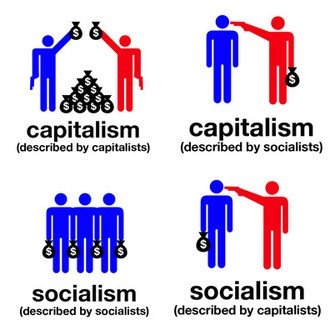
Capitalism vs. Socialism vs. Distributism by Bryan J. Neva, Sr. Since ancient times, people have bought, sold, and traded land,...
-
 Whose Ox Is Being Gored? by Bryan J. Neva, Sr. You've probably heard the old cliché, "It all depends on whose ox is...
 -
 The Parable of the Lost Coin LUKE 15 8 “Or what woman, having ten silver coins, if she loses one coin, does not light a lamp and sweep ...
 -
 What Business can Learn from Sheep Herding by Bryan J. Neva, Sr. Business can learn a lot from the business of sheep herding. Sheep her...
 -
Loving Your Enemies by Fritz Chery, Feb 15, 2015, biblereasons.com Bible verses about loving your enemies This topic is something w...
-
 Capitalism vs. Socialism vs. Distributism by Bryan J. Neva, Sr. Since ancient times, people have bought, sold, and traded land,...
 -
 Elijah by Bryan Neva “Shout louder, Baal may be meditating, or retired, or on vacation, or asleep and needs to be awoken.” The grea...
 -
 The Leash Theory of Management by Bryan J. Neva, Sr. Have you ever heard a manager use phrases like, "I have to keep them on a sho...
 -
 The Parable of the Lost Son LUKE 15: 11 And he said, “There was a man who had two sons; 12 and the younger of them said to his fat...
 -
Thing 7 Free-market policies rarely make poor countries rich by Dr. Ha Joon Chang (Book Excerpt from 23 Things They Don't Tel...
