Translate

Saturday, January 23, 2016

The Game of Chess

The Game of Chess
by Bryan J. Neva, Sr.  (Scene from the 2015 CBS Television series "Person of Interest", Season 4, Episode 11, "If-Then-Else")


Harold Finch sits alone staring at a chess board of unmoved chess pieces on a warm fall afternoon in 2003 in Central Park, New York.

"Hey, Man. So you wanna play or what?" a thirty-something black man walks up to him and asks.

"Oh, that's very kind of you, but I'm playing with a friend." Finch answers.

"You've been sitting here alone for hours, dude." the black man retorts.

"My friend is a little shy." Finch answers, "And somewhat indecisive." Finch exclaims.

"I thought you wanted me to teach you how to play?" Finch asks the Machine. "Each possible move represents a different game; a different universe in which you make a better move. By the second move, there are 72,084 possible games; by the third, 9 million; by the fourth..." Finch's phone vibrates with a message that reads, "318,000,000,000."

"There are more possible games of chess than there are atoms in the universe. No one could possibly predict them all, even you." Finch tells the Machine. "Which means that that first move can be terrifying.  It's the furthest point from the end of the game, there's a virtually infinite sea of possibilities between you and the other side. But it also means that if you make a mistake, there's a nearly infinite amount of ways to fix it. So you should simply relax and play."

An hour or so passes as Finch and the Machine continue to play chess.

"How many moves did you consider that time?" Finch asks the Machine. His phone vibrates and the message reads, "47,035."

"That's good. You're paring them down, concentrating on the most aggressive possible moves." Finch's phone vibrates again and he moves a chess piece. "I didn't see that." Finch says.

"You like the Queen, don't you?" Finch asks the Machine as he picks up the White Queen chess piece. "She can move in any direction targeting anything. Wasn't always the case though. She used to be one of weakest pieces. They played chess in the Royal Court of Spain in the 15th century. Queen Isabella was offended. She asked her advisers if they thought her that feeble. Their response was to make her the most powerful piece in the game."

Finch's phone vibrates. The message reads, "Qf7." Finch picks up the White Queen and moves it.

"You have to be careful though. Because in chess, the more powerful a piece is, the more useful they are. Not just for winning..." Finch's phone vibrates, and he moves more pieces. "...but to be used for sacrifice. As a trick." Finch's phone vibrates again as he continues to move chess pieces around the board.

"How many moves did you consider that time?" Finch asks the Machine as his phone vibrates; the message reads, "647,000."

"A second is like an infinity to you, isn't it?" Finch asks the Machine. "You can take the time to consider everything. Or almost everything. I'm afraid you missed it." Finch moves his chess piece to capture the White King and win the game against the Machine.

An hour or so passes as Finch and the Machine continue to play chess. Finch's phone vibrates and the message reads, "Checkmate."

"Yes, yes, you needn't rub it in. One afternoon and you're a grandmaster." Finch tells the Machine. "Mind you, you'll encounter far more capable opponents than me if you go looking." Finch's phone vibrates and the message reads, "Once Again?"

"No. I don't think so." Finch answers. "You asked me to teach you chess and I've done that. It's a useful mental exercise. And through the years, many thinkers have been fascinated by it. But I don't enjoy playing. Do you know why not?" Finch asks the Machine. His phone vibrates. The message reads, "No."

Finch says, "Because it was a game that was born during a brutal age, when life counted for little. And everyone believed that some people were worth more than others. Kings and pawns. I don't think that anyone is worth more than anyone else. I don't envy you the decisions you're gonna have to make. And one day I'll be gone, and you'll have no one to talk to. But if you remember nothing else, please remember this. Chess is just a game. Real people aren't pieces. And you can't assign more value to some of them than to others. Not to me. Not to anyone. People are not a thing that you can sacrifice. The lesson is that anyone who looks on the world as if it was a game of chess deserves to lose."

Harold Finch stands up from the chess board and walks away.


Monday, January 18, 2016

How Do You Change An Organizational Culture? by Steve Denning

I wanted to share this article on changing organizational culture by Steve Denning (Forbes/July 2011).  In my 32 years of professional experience, which includes 18 years in Field Service, I've encountered many, many, many different organizational cultures. Some where good; most were not! Suffice it to say that changing an organization's culture for the better is incredibly difficult. All it takes is one bad actor and the culture can take a turn for the worse. Not only that, top leadership and management can do little to affect long-term change. Nevertheless, Mr. Denning's ideas for changing organizational culture are worth considering. 

How Do You Change An Organizational Culture?

by Steve Denning, Forbes, July 23, 2011

Changing an organization’s culture is one of the most difficult leadership challenges. That’s because an organization’s culture comprises an interlocking set of goals, roles, processes, values, communications practices, attitudes and assumptions.
The elements fit together as an mutually reinforcing system and combine to prevent any attempt to change it. That’s why single-fix changes, such as the introduction of teams, or Lean, or Agile, or Scrum, or knowledge management, or some new process, may appear to make progress for a while, but eventually the interlocking elements of the organizational culture take over and the change is inexorably drawn back into the existing organizational culture.
Changing a culture is a large-scale undertaking, and eventually all of the organizational tools for changing minds will need to be put in play. However the order in which they deployed has a critical impact on the likelihood of success.
In general, the most fruitful success strategy is to begin with leadership tools, including a vision or story of the future, cement the change in place with management tools, such as role definitions, measurement and control systems, and use the pure powertools of coercion and punishments as a last resort, when all else fails.


Frequent mistakes in trying to change culture include:
  • Overuse of the power tools of coercion and underuse of leadership tools.
  • Beginning with a vision or story, but failing to put in place the management tools that will cement the behavioral changes in place.
  • Beginning with power tools even before a clear vision or story of the future is in place.
These lessons are evident in successive efforts to change the organizational culture of the World Bank over a period of almost half a century.

The challenge of culture change at the World Bank

The World Bank represents a particularly difficult case of organizational culture change. Its formal goal—development—is ambiguous. The institution itself is a peculiar mix of a philanthropic foundation, a university and a bank. As an international organization, it is owned by the governments of the world, with a resident board of directors and their staffs who are ever present and ready to second-guess the management.
In a broad sense, the World Bank is a great success. It’s easy to forget that fifty years ago, India, China and Korea were seen as basket cases requiring Western charity in perpetuity: today, they are independent economic powers in their own right, as a result in part to the implementation of economic policies that the World Bank has been coaching them over many years.
But the remaining development problems in the poorest countries, particularly in Africa, remain intractable. And the new global issues such as the environment present new challenges for the World Bank to play a different role from the past.
Successive presidents have come and tried to change it, mostly with little success.

Robert McNamara: World Bank President 1968-1981

The most successful president by far in terms of changing the culture was Robert McNamara. After a career at the Ford MotorCompany, of which McNamara became head in 1960, he was the U.S. secretary of defense from 1961 to 1968 and president of the World Bank from 1968 to 1981.
His most lasting accomplishment at the World Bank is, for better or worse, that he introduced hierarchical bureaucracy, with its attendant goals, roles, accountabilities, values and communications.
And we know how he did it. On his arrival at the World Bank in May 1968, McNamara quickly took charge. John Blaxall, a young economist at the time, recalls being summoned to McNamara’s office shortly after his arrival, being handed a stack of annual reports, and asked to assemble multiyear financial statements—something that hadn’t been done before. McNamara penciled in his left-handed scrawl on a white-lined pad the headings that he wanted. The columns across the top were the past five fiscal years, and the rows were the standard balance sheet and income statement items. How soon could he have it ready? Blaxall gave him a date and observed with concern that McNamara carefully wrote it down.
Within six weeks, McNamara had a set of tables covering all major aspects of the Bank Group’s activities, with totals for each five-year period and detail for the past five years. Blaxall recalls McNamara poring over the sheets full of numbers, exclaiming with some animation: “This is really exciting, John!”
McNamara then asked the senior managers in the President’s Council of the bank to fill in the numbers for the next five years for the activities under his responsibility. The immediate reaction was that it couldn’t be done, to which McNamara replied that they should do it anyway—and have it ready within a month.
It is not surprising that the five-year lending plans submitted by the geographical units had little correspondence to the five-year plans prepared by the technical units. And the financial projections put forward by the disbursement department were unrelated to either.
It was at this point, in early summer 1968, that McNamara announced to the senior managers that in the future, the World Bank would have only one sheet of music from which everyone would play. Ensuring the necessary consistency would be a key role of the programming and budgeting department. The game plan was not a narrative but rather a set of standard tables—a bunch of numbers—through which McNamara managed the organization for the next thirteen years.
As a result, McNamara transformed the World Bank from a small, sleepy, financial boutique into a large, bustling, modern corporation, expanding lending more than tenfold in the course of his thirteen-year tenure.  He dramatically increased the World Bank’s role in agriculture and education and opened up new lines of business in health, population, nutrition, and urban development. He articulated a new role for the World Bank in alleviating global poverty, passionately calling attention to the plight of the poorest 40 percent of the world’s population who had been essentially untouched by development lending. But his most lasting accomplishment is that he introduced hierarchical bureaucracy.
It’s interesting to note what McNamaradidn’t do to bring about the culture change:
  • He didn’t change the managers or bring in his own staff. He basically worked with people who were already there. When he needed something he couldn’t get from the existing management, he drew on young people from within the organization like Blaxall.
  • He didn’t start by reorganizing: It was only four years after his arrival (in 1972) that McNamara finally got around to a reorganization, which was needed in any event because the organization had grown so much. By this time, his management systems and philosophy were firmly in place.
McNamara thus arrived with a clear vision for the organization: it was to be a lending organization that was lending a great deal more money. He had a clear idea of the management he wanted introduced: hierarchical bureaucracy. He introduced systems and processes that focused everyone’s attention on his vision of the World Bank as a rapidly growing lending organization and the type of management required. Those systems are still largely in place today and still guide management action.

Tom Clausen: 1981-1986: Strategic planning

Tom Clausen came from being head of theBank of America, in which role he was named as the “best manager in America”. After his stint at the World Bank, he returned to the Bank of America, where he was once again voted “best manager in America”.
However at the World Bank, he found it difficult to make his mark. He spent much of his time trying to figure out how the organization functioned. He could see that the organization lent a great deal of money, but the goal of lending—development—remained fuzzy.
Clausen’s response was to launch a major strategic planning exercise, of which the end result, like most such corporate exercises, was essentially to continue with “more of the same”.
Clausen relied principally on management tools, and lacked any clear vision of where he wanted the organization to go. As a result, it kept going in the same direction.

Barber Conable: 1986-1991: Reorganization

Barber Conable’s background as a Republican congressman from New York led him to approach his new job as a political challenge. The organization that he inherited had become slow, bureaucratic and unresponsive to its stakeholders. Conable’s response was a massive reorganization, combined with mild downsizing. The hope was that the reorganized organization would emerge lighter, nimbler and more client-focused. The reality was that the old culture quickly reemerged, despite the new managers and the new structures. The culture easily survived.
Here the reliance of power tools resulted in short term disruption but no long term change.
Lew Preston (1991-1995) came from being head of JP Morgan. As a banker, he accepted the World Bank as a bank, and in the four years that he served as president, he made no significant effort to change it.

James Wolfensohn: 1995-2005:  New structure, new managers

James Wolfensohn came from a career of investment banking. Unlike his predecessors, he had spent a number of years thinking about the World Bank and in fact trying to become its president. He was a candidate when McNamara retired in 1981, but he was told he was ineligible as an Australian citizen. He adopted U.S. nationality and succeeded in becoming president in 1995.
Upon his appointment, it was reported in the press that he intended to remove the entire cadre of senior managers. He denied the report at the time, but over the next couple of years, he did exactly that.
He also launched a massive reorganization that preoccupied managers and staff for several years, though as in earlier reorganizations, the culture re-emerged largely unscathed from the experience, despite the changes in personnel and structures.
More importantly, he also took steps to clarify the goal of the organization. In 1996, he espoused knowledge management as a strategic goal of the organization, calling it “the Knowledge Bank”. (I served as director of knowledge management from 1996-2000.)
In 1998, he succeeded in introducing a World Bank mission statement—the first in its entire life.
To fight poverty with passion and professionalism for lasting results. To help people help themselves and their environment by providing resources, sharing knowledge, building capacity and forging partnerships in the public and private sectors.
The goal was for the first time clearly focused on fighting poverty. However as all of the management systems and processes remained focused on getting out the lending program, the mission statement has still had little operational impact.
Thus Wolfensohn’s ten-year term was marked by a lot of energy and effort to introduce change. The organization became more decentralized, with a younger and less experienced staff, but not fundamentally different. It was a still a bank lending money for development, in accordance with the systems that McNamara had put in place almost forty years before.
Wolfensohn did have a vision for the organization as an organization dedicated to relieving poverty, but failed to put in place the management systems that would support and reinforce that vision.

Paul Wolfowitz: 2005-2007: New blood from outside

As a leading neoconservative, and Deputy Secretary of Defense, Paul Wolfowitz was a major architect of President Bush’s Iraq policy and its most hawkish advocate. His appointment as president of the World Bank was controversial.
Wolfowitz arrived with a change agenda to move the organization towards a more conservative stance. He tried to do this by bringing on board some of his neoconservative lieutenants as managers. By and large, the organization, which has no tradition like the US government of bringing in new managers from outside, responded like an immune system reacting to invading pathogens.
  • In effort to identify and put an end to corruption, Wolfowitz brought on two US nationals formerly with the Bush administration, whom he appointed as close advisors to flush out fraud. Their work proved divisive.
  • Another appointee ran into problems when he tried change policies on family planning and climate change towards a conservative line.
After serving a tumultuous two years, Wolfowitz resigned, following revelation of a promotion that he had arranged for his companion. Obviously, a personal scandal brings any change effort to a screeching halt.

Robert Zoellick: 2007-to date

After the tumult of the brief Wolfowitz era, Zoellick’s calm tenure with no bold moves was a relief to many. His recent discovery of the World Bank’s role in providing data to the world shows how long it can take an incoming president to understand, let alone manage, this intricate organization. As he enters the final year of his five-year term, there is no indication from President Obama as to whether he wants the former Bush hand to stay on. Zoellick has made no statement about his own plans.

Meeting the challenge for the future

As of mid-2011, the World Bank remains a slow-moving traditional hierarchical bureaucracy, with an inward-looking perspective. The mission statement of 1998 dedicating the organization to the relief of poverty is largely unsupported by the management roles, systems and structures which still drive the organization to focus mainly on lending for individual development projects. While filled with talented staff, the organization as a whole is underperforming. It lacks the agility to cope with the diverse challenges that the world now faces.
Overall, the World Bank is desperately in need of a radical change in management. If no change occurs, it will become less and less relevant.

Lessons for the next president

If the next president is to achieve the needed change, he or she should learn from the success of Robert McNamara and the failures of his successors, as well as other successful change efforts in large organizations, such as Alan Mullaly at Ford [F] or even Steve Jobs at Apple [AAPL]:
  • Do come with a clear vision of where you want the organization to go and promulgate that vision rapidly and forcefully with leadership storytelling.
  • Do communicate horizontally in conversations and stories, not through top-down commands.
  • Don’t start by reorganizing. First clarify the vision and put in place the management roles and systems that will reinforce the vision.
  • Don’t parachute in a new team of top managers. Work with the existing managers and draw on people who share your vision.
________________
Follow Steve Denning on Twitter@stevedenning or his website www.stevedenning.com

Thursday, January 7, 2016

2016 New Years Resolutions


Most of us make New Years Resolutions such as losing weight, exercising more, eating better, breaking bad habits, or in some way improving ourselves. In this vein, I like to suggest a New Years Resolution that could dramatically change your life for the better; that is, becoming more Merciful.

In case you haven't heard, in the Roman Catholic faith tradition, 2016 is the Year of Mercy. (Note: Follow this link to the Vatican's Web Page, and this link to the Wikipedia article to learn more about the Year of Mercy.) So if you'd like to become more Merciful, I'd like to suggest some things you can do.

(Note: Follow this link to read the Wikipedia article on the 7 Spiritual and 7 Corporal Works of Mercy.    Attribution: Most of what follows is based on a religious track from Marian Press, Stockbridge, MA (800-804-3823, thedivinemercy.org  and  shopmercy.org))

Spiritual Works of Mercy


1. Admonish Sinners
Correction is sometimes as hard to give as it is to take. It means standing up for moral principles at work, at school, in politics, or in the home. It means taking time to give needed correction (even discipline), especially to children whose minds are impressionable and whose wills are not yet steadfast in truth.

Much of what I write about in this blog is in this vein. It's very hard to stand up for what is right and shine a light on what is wrong. Sometimes it can even cost you your livelihood, your marriage, your friends, or your life. Standing up for the truth cost Socrates, St. John the Baptizer, Jesus,  St. Stephen the Martyr, St. Peter, St. Paul, and millions like them their lives!   

2. Instruct the Ignorant
Ignorance isn't an insult; it just means that you do not know something. Not everyone can be a teacher, but taking time to help a child with their homework, showing the ropes to a new employee at work, sharing your knowledge with fellow employees, or teaching our family members different things are all good ways to instruct the ignorant. How many times have we asked a store clerk where to find something in the store? And they'll instruct ignorant us where to find it.

In my career, I've run across so many employees who refused to share their knowledge with others possibly because of their misguided belief that their job security was based on being the keeper of odd knowledge. Don't be like that! Share what you know with others and raise the collective knowledge base of your organization. What good is knowledge if it's not shared?

3. Counsel the Doubtful
Advice is cheap, so the saying goes, but counsel implies something more loving. It's a Christian approach to solving problems. Doubts about one's faith, about moral issues, marriage, or questions arising from death or divorce do not need a brush-off with a lame excuse. Doubts need instruction in the Christian point of view. The world has their way of dealing with doubts, but God has a much better way of dealing with doubts. Help others by pointing them in a more positive direction.

4. Comfort the Sorrowful
Sorrow and suffering take many forms: death, divorce, grave illness, unemployment, family problems, mental distress, surgery, etc. How many of these sorrows afflict the people around us and yet go unnoticed without so much as a kind word, without so much as a whispered prayer? Sometimes giving a sympathetic ear or just "being with" a sorrowing person is a great act of mercy.

5. Bear Wrongs Patiently
Patience - the bane of the world which hurries only to have to stand in line. Strive for patience with the small child's constant prattling or the chronic complaint of the elderly. Try patience with the slowness of the freeway traffic or the drudgery of a job. Maintain patience with those who never say a kind word, with those whose nagging puts your teeth on edge. Have patience with your own personal pain and suffering; don't add to the the griping around you. Oftentimes, the best reply to insults and accusations is silence. Don't lower yourself to other people's level by returning insult for insult, criticism for criticism, hatred for hatred, or bad behavior for bad behavior. That only perpetuates evil. Instead bear wrongs patiently and return love for evil.

6. Forgive Offenses
Forgive the sharp criticism, the angry retort so easily and thoughtlessly said. Physical injuries heal faster than mental or spiritual ones; dwelling on a wrong only increases its size, breeding hatred, the antithesis of Christ's love. Injuries, voluntary or involuntary, are inescapable; forgiveness heals them.

Forgiving takes so much less energy than hating. Forgiveness is a verb and it takes time so you have to continually practice it especially towards those who deeply hurt you.

7. Pray for the Living and the Dead
It is impossible to physically aid the many people - even those in our own families - who need our help. But we can reach out to them in prayer. All people, living or dead, benefit from a remembrance in prayer, including those praying.

Corporal Works of Mercy


1. Feed the Hungry
2. Give Drink to the Thirsty
These two works of mercy start out in the home, from the hot meal on the table or the cup of water for a child, and extend to the community. The unemployed, the elderly, and the sick benefit from care programs, but these programs are ineffective without food donations, cash contributions, and volunteered time. The doer of mercy can also support national and religious relief organizations and self-help projects such as the vendor on the street, a refugee vegetables stand at the market, or the repair shop run by a minority group. Rather than patronizing the big-box stores and large service providers, patronize the small mom-and-pop businesses.

3. Cloth the Naked
Our Savior tells us that if a person has two coats, he should give one away. Perhaps the need isn't apparent in the immediate neighborhood, but it does exist. Go through your closet and find clothing to donate to the needy or local refugee aid groups. Without the excess, storage problems disappear. 

4. Shelter the Homeless
The unemployed living in cars or abandoned tunnels and caves are in desperate straits, and those who help them need both material and spiritual support. Aging relatives may be just as homeless when they must leave their homes for apartments or are made to feel unwelcome - even as visitors - in the homes of their kin. The refugees transplanted to the strange country, the building tenants forced out of their apartment by fire or eviction, the battered wife or unwed mother on her own are all homeless in need of shelter, companionship, and help in resettlement.

Homelessness is a huge problem here in Southern California (I suppose because the weather is so nice). It's not normal to want to be homeless. Many homeless folks are mentally-ill or addicted to drugs or alcohol, and don't even want help. Rather than enabling these kinds of homeless people by giving them money, instead donate to organizations who try to help the homeless like Father Joe's Villages.

5. Comfort the Imprisoned
Helping captives or the imprisoned is not limited to joining prison volunteer organizations. Some people are imprisoned within the walls of their own homes  - the handicapped, the sick, the elderly, the new mother. For them, ransom may be a visit, a shipping trip, a helping hand once a week, or merely a short chat on the telephone.

6. Visit the Sick
Hospital visits or the semi-weekly trudges to the nursing home are often viewed with chagrin. But put yourself in the sick person's shoes. A short visit to a hospital room, a neighbor's bedside, or the local nursing home is time-consuming, but for the person being visited, the time given is very precious.

7. Bury the Dead
Plague-ridden bodies no longer litter the streets. Modern funeral practices have taken the details of caring for the dead off our hands. But the personal expression of sympathy, the hug or handshake at the vigil or funeral service, or the donation of food are important to the grieving. the ceremonies remember the dead, but we are expected to support the living in their sorrow.

Most of us who've had beloved pets bury them in the back yard when they die. It's our way of honoring God's creatures who've given us so much love in their short lives. 


Sunday, January 3, 2016

How to Break a Bad Habit (and Replace It With a Good One) by James Clear


How to Break a Bad Habit (and Replace It With a Good One)


Bad habits interrupt your life and prevent you from accomplishing your goals. They jeopardize your health — both mentally and physically. And they waste your time and energy.
So why do we still do them? And most importantly, is there anything you can do about it?
I’ve previously written about the science of how habits start, so now let’s focus on the practice of making changes in the real world. How can you delete your bad behaviors and stick to good ones instead?
I certainly don’t have all of the answers, but keep reading and I’ll share what I’ve learned about how to break a bad habit.

What causes bad habits?

Most of your bad habits are caused by two things…
Stress and boredom.
Most of the time, bad habits are simply a way of dealing with stress and boredom. Everything from biting your nails to overspending on a shopping spree to drinking every weekend to wasting time on the internet can be a simple response to stress and boredom.
But it doesn’t have to be that way. You can teach yourself new and healthy ways to deal with stress and boredom, which you can then substitute in place of your bad habits.
Of course, sometimes the stress or boredom that is on the surface is actually caused by deeper issues. These issues can be tough to think about, but if you’re serious about making changes then you have to be honest with yourself.
Are there certain beliefs or reasons that are behind the bad habit? Is there something deeper — a fear, an event, or a limiting belief — that is causing you to hold on to something that is bad for you?
Recognizing the causes of your bad habits is crucial to overcoming them.

You don’t eliminate a bad habit, you replace it.

All of the habits that you have right now — good or bad — are in your life for a reason. In some way, these behaviors provide a benefit to you, even if they are bad for you in other ways.
Sometimes the benefit is biological like it is with smoking or drugs. Sometimes it’s emotional like it is when you stay in a relationship that is bad for you. And in many cases, your bad habit is a simple way to cope with stress. For example, biting your nails, pulling your hair, tapping your foot, or clenching your jaw.
These “benefits” or reasons extend to smaller bad habits as well.
For example, opening your email inbox as soon as you turn on your computer might make you feel connected. At the same time looking at all of those emails destroys your productivity, divides your attention, and overwhelms you with stress. But, it prevents you from feeling like you’re “missing out” … and so you do it again.
Because bad habits provide some type of benefit in your life, it’s very difficult to simply eliminate them. (This is why simplistic advice like “just stop doing it” rarely works.)
Instead, you need to replace a bad habit with a new habit that provides a similar benefit.
For example, if you smoke when you get stressed, then it’s a bad plan to “just stop smoking” when that happens. Instead, you should come up with a different way to deal with stress and insert that new behavior instead of having a cigarette.
In other words, bad habits address certain needs in your life. And for that reason, it’s better to replace your bad habits with a healthier behavior that addresses that same need. If you expect yourself to simply cut out bad habits without replacing them, then you’ll have certain needs that will be unmet and it’s going to be hard to stick to a routine of “just don’t do it” for very long.

How to break a bad habit

Here are some additional ideas for breaking your bad habits and thinking about the process in a new way.
Choose a substitute for your bad habit. You need to have a plan ahead of time for how you will respond when you face the stress or boredom that prompts your bad habit. What are you going to do when you get the urge to smoke? (Example: breathing exercises instead.) What are you going to do when Facebook is calling to you to procrastinate? (Example: write one sentence for work.) Whatever it is and whatever you’re dealing with, you need to have a plan for what you will do instead of your bad habit.
Cut out as many triggers as possible. If you smoke when you drink, then don’t go to the bar. If you eat cookies when they are in the house, then throw them all away. If the first thing you do when you sit on the couch is pick up the TV remote, then hide the remote in a closet in a different room. Make it easier on yourself to break bad habits by avoiding the things that cause them.
Right now, your environment makes your bad habit easier and good habits harder. Change your environment and you can change the outcome.
Join forces with somebody. How often do you try to diet in private? Or maybe you “quit smoking” … but you kept it to yourself? (That way no one will see you fail, right?)
Instead, pair up with someone and quit together. The two of you can hold each other accountable and celebrate your victories together. Knowing that someone else expects you to be better is a powerful motivator.
Surround yourself with people who live the way you want to live. You don’t need to ditch your old friends, but don’t underestimate the power of finding some new ones. If you don’t know where to start, then join a Superhuman Meetup.
Visualize yourself succeeding. See yourself throwing away the cigarettes or buying healthy food or waking up early. Whatever the bad habit is that you are looking to break, visualize yourself crushing it, smiling, and enjoying your success. See yourself building a new identity.
You don’t need to be someone else, you just need to return to the old you. So often we think that to break our bad habits, we need to become an entirely new person. The truth is that you already have it in you to be someone without your bad habits. In fact, it’s very unlikely that you had these bad habits all of your life. You don’t need to quit smoking, you just need to return to being a non–smoker. You don’t need to transform into a healthy person, you just need to return to being healthy. Even if it was years ago, you have already lived without this bad habit, which means you can most definitely do it again.
Use the word “but” to overcome negative self–talk. One thing about battling bad habits is that it’s easy to judge yourself for not acting better. Every time you slip up or make a mistake, it’s easy to tell yourself how much you suck.
Whenever that happens, finish the sentence with “but”…
  • “I’m fat and out of shape, but I could be in shape a few months from now.”
  • “I’m stupid and nobody respects me, but I’m working to develop a valuable skill.”
  • “I’m a failure, but everybody fails sometimes.”
Plan for failure. We all slip up every now and then.
As my main man Steve Kamb says, “When you screw up, skip a workout, eat bad foods, or sleep in, it doesn’t make you a bad person. It makes you human. Welcome to the club.”
So rather than beating yourself up over a mistake, plan for it. We all get off track, what separates top performers from everyone else is that they get back on track very quickly. For a handful of strategies that can help you bounce back when you make a mistake,read this article.

Where to go from here

If you’re looking for the first step to breaking your bad habits, I’d suggest starting with awareness.
It’s easy to get caught up in how you feel about your bad habits. You can make yourself feel guilty or spend your time dreaming about how you wish things were … but these thoughts take you away from what’s actually happening.
Instead, it’s awareness that will show you how to actually make change.
  • When does your bad habit actually happen?
  • How many times do you do it each day?
  • Where are you?
  • Who are you with?
  • What triggers the behavior and causes it to start?
Simply tracking these issues will make you more aware of the behavior and give you dozens of ideas for stopping it.
Here’s a simple way to start: just track how many times per day your bad habit happens. Put a piece of paper in your pocket and a pen. Each time your bad habit happens, mark it down on your paper. At the end of the day, count up all of the tally marks and see what your total is.
In the beginning your goal isn’t to judge yourself or feel guilty about doing something unhealthy or unproductive. The only goal is to be aware of when it happens and how often it happens. Wrap your head around the problem by being aware of it. Then, you can start to implement the ideas in this article and break your bad habit.
Breaking bad habits takes time and effort, but mostly it takes perseverance. Most people who end up breaking their bad habits try and fail multiple times before they make it work. You might not have success right away, but that doesn’t mean you can’t have it at all.

Shoutouts:
1. Hat tip to Leo Babauta for originally talking about stress and boredom driving bad habits.
2. Hat tip to Scott Young for sharing the great idea about using the word “but” to overcome negative self–talk.

Featured Post

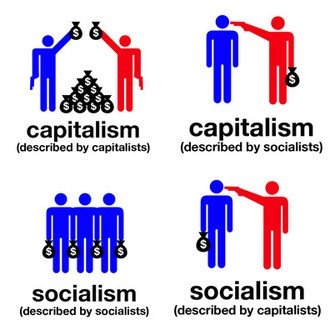
Capitalism vs. Socialism vs. Distributism

Capitalism vs. Socialism  vs. Distributism by Bryan J. Neva, Sr. Since ancient times, people have bought, sold, and traded land,...