Translate

Thursday, January 7, 2016

2016 New Years Resolutions


Most of us make New Years Resolutions such as losing weight, exercising more, eating better, breaking bad habits, or in some way improving ourselves. In this vein, I like to suggest a New Years Resolution that could dramatically change your life for the better; that is, becoming more Merciful.

In case you haven't heard, in the Roman Catholic faith tradition, 2016 is the Year of Mercy. (Note: Follow this link to the Vatican's Web Page, and this link to the Wikipedia article to learn more about the Year of Mercy.) So if you'd like to become more Merciful, I'd like to suggest some things you can do.

(Note: Follow this link to read the Wikipedia article on the 7 Spiritual and 7 Corporal Works of Mercy.    Attribution: Most of what follows is based on a religious track from Marian Press, Stockbridge, MA (800-804-3823, thedivinemercy.org  and  shopmercy.org))

Spiritual Works of Mercy


1. Admonish Sinners
Correction is sometimes as hard to give as it is to take. It means standing up for moral principles at work, at school, in politics, or in the home. It means taking time to give needed correction (even discipline), especially to children whose minds are impressionable and whose wills are not yet steadfast in truth.

Much of what I write about in this blog is in this vein. It's very hard to stand up for what is right and shine a light on what is wrong. Sometimes it can even cost you your livelihood, your marriage, your friends, or your life. Standing up for the truth cost Socrates, St. John the Baptizer, Jesus,  St. Stephen the Martyr, St. Peter, St. Paul, and millions like them their lives!   

2. Instruct the Ignorant
Ignorance isn't an insult; it just means that you do not know something. Not everyone can be a teacher, but taking time to help a child with their homework, showing the ropes to a new employee at work, sharing your knowledge with fellow employees, or teaching our family members different things are all good ways to instruct the ignorant. How many times have we asked a store clerk where to find something in the store? And they'll instruct ignorant us where to find it.

In my career, I've run across so many employees who refused to share their knowledge with others possibly because of their misguided belief that their job security was based on being the keeper of odd knowledge. Don't be like that! Share what you know with others and raise the collective knowledge base of your organization. What good is knowledge if it's not shared?

3. Counsel the Doubtful
Advice is cheap, so the saying goes, but counsel implies something more loving. It's a Christian approach to solving problems. Doubts about one's faith, about moral issues, marriage, or questions arising from death or divorce do not need a brush-off with a lame excuse. Doubts need instruction in the Christian point of view. The world has their way of dealing with doubts, but God has a much better way of dealing with doubts. Help others by pointing them in a more positive direction.

4. Comfort the Sorrowful
Sorrow and suffering take many forms: death, divorce, grave illness, unemployment, family problems, mental distress, surgery, etc. How many of these sorrows afflict the people around us and yet go unnoticed without so much as a kind word, without so much as a whispered prayer? Sometimes giving a sympathetic ear or just "being with" a sorrowing person is a great act of mercy.

5. Bear Wrongs Patiently
Patience - the bane of the world which hurries only to have to stand in line. Strive for patience with the small child's constant prattling or the chronic complaint of the elderly. Try patience with the slowness of the freeway traffic or the drudgery of a job. Maintain patience with those who never say a kind word, with those whose nagging puts your teeth on edge. Have patience with your own personal pain and suffering; don't add to the the griping around you. Oftentimes, the best reply to insults and accusations is silence. Don't lower yourself to other people's level by returning insult for insult, criticism for criticism, hatred for hatred, or bad behavior for bad behavior. That only perpetuates evil. Instead bear wrongs patiently and return love for evil.

6. Forgive Offenses
Forgive the sharp criticism, the angry retort so easily and thoughtlessly said. Physical injuries heal faster than mental or spiritual ones; dwelling on a wrong only increases its size, breeding hatred, the antithesis of Christ's love. Injuries, voluntary or involuntary, are inescapable; forgiveness heals them.

Forgiving takes so much less energy than hating. Forgiveness is a verb and it takes time so you have to continually practice it especially towards those who deeply hurt you.

7. Pray for the Living and the Dead
It is impossible to physically aid the many people - even those in our own families - who need our help. But we can reach out to them in prayer. All people, living or dead, benefit from a remembrance in prayer, including those praying.

Corporal Works of Mercy


1. Feed the Hungry
2. Give Drink to the Thirsty
These two works of mercy start out in the home, from the hot meal on the table or the cup of water for a child, and extend to the community. The unemployed, the elderly, and the sick benefit from care programs, but these programs are ineffective without food donations, cash contributions, and volunteered time. The doer of mercy can also support national and religious relief organizations and self-help projects such as the vendor on the street, a refugee vegetables stand at the market, or the repair shop run by a minority group. Rather than patronizing the big-box stores and large service providers, patronize the small mom-and-pop businesses.

3. Cloth the Naked
Our Savior tells us that if a person has two coats, he should give one away. Perhaps the need isn't apparent in the immediate neighborhood, but it does exist. Go through your closet and find clothing to donate to the needy or local refugee aid groups. Without the excess, storage problems disappear. 

4. Shelter the Homeless
The unemployed living in cars or abandoned tunnels and caves are in desperate straits, and those who help them need both material and spiritual support. Aging relatives may be just as homeless when they must leave their homes for apartments or are made to feel unwelcome - even as visitors - in the homes of their kin. The refugees transplanted to the strange country, the building tenants forced out of their apartment by fire or eviction, the battered wife or unwed mother on her own are all homeless in need of shelter, companionship, and help in resettlement.

Homelessness is a huge problem here in Southern California (I suppose because the weather is so nice). It's not normal to want to be homeless. Many homeless folks are mentally-ill or addicted to drugs or alcohol, and don't even want help. Rather than enabling these kinds of homeless people by giving them money, instead donate to organizations who try to help the homeless like Father Joe's Villages.

5. Comfort the Imprisoned
Helping captives or the imprisoned is not limited to joining prison volunteer organizations. Some people are imprisoned within the walls of their own homes  - the handicapped, the sick, the elderly, the new mother. For them, ransom may be a visit, a shipping trip, a helping hand once a week, or merely a short chat on the telephone.

6. Visit the Sick
Hospital visits or the semi-weekly trudges to the nursing home are often viewed with chagrin. But put yourself in the sick person's shoes. A short visit to a hospital room, a neighbor's bedside, or the local nursing home is time-consuming, but for the person being visited, the time given is very precious.

7. Bury the Dead
Plague-ridden bodies no longer litter the streets. Modern funeral practices have taken the details of caring for the dead off our hands. But the personal expression of sympathy, the hug or handshake at the vigil or funeral service, or the donation of food are important to the grieving. the ceremonies remember the dead, but we are expected to support the living in their sorrow.

Most of us who've had beloved pets bury them in the back yard when they die. It's our way of honoring God's creatures who've given us so much love in their short lives. 


Sunday, January 3, 2016

How to Break a Bad Habit (and Replace It With a Good One) by James Clear


How to Break a Bad Habit (and Replace It With a Good One)


Bad habits interrupt your life and prevent you from accomplishing your goals. They jeopardize your health — both mentally and physically. And they waste your time and energy.
So why do we still do them? And most importantly, is there anything you can do about it?
I’ve previously written about the science of how habits start, so now let’s focus on the practice of making changes in the real world. How can you delete your bad behaviors and stick to good ones instead?
I certainly don’t have all of the answers, but keep reading and I’ll share what I’ve learned about how to break a bad habit.

What causes bad habits?

Most of your bad habits are caused by two things…
Stress and boredom.
Most of the time, bad habits are simply a way of dealing with stress and boredom. Everything from biting your nails to overspending on a shopping spree to drinking every weekend to wasting time on the internet can be a simple response to stress and boredom.
But it doesn’t have to be that way. You can teach yourself new and healthy ways to deal with stress and boredom, which you can then substitute in place of your bad habits.
Of course, sometimes the stress or boredom that is on the surface is actually caused by deeper issues. These issues can be tough to think about, but if you’re serious about making changes then you have to be honest with yourself.
Are there certain beliefs or reasons that are behind the bad habit? Is there something deeper — a fear, an event, or a limiting belief — that is causing you to hold on to something that is bad for you?
Recognizing the causes of your bad habits is crucial to overcoming them.

You don’t eliminate a bad habit, you replace it.

All of the habits that you have right now — good or bad — are in your life for a reason. In some way, these behaviors provide a benefit to you, even if they are bad for you in other ways.
Sometimes the benefit is biological like it is with smoking or drugs. Sometimes it’s emotional like it is when you stay in a relationship that is bad for you. And in many cases, your bad habit is a simple way to cope with stress. For example, biting your nails, pulling your hair, tapping your foot, or clenching your jaw.
These “benefits” or reasons extend to smaller bad habits as well.
For example, opening your email inbox as soon as you turn on your computer might make you feel connected. At the same time looking at all of those emails destroys your productivity, divides your attention, and overwhelms you with stress. But, it prevents you from feeling like you’re “missing out” … and so you do it again.
Because bad habits provide some type of benefit in your life, it’s very difficult to simply eliminate them. (This is why simplistic advice like “just stop doing it” rarely works.)
Instead, you need to replace a bad habit with a new habit that provides a similar benefit.
For example, if you smoke when you get stressed, then it’s a bad plan to “just stop smoking” when that happens. Instead, you should come up with a different way to deal with stress and insert that new behavior instead of having a cigarette.
In other words, bad habits address certain needs in your life. And for that reason, it’s better to replace your bad habits with a healthier behavior that addresses that same need. If you expect yourself to simply cut out bad habits without replacing them, then you’ll have certain needs that will be unmet and it’s going to be hard to stick to a routine of “just don’t do it” for very long.

How to break a bad habit

Here are some additional ideas for breaking your bad habits and thinking about the process in a new way.
Choose a substitute for your bad habit. You need to have a plan ahead of time for how you will respond when you face the stress or boredom that prompts your bad habit. What are you going to do when you get the urge to smoke? (Example: breathing exercises instead.) What are you going to do when Facebook is calling to you to procrastinate? (Example: write one sentence for work.) Whatever it is and whatever you’re dealing with, you need to have a plan for what you will do instead of your bad habit.
Cut out as many triggers as possible. If you smoke when you drink, then don’t go to the bar. If you eat cookies when they are in the house, then throw them all away. If the first thing you do when you sit on the couch is pick up the TV remote, then hide the remote in a closet in a different room. Make it easier on yourself to break bad habits by avoiding the things that cause them.
Right now, your environment makes your bad habit easier and good habits harder. Change your environment and you can change the outcome.
Join forces with somebody. How often do you try to diet in private? Or maybe you “quit smoking” … but you kept it to yourself? (That way no one will see you fail, right?)
Instead, pair up with someone and quit together. The two of you can hold each other accountable and celebrate your victories together. Knowing that someone else expects you to be better is a powerful motivator.
Surround yourself with people who live the way you want to live. You don’t need to ditch your old friends, but don’t underestimate the power of finding some new ones. If you don’t know where to start, then join a Superhuman Meetup.
Visualize yourself succeeding. See yourself throwing away the cigarettes or buying healthy food or waking up early. Whatever the bad habit is that you are looking to break, visualize yourself crushing it, smiling, and enjoying your success. See yourself building a new identity.
You don’t need to be someone else, you just need to return to the old you. So often we think that to break our bad habits, we need to become an entirely new person. The truth is that you already have it in you to be someone without your bad habits. In fact, it’s very unlikely that you had these bad habits all of your life. You don’t need to quit smoking, you just need to return to being a non–smoker. You don’t need to transform into a healthy person, you just need to return to being healthy. Even if it was years ago, you have already lived without this bad habit, which means you can most definitely do it again.
Use the word “but” to overcome negative self–talk. One thing about battling bad habits is that it’s easy to judge yourself for not acting better. Every time you slip up or make a mistake, it’s easy to tell yourself how much you suck.
Whenever that happens, finish the sentence with “but”…
  • “I’m fat and out of shape, but I could be in shape a few months from now.”
  • “I’m stupid and nobody respects me, but I’m working to develop a valuable skill.”
  • “I’m a failure, but everybody fails sometimes.”
Plan for failure. We all slip up every now and then.
As my main man Steve Kamb says, “When you screw up, skip a workout, eat bad foods, or sleep in, it doesn’t make you a bad person. It makes you human. Welcome to the club.”
So rather than beating yourself up over a mistake, plan for it. We all get off track, what separates top performers from everyone else is that they get back on track very quickly. For a handful of strategies that can help you bounce back when you make a mistake,read this article.

Where to go from here

If you’re looking for the first step to breaking your bad habits, I’d suggest starting with awareness.
It’s easy to get caught up in how you feel about your bad habits. You can make yourself feel guilty or spend your time dreaming about how you wish things were … but these thoughts take you away from what’s actually happening.
Instead, it’s awareness that will show you how to actually make change.
  • When does your bad habit actually happen?
  • How many times do you do it each day?
  • Where are you?
  • Who are you with?
  • What triggers the behavior and causes it to start?
Simply tracking these issues will make you more aware of the behavior and give you dozens of ideas for stopping it.
Here’s a simple way to start: just track how many times per day your bad habit happens. Put a piece of paper in your pocket and a pen. Each time your bad habit happens, mark it down on your paper. At the end of the day, count up all of the tally marks and see what your total is.
In the beginning your goal isn’t to judge yourself or feel guilty about doing something unhealthy or unproductive. The only goal is to be aware of when it happens and how often it happens. Wrap your head around the problem by being aware of it. Then, you can start to implement the ideas in this article and break your bad habit.
Breaking bad habits takes time and effort, but mostly it takes perseverance. Most people who end up breaking their bad habits try and fail multiple times before they make it work. You might not have success right away, but that doesn’t mean you can’t have it at all.

Shoutouts:
1. Hat tip to Leo Babauta for originally talking about stress and boredom driving bad habits.
2. Hat tip to Scott Young for sharing the great idea about using the word “but” to overcome negative self–talk.

Thursday, December 24, 2015

Peace To Men of Good Will

Peace To Men of Good Will
by Bryan J. Neva, Sr.

St. Luke Chapter 2   The Shepherds and the Angels circa 4 b.c.
8And there were in the same country shepherds watching, and keeping the night watches over their flock.9And behold an angel of the Lord stood by them, and the brightness of God shone round about them; and they feared with a great fear. 10And the angel said to them: Fear not; for, behold, I bring you good tidings of great joy, that shall be to all the people: 11For, this day, is born to you a Savior, who is Christ the Lord, in the city of David. 12And this shall be a sign unto you. You shall find the infant wrapped in swaddling clothes, and laid in a manger. 13And suddenly there was with the angel a multitude of the heavenly army, praising God, and saying:
14Glory to God in the highest; and on earth peace to men of good will.
15And it came to pass, after the angels departed from them into heaven, the shepherds said one to another: Let us go over to Bethlehem, and let us see this word that is come to pass, which the Lord hath showed to us. 16And they came with haste; and they found Mary and Joseph, and the infant lying in the manger. 17And seeing, they understood of the word that had been spoken to them concerning this child. 18And all that heard, wondered; and at those things that were told them by the shepherds. 19But Mary kept all these words, pondering them in her heart. 20And the shepherds returned, glorifying and praising God, for all the things they had heard and seen, as it was told unto them.

The message of the angels, "peace to men of good will" has been translated/interpreted both inclusively and exclusively; that is, it could mean peace to all or just peace to some. From a Catholic point of view, it means the latter. 

In other words, peace is conditional on righteousness. This is self-evident, and a careful reading of scripture affirms this principal that if you want inner peace, then you must pursue a life of righteousness. You'll only have inner peace if you're a good and righteous person. Bad and sinful people don't have inner peace; rather, they have inner turmoil and restlessness.

On Christmas Day 1863 Henry Wadsworth Longfellow wrote the poem Christmas Bells which I think so eloquently captures this concept of peace to men of good will.
I Heard the Bells on Christmas Day
Their old familiar carols play,
And wild and sweet the words repeat
Of peace on earth, good will to men. 
I thought how, as the day had come,
The belfries of all Christendom
Had rolled along the unbroken song
Of peace on earth, good will to men. 
And in despair I bowed my head:
"There is no peace on earth," I said,
"For hate is strong and mocks the song
Of peace on earth, good will to men." 
Then pealed the bells more loud and deep:
"God is not dead, nor doth he sleep;
The wrong shall fail, the right prevail,
With peace on earth, good will to men." 
Till, ringing singing, on its way,
The world revolved from night to day,
A voice, a chime, a chant sublime,
Of peace on earth, good will to men!

Sunday, December 20, 2015

10 Things You Need to Do To Get Promoted

10 Things You Need to Do To Get Promoted
by Bryan Neva and Allen Laudenslager

Preface
Over our hundred plus years of combined working experience, we've seen what it takes to get promoted to a leadership or management position, and it's probably not what you'd think. So before we begin, we'd suggest that you first spend some time observing your organization, inquiring with long-time employees, and pondering if you really want to move up your organization's career ladder. 

First, survey the landscape by observing the type of people who've already been promoted to different levels of responsibility. What kind of people are they? What are their age, race, personalities, interests, and belief system? Are they kind and considerate, or are they mean and self-serving? Corporate culture begins at the top of the organization, so the personalities of the managers is a good thermometer of the corporate culture. 

Second, gather intelligence by asking long-time employees (not managers) what they think of management. They can provide you with some historical context and notable events that have occurred. Look for a pattern of behavior. You'll probably get all sorts of answers both positive and negative, so try to ask as many employees as you can and then draw your own conclusions. This is akin to measuring the blood pressure or happiness of an organization. 

Finally, knowing the state of affairs with your employer, you can make an informed decision whether or not to even bother trying. It might be better to just cut your losses and run. But if you still aspire to a leadership or management position within your organization, here's what you'll need to do to get promoted. 

1. Look and dress the part
If you want to move up in any organization you must also look and dress the part.  Dress to impress.  Look at those who hold the next higher position than yours and dress like they do.  Also, consider getting a hairstyle similar to your superiors.


Always be clean and well groomed when you come to work.  If you’re overweight, you need to go on a diet and shed those unwanted pounds. Overweight people generally don’t get promoted. If you smoke, you need to quit, or at least try not to smoke at work by using nicotine patches. Always use breath mints while at work, and go easy on the cologne or perfume: less is more.  

Studies have shown that attractive people generally are given more opportunities than less than attractive people.  So do whatever it takes to improve your appearance through better grooming, hairstyles, clothing, weight loss, healthy living, and fresh breath.

You shouldn’t think of this as misrepresenting who or what you really are.  If you were learning to play tennis, you wouldn’t wear Levis and cowboy boots so why wouldn’t you dress appropriately for your new job.  If you're in the military they have a strict dress code.  If you work at McDonald's they have a dress code too. Even if it’s not your current job, but rather the job you aspire to, look and dress the part.

Some people have asked, what do you do when your personality is Levis and cowboy boots and your job is a three-piece suit? You either have to accept that your job demands you display a different part of your personality at work or change career fields to one that more closely matches what you think of as your personality.

When I (Bryan) was in the Navy, there were sailors who worked in the greasy diesel engine rooms.  Most of them walked around the ship covered from head to toe in grease and grime. They'd even come to the mess deck and eat without washing themselves first.  It was really gross especially if I were sitting next to them. I'd lose my appetite and just leave. But there was one sailor who also worked in the engine rooms, but took personal pride in his appearance and was always clean and well groomed.  We jokingly used to kid him about his cleanliness, but he'd just say that working in a dirty environment is not an excuse for filthiness. Guess what, he was eventually promoted over his peers.  

You have to think of going to work like going to a party or club and trying to attract the opposite sex, or going on a job interview and trying to get the job.  You only get one chance to make a good first impression.  But consistently dressing well can leave a lasting impression that will help you get promoted.

2. Be very careful what you say, who you say it to, and how you say it
The great philosopher Aristotle once said, "To avoid criticism, say nothing, do nothing, be nothing!" The first step in getting a promotion is to mind your "p's" and "q's." Be very careful who you talk with and what you talk about. While not being rude or making others feel uncomfortable, do not share too much personal information about yourself. Try to diplomatically sidestep personal inquiries. And don't ask others any personal questions either as you never know if they'll be offended. Even small talk or conversational openers such as, "Where do you live?" could be offensive to some people. Don't brag about yourself or your accomplishments in life. Be meek and humble to a fault.

The less you say at work, the better off you'll be positioned to getting a promotion.  Other than benign details, be guarded about sharing too many personal details about yourself with anyone.  If you're having personal problems at home, don't bring them to work. Even if you're going through a bitter divorce and custody battle, keep it to yourself. Don’t be rude about it, just be coy about discussing your personal business. Think of professional television and radio personalities, you may think they’re being open about themselves, but in fact, if you listen carefully they’re actually being quite guarded about sharing details about their lives. They say just enough to connect with the audience and no more.

Be very careful if you go out for drinks with coworkers.  A little bit of alcohol can lower your inhibitions and you may say something they can use against you later.  In fact, it’s probably better just to order a soda.  Just tell them you’ve got to drive or you're on medication which doesn't mix well with alcohol. 

Abraham Lincoln once said, "It's better to remain silent and thought a fool than to speak up and remove all doubt." People will judge you by the words you use.


3. Don’t criticize or complain about anything
Being negative won't get you anywhere in an organization (or in life for that matter).  In fact, in time it'll probably get you fired. Organizations don't like malcontents or dysfunctional behavior. They want everyone to be happy campers even if the working conditions are in fact miserable and your superiors are misbehaving.  So if you want to get promoted, you'll have to become stoic at work. The old cliché, "If you can't say anything nice, then don't say anything at all!" really applies here.

As far as your colleagues are concerned, don't say anything negative about anyone else.  If someone says something negative about someone else, retort by saying something positive about them.  

Euphemistically phrase everything you say.  For example, if something is going really badly, say it's challenging.  If you work in deplorable conditions, say you work in a rugged setting or an early century environment.  If someone is behaving badly, say they were having a bad day.  You get the idea.  In other words, don't call a spade a spade, instead be very diplomatic in everything you say.  Bridle your tongue by thinking about what you’ll say or don’t say before you even say it.  And never use profanity or foul language at work.

At the risk of sounding like a broken record, if things are really that bad at work where you have to be extremely guarded, you might be happier looking for an exit. No one likes working in a toxic, dysfunctional work environment. There is no shame in recognizing that the place is broke-beyond-repair and you just can’t fix it.

4. Be completely honest and trustworthy

You have to be completely honest and trustworthy in everything you do.  These are virtues to strive for whether or not you’re at work.  If you make a mistake, then fix it and humbly admit it.  Don't try to hide your mistakes or blame it on someone else.  If you catch someone else making a mistake, help them fix it and make them look good and you’ll earn their trust and respect.  Let your work speak for itself and be your calling card so that when someone else comes behind you they'll be impressed with the quality of your work.


When you're on official business or travel, keep your expenses down to a minimum.  Think of business travel like you're spending your own money when you go on vacation.  Economize. Companies generally don’t mind paying legitimate business and travel expenses, so just follow the organization’s rules and regulations on business and travel and try to come in under budget.

Being honest and trustworthy is easy at the lower levels of an organization, but as you move up it becomes a bit more difficult as you’ll be faced with more ambiguous situations.  At the lower levels, you can pass the buck of responsibility and decision making up the chain of command. But at the higher levels, you have to make sense of ambiguity and try to make wise and prudent decisions.  This is why it’s so important to have guiding principles in life to point you in the right direction when you’re lost and don’t know which way to turn.

We’ve both have been in jobs where the culture was to make unethical decisions if it helped the bottom line.  And if anyone in the organization actually tried to make a principled decision it actually got them into trouble.  All we can recommend is run, do not walk to the nearest exit.  Trying to fight the organization by making principled decisions will only destroy you.  But we promise you that if you consistently make unethical or illegal choices it will eventually catch up with you and cost you much more than simply changing jobs.

5. Be well liked and respected throughout the organization
In order to get promoted you first have to be personally liked and respected by your colleagues.  And you have to be cognizant of who in your workgroup is the most influential as they can either help or hurt your career.  If you're working with jerks, then kill them all with kindness.  But never let them perceive what you really think of them.  As far as they’re concerned, make them believe you like and respect them too (even if you really don't).  Showing respect to others can be as simple as showing the common courtesy we should all show to another human being (even if they really don't deserve it). 


The next thing you need to do is be personally liked and respected by your manager.  If your manager doesn’t personally like or respect you, then you'll never go anywhere as they can sabotage your career.  If you're working for a jerk, kill him with kindness too, but look around for a lateral move within the organization. Changing bosses can make all the difference and help you get ahead.  If a lateral move isn’t possible, it’s probably time to look for another job with another company.  If your boss doesn’t like or respect you, no matter how well you do your job it’ll never be good enough for him or her.

The next thing you need to do to get promoted is to be liked and respected by other managers (your manager's peers).  They too have influence with the decision maker and can help or hurt your career.

Finally, you have to be liked and respected by your manager's boss.  Any chance you get to make a positive impression on this person can only help your career.  Emails, presentations, exchanging pleasantries are all good ways to make a good impression.  But be careful not to let them perceive you’re sucking up to them, that’ll turn them off.  Less is probably more when it comes to dealing with this individual.

You should think of going to work like being an actor in Hollywood trying to win roles and eventually winning the academy award, a political candidate trying to win votes and getting elected to public office, or a salesman trying to make a good impression and closing the deal.  This is not about being disingenuous with others; it’s just like going to a wedding and being kind and friendly to the other guests so that the wedding can be fun for everyone there.  So, make the same effort at work.

The Golden Rule says, “treat others the way you want to be treated.”  But the Platinum Rule says, “treat others the way they want to be treated.”  In order to be liked and respected by others, you have to follow both the Golden and Platinum Rules. Once again, you really can't fake this.  You must truly care about the people around you. That doesn't mean you will like and respect everyone, just that you must care that they succeed and that the organization as a whole will make its goals.

6. Keep your creative ideas and solutions to yourself
The only person allowed to be creative in any organization is the person at the very top. Everyone else is only allowed to carry out their creative ideas and solutions.  You have to walk a fine line here.  


Many organizations that claim to want creative solutions to their problems really only want creative solutions that don’t violate established policies or procedures.  The problem for you is that if the established policies or procedures could fix the problem they wouldn’t be looking for a creative solution!  Whenever possible frame your solution as a one-time exception to the rules so that you don’t make the bean counters too nervous.

7. Be consistently outstanding in performing your job
Doing your job and doing it well is a very important prerequisite to getting promoted.  In fact, if you want to stand out from your peers, you'll have to exceed your boss' expectations and give him or her more than what they asked for in a timely manner (even if that means coming in early, staying late, working Saturdays, and bringing work home with you).  When you do your job well, it makes your boss, as well as the entire organization, look good.

Think for a moment about the skill level of professional athletes.  Most good athletes were high school or college sports stars, but only a few of those made it into the pros.  Are the few outstanding athletes who do make it into the “big leagues” really that much more talented?  Or did they just put in the extra effort and time to hone their skills to the professional level?

There are plenty of people who do a good job, and they make up a majority of the workforce. Nevertheless, most high performing organizations have raised the bar so high that being good is no longer good enough.  If you're not consistently performing at a superior level you might be in danger of losing your job.  To get promoted you have to have sustained, superior performance.

Jack Welch, the legendary and controversial CEO of GE, pioneered a method of annual employee evaluations where GE would cull the bottom 10% of their workforce every year.  Managers could only rate 20% of their employees as "excellent”; 70% of their employees could be rated "good", and the bottom 10% would have to be rated "poor" and subsequently let go.  Following in GE's footsteps, many other large companies adopted this scheme of annually culling their workforce.  Personally, we’re opposed to culling employees for many different reasons, but then again we’re not running GE. But if you consistently do your best at work, then you’ll have nothing to worry about.

Along with doing a great job at work is showing flexibility and adapting to change.  You may begin your career with a certain job description, but how you end your career depends on your flexibility and your willingness to accept change as inevitable.  There will always be some people who just want to be a designing engineer and have absolutely no desire to be the managing engineer. That’s perfectly OK as long as it’s a choice and not the result of not doing their best work.

8. Prove you can do the job above you
Over time you have to prove to your superiors that you can do the job above you.  This means stepping up to the plate every chance you get to go the extra mile.  If your boss goes on vacation offer to cover for her while they’re gone.  Maybe there are routine reports that have to be filed, do those for her.  In fact, try to relieve your boss’ work-load by taking on some of her collateral duties.

One way you can prove to your superiors that you’re ready for more responsibility is by furthering your education.  If you’ve got a technical background, consider getting an MBA. If you don’t have a college education, go back to school and finish your degree.  Online distance education has made is so much easier than when we were young and you physically had to go to a brick and mortar school. Also, take seminars that will help you improve your job performance.  Or earn certifications that will prove your skill level. Go to the self-help or business section of your local bookstore and peruse the books.  You may find a book that could be transformative.  

Remember that anything you master will not only prove to your current boss that you are motivated and prepared, it will prove exactly the same things to a future boss if you decide the current company doesn’t value you.

But as Dirty Harry said, “A man has got to know his limitations!”  So don’t fall prey to the Peter Principle by getting promoted to your highest level of incompetence.  It’s better to pass on an opportunity until you’re absolutely sure you can do the job.  It won’t help you in the long-run if you’re promoted and eventually fail.

9. Share your superiors values and interests
People who get promoted more or less share their superiors values and interests.  More often than not, you’ll get promoted because your superiors personally like you.  And they’ll like you more if you share their values and interests. But you have to be very careful here if you want to maintain your personal integrity.
  
If your superiors are politically liberal or conservative, don’t pretend you’re a liberal or conservative just to ingratiate yourself with them.  If your political views are different, just keep your opinions to yourself.  If your political views are the same, then nod in agreement.  If they play golf and you don’t, then don’t  pretend you like golf too.  Just say you’ve never tried golf before and you've always wanted to learn to play.  Maybe they’ll invite you along to learn to play golf and you might discover a new hobby.  If you don’t have much in common with your superiors, then just show an interest in what they like even if you personally don’t like it.  There’s nothing disingenuous about showing an interest in others and their hobbies.  All you’re doing here is managing which parts of yourself you share with others.  In exactly the same way you wouldn’t bore your wife with a review of a football game if she doesn’t like football; you’d save that discussion with your buddies who love football.

The one thing you do have in common with your superiors is your work.  Try to learn more about the organization and the industry you work in.  Start picking their brains and asking open-ended questions so you can learn more and become a more effective employee.  Start doing your own research on the industry and problems they face.  Maybe you can come up with creative ideas that you can do on your own to help your organization become more competitive.

10. Do Not Drink the Kool-Aid

"Drinking the Kool-Aid" is a figure of speech which generally refers to people who unquestionably accept a philosophy or go along with peer pressure or group thinking without critical examination.  It is a severe criticism of those in an organization who don't think for themselves, go-along-to-get-along or engages in a sycophantic behavior.  

This figure of speech has it's roots with the infamous American religious cult leader of the People's Temple, Jim Jones, who on November 18, 1978, in Jonestown, Guyana, demanded his followers commit suicide with him by drinking cyanide-laced, grape-flavored Kool-Aid.  He is responsible for the murder/suicides of over 900 people.

Most companies will not ask you to Drink the Kool-Aid or do anything unethical, illegal, or morally questionable.  However, there are some organizations where you’ll only get promoted if you’ll figuratively Drink the Kool-Aid.  But that’s not the type of organization you’d want to work for anyway.  

In those unethical organizations, they’ll want you to blindly follow whatever they tell you to do.  If they want you to get rid of a good employee, you'll have to do it without losing sleep over it.  If they want you to do anything questionable, unethical, or illegal for the good and profitability of the organization, you'll have to do it and not bat an eye. They'll ask you to reach into your own pocket to pay their legitimate business expenses. They'll pay you far less than you're really worth in the marketplace. They'll consistently ask you to put in sixty to eighty hours a week so they don't have to hire more people. And they'll motivate you by hanging your job security and livelihood of your family over your head. If that’s the type of company you work for, don’t waste your time and energy trying to get promoted. Just start looking for another organization that values honesty and personal integrity even if it means taking a pay cut. Over the long-run, it’s much better for the welfare of your family, your own health, and your long-term career success for you to just find another job than to fight within your organization.

We've both worked for unethical companies like those described above, and the big career limiting choice we each made was to Not Drink the Kool-Aid.  Many of our colleagues in those companies chose to Drink The Kool-Aid and were subsequently promoted over us.  As far as we know they thrived in their careers whereas we both suffered. But we were more concerned about doing what is right rather than in just doing the right things to get ahead.

Conclusion
In short, getting promoted is a combination of playing politics and then doing your job extremely well. Some people have a really hard time playing politics; they feel if they just do their job extremely well then management will notice and they'll eventually get promoted. But the reality is that the "C" students in school usually end up managing the "A" and "B" students. So doing all these things we suggest is no guarantee you'll ever get promoted to a leadership or management position.  Oftentimes, the best and most qualified people don't get promoted, and that's just a sad fact of life. 

We're all complex, multi-dimensional people with many facets of our personalities. You may be an engineer who loves riding motorcycles, a technical writer who loves building sailboats and campers, an accountant who rides mountain bikes, a janitor who's the part-time pastor of a small church, a waitress who writes romance novels, a businessman who likes to volunteer at soup kitchens, a physician who plays guitar in the church band, or a scientist who sings in the community choir. The point is that you may only display a small part of who you are at work and that’s OK. In fact, that’s a big part of the points we’re making here. You aren’t changing who you are when you follow these ideas, you are just selecting which of your existing facets you will show at what time to further your career.

You may read these 10 things and decide that trying to get promoted is really not for you, and that's OK as not everyone is cut out for leadership or management positions. Sadly, the big reason we've seen people aspire to leadership or management positions is simply that they want more power and money. Ideally, it should be because you'd like to make a positive difference in your organization. Nevertheless, if you consistently follow these 10 things we suggest, you'll greatly increase your chances of getting that promotion you've always wanted, and you'll do it in an honest and ethical manner.  

Featured Post

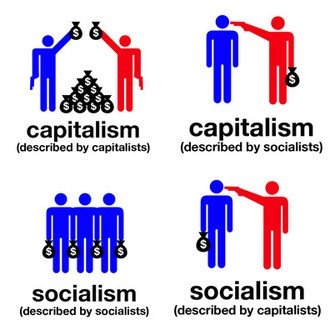
Capitalism vs. Socialism vs. Distributism

Capitalism vs. Socialism  vs. Distributism by Bryan J. Neva, Sr. Since ancient times, people have bought, sold, and traded land,...