Translate

Saturday, December 5, 2015

Proof That Positive Work Cultures Are More Productive by Emma Seppala and Kim Cameron HBR

Proof That Positive Work Cultures Are More Productive

DECEMBER 01, 2015  Harvard business review
Too many companies bet on having a cut-throat, high-pressure, take-no-prisoners culture to drive their financial success.
But a large and growing body of research on positive organizational psychology demonstrates that not only is a cut-throat environment harmful to productivity over time, but that a positive environment will lead to dramatic benefits for employers, employees, and the bottom line.
Although there’s an assumption that stress and pressure push employees to perform more, better, and faster, what cutthroat organizations fail to recognize is the hidden costs incurred.
First, health care expenditures at high-pressure companies are nearly50% greater than at other organizations. The American Psychological Association estimates that more than $500 billion is siphoned off from the U.S. economy because of workplace stress, and 550 billion workdays are lost each year due to stress on the job. Sixty percent to 80% of workplace accidents are attributed to stress, and it’s estimated that more than 80% of doctor visits are due to stress. Workplace stress has been linked to health problems ranging from metabolic syndrome to cardiovascular disease and mortality.
The stress of belonging to hierarchies itself is linked to disease and death. One study showed that, the lower someone’s rank in a hierarchy, the higher their chances of cardiovascular disease and death from heart attacks. In a large-scale study of over 3,000 employees conducted by Anna Nyberg at the Karolinska Institute, results showed a strong link between leadership behavior and heart disease in employees. Stress-producing bosses are literally bad for the heart.
Second is the cost of disengagement.While a cut-throat environment and a culture of fear can ensure engagement (and sometimes even excitement) for some time, research suggests that the inevitable stress it creates will likely lead to disengagement over the long term. Engagement in work — which is associated with feeling valued, secure, supported, and respected — is generally negatively associated with a high-stress, cut-throat culture.
And disengagement is costly. In studies by the Queens School of Businessand by the Gallup Organization, disengaged workers had 37% higher absenteeism, 49% more accidents, and 60% more errors and defects. In organizations with low employee engagement scores, they experienced 18% lower productivity, 16% lower profitability, 37% lower job growth, and 65% lower share price over time. Importantly, businesses with highly engaged employees enjoyed 100% more job applications.
Lack of loyalty is a third cost. Research shows that workplace stress leads to an increase of almost 50% in voluntary turnover. People go on the job market, decline promotions, or resign. And the turnover costs associated with recruiting, training, lowered productivity, lost expertise, and so forth, are significant. The Center for American Progress estimates that replacing a single employee costs approximately 20% of that employee’s salary.
For these reasons, many companies have established a wide variety of perks from working from home to office gyms. However, these companies still fail to take into account the research. A Gallup poll showed that, even when workplaces offered benefits such as flextime and work-from-home opportunities, engagement predicted wellbeing above and beyond anything else. Employees prefer workplace wellbeing to material benefits.
Wellbeing comes from one place, and one place only — a positive culture.
Creating a positive and healthy culture for your team rests on a few major principles. Our own research (see here and here) on the qualities of a positive workplace culture boils down to six essential characteristics:
  • Caring for, being interested in, and maintaining responsibility for colleagues as friends.
  • Providing support for one another, including offering kindness and compassion when others are struggling.
  • Avoiding blame and forgive mistakes.
  • Inspiring one another at work.
  • Emphasizing the meaningfulness of the work.
  • Treating one another with respect, gratitude, trust, and integrity.
As a boss, how can you foster these principles? The research points to four steps to try:
1. Foster social connections. A large number of empirical studies confirm that positive social connections at work produce highly desirable results. For example, people get sick less often, recover twice as fast from surgery, experience less depression, learn faster and remember longer, tolerate pain and discomfort better, display more mental acuity, and perform better on the job. Conversely, research by Sarah Pressman at the University of California, Irvine, found that the probability of dying early is 20% higher for obese people, 30% higher for excessive drinkers, 50% higher for smokers, but a whopping 70% higher for people with poor social relationships. Toxic, stress-filled workplaces affect social relationships and, consequently, life expectancy.
2. Show empathy. As a boss, you have a huge impact on how your employees feel. A telling brain-imaging study found that, when employees recalled a boss that had been unkind or un-empathic, they showed increased activation in areas of the brain associated with avoidance and negative emotion while the opposite was true when they recalled an empathic boss. Moreover, Jane Dutton and her colleagues in the CompassionLab at the University of Michigan suggest that leaders who demonstrate compassion toward employees foster individual and collective resilience in challenging times. 
3. Go out of your way to help. Ever had a manager or mentor who took a lot of trouble to help you when he or she did not have to? Chances are you have remained loyal to that person to this day.  Jonathan Haidt at New York University’s Stern School of Business shows in his research  that when leaders are not just fair but self-sacrificing, their employees are actually moved and inspired to become more loyal and committed themselves. As a consequence, they are more likely to go out of their way to be helpful and friendly to other employees, thus creating a self-reinforcing cycle. Daan Van Knippenberg of Rotterdam School of Management shows that employees of self-sacrificing leaders are more cooperative because they trust their leaders more. They are also more productive and see their leaders as more effective and charismatic.
4. Encourage people to talk to you – especially about their problems. Not surprisingly, trusting that the leader has your best interests at heart improves employee performance. Employees feel safe rather than fearful and, as research by Amy Edmondson of Harvard demonstrates in her work on psychological safety, a culture of safety i.e. in which leaders are inclusive, humble, and encourage their staff to speak up or ask for help, leads to better learning and performance outcomes. Rather than creating a culture of fear of negative consequences, feeling safe in the workplace helps encourage the spirit of experimentation so critical for innovation. Kamal Birdi of Sheffield University has shown that empowerment, when coupled with good training and teamwork, leads to superior performance outcomes whereas a range of efficient manufacturing and operations practices do not.
When you know a leader is committed to operating from a set of values based on interpersonal kindness, he or she sets the tone for the entire organization. In Give and Take, Wharton professor Adam Grant demonstrates that leader kindness and generosity are strong predictors of team and organizational effectiveness. Whereas harsh work climates are linked to poorer employee health, the opposite is true of positive work climates where employees tend to have lower heart rates and blood pressure as well as a stronger immune systems. A positive work climate also leads to a positive workplace culture which, again, boosts commitment, engagement, and performance. Happier employees make for not only a more congenial workplace but for improved customer service. As a consequence, a happy and caring culture at work not only improves employee well-being and productivity but also improved client health outcomes and satisfaction.
In sum, a positive workplace is more successful over time because it increases positive emotions and well-being. This, in turn, improves people’s relationships with each other and amplifies their abilities and their creativity. It buffers against negative experiences such as stress, thus improving employees’ ability to bounce back from challenges and difficulties while bolstering their health. And, it attracts employees, making them more loyal to the leader and to the organization as well as bringing out their best strengths. When organizations develop positive, virtuous cultures they achieve significantly higher levels of organizational effectiveness — including financial performance, customer satisfaction, productivity, and employee engagement.


Wednesday, November 25, 2015

st. Megan Jarvis

November in the Roman Catholic faith is when we traditionally remember our friends and family who have gone to their rest hoping to rise again in the resurrection of the dead.  Megan Jarvis unfortunately left this world too early in life.
Megan and Susan Jarvis vacationing in Northern California circa 2011
So I wanted to share this essay from This Grey Matters Blog by Susan Jarvis, my fellow parishioner of St. Stephen, Martyr Roman Catholic Church in Chesapeake, Virginia.  Susan and her husband Randy lost their daughter Megan on August 10th 2012 to brain cancer.

_____________________
Our daughter, Megan, had suffered from headaches for years which doctors said were migraines. However, on December 1, 2004, an MRI revealed our worst nightmare. We got the news no parent wants to hear – “your daughter has a brain tumor.” Our lives would be changed forever that day.
A biopsy revealed a grade two Oligoastrocytoma.   After three surgeries and years of chemo, fast-forward to August 2009, her tumor had now progressed to a grade four Glioblastoma.   This time treatment would be radiation and more chemo. Fast-forward to February 2012, more words no parent wants to hear – “Megan’s tumor is growing, and we have run out of options. “ Basically, nothing more we can do for your daughter, and then I asked the dreaded question – how much time does she have, and the dreaded answer – six months. So we took that special trip, had fun with family and friends, ate good food and we didn’t focus on what was going to happen tomorrow.
On August 10, 2012, Megan passed away from this terrible disease. It was a long journey of so many ups and downs that Megan handled with such grace and dignity – never complaining. She had a beautiful spirit that shined through in how to live day-by-day with the challenges of a terminal illness.
Six months after Megan’s death, I found the following paper she wrote for an English class at Old Dominion University. The paper was a hidden gift to us, as Megan was very private about her illness. It gives such an insight as to what life is like with a brain tumor. Megan just wanted to live a normal life like any young adult.
___________________
“English 101
Megan Jarvis
March 6, 2008
I believe that life is something that should never be taken for granted. In my first year at college I have met many people who do this every single day, not thinking anything will happen to them; that they are untouchable. I, like any young healthy person, thought that I would be fine forever, but realized that disease does not discriminate. It can affect anyone at any time, no matter how perfect they think their life is.
When I was sixteen years old I found out I had a brain tumor. I had three major surgeries, each setting me back physically and mentally. I had to deal with pain, speech therapy, seizures, chemotherapy and radiation. It has been hard, but it has helped me understand how precious every little thing in one’s life is. Since the surgeries it has been hard for me to remember my friend’s name, drink a cup of coffee, drive a car, swim, or play my piano. It is even more difficult to take a piece of paper and write my thoughts into words. Another thing that is different is all of the medication I am on. Before this I never took any medicine, and now I can’t go a day without it. It is a lot to remember and also come many side effects. The worst is when I become toxic, which has happened many times. This hurts me the most by having to miss important things, like school. I had to be home-schooled part of my senior year. I have lost almost all of my short-term memory and have trouble finding words. This can be very frustrating.
With things being the way they are, it is distressing for me to see people act in ways that are so perilous and think nothing of it. They won’t wear their seatbelt in their car; they don’t need it. They start smoking cigarettes; it makes them look cool. Lying out in the sun all day is smart and makes them look better. And after all of these things, they believe they are so healthy that they have no need for medical insurance. Then they start with their complaints – I’m not getting paid enough, I don’t like my car, I’m not tall enough, my clothes aren’t pretty enough. I want to tell them to stop wasting their time complaining about these petty things that don’t mean anything. Start appreciating things that do matter. Volunteering in a hospital I have met many elderly people with terminal diseases. When talking to them, almost all say that their sickness is due to decisions they made when they were young.
I met a person at school and when I told him about my situation, he was surprised at the way I was living my life. He said with something like this I needed to carpe diem, or “seize the day”. That was the motto by which he lived. And I did agree with him. Eat, drink, and be merry is something everyone should do; live a happy life. But don’t lose concern for the future. I told him my saying is memento mori,“remember that you are mortal”. Life is something that’s value should not be underestimated.
I know what I have experienced is more than significant. It has completely changed my life. Everything now is opposite of what I had planned it to be. It did have some good with it though. I was able to meet so many great people, people who have gone through much more than me. It showed me that I have more friends than I ever thought I did. It showed me how kind people are, but unfortunately how unkind others can be.
I am strong inside, not fearful of my future. I don’t look ahead, just the present. I don’t even know what I am doing tomorrow. I was never scared of what was going to happen to me, and I was the one holding up my family through the ordeal. I don’t know what I want for the immediate future. I think my goal is to just get through another day and see what happens from there.
My life is nowhere close to where it was before any of this happened, but I wouldn’t change anything.”
__________________
Megan had wisdom beyond her years like so many children and young adults who have to deal with cancer. Their lives remind us that it’s not the number of years we are given, but how we use them.
The question of what I wish I knew before Megan was diagnosed. I wish this were all a bad dream! I wish I wasn’t in the grieving parent club that I didn’t ask to join. Someone I knew who had also passed away from a brain tumor last words still stay etched in my mind.   Confront reality, confront the end.
I thought I knew what life would be like after Megan was gone. I thought I would be prepared. But no one can be prepared for death, let alone the death of their own child. I knew how this story would end.  After all, you don’t read of too many people living a long, full-life with a GBM. Sometimes statistics don’t lie. But that’s not to say we ever gave up hope. I grieved for many years being her mother and primary caregiver and watching her go through so much pain and suffering. That grief journey is over and now I’m on a new journey. Learning to live with the loneliness and emptiness. Learning to live with the reality that my hopes, dreams and future for Megan – gone. All the thoughts of what could have been, should have been, would have been – gone. From the time Megan was little, she always wanted to be a doctor – ironically, a Neurosurgeon.
So for my future – I will strive to live my life with Megan’s positive attitude, courage, perseverance, compassion, faith and living for today like there may be no tomorrow on this earth. I do believe there is hope that each day can get better – it’s a minute-by-minute process that may take me a lifetime to achieve.
Megan, may the wind be always at your back, and may the sun shine warm upon your face. And until we meet again, may God hold you in the palm of his hand.
Love Mom

Saturday, November 21, 2015

The Cost of Bad Behavior in the Workplace

The Cost of Bad Behavior in the Workplace
by Bryan J. Neva, Sr.


It's hard to quantify how much bad behavior costs organizations, but I'd bet that conservatively it's probably hundreds of billions of dollars in lost productivity and opportunities every year.

I'll give you an example. A good employee arrives back at work Monday morning after being on vacation for a week. He's refreshed after his vacation, in a good mood, and ready to tackle the work at hand. He goes through his accumulated email and discovers that his boss held a very important meeting with the team in his absence. So he walks over to his boss' office and asks about the meeting and what he missed. His boss rudely tells him he's too busy to repeat what was in the meeting and that it was his own fault he missed the meeting (even though he was on scheduled vacation). The good employee walks away humiliated and dejected.

Because he's only human, the employee doesn't accomplish much for the rest of day or the rest of the week for that matter. In fact, he's gotten so frustrated with his boss' consistent bad behavior, he spends a good part of the week updating his resume and applying for other jobs. It's only human to get even with his boss through passive aggressive behavior like this. The boss' bad behavior probably cost his organization over $1000.00 in lost productivity that one week!

Just like his boss, it wasn't right of the employee to behave badly either through his passive aggressive behavior. But people are only human and they tend to respond in kind when treated badly. It's a vicious cycle.

This is just one little example, but I could provide thousands of anecdotal examples of bad behavior in the workplace that cost organizations a lot more than just a thousand bucks! Just read through all of my past blog posts and you'll get the idea. And these are just my experiences! Multiply that by all the workers in the U.S. and you'll realize how expensive bad behavior is to the bottom line of any organization.

The point is that bad behavior at any level in the workplace is expensive and counterproductive. Look at any company or organization where bad behavior is widespread and you'll see an organization that's failing. Bad behavior is simply bad for business!


Sunday, November 15, 2015

St. John the Apostle on Love for God and our Neighbor

Paraphrased excerpts from the First Letter of St. John the Apostle 

Beloved, I am not writing to you about a new commandment, but about an old commandment which you had from the beginning; the old commandment is the word which you have already heard. Yet I am writing you about a new commandment, which is true in him and in you, because the darkness is passing away and the true light is already shining. 

He who says he walks in the light yet hates his neighbor is actually walking in the darkness. He who loves his neighbor walks in the light, and in it there is no cause for stumbling. But he who hates his neighbor is in the darkness and walks in the darkness, and does not know where he is going, because the darkness has blinded his eyes.

Do not love the world or the things in the world. If any one loves the world, the love of God is not in him. For all that is in the world, the lust of the flesh and the lust of the eyes and the pride of life, is not of God but is of the world. And the world passes away, and the lust of it; but he who does the will of God abides for ever.
See what love God has given us, that we should be called children of God; and so we are! The reason why the world does not know us is that it did not know him. Beloved, we are God’s children now; it does not yet appear what we shall be, but we know that when he appears we shall be like him, for we shall see him as he is. And every one who thus hopes in him purifies himself as he is pure.
By this it may be seen who are the children of God, and who are the children of the devil: whoever does not do what is right is not of God, nor he who does not love his neighbor.
For this is the message which you have heard from the beginning, that we should love one another, and not be like Cain who was of the evil one and murdered his brother Abel. And why did Cain murder Abel? Because his own deeds were evil and his brother’s were righteous. 
Do not wonder, my children, why the world hates you. We know that we have passed out of death into life, because we love one another. He who does not love remains in death. Any one who hates his neighbor is a murderer, and you know that no murderer has eternal life abiding in him. By this we know love, that he laid down his life for us; and we ought to lay down our lives for one another. 
But if any one has the world’s goods and sees his neighbor in need, yet closes his heart against him, how does God’s love abide in him? Little children, let us not love in word or speech but in deed and in truth.
And this is God's commandment, that we should believe in the name of his Son Jesus Christ and love one another, just as he has commanded us. All who keep his commandments abide in him, and he in them.
Beloved, let us love one another; for love is of God, and he who loves is born of God and knows God. He who does not love does not know God; for God is love. In this the love of God was made manifest among us, that God sent his only Son into the world, so that we might live through him. In this is love, not that we loved God but that he loved us and sent his Son to atone for our sins. Beloved, if God so loved us, we also ought to love one another. If we love one another, God abides in us and his love is perfected in us.
So we have come to know and believe the love God has for us. God is love, and the person who lives in love does in fact live in God, and God does in fact live in him. There is no fear in love, but perfect love casts out fear. For fear has to do with punishment, and he who fears is not perfected in love. We love, because he first loved us. 
If any one says, “I love God,” and hates his neighbor, he is a liar; for he who does not love his neighbor whom he has seen, cannot love God whom he has not seen. And this commandment we have from him, that he who loves God should also love his neighbor.
For this is the love of God, that we keep his commandments. And his commandments are not burdensome. For whatever is born of God overcomes the world; and this is the victory that overcomes the world, our faith. Who is it that overcomes the world but he who believes that Jesus is the Son of God?

Friday, November 13, 2015

Archbishop Fulton Sheen on Work and Worry


“One of the greatest deceptions of today is the belief that leisure and money are the two essentials of happiness. The sad fact of life is that there are no more frustrated people on the face of the earth than those who have nothing to do and those who have too much money for their own good. Work never killed anybody, but worry has.” 

- Archbishop Fulton Sheen (Peace of Soul)

Wednesday, November 4, 2015

"Relationships and Self Esteem. How to love and be loved" by Dr. David Lieberman, Ph.D.

Dr. David Lieberman, Ph.D.

Relationships and Self Esteem

How to love and be loved

by Dr. David Lieberman, Ph.D.


Emotionally healthy people generally have positive relationships. Conversely, those who don't seem to get along with anyone are often emotionally unstable. Our self-esteem has a direct impact on the quality of our relationships.
To the degree that we lack self-esteem, we cannot love ourselves fully. To fill this emotional void, we turn to the world for approval. This behavior illuminates the source of all negative emotions and interpersonal conflicts. The acceptance and recognition that we crave comes in the form of respect. We erroneously believe that if only others would respect us, we would be able to respect ourselves by converting the adoration and praise of others into self-love. Our self-worth is therefore dependent on others' opinions.
When we depend on others for validation, we become tense and vulnerable, as we over-analyze every fleeting glance and passing comment. It does not matter how much respect and adoration we receive; we are like a cup without a bottom: the moment we stop receiving this undivided attention, we are as empty and as thirsty as we were before. Yes, there are moments of fleeting satisfaction, but ultimately we remain empty inside.
No-Win or Win-Win
A healthy sense of self-esteem endows us with the ability to give. To the degree that we do not like ourselves, we cannot receive, we can only take. The more self-esteem we have, the more we are whole, as receiving is a natural consequence of giving. This cycle of giving and receiving creates the perfect union. When we take, however, we do so in an attempt to fill a void -- leaving us still empty, and forced, once again, to take in a vain attempt to feel complete. Such behavior only reinforces our dependency, and continues to exhaust us emotionally, spiritually, and physically. Man is the sum total of what he gives; and he loses a piece of himself every time he takes.
Only someone who has higher self-esteem is able to give -- love, respect, time, and attention -- to both himself and to others.
Without enough self-esteem, every relationship is rigged for a no-win scenario. For example, someone asks us for a favor, but we do not want to do it, for good reason. Giving out of fear or guilt does nothing to enhance self-esteem. To the contrary, it diminishes it. Such a situation is not really giving; it is the other person taking. If we acquiesce, then we are angry at ourselves or the other person, and if we do not do it, we feel guilty. Whatever we do leads to further justification; we cannot win. The ego swells in both scenarios and neither situation boosts self-esteem.
Through this paradigm we learn how to tell if someone has high or low self-esteem. It is reflected in how he treats himself and others. A person who lacks self-esteem may indulge in things to satisfy only his own desires, and he will not treat others particularly well (a product of an arrogant mentality). Alternatively, this person may cater to others because he so craves their approval and respect, but he does not take care of his own needs (a product of the doormat mentality). Only someone who has higher self-esteem is able to give -- love, respect, time, and attention -- to both himself and to others.
Giving Vs. Taking
When a person gives, he loves the object of his giving more -- and so love is planted and grows. A child receives and a parent gives; who loves who more? The child cannot wait to get out of the house, while the parent is forever concerned with the child's wellbeing.
Every positive emotion stems from giving and flows outward from us to others, whereas every negative emotion revolves around taking. Indeed, the root of the Hebrew word, ahavah, love, is hav, to give.
Lust is the opposite of love. When we lust after someone or something, our interest is purely selfish in our desire to feel complete. When we love, however, our focus is on how we can express our love, and give to the other person. It makes us feel good to give, and we do so happily. When someone we love is in pain, we feel pain. When someone after whom we lust is in pain, however, we think only about how this person's situation will affect us, in terms of our own inconvenience or discomfort.
Love is limitless. A parent does not love her second child less because she already has one child. She loves each child, gives to each child, and does not run out of love. Compare this to someone who acquires a work of art that he "loves." Over time, his fascination with the piece wanes, and when he acquires a new work, all of his attention, affection, and joy is redirected from the old art to the new art because, in truth, he does not love his art. He loves himself, and his art makes him happy. He is not giving to his art; his art gives to him, and so he takes.
Our feelings of self-worth betray us when we consider whether God really cares about little old me, with all the billions of people in the world. There are no limitations to God's love. He created the world expressly for us as if we were His only child. Just as a loving parent is concerned and consumed by each and every aspect of the child's wellbeing, so, too, is God's interest in our lives.
Difficult People: The Solution, not the Problem
The image on the right demonstrates negative space. Focus on the white image and we see a vase; focus on the black space and we see two profiles facing each other. Each space, positive and negative, defines the other. The vase cannot maintain the integrity of its shape unless the white space does the same.

No matter how much we work on ourselves, we will never be successful at transforming any aspect of our character, if our new self cannot exist in our world. Reshaping ourselves into the desired vessel can only be accomplished by redefining current relationships, and better understanding the role that difficult people play in our lives.
We are no good to anyone if we are no good to ourselves.
Flight attendants begin each trip by informing passengers that in the event of the oxygen masks dropping down during the flight, those traveling with children should secure their own masks first, and then secure the masks on their children. We are no good to anyone if we are no good to ourselves. Whenever we redraw lines in relationships, one person gets less territory; but without boundaries, there is no definition of self. While some relationships benefit from having no boundaries, allowing those who are toxic make the rules and shape us is not healthy. It certain instances, then, we are obligated to say, "Enough is enough."
We are mistaken to believe that the larger solution is cutting out of our lives those people who are difficult; rarely is this required. It is only when we respond to another's' cruelty with like, that we move to a mode of dependence, and so pain. There is no way to get around this. Guilt will seep in, our ego engages to fortify our actions and our beliefs, and all the while, our self-esteem and emotional wellbeing slowly melt.
Sometimes the closer we are to someone, the worse we treat them. Too often, a person shows more gratitude to the toll collector than to his own spouse; indeed, sometimes we deliver kindness to a stranger but ignore the needs of our own family.
One reason we do not give is because we do not get. A person holds back from another because he does not feel that his own emotional needs are being met. On the other side of the coin, strangers are quick to offer their appreciation and to give us the respect we crave when we come to their aid. Will a family member even acknowledge our efforts? It does not matter. Our actions must be independent of the response or of our own feelings of whether or not the other party in the relationship deserves our kindness and love.
The temptation to do otherwise is strong, particularly if we suffer from low self-esteem. By definition, low self-esteem means that a person does not feel in control -- remember, self-respect comes from self-control. So the less control we exert over ourselves, the more we attempt to control or manipulate the world and the people in it.
Now we understand why it is that we hurt -- either overtly or passive aggressively -- the ones closest to us. The closer we are to someone, the more power we have over them, and the more we can attack their weaknesses with pinpoint accuracy. When we lack self-control, hurting those who love us gives us the most traction to cause something to happen. It is the last vestige of power for the person who has so little of it.
When a person has very low self-esteem, it does not matter how accomplished he appears; such a person is dependent upon everyone and everything to feed his ego.
We do not feel complete when we are feuding or estranged from a member of our immediate family. But God does not leave our wellbeing at the doorstep of other people, let alone those who are not well. If we do everything that we can, when we can, for as long as we can, to have the healthiest relationship possible, and we still don't get anywhere, then we find that while we have compassion for the other, and perhaps some sadness over the loss of the relationship, we do not feel less good about ourselves.
Our strife with another need not cause discord within ourselves. Our willingness to do what is necessary to bring peace, is what will give us peace, regardless of the outcome. There is one major caveat. When we say that we need to do everything possible to make peace, we do not mean that we try our very best to make our point, and present a clear and rational argument as to why we are right. Only an attempt at peace that comes by way of complete humility, will keep our trust in God intact and our conscience absolved of guilt.
Don't Shoot the Messenger
It is our responsibility to perceive the wider reality, which is that God is speaking to us through every person and situation. Relationships are a very common area in which people often miss the message and focus on the messenger.
The prerequisite for growing in any area is not to blame, but to ask oneself practically, "What does God want from me now?"
Difficult people are not in our lives to add to our woes, but to help us; and we need to realize this, or they will keep coming around again and again -- and so may we keep coming around, again and again.
The prerequisite for growing in any area is not to blame, or be enraged at the injustice of the situation, but to ask oneself practically, "What does God want from me now?"
While we are in blame-mode, we are also not solution-oriented, and therefore cannot see, let alone investigate, ways to improve the situation. What would happen if you would stop looking at yourself as a victim?
Our Parents
An adult's self-esteem is often damaged as a result of suffering from lack of love or experiencing intense turmoil at an early age. This is because children gain their self-esteem largely from their parents (or primary caregivers). Children do not possess the reasoning faculties to make choices as adults do, and thus they cannot gain self-respect through self-control. Our personal sense of right and wrong is not fully established until our early teens.
For egocentric beings (children), it is easy to ascribe a failure within ourselves as the "reason" behind a parent's behavior. A parent becomes angry with the child, and so the child naturally concludes that there is a flaw within herself. She translates her parent's anger into, "I am unworthy of his love," which soon becomes, "I am not worthy of being loved." Now, if a child can form these conclusions -- as many do -- with loving parents, imagine how easy it is for the child to draw the conclusion that she is unlovable or bad when she is being raised by abusive parents. The child will understandably feel, "If my parents' can do this to me, then what am I worth?"
If we did not receive love from our parents as children, or felt that our lives were out of control due to trauma or domestic volatility, we may needlessly spend the rest of our lives craving love and acceptance. Everything we do is intended to bring us to that end.
The love that parents give children is determined by their own limitations, not those of the children. It never occurs to us as children that maybe it has nothing to do with us.
As adults, it can still be difficult to internalize the fact that our self-worth isn't contingent upon our parents' approval of us, but we can recreate this imprint. Once we do, our lives can be forever changed, and the damage that has disfigured us for decades can be undone.
We will not find an emotionally healthy person with considerable unresolved anger towards a parent. It is highly probable that this person will have difficulty enjoying positive, let alone deep and meaningful, relationships while this anger exists. Anyone who feels anger towards a parent must make it a priority to move past the negative feelings.
Revisiting the Past
Experiments in the field of quantum mechanics reveal something most intriguing: the quantum eraser effect. Physicists have determined that something happening after the fact can change or "erase" the way particles have behaved at an earlier point in time. As strange as this seems, not only do we shape reality, but we can recreate what has already unfolded. This means that a shift in perspective now allows us to "undo" our past and permanently alter how we see ourselves and our world. In an address to physicists, Albert Einstein pronounced: "People like us, who believe in physics, know that the distinction between past, present, and future is only a stubbornly persistent illusion."
It is difficult to grasp the concept that reality is not linear, where a shift in perspective can create retroactive change. Since human beings are locked in time and space, we cannot easily see how the future can change the past.
Imagine an elderly woman, who, after believing that she was happily married for 60 years, is told on her deathbed that her recently departed husband never loved her - he was a paid actor hired by her parents. Can we say that she was happy her entire life and that only the last thirty seconds were difficult? Did the birthday celebrations, anniversaries, walks, conversations, laughter, and memories of beautiful vacations disappear? No. They are there in memory, but changed. Her past is now different.
If, after hearing this revelation, someone were to ask this woman, "How was your life?" what would she answer? Would she easily answer "Wonderful?" More likely, her response would be that it was awful, sad, and heartbreaking. The characters and events are still fixed in time, but we have a glimpse of how the now has an impact on the before.
That is not to say that we should attempt to convince ourselves that our past carries no meaning. Instead, we should simply allow for the possibility that the meaning we have assigned to events may not be true; that how we feel about ourselves, based on how our parents (or anyone else for that matter) treated us, may be an inaccurately formed conclusion.
We continuously re-energize painful experiences by rehearsing the fictitious causal correlation between an event and our feelings. Our memory of the experience is locked in a false impression, and we file that negative memory away in our minds as fact.
It is not the circumstance, but rather our thoughts about the situationthat gives rise to the emotions, that determine the impact and lasting influence. Taking responsibility for our lives now, wherever we are, converts the pain into fuel that ignites our emotional freedom.

Friday, October 30, 2015

Red Notice: A True Story of High Finance, Murder, and One Man's Fight for Justice by Bill Browder (2015) - Book Review

Red Notice: A True Story of High Finance, Murder, and One Man's Fight for Justice by Bill Browder (2015)  - Book Review
by Bryan J. Neva, Sr.

Follow this link to Bill Browder's web site and get the book

My younger brother Todd (MBA from the University of Minnesota) highly recommended this book to me. It was an absolute page-turner; I couldn't put it down. And the amazing thing is that it's completely true! By the end of the book I was crying. (I suspect Hollywood will make this into a movie someday.)

Bill Browder (MBA Stanford Business School) was one of the first western investors in Russia after the fall of communism. He gave up his American citizenship to become a British subject, ostensibly because of his family's ill treatment by the U.S. Government. (His Grandfather, Earl Browder, was the head of the Communist Party USA in the 1930s and 40s and actually ran for President of the US a couple of times.)  Although, I suspect Bill Browder's decision to give up his American citizenship had more to do with taxes than anything else. Be that as it may, his business venture into Russia was undoubtedly motivated by greed. But over the course of the story, he has to face the Russian version of "Profit At Any Price" and learns first hand the meaning of the words of Jesus, "For what shall it profit a man, if he gains the whole world, and loses his own soul?" In the case of Bill Browder, he found his soul and calling in life.

The Parable of the Lost Son

The Parable of the Lost Son

LUKE 15: 11 And he said, “There was a man who had two sons; 12 and the younger of them said to his father, ‘Father, give me the share of property that falls to me.’ And he divided his living between them. 13 Not many days later, the younger son gathered all he had and took his journey into a far country, and there he squandered his property in loose living. 14 And when he had spent everything, a great famine arose in that country, and he began to be in want. 15 So he went and joined himself to one of the citizens of that country, who sent him into his fields to feed swine. 16 And he would gladly have fed on the pods that the swine ate; and no one gave him anything. 17 But when he came to himself he said, ‘How many of my father’s hired servants have bread enough and to spare, but I perish here with hunger!18 I will arise and go to my father, and I will say to him, “Father, I have sinned against heaven and before you; 19 I am no longer worthy to be called your son; treat me as one of your hired servants.”’ 20 And he arose and came to his father. But while he was yet at a distance, his father saw him and had compassion, and ran and embraced him and kissed him. 21 And the son said to him, ‘Father, I have sinned against heaven and before you; I am no longer worthy to be called your son.’ 22 But the father said to his servants, ‘Bring quickly the best robe, and put it on him; and put a ring on his hand, and shoes on his feet;23 and bring the fatted calf and kill it, and let us eat and make merry; 24 for this my son was dead, and is alive again; he was lost, and is found.’ And they began to make merry. 25 “Now his elder son was in the field; and as he came and drew near to the house, he heard music and dancing. 26 And he called one of the servants and asked what this meant. 27 And he said to him, ‘Your brother has come, and your father has killed the fatted calf, because he has received him safe and sound.’ 28 But he was angry and refused to go in. His father came out and entreated him, 29 but he answered his father, ‘Lo, these many years I have served you, and I never disobeyed your command; yet you never gave me a kid, that I might make merry with my friends. 30 But when this son of yours came, who has devoured your living with harlots, you killed for him the fatted calf!’ 31 And he said to him, ‘Son, you are always with me, and all that is mine is yours. 32 It was fitting to make merry and be glad, for this your brother was dead, and is alive; he was lost, and is found.’”

My Thoughts

Like the previous two parables, this parable is about losing something extremely valuable - a child! There's a progression of value in these three parables. The poor shepherd loses 1 of his 100 sheep (1/100, 1%, or 1:100, Joy in Heaven). The poor housewife loses 1 of her 10 wedding coins (1/10, 10%, or 1:10, Joy with the Angels). Here a wealthy father loses 1 of his 2 sons (1/2, 50%, or 1:2, Joy with the Father).

In the culture of Jesus day, for a shepherd to lose 1 of his 100 sheep was disappointing but understandable as sheep tend to go astray; for a poor housewife to lose 1 of her 10 wedding coins was more disappointing but still understandable as we all lose stuff on occasion; but for a wealthy and prominent father to lose 1 of his 2 sons would have brought shame and disgrace on his family for generations to come! 

Normally (even to this day), children don't inherit their parent's wealth until their parents pass away. And in Jesus' day, it was usually the first born son who'd inherit the parent's wealth. In this case, it was the younger son who'd asked for his inheritance even though he wasn't entitled to one. 

Can you imagine the gaul of this ungrateful son who goes to his father and essentially says, "Father, I just can't wait for you to die. So give me my inheritance now so that I can get out on my own?" Well the father still has to support himself and his other son, his oldest son is the rightful heir, plus he still has a business to run with hired servants. Given this, his prodigal younger son only asks for half his father's wealth (very reasonable)!

As a parent, if one of my children were to do that to me, I'd have some pretty choice words to say to them, plus I'd probably disinherit them completely! But in the case of this father he's different from the norm. In fact, the father in this parable is God. God gives us free-will. If we no longer want to live at home but get out on our own and do our own thing he's not going to stand in our way. God loves us enough to let us make our own mistakes and learn the hard way.

The prodigal son in this parable represents each of us. We were the one sheep that went astray; we were the one coin that was lost; and we were the rebellious child that left home and squandered our inheritance.

The father in this parable not only lets his son leave home with his inheritance, but he also welcomes him back home with open arms after he's squandered his inheritance and repents.  And then he restores him to his previous status as his son and throws a huge party for him to welcome him back. Absolutely incredible!

There's so many layers of meaning in each of these parables that only with the proper theological credentials could one decipher them. Consider the following: the parable of the lost son could allude to the fall of man in the garden of eden where we initially lost our inheritance; the parable of the lost coin could also allude to a lost wedding ring, the symbol of a covenant relationship with God; the parable of the lost sheep could allude to the first passover lamb or to the lamb of God which takes away the sin of the world (see Psalms 23).

From my point of view, all these parables illustrate God's incredible love for us (lost mankind) and the ends He will go to save each of us.  

Featured Post

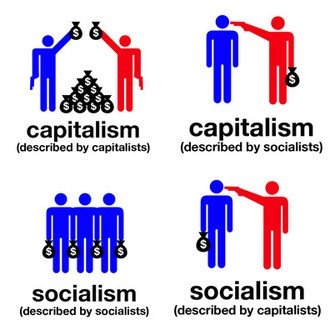
Capitalism vs. Socialism vs. Distributism

Capitalism vs. Socialism  vs. Distributism by Bryan J. Neva, Sr. Since ancient times, people have bought, sold, and traded land,...