Translate

Friday, October 30, 2015

Red Notice: A True Story of High Finance, Murder, and One Man's Fight for Justice by Bill Browder (2015) - Book Review

Red Notice: A True Story of High Finance, Murder, and One Man's Fight for Justice by Bill Browder (2015)  - Book Review
by Bryan J. Neva, Sr.

Follow this link to Bill Browder's web site and get the book

My younger brother Todd (MBA from the University of Minnesota) highly recommended this book to me. It was an absolute page-turner; I couldn't put it down. And the amazing thing is that it's completely true! By the end of the book I was crying. (I suspect Hollywood will make this into a movie someday.)

Bill Browder (MBA Stanford Business School) was one of the first western investors in Russia after the fall of communism. He gave up his American citizenship to become a British subject, ostensibly because of his family's ill treatment by the U.S. Government. (His Grandfather, Earl Browder, was the head of the Communist Party USA in the 1930s and 40s and actually ran for President of the US a couple of times.)  Although, I suspect Bill Browder's decision to give up his American citizenship had more to do with taxes than anything else. Be that as it may, his business venture into Russia was undoubtedly motivated by greed. But over the course of the story, he has to face the Russian version of "Profit At Any Price" and learns first hand the meaning of the words of Jesus, "For what shall it profit a man, if he gains the whole world, and loses his own soul?" In the case of Bill Browder, he found his soul and calling in life.

The Parable of the Lost Son

The Parable of the Lost Son

LUKE 15: 11 And he said, “There was a man who had two sons; 12 and the younger of them said to his father, ‘Father, give me the share of property that falls to me.’ And he divided his living between them. 13 Not many days later, the younger son gathered all he had and took his journey into a far country, and there he squandered his property in loose living. 14 And when he had spent everything, a great famine arose in that country, and he began to be in want. 15 So he went and joined himself to one of the citizens of that country, who sent him into his fields to feed swine. 16 And he would gladly have fed on the pods that the swine ate; and no one gave him anything. 17 But when he came to himself he said, ‘How many of my father’s hired servants have bread enough and to spare, but I perish here with hunger!18 I will arise and go to my father, and I will say to him, “Father, I have sinned against heaven and before you; 19 I am no longer worthy to be called your son; treat me as one of your hired servants.”’ 20 And he arose and came to his father. But while he was yet at a distance, his father saw him and had compassion, and ran and embraced him and kissed him. 21 And the son said to him, ‘Father, I have sinned against heaven and before you; I am no longer worthy to be called your son.’ 22 But the father said to his servants, ‘Bring quickly the best robe, and put it on him; and put a ring on his hand, and shoes on his feet;23 and bring the fatted calf and kill it, and let us eat and make merry; 24 for this my son was dead, and is alive again; he was lost, and is found.’ And they began to make merry. 25 “Now his elder son was in the field; and as he came and drew near to the house, he heard music and dancing. 26 And he called one of the servants and asked what this meant. 27 And he said to him, ‘Your brother has come, and your father has killed the fatted calf, because he has received him safe and sound.’ 28 But he was angry and refused to go in. His father came out and entreated him, 29 but he answered his father, ‘Lo, these many years I have served you, and I never disobeyed your command; yet you never gave me a kid, that I might make merry with my friends. 30 But when this son of yours came, who has devoured your living with harlots, you killed for him the fatted calf!’ 31 And he said to him, ‘Son, you are always with me, and all that is mine is yours. 32 It was fitting to make merry and be glad, for this your brother was dead, and is alive; he was lost, and is found.’”

My Thoughts

Like the previous two parables, this parable is about losing something extremely valuable - a child! There's a progression of value in these three parables. The poor shepherd loses 1 of his 100 sheep (1/100, 1%, or 1:100, Joy in Heaven). The poor housewife loses 1 of her 10 wedding coins (1/10, 10%, or 1:10, Joy with the Angels). Here a wealthy father loses 1 of his 2 sons (1/2, 50%, or 1:2, Joy with the Father).

In the culture of Jesus day, for a shepherd to lose 1 of his 100 sheep was disappointing but understandable as sheep tend to go astray; for a poor housewife to lose 1 of her 10 wedding coins was more disappointing but still understandable as we all lose stuff on occasion; but for a wealthy and prominent father to lose 1 of his 2 sons would have brought shame and disgrace on his family for generations to come! 

Normally (even to this day), children don't inherit their parent's wealth until their parents pass away. And in Jesus' day, it was usually the first born son who'd inherit the parent's wealth. In this case, it was the younger son who'd asked for his inheritance even though he wasn't entitled to one. 

Can you imagine the gaul of this ungrateful son who goes to his father and essentially says, "Father, I just can't wait for you to die. So give me my inheritance now so that I can get out on my own?" Well the father still has to support himself and his other son, his oldest son is the rightful heir, plus he still has a business to run with hired servants. Given this, his prodigal younger son only asks for half his father's wealth (very reasonable)!

As a parent, if one of my children were to do that to me, I'd have some pretty choice words to say to them, plus I'd probably disinherit them completely! But in the case of this father he's different from the norm. In fact, the father in this parable is God. God gives us free-will. If we no longer want to live at home but get out on our own and do our own thing he's not going to stand in our way. God loves us enough to let us make our own mistakes and learn the hard way.

The prodigal son in this parable represents each of us. We were the one sheep that went astray; we were the one coin that was lost; and we were the rebellious child that left home and squandered our inheritance.

The father in this parable not only lets his son leave home with his inheritance, but he also welcomes him back home with open arms after he's squandered his inheritance and repents.  And then he restores him to his previous status as his son and throws a huge party for him to welcome him back. Absolutely incredible!

There's so many layers of meaning in each of these parables that only with the proper theological credentials could one decipher them. Consider the following: the parable of the lost son could allude to the fall of man in the garden of eden where we initially lost our inheritance; the parable of the lost coin could also allude to a lost wedding ring, the symbol of a covenant relationship with God; the parable of the lost sheep could allude to the first passover lamb or to the lamb of God which takes away the sin of the world (see Psalms 23).

From my point of view, all these parables illustrate God's incredible love for us (lost mankind) and the ends He will go to save each of us.  

Wednesday, October 28, 2015

The Parable of the Lost Coin

The Parable of the Lost Coin

LUKE 15 “Or what woman, having ten silver coins, if she loses one coin, does not light a lamp and sweep the house and seek diligently until she finds it? And when she has found it, she calls together her friends and neighbors, saying, ‘Rejoice with me, for I have found the coin which I had lost.’ 10 Just so, I tell you, there is joy before the angels of God over one sinner who repents.”


My Thoughts

Like the previous parable of the lost sheep, this parable is also about something that was lost - a coin.  In the culture of Jesus day, the coins (each worth about one days wages) could have been the woman's dowry often worn as ornamental jewelry. (In the picture above you can see the jewelry coins on the bed with one missing.) It would roughly be equivalent to a woman today loosing her engagement or wedding ring; there's sentimental value there. Also, a wedding ring (or in this case, the ornamental coin jewelry) represents the covenant relationship of marriage. The Jewish people had a covenant relationship with God. (The coins also could be the family's emergency savings.)

Once again, I was struck by the math: the fraction 1/10, or the percentage 10%, or the ratio 1:10.  In the parable of the lost sheep, it was only a 1% loss; in this parable it's a 10% loss! Now that's worth looking for. 

In the culture of Jesus' day, for a shepherd to lose one sheep from his herd was disappointing yet understandable as all sheep go astray. But for a woman to lose one of her ten wedding coins in her own house was even more disappointing yet still understandable as we all lose stuff from time to time. But think about it for a moment, why would a housewife humiliate herself by telling anyone that one of her wedding coins were lost? Most likely she wouldn't. She'd say to herself, "it'll turn up sooner or later." Why would a housewife completely clean her house just to find one coin? Most likely she wouldn't. It's only worth a days wages and you have to look at the cost/benefit return on investment. One's time would be better spent elsewhere. But this housewife is different. 

Notice how Jesus gives an example for men - the lost sheep, and then an example for women - the lost coin? Interestingly, the shepherd in the first parable represents God; in this parable of the lost coin, the poor housewife represents God. We were the insignificant lost sheep in the first parable, and we were the insignificant lost coin in this parable.

So there's a progression of value here: the shepherd loses 1% of his herd; then the housewife loses 10% of her dowry. I'm not sure of the comparative value of one sheep to one coin. Because sheep were so plentiful during Jesus time, maybe one coin would buy 10 sheep. Notice that when the shepherd found his lost sheep, he called his friends and neighbors to celebrate. Similarly there is great joy in heaven over one sinner who repents. In this case, the woman called her friends and neighbors to celebrate her finding her lost coin. Similarly there is great joy among the angels over one sinner who repents.

When the housing and stock market crashed in 2008, people lost large percentages of value in their homes and retirement savings. Like the shepherd and the housewife in these two parables, we too were upset with our losses. And when the housing and stock market eventually bounced back, we celebrated with our neighbors and friends over regaining our lost wealth.  Like this woman in the parable, we too know what it's like to lose and to find.

God feels the same way about each us when we're lost. To God losing any one of us is like losing 1% of our sheep herd, or like losing 10% of our life savings. Each of us is worth diligently searching for. And when He finds us He's so happy that He calls for a big celebration in Heaven and among the Angels! These are just two examples of God's incredible love for us. 

Saturday, October 24, 2015

The Parable of the Lost Sheep

The Parable of the Lost Sheep


Luke 15 Now the tax collectors and sinners were all drawing near to hear Jesus. And the Pharisees and the Scribes murmured, saying, “This man receives sinners and eats with them.” So Jesus told them this parable: “What man of you, having a hundred sheep, if he has lost one of them, does not leave the ninety-nine in the wilderness, and go after the one which is lost, until he finds it? And when he has found it, he lays it on his shoulders, rejoicing.And when he comes home, he calls together his friends and his neighbors, saying to them, ‘Rejoice with me, for I have found my sheep which was lost.’ Just so, I tell you, there will be more joy in heaven over one sinner who repents than over ninety-nine righteous persons who need no repentance.


My Thoughts

As an engineer and former businessman, one of the first things that struck me about this parable was the math: the fraction of 1/100, or the percentage of 1%, or the ratio of 1:100.  In engineering and in business, you generally don't worry about the lost 1%. If you're 99% correct, that's awesome; that's Six-Sigma quality!  And generally speaking, being 80% correct is acceptable; it's called the 80/20 rule or the 80% solution.

Imagine if you were a shepherd; would you risk your 99 sheep to go after 1 lost sheep? I wouldn't! It's not worth your time, money, or the risk to your remaining herd of 99 sheep. With all the predators that try to kill your sheep every day, you'd expect a certain amount of loss. Not only that, domestic sheep are dumb animals and will often get themselves into trouble by wondering away from the herd. Isaiah 53:6 says, "All we like sheep have gone astray; we have each turned to our own way." (An interesting book to read on is "A Shepard Looks at Psalm 23" by W. Phillip Keller.)

So Jesus, as the good Shepherd, turns conventional wisdom on its head and leaves the 99 to go after the 1 sheep that was lost.  The 100 sheep could represent all of mankind, and the 1 sheep could represent each one of us.  2 Peter 3:9 says, "The Lord is patient with you, not wanting anyone to perish, but everyone to come to repentance."  God simply doesn't give up on us.

Over my 30 year career, I've come to realize that one key to success with the 99 is in how we treat the 1. When I worked in field service, there was always 1 customer, 1 colleague, 1 sales-rep, or 1 manager every week who'd try my patience and behave badly towards me. No matter how hard I tried to please them, it was never enough. But I strived to always take the high-road rather than lowering myself to their level of bad behavior. Over time (exactly 18 years in my case), I think the 99 noticed my patience and long-suffering with these difficult customers, colleagues, sales-reps, or managers and came to respect me even more as a man of patience and personal integrity. (Ironically, by the time I resigned from PHILPS my customer satisfaction rate was 99%.) How we treat the 1 really does matter to the 99.

Tuesday, October 20, 2015

The Emotional Bank Account by Stephen Covey

The Emotional Bank Account

Excerpts from Stephen Covey's best selling book The 7 Habits of Highly Effective People

We all know what a financial bank account is. We make deposits into it and build up a reserve from which we can make withdrawals when we need to. An Emotional Bank Account is a metaphor that describes the amount of trust that's been built up in a relationship. It's the feeling of safeness you have with another human being.

If I make deposits into an Emotional Bank Account with you through courtesy, kindness, honesty, and keeping my commitments to you, I build up a reserve. Your trust toward me becomes higher, and I can call upon that trust many times if I need to. I can even make mistakes and that trust level, that emotional reserve, will compensate for it. My communication may not be clear, but you'll get my meaning anyway. You won't make me "an offender for a word." When the trust account is high, communication is easy, instant, and effective.

But if I have a habit of showing discourtesy, disrespect, cutting you off, overreacting, ignoring you, becoming arbitrary, betraying your trust, threatening you, or playing little tin god in your life, eventually my Emotional Bank Account is overdrawn. The trust level gets very low. Then what flexibility do I have?
None. I'm walking on mine fields. I have to be very careful of everything I say. I measure every word. It's tension city, memo heaven. It's protecting my backside, politicking. And many organizations are filled with it. Many families are filled with it. Many marriages are filled with it.

If a large reserve of trust is not sustained by continuing deposits, a marriage will deteriorate. Instead of rich, spontaneous understanding and communication, the situation becomes one of accommodation, where two people simply attempt to live independent life-styles in a fairly respectful and tolerant way. The relationship may further deteriorate to one of hostility and defensiveness. The "fight or flight" response creates verbal battles, slammed doors, refusal to talk, emotional withdrawal and self-pity. It may end up in a cold war at home, sustained only by children, sex, and social pressure, or image protection. Or it may end up in open warfare in the courts, where bitter ego-decimating legal battles can be carried on for years as people endlessly confess the sins of a former spouse.

And this is in the most intimate, the most potentially rich, joyful, satisfying and productive relationship possible between two people on this earth. The P/PC [Production/Production Capability] lighthouse is there; we can either break ourselves against it or we can use it as a guiding light. 

Our most constant relationships, like marriage, require our most constant deposits. With continuing expectations, old deposits evaporate. If you suddenly run into an old high school friend you haven't seen for years, you can pick up right where you left off because the earlier deposits are still there. But your accounts with the people you interact with on a regular basis require more constant investment. There are sometimes automatic withdrawals in your daily interactions or in their perception of you that you don't even know about. 

Remember that quick fix is a mirage. Building and repairing relationships takes time. If you become impatient with this apparent lack of response of his seeming ingratitude, you may make huge withdrawals and undo all the good you've done. "After all we've done for you, the sacrifices we've made, how can you be so ungrateful? We try to be nice and you act like this. I can't believe it!

It's hard not to get impatient. It takes character to be proactive, to focus on your Circle of Influence, to nurture growing things, and not to "pull up the flowers to see how the roots are coming." But there really is no quick fix. Building and repairing relationships are long-term investments.

Six Major Deposits

Let me suggest six major deposits that build the Emotional Bank Account.

1. Understanding the Individual 
Really seeking to understand another person is probably one of the most important deposits you can make, and it is the key to every other deposit. You simply don't know what constitutes a deposit to another person until you understand that individual. What might be a deposit for you -- going for a walk to talk things over, going out for ice cream together, working on a common project -- might not be perceived by someone else as a deposit at all. It might even be perceived as a withdrawal, if it doesn't touch the person's deep interests or needs. One person's mission is another person's minutia. To make a deposit, what is important to another person must be as important to you as the other person is to you. You may be working on a high priority project when your six-year-old child interrupts with something that seems trivial to you, but it may be very important from his point of view. By accepting the value he places on what he has to say, you show an understanding of him that makes a great deposit.

Our tendency is to project out of our own autobiographies what we think other people want or need. We project our intentions on the behavior of others. We interpret what constitutes a deposit based on our own needs and desires, either now or when we were at a similar age or stage in life. If they don't interpret our effort as a deposit, our tendency is to take it as a rejection of our well-intentioned effort and give up.

The Golden Rule says to "Do unto others as you would have others do unto you." While on the surface that could mean to do for them what you would like to have done for you, I think the more essential meaning is to understand them deeply as individuals, the way you would want to be understood, and then to treat them in terms of that understanding. As one successful parent said about raising children, "Treat them all the same by treating them differently."

2. Attending to the Little Things
The little kindnesses and courtesies are so important. Small discourtesies, little unkindnesses, little forms of disrespect make large withdrawals. In relationships, the little things are the big things. People are very tender, very sensitive inside. I don't believe age or experience makes much difference. Inside, even within the most toughened and calloused exteriors, are the tender feelings and emotions of the heart.

3. Keeping Commitments
Keeping a commitment or a promise is a major deposit; breaking one is a major withdrawal. In fact, there's probably not a more massive withdrawal than to make a promise that's important to someone and then not to come through. The next time a promise is made, they won't believe it. People tend to build their hopes around promises, particularly promises about their basic livelihood.

4. Clarifying Expectations
Imagine the difficulty you might encounter if you and your boss had different assumptions regarding whose role it was to create your job description.
"When am I going to get my job description?" you might ask.
"I've been waiting for you to bring one to me so that we could discuss it," your boss might reply.
"I thought defining my job was your role."
"That's not my role at all. Don't you remember? Right from the first, I said that how you do in the job largely depends on you."
"I thought you meant that the quality of my job depended on me. But I don't even know what my job really is."
"I did exactly what you asked me to do and here is the report."
"I don't want a report. The goals was to solve the problem -- not to analyze it and report on it."
"I thought the goal was to get a handle on the problem so we could delegate it to someone else."

How many times have we had these kinds of conversations?
"You said..."
"No, you're wrong! I said..."
"You did not! You never said I was supposed to..."
"Oh, yes I did! I clearly said..."
"You never even mentioned..."
"But that was our agreement..."

The cause of almost all relationship difficulties is rooted in conflicting or ambiguous expectations around roles and goals. Whether we are dealing with the question of who does what at work, how you communicate with your daughter when you tell her to clean her room, or who feeds the fish and takes out the garbage, we can be certain that unclear expectations will lead to misunderstanding, disappointment, and withdrawals of trust.

Many expectations are implicit. They haven't been explicitly stated or announced, but people nevertheless bring them to a particular situation. In marriage, for example, a man and a woman have implicit expectations of each other in their marriage roles. Although these expectations have not been discussed, or sometimes even recognized by the person who has them, fulfilling them makes great deposits in the relationship and violating them makes withdrawals.

That's why it's so important whenever you come into a new situation to get all the expectations out on the table. People will begin to judge each other through those expectations. And if they feel like their basic expectations have been violated, the reserve of trust is diminished. We create many negative situations by simply assuming that our expectations are self-evident and that they are clearly understood and shared by other people.

The deposit is to make the expectations clear and explicit in the beginning. This takes a real investment of time and effort up front, but it saves great amounts of time and effort down the road.

When expectations are not clear and shared, people begin to become emotionally involved and simple misunderstandings become compounded, turning into personality clashes and communication breakdowns.

Clarifying expectations sometimes takes a great deal of courage. It seems easier to act as though differences don't exist and to hope things will work out than it is to face the differences and work together to arrive at a mutually agreeable set of expectations.

5. Showing Personal Integrity
Personal integrity generates trust and is the basis of many different kinds of deposits. Lack of integrity can undermine almost any other effort to create high trust accounts. People can seek to understand, remember the little things, keep their promises, clarify and fulfill expectations, and still fail to build reserves of trust if they are inwardly duplicitous.

Integrity includes but goes beyond honesty. Honesty is telling the truth--in other words, conforming our words to reality. Integrity is conforming reality to our words--in other words, keeping promises and fulfilling expectations. This requires an integrated character, a oneness, primarily with self but also with life.

One of the most important ways to manifest integrity is to be loyal to those who are not present. In doing so, we build the trust of those who are present. When you defend those who are absent, you retain the trust of those present.

Suppose you and I were talking alone, and we were criticizing our supervisor in a way that we would not dare to if he were present. Now what will happen when you and I have a falling out? You know I'm going to be discussing your weaknesses with someone else. That's what you and I did behind our supervisor's back. You know my nature. I'll sweet-talk you to your face and bad-mouth you behind your back. You've seen me do it. That's the essence of duplicity. Does that build a reserve of trust in my account with you?

On the other hand, suppose you were to start criticizing our supervisor and I basically told you I agree with the content of some of the criticism and suggest that the two of us go directly to him and make an effective presentation of how things might be improved. Then what would you know I would do if someone were to criticize you to me behind your back?

For another example, suppose in my effort to build a relationship with you, I told you something someone else had shared with me in confidence. "I really shouldn't tell you this," I might say, "but since you're my friend..." Would my betraying another person build my trust account with you? Or would you wonder if the things you had told me in confidence were being shared with others?

Such duplicity might appear to be making a deposit with the person you're with, but it is actually a withdrawal because you communicate your own lack of integrity. You may get the golden egg of temporary pleasure from putting someone down or sharing privileged information, but you're strangling the goose, weakening the relationship that provides enduring pleasure in association.

Integrity in an interdependent reality is simply this: you treat everyone by the same set of principles. As you do, people will come to trust you. They may not at first appreciate the honest confrontational experiences such integrity might generate. Confrontation takes considerable courage, and many people would prefer to take the course of least resistance, belittling and criticizing, betraying confidences, or participating in gossip about others behind their backs. But in the long run, people will trust and respect you if you are honest and open and kind with them. You care enough to confront. And to be trusted, it is said, is greater than to be loved. In the long run, I am convinced, to be trusted will be also mean to be loved.

As a teacher, as well as a parent, I have found that the key to the ninety-nine is the one--particularly the one that is testing the patience and the good humor of the many. It is the love and the discipline of the one student, the one child, that communicates love for the others. It's how you treat the one that reveals how you regard the ninety-nine, because everyone is ultimately a one.

Integrity also means avoiding any communication that is deceptive, full of guile, or beneath the dignity of people. "A lie is any communication with intent to deceive," according to one definition of the word. Whether we communicate with words or behavior, if we have integrity, our intent cannot be to deceive.

6. Apologizing Sincerely When You Make a Withdrawal
When we make withdrawals from the Emotional Bank Account, we need to apologize and we need to do it sincerely. Great deposits come in the sincere words. 
"I was wrong."
"That was unkind of me."
"I showed you no respect."
"I gave you no dignity, and I'm deeply sorry."
"I embarrassed you in front of your friends and I had no call to do that. Even though I wanted to make a point, I never should have done it. I apologize."

It takes a great deal of character strength to apologize quickly out of one's heart rather than out of pity. A person must possess himself and have a deep sense of security in fundamental principles and values in order to genuinely apologize.

People with little internal security can't do it. It makes them too vulnerable. They feel it makes them appear soft and weak, and they fear that others will take advantage of their weakness. Their security is based on the opinions of other people, and they worry about what others might think. In addition, they usually feel justified in what they did. They rationalize their own wrong in the name of
the other person's wrong, and if they apologize at all, it's superficial.

"If you're going to bow, bow low," say Eastern wisdom. 
"Pay the uttermost farthing," says the Christian ethic. 
To be a deposit, an apology must be sincere. And it must be perceived as sincere.
Leo Roskin taught, "It is the weak who are cruel. Gentleness can only be expected from the strong."

The Laws of Love and the Laws of Life

When we make deposits of unconditional love, when we live the primary laws of love, we encourage others to live the primary laws of life. In other words, when we truly love others without condition, without strings, we help them feel secure and safe and validated and affirmed in their essential worth, identity, and integrity. Their natural growth process is encouraged. We make it easier for them to live the laws of life -- cooperation, contribution, self-discipline, integrity -- and to discover and live true to the highest and best within them. We give them the freedom to act on their own inner imperatives rather than react to our conditions and limitations. This does not mean we become permissive or soft. That itself is a massive withdrawal. We counsel, we plead, we set limits
and consequences. But we love, regardless.

When we violate the primary laws of love--when we attach strings and conditions to that gift -- we actually encourage others to violate the primary laws of life. We put them in a reactive, defensive position where they feel they have to prove "I matter as a person, independent of you."

In reality, they aren't independent. They are counter-dependent, which is another form of dependency and is at the lowest end of the Maturity Continuum. They become reactive, almost enemy-centered, more concerned about defending their "rights" and producing evidence of their individuality than they are about proactively listening to and honoring their own inner imperatives. Rebellion is a knot of the heart, not of the mind. The key is to make deposits -- constant deposits of unconditional love.

Dag Hammarskjold, past Secretary-General of the United Nations, once made a profound, far-reaching statement: "It is more noble to give yourself completely to one individual than to labor diligently for the salvation of the masses."

I take that to mean that I could devote eight, ten, or twelve hours a day, five, six, or seven days a week to the thousands of people and projects "out there" and still not have a deep, meaningful relationship with my own spouse, with my own teenage son, with my closest working associate. And it would take more nobility of character -- more humility, courage, and strength -- to rebuild that one relationship than it would to continue putting in all those hours for all those people and causes.

In 25 years of consulting with organizations, I have been impressed over and over again by the power of that statement. Many of the problems in organizations stem from relationship difficulties at the very top -- between two partners in a company, between the president and an executive vice-president. It truly takes more nobility of character to confront and resolve those issues than it
does to continue to diligently work for the many projects and people "out there."

When I first came across Hammarskjold's statement, I was working in an organization where there were unclear expectations between the individual who was my right-hand man and myself. I simply did not have the courage to confront our differences regarding role and goal expectations and values, particularly in our methods of administration. So I worked for a number of months in a compromise mode to avoid what might turn out to be an ugly confrontation. All the while, bad feelings were developing inside both of us.

After reading that it is more noble to give yourself completely to one individual than to labor diligently for the salvation of the masses, I was deeply affected by the idea of rebuilding that relationship. I had to steel myself for what lay ahead, because I knew it would be hard to really get the issues out and to achieve a deep, common understanding and commitment. I remember actually shaking in
anticipation of the visit. He seemed like such a hard man, so set in his own ways and so right in his own eyes; yet I needed his strengths and abilities. I was afraid a confrontation might jeopardize the relationship and result in my losing those strengths.

I went through a mental dress rehearsal of the anticipated visit, and I finally became settled within myself around the principles rather than the practices of what I was going to do and say. At last I felt peace of mind and the courage to have the communication. When we met together, to my total surprise, I discovered that this man had been going through the very same process and had been longing for such a conversation. He was anything but hard and defensive.
Nevertheless, our administrative styles were considerably different, and the entire organization was responding to these differences. We both acknowledged the problems that our disunity had created.

Over several visits, we were able to confront the deeper issues, to get them all out on the table, and to resolve them, one by one, with a spirit of high mutual respect. We were able to develop a powerful complementary team and a deep personal affection which added tremendously to our ability to work effectively together.

Creating the unity necessary to run an effective business or a family or a marriage requires great personal strength and courage. No amount of technical administrative skill in laboring for the masses can make up for lack of nobility of personal character in developing relationships. It is at a very essential, one-on-one level, that we live the primary laws of love and life.

Friday, October 16, 2015

The Power of Forgiveness (Part 7)

Jesus Forgives His Tormentors

Actor Jim Caviezel portraying Jesus Christ in the 2004 film "The Passion of the Christ"
And when they came to the place which is called The Skull, there they crucified him, and the criminals, one on the right and one on the left. And Jesus said, “Father, forgive them; for they know not what they do.” (Luke 23:33-34)

Wednesday, October 14, 2015

The Power of Forgiveness (Part 6)

Dr. David Lieberman, Ph.D.
In the first five parts of this blog series on The Power of Forgiveness, I presented much of what Jesus taught on forgiveness.  Today I'd like to shift the focus a bit to some practical advice on dealing with our anger and practicing forgiveness. The following is a great article from one of my favorite authors, Dr. David Lieberman, Ph.D., who is a best-selling author of 11 books on practical psychology. (Here's a link to the website he posts on.)

How To Deal With Nonsense Criticism

Don't get angry. Why let someone else dictate how you feel?

by Dr. David Lieberman, Ph.D.

When someone is rude to us our first reaction is to protect our ego. We get upset and respond with something like, "How dare you talk to me like that!" "Don't you yell at me!" We make this angry person our problem.
Why let someone else dictate how you feel? Getting angry gives another person control over your emotional state. That's a lot of power for one person to possess, especially someone that is rude to you.
If you resist your initial inclination to get defensive, you may be surprised at what happens. Instead of, "Why are you treating me like this?" try saying, "You seem to be having a rough day." Rather than, "I didn't do anything. Don't talk to me like that!" say, "This seems to have upset you." Don't take possession of his problem. It's his problem, not yours.
The psychological dynamics change dramatically as soon as you use the word "I" or "me." Then it becomes something between you and him. By using the word "you," you keep the ball in his court and the problem remains his sole property.
It has nothing to do with you as long as you don't try to take part ownership of it.
 You will find that by not responding defensively you won't become as upset by the exchange. It has nothing to do with you as long as you don't try to take part ownership of it.
Sometimes criticism comes in the form of nicely packaged advice. In this instance thank the person for offering her insight, and then later you can decide whether or not there is any credence to what she said. Sometimes it can be hard to separate out the message from the messenger, but when you do, you may find some good advice.
Thank the person regardless of how unproductive or self-serving the remark is. Recognize that if the advice is more of a put-down than it is constructive, she is coming from a place of pain and she needs to do this in order to feel good about herself. Have compassion and empathy for her and rise above it. If you get angry or annoyed, it's the same as kicking the shins of a 90-year-old man who wants to pick a fight with you. First, no matter what happens, you can't win. And second, what are you doing? Do not get defensive. Do not engage her. Simply say "Thank you, I will give that some thought," sincerely and directly.
If you want, you can then ask a question regarding how or why she herself is so capable, without being sarcastic!
Comment: "You know, Aaron, you were way off your game in that meeting."
Response: "Really? I'll have to review that later. You're so great for looking out for me. How would you have handled it?"
Comment: "Marcy, you know that outfit is not very flattering on you."
Response: "Oh, thanks for letting me know. A lot of friends wouldn't tell me something like that because they'd think I might get upset. You're such a special person. Where did you get such a great sense of fashion from?"
Comment: "I thought you were trying to lose weight. Do you think you should be eating that?"
Response: "Oh, you're so sweet for remembering that I'm dieting. Thank you. You seem like you have great willpower. I'd love for you to tell me your secret."
This person is being disrespectful to you because she craves respect herself. By thanking her and asking her for her input, you feed her psyche and end the "attack."
Of course, not all criticism comes from people in pain. And just because it's not done in a caring way does not mean that this person doesn't still care about you. She may not be able to critique you effectively and kindly, even though she does really care.
Alas, we should always keep in mind the optimum motivation for holding our tongue. The Talmud (Gittin 56a) reveals that the strength of God is manifest through His non-reaction to the insults and blaspheming of the wicked. Elsewhere, the Midrash states that one who is silent in the face of insults is called pious, and a partner with God. What greater motivation do we really need?
So the next time someone fires an insult or criticism your way, remember you don't lose by saying nothing in response.

Tuesday, October 13, 2015

The Power of Forgiveness (Part 5)

Cleaning House

In Matthew's Gospel (12:43-45) Jesus talks figuratively about cleaning house. Let's listen.

“When an unclean spirit has gone out of a man, he passes through waterless places seeking rest, but he finds none. Then he says, ‘I will return to my house from which I came.’ And when he comes he finds it empty, swept, and put in order. Then he goes and brings with him seven other spirits more evil than himself, and they enter and dwell there; and the last state of that man becomes worse than the first." 

We all know that once you clean your house it only stays clean for a little while and the dirt magically returns again. You've got to continue to clean your house if you want it to stay clean. In the same way, we've got to continue to clean our hearts and souls of the dirt that piles up inside. The dirt in our hearts and souls are "evil spirits." They're the bad, sinful, self-indulgent behaviors in our lives. It could be addictive behaviors such as smoking, drinking, drugs, or over-eating. In our case let's call the "evil spirit" holding on to anger and resentment, or our inability to forgive others. When we try to rid ourselves of our destructive behaviors (cleaning house), we'll always be vulnerable that they'll return again in force. If you're an ex-smoker or drinker, you know you're one cigarette or one drink away from getting re-addicted. If you've struggled with your weight, you know you're one piece of candy away from regaining all your weight and then some. In the same way, if you've been accustomed to holding on to anger and resentment, then you're just one insult away from an unforgiving heart. Practicing forgiveness is like keeping our house clean. It takes work, but the payoff is a clean and tidy house you can live in.

Monday, October 12, 2015

The Power of Forgiveness (Part 4)

Jesus on Personal Conflict


In Matthew's Gospel (excerpts from Chapter 18), Jesus teaches us how to handle personal conflict.  Let's listen: 
“If your brother sins against you, go and tell him his fault, between you and him alone. If he listens to you, you have gained your brother. But if he does not listen, take one or two others along with you, that every word may be confirmed by the evidence of two or three witnesses. If he refuses to listen to them, tell it to the church; and if he refuses to listen even to the church, let him be to you as a Gentile and a tax collector. Truly, I say to you, whatever you bind on earth shall be bound in heaven, and whatever you loose on earth shall be loosed in heaven.  Again I say to you, if two of you agree on earth about anything they ask, it will be done for them by my Father in heaven. For where two or three are gathered in my name, there am I in the midst of them.”
Then Peter came up and said to him, “Lord, how often shall my brother sin against me, and I forgive him? As many as seven times?” Jesus said to him, “I do not say to you seven times, but seventy times seven.
“Therefore the kingdom of heaven may be compared to a king who wished to settle accounts with his servants. When he began the reckoning, one was brought to him who owed him ten thousand talents; and as he could not pay, his lord ordered him to be sold, with his wife and children and all that he had, and payment to be made. So the servant fell on his knees, imploring him, ‘Lord, have patience with me, and I will pay you everything.’ And out of pity for him the lord of that servant released him and forgave him the debt. But that same servant, as he went out, came upon one of his fellow servants who owed him a hundred denarii; and seizing him by the throat he said, ‘Pay what you owe.’ So his fellow servant fell down and besought him, ‘Have patience with me, and I will pay you.’ He refused and went and put him in prison till he should pay the debt. When his fellow servants saw what had taken place, they were greatly distressed, and they went and reported to their lord all that had taken place. Then his lord summoned him and said to him, ‘You wicked servant! I forgave you all that debt because you besought me; and should not you have had mercy on your fellow servant, as I had mercy on you?’ And in anger his lord delivered him to the jailers, till he should pay all his debt. So also my heavenly Father will do to every one of you, if you do not forgive your brother from your heart.”

Saturday, October 10, 2015

The Power of Forgiveness (Part 3)

Jesus on Judging Others


In St. Luke's Gospel (excerpts from Chapters 6 and 7), Jesus' sermon on the mount is retold in slightly a different way. Let's listen:

“But I say to you that hear, Love your enemies, do good to those who hate you, bless those who curse you, pray for those who abuse you. And as you wish that men would do to you, do so to them. If you love those who love you, what credit is that to you? For even sinners love those who love them. And if you do good to those who do good to you, what credit is that to you? For even sinners do the same. And if you lend to those from whom you hope to receive, what credit is that to you? Even sinners lend to sinners, to receive as much again. But love your enemies, and do good, and lend, expecting nothing in return; and your reward will be great, and you will be sons of the Most High; for he is kind to the ungrateful and the selfish. Be merciful, even as your Father is merciful."
“Judge not, and you will not be judged; condemn not, and you will not be condemned; forgive, and you will be forgiven; give, and it will be given to you; good measure, pressed down, shaken together, running over, will be put into your lap. For the measure you give will be the measure you get back.”
"Why do you see the speck that is in your brother’s eye, but do not notice the log that is in your own eye? Or how can you say to your brother, ‘Brother, let me take out the speck that is in your eye,’ when you yourself do not see the log that is in your own eye? You hypocrite, first take the log out of your own eye, and then you will see clearly to take out the speck that is in your brother’s eye."

Featured Post

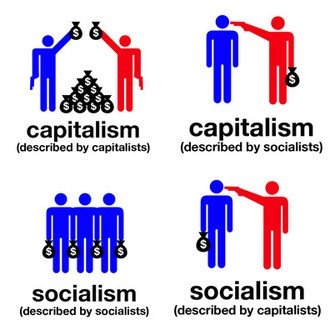
Capitalism vs. Socialism vs. Distributism

Capitalism vs. Socialism  vs. Distributism by Bryan J. Neva, Sr. Since ancient times, people have bought, sold, and traded land,...