Translate

Saturday, October 10, 2015

The Power of Forgiveness (Part 3)

Jesus on Judging Others


In St. Luke's Gospel (excerpts from Chapters 6 and 7), Jesus' sermon on the mount is retold in slightly a different way. Let's listen:

“But I say to you that hear, Love your enemies, do good to those who hate you, bless those who curse you, pray for those who abuse you. And as you wish that men would do to you, do so to them. If you love those who love you, what credit is that to you? For even sinners love those who love them. And if you do good to those who do good to you, what credit is that to you? For even sinners do the same. And if you lend to those from whom you hope to receive, what credit is that to you? Even sinners lend to sinners, to receive as much again. But love your enemies, and do good, and lend, expecting nothing in return; and your reward will be great, and you will be sons of the Most High; for he is kind to the ungrateful and the selfish. Be merciful, even as your Father is merciful."
“Judge not, and you will not be judged; condemn not, and you will not be condemned; forgive, and you will be forgiven; give, and it will be given to you; good measure, pressed down, shaken together, running over, will be put into your lap. For the measure you give will be the measure you get back.”
"Why do you see the speck that is in your brother’s eye, but do not notice the log that is in your own eye? Or how can you say to your brother, ‘Brother, let me take out the speck that is in your eye,’ when you yourself do not see the log that is in your own eye? You hypocrite, first take the log out of your own eye, and then you will see clearly to take out the speck that is in your brother’s eye."

Friday, October 9, 2015

The Power of Forgiveness (Part 2)

Jesus and the woman caught in adultery 


In St. John's Gospel (8:2-11), an interesting thing happens and Jesus uses it as a teachable moment:

Early in the morning Jesus came again to the temple; all the people came to him, and he sat down and taught them. The Scribes and the Pharisees brought a woman who had been caught in adultery, and placing her in the midst they said to him, “Teacher, this woman has been caught in the act of adultery. Now in the law Moses commanded us to stone such. What do you say about her?” This they said to test him, that they might have some charge to bring against him. Jesus bent down and wrote with his finger on the ground. And as they continued to ask him, he stood up and said to them, “Let him who is without sin among you be the first to throw a stone at her.” And once more he bent down and wrote with his finger on the ground. But when they heard it, they went away, one by one, beginning with the eldest, and Jesus was left alone with the woman standing before him.  Jesus looked up and said to her, “Woman, where are they? Has no one condemned you?”  She said, “No one, Lord.” And Jesus said, “Neither do I condemn you; go, and do not sin again.”

What was Jesus writing on the ground? Some biblical commentators believe he was writing the sins of the Scribes and the Pharisees as each of them spoke such as, "Usurer, Fornicator, Adulterer, Murderer, Thief, Blasphemer, Idolator, Irreverent Son, False Witness...."  One commentator quoted Jeremiah 17:13, "All those who forsake thee shall be put to shame; those who turn away from thee shall be written in the earth, for they have forsaken the Lord." Maybe Jesus was fulfilling this prophecy? We don't know for sure, but I'd like to believe that after all the commotion had died down and the woman's accusers had left he wrote this word on the ground: "Forgiven!"

Tuesday, October 6, 2015

The Power of Forgiveness (Part 1)

I'm beginning a new blog series on the power of forgiveness.  I think forgiveness more than any other thing is absolutely vital for success in all aspects of our lives. Being the shy and sensitive type, I've struggled with anger and resentment throughout my life. In fact, my inability to forgive and forget almost destroyed me once had it not been for God's grace in my life.
______*______

Jesus on Forgiveness

We all see the horrible affects anger and resentment has on people's lives. When we watch the evening news we see all manner of anger, hate, rage, murder, mayhem, violence, and war. In Jesus' sermon on the mount, he talked about anger, resentment, and how to overcome it (excerpts from Matthew 5 and 6):  
"You have heard that it was said to the men of old, ‘You shall not kill; and whoever kills shall be liable to judgment.’ But I say to you that every one who is angry with his brother shall be liable to judgment; whoever insults his brother shall be liable to the council, and whoever says, ‘You fool!’ shall be liable to the hell of fire. So if you are offering your gift at the altar, and there remember that your brother has something against you, leave your gift there before the altar and go; first be reconciled to your brother, and then come and offer your gift. Make friends quickly with your accuser, while you are going with him to court, lest your accuser hand you over to the judge, and the judge to the guard, and you be put in prison; truly, I say to you, you will never get out till you have paid the last penny." 
"You have heard that it was said, ‘An eye for an eye and a tooth for a tooth.’ But I say to you, Do not resist one who is evil. But if any one strikes you on the right cheek, turn to him the other also; and if any one would sue you and take your coat, let him have your cloak as well; and if any one forces you to go one mile, go with him two miles. Give to him who begs from you, and do not refuse him who would borrow from you."
"You have heard that it was said, ‘You shall love your neighbor and hate your enemy.’ But I say to you, Love your enemies and pray for those who persecute you, so that you may be sons of your Father who is in heaven; for he makes his sun rise on the evil and on the good, and sends rain on the just and on the unjust. For if you love those who love you, what reward have you? Do not even the tax collectors do the same? And if you salute only your brethren, what more are you doing than others? Do not even the Gentiles do the same? You, therefore, must be perfect, as your heavenly Father is perfect."
"And when you pray, pray then like this: 
Our Father who art in heaven, 
Hallowed be thy name.
Thy kingdom come,
Thy will be done,
On earth as it is in heaven.
Give us this day our daily bread;
And forgive us our trespasses,
As we also have forgiven those who trespass against us.
And lead us not into temptation,
But deliver us from evil.
For if you forgive men their trespasses, your heavenly Father also will forgive you; but if you do not forgive men their trespasses, neither will your heavenly Father forgive your trespasses."


Saturday, October 3, 2015

Fear and Midwestern Matter-of-Fact-ness

There is no fear in love. But perfect love drives out fear, because fear has to do with punishment. The one who fears has not been perfected in love.  - St. John, the Evangelist (I John 4:18)
Having grown up in the Midwest, I developed a unique regional personality trait: simply being open, honest, and personable with others. Some call it Midwestern matter-of-fact-ness! And since leaving the North in my early twenties, I've lived in the South, the East, and the West, and I've visited just about every place in between. Some places I've liked more than others, but it's usually the people that tell me a lot about a place. Some places like the South, people are slower paced, polite, and respectful. Other places like the East, people are hurried, cold, and aloof. Out in the West, I've found people friendly, but self-absorbed and stand-off-ish.

I think the regional social differences in the U.S. have a lot to do with how crowded a place is, how cosmopolitan a place is (or the racial and ethnic makeup of the area), the climate, the economy, and many other factors. But deep down I think regional social differences have more to do with fear and insecurity.

Early in my career I took a position as a field service engineer which required me to have a lot of social interaction with customers and colleagues. I stumbled quite a bit in the beginning because I had erected many self-preserving barriers. I wanted to keep people at arms length in order to keep them from hurting me. What I had to learn the hard way is that doesn't work well in sales and service. To be successful in business, you've really got to be more open and honest with others as it's easier to do business with friends and acquaintances than it is with enemies and strangers. At the very least, you have to give customers the impression you're being open and honest with them, but I've found being authentic worked the best for me as customers aren't stupid and they can tell if a sales or service provider is being disingenuous.

Digging deep into my soul, I rediscovered my Midwestern matter-of-factness and started opening up more to others and being more authentic. Eventually, I became one of the most successful field service engineers in my company; by the time I quit, my annual sales revenue were twice the national average, and my customer satisfaction rate was 98% in a business that demands only 80%. But I think more telling than this is that I've stayed acquainted with many of my customers and colleagues since leaving that job.

I realize that being introverted inhibits many people from developing their own Midwestern matter-of-fact-ness. I too am an introvert, and surprisingly you'll discover that many other success people are introverts as well. Being introverted just means you've got to try a lot harder than extroverts do as you've got more social fears and insecurities to overcome.

Fear is what keeps most people from truly being successful in their chosen work. Most of your colleagues are on par with you as far as technical knowledge and business skills. So the difference is how open, honest, and personable you are. By confronting your own fears and insecurities, you too can become more successful in business and in life by developing a more open, honest, and personable style or Midwestern matter-of-factness.

Saturday, September 26, 2015

Doing the Right Thing

There's an old maxim that many try to live their lives by, "If you do the right things...for the right reasons...the right things will eventually happen."

I learned this life-long lesson early in my career. Back in the early 1990s the economy was in a serious recession, the first Gulf War had just ended, and after more than a decade of heavy defense spending under Reagan and Bush 41, the government was cutting back. Many experienced engineers found themselves unemployed and had to take humiliating jobs working at Radio Shack; so I was lucky just to get the low-paying engineering job that I did.

The company I went to work for - LORAL - was notoriously one of the worst in the defense industry. They were cheap-skates! Nevertheless, the job was interesting and challenging, and I had one of the best managers I've ever worked for. I learned a lot in that job, but I had a family to support and left for a better paying job after a year-and-a-half.

About a year after leaving LORAL, I got a call from a lawyer asking me questions about my old boss. After I left LORAL, the company tried to hire my replacement. An experienced African-American engineer applied, but the company's managers blatantly discriminated against him. My old boss rightfully tried to expose their wrongdoing internally and they retaliated against him by firing him. Eventually, his lawsuit against LORAL for wrongful termination was settled out-of-court, and the case was dismissed with prejudice by the judge. My old boss just couldn't afford the legal battle with LORAL.

I'd like to tell you that the story of my old boss losing his job for doing the right thing had a happy ending. Unfortunately, he never really recovered professionally from his setback. But I can assure you that he has treasures stored up in heaven, and he made a lasting impression on me about doing the right thing regardless of the consequences. Years later, I too had to make a choice similar to his that cost me my job with another company.

Often times when we try to do the right thing...for the right reasons...the right things don't always happen. More often than not, the world doesn't reward us for doing the right thing. But I can assure you that God will reward us: if not in this life then in the next.

Sunday, September 20, 2015

Working in a Den of Thieves by Allen Laudenslager and Bryan Neva (2005)

In the Kenny Rogers song “The Gambler” there’s a line in the chorus that says, “you’ve got to know when to hold them, know when to fold them, know when to walk away, and know when to run.”  Of course, the song is about The Gambler’s strategy for playing high-stakes poker games, but metaphorically the song is about the strategy of the game of life.  By knowing what battles in life to fight, we can live to fight another day, and survive the entire war. 

Often times in our working lives, there’s little or nothing we can personally do to make a bad situation better.  Regardless of our personal belief system, if we’re working in a den of thieves it’s easy to be overcome by evil.  So we must know when to tough it out and endure it, when to quietly leave, and when to burn our bridges behind us.  Having the street smarts to out-maneuver, out-fight, or out-run our opponents will give us the endurance to continue fighting the war to stop dishonest, unethical, and immoral behavior at work and in business.

We cannot force or coerce others into behaving honestly, ethically, and morally.  We’re responsible for our actions, and they’re responsible for theirs.  After all, companies are human organizations, and when each person in the organization starts to act honorably and ethically eventually it’ll make a difference.  But if each person perpetuates the cycle of unethical behavior, conflicts, hatred, revenge, dishonesty, and immorality then things will only get worse.  As business stakeholders, we can ask ourselves what we’re doing today, tomorrow, next week, next month, or next year to satisfy the needs of all the other stakeholders? 

Business owners who set unrealistic expectations on their managers will drive them to make unethical, immoral, or unfair decisions that harm the other stakeholders especially the employees.  On the other hand, if business owners set realistic goals and ensured their managers are treating their customers, employees, suppliers, and distributors the way they’d want to be treated, their business will thrive and everyone will benefit.

Investors who put money into profitable yet unethical companies just because they offer a high return on investment (ROI) are rewarding unethical behavior.  On the other hand, if each private investor decided only to invest in honest and ethical companies, in the long run, they’d earn higher dividends than ever imagined, and it would encourage the unethical companies to clean up their acts.  But it all starts with one investor making a choice to invest in companies that are honest, ethical, just, and fair with their customers, employees, suppliers, and distributors. 

Managers who are dishonest, unfair, or habitually mistreat their customers, employees, suppliers, and distributors will only perpetuate this ethical crisis in business.  On the other hand, if managers acted as servants to those who work for them they’d become much better stewards to the owners and investors of the business, and they would earn the respect and admiration of their employees.  Paying workers just and fair wages, ensuring a safe and friendly work environment, and being honest and fair in every decision will go a long way towards making companies better places to work.

Workers who don’t give an honest-days-work for an honest-days-pay are not only hurting their employers, they’re hurting themselves and their families, and they’re sabotaging their own livelihoods.  On the other hand, if workers do the best job they’re capable of doing each day they’ll help their companies become more successful.  By working smarter and harder, improving our skills, getting along with others, showing up on time, and not leaving early will pay enormous benefits.

To a certain degree, each of us is responsible for the impressions others have of us.  What others think of us is a reaction to what we say and do.  If there’s a difference between what we say and what we do, people will naturally believe what we do.  If companies do not publicly praise and reward workers who do the right thing, then they’ll discourage others from doing the right thing.  A lot of companies protect powerful and unethical managers at the expense of honest and hardworking employees.  Rather than standing up for what’s right, they choose the more expedient alternative of looking the other way. 

Shooting the messenger ensures that no one else will ever report that something’s wrong.  When honest and hardworking employees see good people sacrificed for unethical managers, they’ll learn not to stick their necks out.  And when employees stop reporting problems, companies eventually get into bigger trouble.  When employees start quitting in droves, maybe it’s an indication there’s something wrong with the management.  Nevertheless, you should always do your part to keep your company’s actions honest and ethical, and sometimes that includes reporting unethical behavior. 

It’s sad that some companies encourage their employees to report safety violations but not other forms of wrongdoing.  If you find yourself working for a company that consistently punishes employees for reporting wrongdoing, you’re working for an unethical company.  This is not to say that all reports of wrongdoing are founded.  Sometimes there are misunderstandings when people take things out of context or don’t know all the facts.  In these cases, an honest and ethical company will make sure that every employee knows that it’s better to report problems and discover it’s a misunderstanding than to allow real wrongdoing to go unreported.  At some point it will be clear from how your company treats people who report problems whether or not you are working for a company that truly believes in honest and ethical behavior or if they’re just paying lip service to it. 

Unless you’re highly placed within the organization, there’s probably little you can do to improve a bad situation and you’ll need to decide whether or not you should stay with that company.  For some managers and workers, the issues may be important enough to put their careers on the line; however, we can both tell you from hard-learned personal experience that we don’t recommend it.  In most cases, it’s better to just quietly leave and find another job than to suffer the emotional and financial turmoil of fighting the system. 

How much do you really owe a company that has demonstrated that you will have to commit professional suicide to solve problems?  And, how much do you owe your coworkers balanced against meeting your family’s needs?  At some point, senior management is being willfully ignorant, so if you’re caught in a situation like this, run—do not walk—to the nearest exit!

At your exit interview, resist the temptation to blast them.  Just say that you were ready for a change, smile, and walk away.  Nothing you do at this point will make the slightest bit of difference for those left behind.  Getting ground up by the corporate machine won’t do your former coworkers any good and may ruin your future with a new ethical company.

Deciding to make a difference in the world takes genuine courage.  It’s far easier to keep a low profile and go with the flow than to stick your neck out.  But there are subtler ways to make a difference such as working hard and being honest and ethical in everything you do.  Sometimes this is very difficult when you find yourself working in a den of thieves. 

Given Allen’s German heritage and Bryan’s Scottish heritage, it has always come naturally for us to speak our minds.  But you may not have our genetic predispositions, so only you can decide how far you want to stick your neck out.  The old adage, you catch more flies with honey than you do with vinegar really apply here.  Oftentimes you can do more to positively influence others just by doing the little things like working honestly and ethically, and treating others the way you want to be treated. 


Friday, September 18, 2015

Lou Holtz offers great advise for life, success, and happiness.

Whether you have a spiritual side to your life or not, these are words to model your life after. It will put a thought in your mind and a smile on your face.


Featured Post

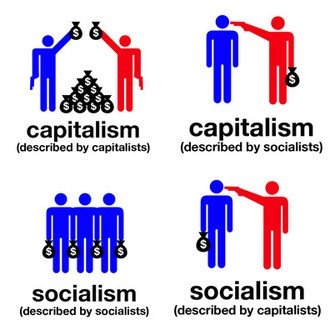
Capitalism vs. Socialism vs. Distributism

Capitalism vs. Socialism  vs. Distributism by Bryan J. Neva, Sr. Since ancient times, people have bought, sold, and traded land,...