Tuesday, June 2, 2015
Monday, May 25, 2015
Pope: wealth that is not shared generates corruption

Gospel Reading for May 25, 2015MK 10:17-27
As Jesus was setting out on a journey, a man ran up,
knelt down before him, and asked him,
“Good teacher, what must I do to inherit eternal life?”
Jesus answered him, “Why do you call me good?
No one is good but God alone.
You know the commandments: You shall not kill;
you shall not commit adultery;
you shall not steal;
you shall not bear false witness;
you shall not defraud;
honor your father and your mother.”
He replied and said to him,
“Teacher, all of these I have observed from my youth.”
Jesus, looking at him, loved him and said to him,
“You are lacking in one thing.
Go, sell what you have, and give to the poor
and you will have treasure in heaven; then come, follow me.”
At that statement, his face fell,
and he went away sad, for he had many possessions.
Jesus looked around and said to his disciples,
“How hard it is for those who have wealth
to enter the Kingdom of God!”
The disciples were amazed at his words.
So Jesus again said to them in reply,
“Children, how hard it is to enter the Kingdom of God!
It is easier for a camel to pass through the eye of a needle
than for one who is rich to enter the Kingdom of God.”
They were exceedingly astonished and said among themselves,
“Then who can be saved?”
Jesus looked at them and said,
“For men it is impossible, but not for God.
All things are possible for God.”
knelt down before him, and asked him,
“Good teacher, what must I do to inherit eternal life?”
Jesus answered him, “Why do you call me good?
No one is good but God alone.
You know the commandments: You shall not kill;
you shall not commit adultery;
you shall not steal;
you shall not bear false witness;
you shall not defraud;
honor your father and your mother.”
He replied and said to him,
“Teacher, all of these I have observed from my youth.”
Jesus, looking at him, loved him and said to him,
“You are lacking in one thing.
Go, sell what you have, and give to the poor
and you will have treasure in heaven; then come, follow me.”
At that statement, his face fell,
and he went away sad, for he had many possessions.
Jesus looked around and said to his disciples,
“How hard it is for those who have wealth
to enter the Kingdom of God!”
The disciples were amazed at his words.
So Jesus again said to them in reply,
“Children, how hard it is to enter the Kingdom of God!
It is easier for a camel to pass through the eye of a needle
than for one who is rich to enter the Kingdom of God.”
They were exceedingly astonished and said among themselves,
“Then who can be saved?”
Jesus looked at them and said,
“For men it is impossible, but not for God.
All things are possible for God.”
Article is from Vatican Radio May 25, 2015
In his Homily, Pope Francis reflects on one of the most famous passages of the Gospel: Jesus meets the rich young man who enthusiastically asks to follow Him and assures Him he will always live by the commandments. But when Jesus tells him one last thing is needed - to sell his things, give everything to the poor and then follow Him - the young man’s attitude and willingness swiftly change. Suddenly, "the joy and hope" in the rich young man vanish, because he does not want to give up his riches.
"The attachment to riches is the beginning of all kinds of corruption, everywhere: personal corruption, corruption in business, even small commercial bribery, the kind that shortchanges you at the counter, political corruption, corruption in education ... Why? Because those who live attached to their own power, their own wealth, they believe they’re in heaven. They are closed; they have no horizon, no hope. Eventually they will have to leave everything."
Rich and sterile
"There is a mystery in the possession of wealth," says Francis. "Riches have the ability to seduce, to take us to a seduction and make us believe that we are in a paradise on earth." Instead, says the Pope, that earthly paradise is a place without "horizon", similar to that neighborhood the pontiff remembers seeing in the seventies, inhabited by wealthy people who had built walls and fences to defend their property from thieves:
"And living without horizons is a sterile life; living without hope is a sad life. The attachment to wealth makes us sad and makes us sterile. I say 'attachment,' I am not saying 'good administration of one’s riches', because riches are for the common good, for everyone. And if the Lord gives them to one person it is so that they are used for the good of all, not for oneself, not so they are closed in one’s heart, which then becomes corrupt and sad."
Open your hand and your horizons
Wealth without generosity, insists Pope Francis, "makes us believe that we are powerful like God. And in the end it takes away the best: hope." But Jesus, he concludes, indicates in the Gospel the right way to live.
"The first Beatitude: 'Blessed are the poor in spirit,' or the stripping off of this attachment and making sure that the riches that the Lord has given one are for the common good. It’s the only way. Open your hand, open your heart, open up the horizon. But if you have a closed hand, your heart is closed as the man’s who threw banquets and wore expensive clothes; you have no horizons, you do not see others who are in need and you'll end up like that man: far from God. "


Wednesday, May 20, 2015
Who Do You Believe?
Who Do You Believe?
by Bryan J. Neva, Sr.

We're all bombarded with too much information! There's 24/7 news, information, commentary, and entertainment on television, the Internet, radio, and smart phones. Newspapers and other periodicals offer even more salacious details, rumors, and photos we didn't get from the other sources. Finally, there are millions of books out there on just about any subject we can imagine.
So who do we believe as a trusted source of information when so much of what we read and hear is contradictory? One week we are told to eat more meat and protein, the next to eat more fruits, grains, and vegetables. One week we are told to drink a glass of red wine every day, the next to drink none at all. One week we are told something or other is good for you, the next that something or other is bad for you depending on which expert is talking.
When I was a teenager in the 1970s, all the climatologist were predicting global cooling; today all the climatologist are predicting global warming. When I was a young man in the 1980s, it was socially acceptable to demean certain social or ethnic groups; today it's not. When I was starting a family in the 1990s people were not very environmentally conscience; today they are. But still, who do you believe?
For starters, our parents didn't raise us to be fools! They're our first teachers. They taught us right from wrong and helped us to form our paradigms on life. And if we were blessed to have been raised in a faith tradition, our place of worship also helped teach us right from wrong.
In school, our teachers taught us reading and writing, language and speech, history, sociology, psychology, cultures, economics, government, mathematics, and science. And then they helped us make sense of all this information by teaching us critical thinking skills and the scientific method.

We're all bombarded with too much information! There's 24/7 news, information, commentary, and entertainment on television, the Internet, radio, and smart phones. Newspapers and other periodicals offer even more salacious details, rumors, and photos we didn't get from the other sources. Finally, there are millions of books out there on just about any subject we can imagine.
So who do we believe as a trusted source of information when so much of what we read and hear is contradictory? One week we are told to eat more meat and protein, the next to eat more fruits, grains, and vegetables. One week we are told to drink a glass of red wine every day, the next to drink none at all. One week we are told something or other is good for you, the next that something or other is bad for you depending on which expert is talking.
When I was a teenager in the 1970s, all the climatologist were predicting global cooling; today all the climatologist are predicting global warming. When I was a young man in the 1980s, it was socially acceptable to demean certain social or ethnic groups; today it's not. When I was starting a family in the 1990s people were not very environmentally conscience; today they are. But still, who do you believe?
For starters, our parents didn't raise us to be fools! They're our first teachers. They taught us right from wrong and helped us to form our paradigms on life. And if we were blessed to have been raised in a faith tradition, our place of worship also helped teach us right from wrong.
In school, our teachers taught us reading and writing, language and speech, history, sociology, psychology, cultures, economics, government, mathematics, and science. And then they helped us make sense of all this information by teaching us critical thinking skills and the scientific method.
So with our God given ability to naturally reason, why do so many people believe lies and live unrighteous lives? It may simply be ignorance of the truth or a warped perception of reality. You can't hardly blame someone's misguided beliefs if they were raised poorly or if they had a poor education can you? But still, none of us had perfect childhoods or an education. This is the nature versus nurture argument.
Something else to consider is that man is a social animal and most of us like to go along to get along. So if a society condones or condemns certain things, people will generally go along with it. Consider what happened in Germany in the 1930s and 40s. Very few people had the courage to stand up against Hitler and the Nazi party. Or consider North Korea today. The society has become cult-like in their unquestioned devotion to their leader.
The archenemies of the great Greek philosophers Socrates and Plato were the Sophists. Socrates and Plato both believed that absolute truth can be known and discovered, whereas the Sophist believed that truth is relative. This is what we call moral relativism today, and it's the hallmark of secular-progressive thinking that has become so widespread.
Webster's defines truth as the true or actual state of a matter; conformity with fact, reality, actuality, or existence; a verified or indisputable fact, proposition, principle, observation, or the like (such as scientific or mathematical truths).
Beyond simply collecting and analyzing information, we need a compass or guide to help us sort through how we should act in response to all the information we're bombarded with. For many of us, our faith supplies that moral or ethical compass or GPS. It shows us exactly where we are and the direction we should follow to reach our goals.
Jesus said, "I am the light of the world. Whoever follows me will never walk in darkness but will have the light of life. If you continue in my word, you are truly my disciples; and you will know the truth, and the truth will set you free. I am the way, and the truth, and the life, no one comes to the Father except through me!" (John 8:12, 31, 32; 14:6). And during Jesus' trial before the Roman Governor of Judaea, Pontius Pilate asked him, "So you are a king?" Jesus answered, "You say that I am a king, and for this reason I was born, and for this reason I came into the world, to bear witness to the truth. Everyone who is committed to the truth listens to me!" Then Pilate said to him sardonically, "What is truth?" (John 18:37, 38).
"What is truth?" seems like a simple enough question, but the answer is not so simple at all when we're bombarded with so much information. Philosophers, scientist, and great thinkers throughout the ages have debated this very question. And institutions of higher learning have dedicated themselves to discovering and discerning the truth in all its varied forms. The late Pope John Paul II in 1993 publish an encyclical letter called "The Splendor of Truth" (in Latin Veritatis Splendor) where he asserted that absolute truth is knowable by everyone and in any culture writing, "in the depth of [man's] heart there always remains a yearning for absolute truth and thirst to attain full knowledge of it."
Throughout our history, mankind, by our very nature, has been drawn to the truth despite being deluded by lies, superstitions, misconceptions, misunderstandings, prejudices, and the like.
But truth can be a demanding task master. Living a life of truth can be a hard, rocky, and difficult road to follow. Falsehood is easy. But committing ourselves to the truth can cost us a lot. It can mean the difference between worldly success or failure, fame or obscurity, fortune or poverty, pleasure or pain, reward or sacrifice, life or death.
So why live by the truth if living a lie is so much easier and rewarding? That's the sixty-four-thousand dollar question! But it's probably why so few of us actively pursue and live by the truth. Being bombarded with so much information, we can believe almost anything. As the old saying goes, if you don't believe in something, then you'll fall for anything.
As for me, I believe that being committed to the truth is its own reward, and being a follower of Jesus Christ, the source and embodiment of all truth, gives us someone we can believe in.
Something else to consider is that man is a social animal and most of us like to go along to get along. So if a society condones or condemns certain things, people will generally go along with it. Consider what happened in Germany in the 1930s and 40s. Very few people had the courage to stand up against Hitler and the Nazi party. Or consider North Korea today. The society has become cult-like in their unquestioned devotion to their leader.
The archenemies of the great Greek philosophers Socrates and Plato were the Sophists. Socrates and Plato both believed that absolute truth can be known and discovered, whereas the Sophist believed that truth is relative. This is what we call moral relativism today, and it's the hallmark of secular-progressive thinking that has become so widespread.
Webster's defines truth as the true or actual state of a matter; conformity with fact, reality, actuality, or existence; a verified or indisputable fact, proposition, principle, observation, or the like (such as scientific or mathematical truths).
Beyond simply collecting and analyzing information, we need a compass or guide to help us sort through how we should act in response to all the information we're bombarded with. For many of us, our faith supplies that moral or ethical compass or GPS. It shows us exactly where we are and the direction we should follow to reach our goals.
Jesus said, "I am the light of the world. Whoever follows me will never walk in darkness but will have the light of life. If you continue in my word, you are truly my disciples; and you will know the truth, and the truth will set you free. I am the way, and the truth, and the life, no one comes to the Father except through me!" (John 8:12, 31, 32; 14:6). And during Jesus' trial before the Roman Governor of Judaea, Pontius Pilate asked him, "So you are a king?" Jesus answered, "You say that I am a king, and for this reason I was born, and for this reason I came into the world, to bear witness to the truth. Everyone who is committed to the truth listens to me!" Then Pilate said to him sardonically, "What is truth?" (John 18:37, 38).
"What is truth?" seems like a simple enough question, but the answer is not so simple at all when we're bombarded with so much information. Philosophers, scientist, and great thinkers throughout the ages have debated this very question. And institutions of higher learning have dedicated themselves to discovering and discerning the truth in all its varied forms. The late Pope John Paul II in 1993 publish an encyclical letter called "The Splendor of Truth" (in Latin Veritatis Splendor) where he asserted that absolute truth is knowable by everyone and in any culture writing, "in the depth of [man's] heart there always remains a yearning for absolute truth and thirst to attain full knowledge of it."
Throughout our history, mankind, by our very nature, has been drawn to the truth despite being deluded by lies, superstitions, misconceptions, misunderstandings, prejudices, and the like.
But truth can be a demanding task master. Living a life of truth can be a hard, rocky, and difficult road to follow. Falsehood is easy. But committing ourselves to the truth can cost us a lot. It can mean the difference between worldly success or failure, fame or obscurity, fortune or poverty, pleasure or pain, reward or sacrifice, life or death.
So why live by the truth if living a lie is so much easier and rewarding? That's the sixty-four-thousand dollar question! But it's probably why so few of us actively pursue and live by the truth. Being bombarded with so much information, we can believe almost anything. As the old saying goes, if you don't believe in something, then you'll fall for anything.
As for me, I believe that being committed to the truth is its own reward, and being a follower of Jesus Christ, the source and embodiment of all truth, gives us someone we can believe in.
Friday, May 15, 2015
Outside Your Control by Allen Laudenslager with Bryan Neva
From the blog A Voice In The Wilderness by Allen Laudenslager
When I was in the army , an old time sergeant said “You either control your environment or it controls you” and like many young inexperienced trainees, I bought into that concept. Unfortunately, it has caused me untold frustration both at work and in my personal life. With age and experience, I came to realize that there are circumstances outside my control and that many times they are completely outside my power to control. This is the central teaching of both Stoic Philosophy and Buddhism: that there are things under your control and things outside of your control, and if you really think hard, you’ll realize that the only things absolutely within your control are your own attitudes and behavior.
I recently read an article that included the following statement: “Blaming others for a situation over which you clearly had a choice is simply shirking responsibility.” While it's true that blaming others for situations over which you clearly had a choice is bad for you anytime you do it, there are real situations where outside influences caused the problem for you and recognizing that the cause was really outside your control is the first step in recognizing that it's not YOUR failure that caused the problem. Recognizing the real cause will help you find ways to either fix that outside disturbance or to separate yourself from it.
Life basically only offers us three choices: we can Accept things the way they are, we can honestly and constructively try to Change things, or we can Exit. In other words we can ACE it: Accept it, Change it, or Exit. In practice, this is what most people do unconsciously. The 12 step programs phrase it well in their serenity prayer: God, grant me the serenity to accept the things I cannot change, the courage to change the things I can and the wisdom to know the difference.
Remember, you are getting wet because it's raining and you can't control the rain. All you can do is continue getting wet (Accept it), put on a raincoat or put up an umbrella (Change it), or come in out of the rain (Exit).
In any organization whether it’s a family, a social group, or a workplace, people will behave badly at times. You might blame yourself asking, “what did I do to upset them or cause their bad behavior?” Regardless of what you did or did not do, how someone chooses to behave is entirely up to them and not you. You can honestly and sincerely try to positively influence other people’s behavior, but you cannot control their behavior. That’s completely up to them. You only can control your response and your behavior. You can choose to be hateful and vindictive, or you can choose to be loving and forgiving - knowing that you too sometimes behave badly.
One of the big secrets to life is discovering the difference between what’s inside your control and what is controlled by other people or events. Once you understand what is truly within your control, you can begin to fix the things you can, decide to accept the things you can’t or to exit from the situation.
When it gets right down to it, all you can really control is what you do and how you act. Including what you will or will not stick around for.
I recently read an article that included the following statement: “Blaming others for a situation over which you clearly had a choice is simply shirking responsibility.” While it's true that blaming others for situations over which you clearly had a choice is bad for you anytime you do it, there are real situations where outside influences caused the problem for you and recognizing that the cause was really outside your control is the first step in recognizing that it's not YOUR failure that caused the problem. Recognizing the real cause will help you find ways to either fix that outside disturbance or to separate yourself from it.
Life basically only offers us three choices: we can Accept things the way they are, we can honestly and constructively try to Change things, or we can Exit. In other words we can ACE it: Accept it, Change it, or Exit. In practice, this is what most people do unconsciously. The 12 step programs phrase it well in their serenity prayer: God, grant me the serenity to accept the things I cannot change, the courage to change the things I can and the wisdom to know the difference.
Remember, you are getting wet because it's raining and you can't control the rain. All you can do is continue getting wet (Accept it), put on a raincoat or put up an umbrella (Change it), or come in out of the rain (Exit).
In any organization whether it’s a family, a social group, or a workplace, people will behave badly at times. You might blame yourself asking, “what did I do to upset them or cause their bad behavior?” Regardless of what you did or did not do, how someone chooses to behave is entirely up to them and not you. You can honestly and sincerely try to positively influence other people’s behavior, but you cannot control their behavior. That’s completely up to them. You only can control your response and your behavior. You can choose to be hateful and vindictive, or you can choose to be loving and forgiving - knowing that you too sometimes behave badly.
One of the big secrets to life is discovering the difference between what’s inside your control and what is controlled by other people or events. Once you understand what is truly within your control, you can begin to fix the things you can, decide to accept the things you can’t or to exit from the situation.
When it gets right down to it, all you can really control is what you do and how you act. Including what you will or will not stick around for.
Monday, May 11, 2015
A Hair’s Breadth to Happiness by Todd Neva
A Hair’s Breadth to Happiness
May 11, 2015, by Todd Neva, guest blogger
“I have hundreds of Rubles I don’t know what to do with, and she stands in her tattered cloak looking timidly at me,” Count Bezukhov thought of a peddler woman. “And what does she want money for? As if that money could add a hair’s breadth to happiness or peace of mind. Can anything in the world make her or me less a prey to evil and death?”1
In Leo Tolsky’s War & Peace, Pierre had left his beautiful wife Helene at his Moscow palace and traveled to his home in Petersburg. Helene called him an idiot for suspecting she had an affair with Dolokhov. Pierre had challenged the insolent man to a duel and shot him, but now suffered overwhelming regret. He was in a loveless marriage, and he felt awkward in Moscow society. His life was not happier since he inherited a massive fortune and became Count Bezukhov.
Such a profound question Tolsky asks: Does money buy happiness? Great literature asks the big questions; this blog attempts to answer them.
In 2010, economist Angus Deaton and psychologist Daniel Kahnemana, both of Princeton University, published a study that showed Americans do feel happier as incomes increase up to $75,000, after which there is no greater degree of happiness no matter how much they make. The study also showed absolute wealth didn’t matter, rather people were happier when they were relatively wealthier than their peers. The same poll done in other countries showed similar results, but at different income thresholds. As incomes rise, stress decreases.
Apparently, money does add a hair’s breadth to happiness and peace of mine.
The Apostle Paul warned of the power of money, or at least the desire for money. He said that we should be content with food and clothing. Those who desire to be rich fall into temptation, into a snare, into many senseless and harmful desires that plunge people into ruin and destruction. The love of money is the root of all kinds of evil. It’s the craving for money, he continued, that some have wandered away from the faith and pierced themselves with many pangs.3
We shouldn’t take Paul’s admonition too far and reject wealth or despise the rich. James tells us to look after the widows and orphans.4 We have more capacity to do that when we have wealth. We shouldn’t love money, we shouldn’t crave money, but we can use prosperity for good.
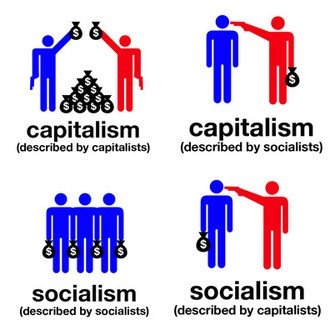
The United States may be the most prosperous nation in the history of the world. Is there greed? Sure. Is there income inequality? Sure. Nonetheless, capitalism has lifted more people out of poverty than any other economic system. As Winston Churchill pointed out, “The inherent vice of capitalism is the unequal sharing of blessings; the inherent virtue of socialism is the equal sharing of miseries.”5
Recently, my cousin visited us all the way from St. Petersburg, Russia. She said when people in Russia get ALS, they lie in their beds. There is no safety net, and the average person is so poor he can’t afford to purchase even the most basic adaptive equipment, like a wheelchair.
It’s a stark difference from my life. Slings and lifts transfer me out of bed and to my power wheelchair. I roll around in my accessible house. I get out on the town in my accessible van. I have a window that opens to the world sitting on my desk with a trackpad mouse and the clicker at my feet. Money might not buy happiness, but it certainly pays for my independence and quality of life.
I’m thankful for the top 10% of income earners who pay 70% of US federal taxes that fund Medicare for the disabled.6 I’m thankful for Americans heart for giving to organizations like MDA, which provides equipment to people who can’t afford to purchase it themselves.
Luke records Jesus saying, “Blessed be the poor, for yours is the kingdom of God.” Does he mean all who live in poverty will go to heaven? What did he mean? Matthew quotes Jesus in the same sermon with more context: “Blessed be the poor in spirit.”7 Jesus is all about the heart. Rejecting wealth to stave off the temptation of greed makes as little sense as burning a bounty crop to stave off the temptation of gluttony.
“Money is a terrible master, but an excellent servant.” ~ P.T. Barnum
Todd Neva has a Bachelor of Science, Business, and Master of Business Administration (MBA) from the Carlson School of Management at the University of Minnesota. He worked for sixteen years in the fields of marketing research and finance until becoming permanently disabled with ALS. He co-authored (with his wife Kristin Neva) Heavy: Finding Meaning after a Terminal Disease, which has not brought him prosperity, but has blessed the poor in spirit. He blogs on the topics of suffering, grief, and disability at nevastory.com.
 |
| Todd Neva and his family live in the Upper Peninsula of Michigan |
References:
1. Tolstoy, Leo (2010-07-23). War and Peace (Kindle Locations 7175-7177). Superior Formatting Publishing. Kindle Edition.
2. Time Magazine, http://content.time.com/time/magazine/article/0,9171,2019628,00.html, accessed on May 9, 2015.
3. 1 Timothy 6:3-10
4. James 1:27
5. Brainy Quote, http://www.brainyquote.com/quotes/quotes/w/winstonchu101776.html, accessed May 9, 2015.
6. McCormally, Kevin (January 8, 2015). "Where Do You Rank as a Taxpayer?". Kiplinger. http://www.kiplinger.com/article/taxes/T054-C000-S001-calculate-your-share-of-the-tax-burden.html, accessed May 9, 2015.
7. Luke 6:20-21 and Matthew 5:3
Sunday, May 10, 2015
11 Life Changing Lessons to Learn from Einstein
Article from: www.powerofpositivity.com
11 Life Changing Lessons to Learn from Einstein
When most people think of Einstein, they think of the theory of relativity and “the world’s most famous equation,” E=MC². However, we can learn a lot more from Einstein than just scientific formulas and theories. Albert Einstein also offered renowned knowledge in how to become your best self and enjoy life to the fullest. Even if you have no interest in science, you can still apply these valuable lessons to your life today.
1. Value Your Imagination
“The true sign of intelligence is not knowledge but imagination.” -Einstein
“Logic will get you from A to B. Imagination will take you everywhere.” -Einstein
“Imagination is more important than knowledge. For knowledge is limited to all we now know and understand, while imagination embraces the entire world, and all there ever will be to know and understand.” -Einstein
“Imagination is the highest form of research.” –Einstein
2. Never Stop Being Curious
“I have no special talents. I am only passionately curious.” ? Einstein
“The important thing is not to stop questioning. Curiosity has its own reason for existing.” -Einstein
“The most beautiful thing we can experience is the mysterious. It is the source of all true art and science.” -Einstein
3. Be Willing to Learn New Things
“Learning is experience. Everything else is just information.” – Einstein
“Education is what remains after one has forgotten what one has learned in school.” -Einstein
“Intellectual growth should commence at birth and cease only at death.” -Einstein
4. Realize that Growth Comes Out of Failure
A person who never made a mistake never tried anything new. – Albert Einstein
“The only sure way to avoid making mistakes is to have no new ideas.” – Albert Einstein
“You never fail until you stop trying.” -Albert Einstein
Once we accept our limits, we go beyond them. – Albert Einstein
“Only the one who does not question is safe from making a mistake.” —Albert Einstein
5. Dare to be Different and Take Initiative
“Only those who attempt the absurd can achieve the impossible.” – Albert Einstein
Insanity: doing the same thing over and over again and expecting different results. – Albert Einstein
The world is a dangerous place to live; not because of the people who are evil, but because of the people who don’t do anything about it. – Albert Einstein
“I never made one of my discoveries through the process of rational thinking.” – Albert Einstein
6. Live in the Moment and Realize that Beauty Exists Everywhere
“Look deep into nature, and then you will understand everything better.” – Albert Einstein
“I never worry about the future. It comes soon enough.” —Albert Einstein
“He who can no longer pause to wonder and stand rapt in awe, is as good as dead; his eyes are closed.” – Albert Einstein
“There are two ways to live: you can live as if nothing is a miracle; you can live as if everything is a miracle.” – Albert Einstein
“A happy man is too satisfied with the present to dwell too much on the future.” Albert Einstein
7. Live Selflessly and Value Others
“Only a life lived for others is a life worthwhile.”
“Try to become not a man of success, but try rather to become a man of value.”
“Only one who devotes himself to a cause with his whole strength and soul can be a true master. For this reason mastery demands all of a person.”
“We know from daily life that we exist for other people first of all, for whose smiles and well-being our own happiness depends.”
“Enjoying the joys of others and suffering with them—these are the best guides for man.” – Albert Einstein
8. Your Thoughts Create Your Reality
“I admit that thoughts influence the body.”
“We cannot solve our problems with the same thinking we used when we created them.” – Albert Einstein
9. Unleash Your Greatness
“Great spirits have always encountered violent opposition from mediocre minds.” – Albert Einstein
10. Be Kind to All Living Beings On Earth
“Our task must be to free ourselves by widening our circle of compassion to embrace all living creatures and the whole of nature and its beauty.” – Albert Einstein
11. Trust Your Inner Voice
“The only real valuable thing is intuition.”
“Never do anything against conscience even if the state demands it.”
“Few are those who see with their own eyes and feel with their own hearts.” – Albert Einstein

Subscribe to:
Posts (Atom)
Featured Post
Capitalism vs. Socialism vs. Distributism
Capitalism vs. Socialism vs. Distributism by Bryan J. Neva, Sr. Since ancient times, people have bought, sold, and traded land,...