Friday, February 20, 2015
Wednesday, February 18, 2015
Pope Francis on the socio-economic problems we face in the world today
The following came from Pope Francis' recent encyclical: Evangelii Gaudium (Joy of the Gospel) Apostolic Exhortation, Pope Francis, On the Proclamation of the Gospel in Today's World (24 November 2013)
I. Some challenges of today’s world
52. In our time humanity is experiencing a turning-point in its history, as we can see from the advances being made in so many fields. We can only praise the steps being taken to improve people’s welfare in areas such as health care, education and communications. At the same time we have to remember that the majority of our contemporaries are barely living from day to day, with dire consequences. A number of diseases are spreading. The hearts of many people are gripped by fear and desperation, even in the so-called rich countries. The joy of living frequently fades, lack of respect for others and violence are on the rise, and inequality is increasingly evident. It is a struggle to live and, often, to live with precious little dignity. This epochal change has been set in motion by the enormous qualitative, quantitative, rapid and cumulative advances occuring in the sciences and in technology, and by their instant application in different areas of nature and of life. We are in an age of knowledge and information, which has led to new and often anonymous kinds of power.
No to an economy of exclusion
53. Just as the commandment “Thou shalt not kill” sets a clear limit in order to safeguard the value of human life, today we also have to say “thou shalt not” to an economy of exclusion and inequality. Such an economy kills. How can it be that it is not a news item when an elderly homeless person dies of exposure, but it is news when the stock market loses two points? This is a case of exclusion. Can we continue to stand by when food is thrown away while people are starving? This is a case of inequality. Today everything comes under the laws of competition and the survival of the fittest, where the powerful feed upon the powerless. As a consequence, masses of people find themselves excluded and marginalized: without work, without possibilities, without any means of escape. Human beings are themselves considered consumer goods to be used and then discarded. We have created a “throw away” culture which is now spreading. It is no longer simply about exploitation and oppression, but something new. Exclusion ultimately has to do with what it means to be a part of the society in which we live; those excluded are no longer society’s underside or its fringes or its disenfranchised – they are no longer even a part of it. The excluded are not the “exploited” but the outcast, the “leftovers”.
54. In this context, some people continue to defend trickle-down theories which assume that economic growth, encouraged by a free market, will inevitably succeed in bringing about greater justice and inclusiveness in the world. This opinion, which has never been confirmed by the facts, expresses a crude and naïve trust in the goodness of those wielding economic power and in the sacralized workings of the prevailing economic system. Meanwhile, the excluded are still waiting. To sustain a lifestyle which excludes others, or to sustain enthusiasm for that selfish ideal, a globalization of indifference has developed. Almost without being aware of it, we end up being incapable of feeling compassion at the outcry of the poor, weeping for other people’s pain, and feeling a need to help them, as though all this were someone else’s responsibility and not our own. The culture of prosperity deadens us; we are thrilled if the market offers us something new to purchase. In the meantime all those lives stunted for lack of opportunity seem a mere spectacle; they fail to move us.
No to the new idolatry of money
55. One cause of this situation is found in our relationship with money, since we calmly accept its dominion over ourselves and our societies. The current financial crisis can make us overlook the fact that it originated in a profound human crisis: the denial of the primacy of the human person! We have created new idols. The worship of the ancient golden calf (cf. Ex 32:1-35) has returned in a new and ruthless guise in the idolatry of money and the dictatorship of an impersonal economy lacking a truly human purpose. The worldwide crisis affecting finance and the economy lays bare their imbalances and, above all, their lack of real concern for human beings; man is reduced to one of his needs alone: consumption.
56. While the earnings of a minority are growing exponentially, so too is the gap separating the majority from the prosperity enjoyed by those happy few. This imbalance is the result of ideologies which defend the absolute autonomy of the marketplace and financial speculation. Consequently, they reject the right of states, charged with vigilance for the common good, to exercise any form of control. A new tyranny is thus born, invisible and often virtual, which unilaterally and relentlessly imposes its own laws and rules. Debt and the accumulation of interest also make it difficult for countries to realize the potential of their own economies and keep citizens from enjoying their real purchasing power. To all this we can add widespread corruption and self-serving tax evasion, which have taken on worldwide dimensions. The thirst for power and possessions knows no limits. In this system, which tends to devour everything which stands in the way of increased profits, whatever is fragile, like the environment, is defenseless before the interests of a deified market, which become the only rule.
No to a financial system which rules rather than serves
57. Behind this attitude lurks a rejection of ethics and a rejection of God. Ethics has come to be viewed with a certain scornful derision. It is seen as counterproductive, too human, because it makes money and power relative. It is felt to be a threat, since it condemns the manipulation and debasement of the person. In effect, ethics leads to a God who calls for a committed response which is outside the categories of the marketplace. When these latter are absolutized, God can only be seen as uncontrollable, unmanageable, even dangerous, since he calls human beings to their full realization and to freedom from all forms of enslavement. Ethics – a non-ideological ethics – would make it possible to bring about balance and a more humane social order. With this in mind, I encourage financial experts and political leaders to ponder the words of one of the sages of antiquity: “Not to share one’s wealth with the poor is to steal from them and to take away their livelihood. It is not our own goods which we hold, but theirs”.[55]
58. A financial reform open to such ethical considerations would require a vigorous change of approach on the part of political leaders. I urge them to face this challenge with determination and an eye to the future, while not ignoring, of course, the specifics of each case. Money must serve, not rule! The Pope loves everyone, rich and poor alike, but he is obliged in the name of Christ to remind all that the rich must help, respect and promote the poor. I exhort you to generous solidarity and to the return of economics and finance to an ethical approach which favours human beings.
No to the inequality which spawns violence
59. Today in many places we hear a call for greater security. But until exclusion and inequality in society and between peoples are reversed, it will be impossible to eliminate violence. The poor and the poorer peoples are accused of violence, yet without equal opportunities the different forms of aggression and conflict will find a fertile terrain for growth and eventually explode. When a society – whether local, national or global – is willing to leave a part of itself on the fringes, no political programmes or resources spent on law enforcement or surveillance systems can indefinitely guarantee tranquility. This is not the case simply because inequality provokes a violent reaction from those excluded from the system, but because the socioeconomic system is unjust at its root. Just as goodness tends to spread, the toleration of evil, which is injustice, tends to expand its baneful influence and quietly to undermine any political and social system, no matter how solid it may appear. If every action has its consequences, an evil embedded in the structures of a society has a constant potential for disintegration and death. It is evil crystallized in unjust social structures, which cannot be the basis of hope for a better future. We are far from the so-called “end of history”, since the conditions for a sustainable and peaceful development have not yet been adequately articulated and realized.
60. Today’s economic mechanisms promote inordinate consumption, yet it is evident that unbridled consumerism combined with inequality proves doubly damaging to the social fabric. Inequality eventually engenders a violence which recourse to arms cannot and never will be able to resolve. It serves only to offer false hopes to those clamouring for heightened security, even though nowadays we know that weapons and violence, rather than providing solutions, create new and more serious conflicts. Some simply content themselves with blaming the poor and the poorer countries themselves for their troubles; indulging in unwarranted generalizations, they claim that the solution is an “education” that would tranquilize them, making them tame and harmless. All this becomes even more exasperating for the marginalized in the light of the widespread and deeply rooted corruption found in many countries – in their governments, businesses and institutions – whatever the political ideology of their leaders.
Some cultural challenges
61. We also evangelize when we attempt to confront the various challenges which can arise.[56] On occasion these may take the form of veritable attacks on religious freedom or new persecutions directed against Christians; in some countries these have reached alarming levels of hatred and violence. In many places, the problem is more that of widespread indifference and relativism, linked to disillusionment and the crisis of ideologies which has come about as a reaction to any-thing which might appear totalitarian. This not only harms the Church but the fabric of society as a whole. We should recognize how in a culture where each person wants to be bearer of his or her own subjective truth, it becomes difficult for citizens to devise a common plan which transcends individual gain and personal ambitions.
62. In the prevailing culture, priority is given to the outward, the immediate, the visible, the quick, the superficial and the provisional. What is real gives way to appearances. In many countries globalization has meant a hastened deterioration of their own cultural roots and the invasion of ways of thinking and acting proper to other cultures which are economically advanced but ethically debilitated. This fact has been brought up by bishops from various continents in different Synods. The African bishops, for example, taking up the Encyclical Sollicitudo Rei Socialis, pointed out years ago that there have been frequent attempts to make the African countries “parts of a machine, cogs on a gigantic wheel. This is often true also in the field of social communications which, being run by centres mostly in the northern hemisphere, do not always give due consideration to the priorities and problems of such countries or respect their cultural make-up”.[57] By the same token, the bishops of Asia “underlined the external influences being brought to bear on Asian cultures. New patterns of behaviour are emerging as a result of over-exposure to the mass media… As a result, the negative aspects of the media and entertainment industries are threatening traditional values, and in particular the sacredness of marriage and the stability of the family”.[58]
63. The Catholic faith of many peoples is nowadays being challenged by the proliferation of new religious movements, some of which tend to fundamentalism while others seem to propose a spirituality without God. This is, on the one hand, a human reaction to a materialistic, consumerist and individualistic society, but it is also a means of exploiting the weaknesses of people living in poverty and on the fringes of society, people who make ends meet amid great human suffering and are looking for immediate solutions to their needs. These religious movements, not without a certain shrewdness, come to fill, within a predominantly individualistic culture, a vacuum left by secularist rationalism. We must recognize that if part of our baptized people lack a sense of belonging to the Church, this is also due to certain structures and the occasionally unwelcoming atmosphere of some of our parishes and communities, or to a bureaucratic way of dealing with problems, be they simple or complex, in the lives of our people. In many places an administrative approach prevails over a pastoral approach, as does a concentration on administering the sacraments apart from other forms of evangelization.
64. The process of secularization tends to reduce the faith and the Church to the sphere of the private and personal. Furthermore, by completely rejecting the transcendent, it has produced a growing deterioration of ethics, a weakening of the sense of personal and collective sin, and a steady increase in relativism. These have led to a general sense of disorientation, especially in the periods of adolescence and young adulthood which are so vulnerable to change. As the bishops of the United States of America have rightly pointed out, while the Church insists on the existence of objective moral norms which are valid for everyone, “there are those in our culture who portray this teaching as unjust, that is, as opposed to basic human rights. Such claims usually follow from a form of moral relativism that is joined, not without inconsistency, to a belief in the absolute rights of individuals. In this view, the Church is perceived as promoting a particular prejudice and as interfering with individual freedom”.[59] We are living in an information-driven society which bombards us indiscriminately with data – all treated as being of equal importance – and which leads to remarkable superficiality in the area of moral discernment. In response, we need to provide an education which teaches critical thinking and encourages the development of mature moral values.
65. Despite the tide of secularism which has swept our societies, in many countries – even those where Christians are a minority – the Catholic Church is considered a credible institution by public opinion, and trusted for her solidarity and concern for those in greatest need. Again and again, the Church has acted as a mediator in finding solutions to problems affecting peace, social harmony, the land, the defence of life, human and civil rights, and so forth. And how much good has been done by Catholic schools and universities around the world! This is a good thing. Yet, we find it difficult to make people see that when we raise other questions less palatable to public opinion, we are doing so out of fidelity to precisely the same convictions about human dignity and the common good.
66. The family is experiencing a profound cultural crisis, as are all communities and social bonds. In the case of the family, the weakening of these bonds is particularly serious because the family is the fundamental cell of society, where we learn to live with others despite our differences and to belong to one another; it is also the place where parents pass on the faith to their children. Marriage now tends to be viewed as a form of mere emotional satisfaction that can be constructed in any way or modified at will. But the indispensible contribution of marriage to society transcends the feelings and momentary needs of the couple. As the French bishops have taught, it is not born “of loving sentiment, ephemeral by definition, but from the depth of the obligation assumed by the spouses who accept to enter a total communion of life”.[60]
67. The individualism of our postmodern and globalized era favours a lifestyle which weakens the development and stability of personal relationships and distorts family bonds. Pastoral activity needs to bring out more clearly the fact that our relationship with the Father demands and encourages a communion which heals, promotes and reinforces interpersonal bonds. In our world, especially in some countries, different forms of war and conflict are re-emerging, yet we Christians remain steadfast in our intention to respect others, to heal wounds, to build bridges, to strengthen relationships and to “bear one another’s burdens” (Gal6:2). Today too, various associations for the defence of rights and the pursuit of noble goals are being founded. This is a sign of the desire of many people to contribute to social and cultural progress.
Challenges to inculturating the faith
68. The Christian substratum of certain peoples – most of all in the West – is a living reality. Here we find, especially among the most needy, a moral resource which preserves the values of an authentic Christian humanism. Seeing reality with the eyes of faith, we cannot fail to acknowledge what the Holy Spirit is sowing. It would show a lack of trust in his free and unstinting activity to think that authentic Christian values are absent where great numbers of people have received baptism and express their faith and solidarity with others in a variety of ways. This means more than acknowledging occasional “seeds of the word”, since it has to do with an authentic Christian faith which has its own expressions and means of showing its relationship to the Church. The immense importance of a culture marked by faith cannot be overlooked; before the onslaught of contemporary secularism an evangelized culture, for all its limits, has many more resources than the mere sum total of believers. An evangelized popular culture contains values of faith and solidarity capable of encouraging the development of a more just and believing society, and possesses a particular wisdom which ought to be gratefully acknowledged.
69. It is imperative to evangelize cultures in order to inculturate the Gospel. In countries of Catholic tradition, this means encouraging, fostering and reinforcing a richness which already exists. In countries of other religious traditions, or profoundly secularized countries, it will mean sparking new processes for evangelizing culture, even though these will demand long-term planning. We must keep in mind, however, that we are constantly being called to grow. Each culture and social group needs purification and growth. In the case of the popular cultures of Catholic peoples, we can see deficiencies which need to be healed by the Gospel: machismo, alcoholism, domestic violence, low Mass attendance, fatalistic or superstitious notions which lead to sorcery, and the like. Popular piety itself can be the starting point for healing and liberation from these deficiencies.
70. It is also true that at times greater emphasis is placed on the outward expressions and traditions of some groups, or on alleged private revelations which would replace all else, than on the impulse of Christian piety. There is a kind of Christianity made up of devotions reflecting an individual and sentimental faith life which does not in fact correspond to authentic “popular piety”. Some people promote these expressions while not being in the least concerned with the advancement of society or the formation of the laity, and in certain cases they do so in order to obtain economic benefits or some power over others. Nor can we overlook the fact that in recent decades there has been a breakdown in the way Catholics pass down the Christian faith to the young. It is undeniable that many people feel disillusioned and no longer identify with the Catholic tradition. Growing numbers of parents do not bring their children for baptism or teach them how to pray. There is also a certain exodus towards other faith communities. The causes of this breakdown include: a lack of opportunity for dialogue in families, the influence of the communications media, a relativistic subjectivism, unbridled consumerism which feeds the market, lack of pastoral care among the poor, the failure of our institutions to be welcoming, and our difficulty in restoring a mystical adherence to the faith in a pluralistic religious landscape.
Challenges from urban cultures
71. The new Jerusalem, the holy city (cf. Rev 21:2-4), is the goal towards which all of humanity is moving. It is curious that God’s revelation tells us that the fullness of humanity and of history is realized in a city. We need to look at our cities with a contemplative gaze, a gaze of faith which sees God dwelling in their homes, in their streets and squares. God’s presence accompanies the sincere efforts of individuals and groups to find encouragement and meaning in their lives. He dwells among them, fostering solidarity, fraternity, and the desire for goodness, truth and justice. This presence must not be contrived but found, uncovered. God does not hide himself from those who seek him with a sincere heart, even though they do so tentatively, in a vague and haphazard manner.
72. In cities, as opposed to the countryside, the religious dimension of life is expressed by different lifestyles, daily rhythms linked to places and people. In their daily lives people must often struggle for survival and this struggle contains within it a profound understanding of life which often includes a deep religious sense. We must examine this more closely in order to enter into a dialogue like that of our Lord and the Samaritan woman at the well where she sought to quench her thirst (cf. Jn 4:1-15).
73. New cultures are constantly being born in these vast new expanses where Christians are no longer the customary interpreters or generators of meaning. Instead, they themselves take from these cultures new languages, symbols, messages and paradigms which propose new approaches to life, approaches often in contrast with the Gospel of Jesus. A completely new culture has come to life and continues to grow in the cities. The Synod noted that today the changes taking place in these great spaces and the culture which they create are a privileged locus of the new evangelization.[61] This challenges us to imagine innovative spaces and possibilities for prayer and communion which are more attractive and meaningful for city dwellers. Through the influence of the media, rural areas are being affected by the same cultural changes, which are significantly altering their way of life as well.
74. What is called for is an evangelization capable of shedding light on these new ways of relating to God, to others and to the world around us, and inspiring essential values. It must reach the places where new narratives and paradigms are being formed, bringing the word of Jesus to the inmost soul of our cities. Cities are multicultural; in the larger cities, a connective network is found in which groups of people share a common imagination and dreams about life, and new human interactions arise, new cultures, invisible cities. Various subcultures exist side by side, and often practise segregation and violence. The Church is called to be at the service of a difficult dialogue. On the one hand, there are people who have the means needed to develop their personal and family lives, but there are also many “non-citizens”, “half citizens” and “urban remnants”. Cities create a sort of permanent ambivalence because, while they offer their residents countless possibilities, they also present many people with any number of obstacles to the full development of their lives. This contrast causes painful suffering. In many parts of the world, cities are the scene of mass protests where thousands of people call for freedom, a voice in public life, justice and a variety of other demands which, if not properly understood, will not be silenced by force.
75. We cannot ignore the fact that in cities human trafficking, the narcotics trade, the abuse and exploitation of minors, the abandonment of the elderly and infirm, and various forms of corruption and criminal activity take place. At the same time, what could be significant places of encounter and solidarity often become places of isolation and mutual distrust. Houses and neighbourhoods are more often built to isolate and protect than to connect and integrate. The proclamation of the Gospel will be a basis for restoring the dignity of human life in these contexts, for Jesus desires to pour out an abundance of life upon our cities (cf. Jn 10:10). The unified and complete sense of human life that the Gospel proposes is the best remedy for the ills of our cities, even though we have to realize that a uniform and rigid program of evangelization is not suited to this complex reality. But to live our human life to the fullest and to meet every challenge as a leaven of Gospel witness in every culture and in every city will make us better Christians and bear fruit in our cities.
Footnotes:
[55] Saint John Chrysostom, De Lazaro Concio, II, 6: PG 48, 992D.
[56] Cf. Propositio 13.
[57] John Paul II, Apostolic Exhortation Ecclesia in Africa (14 September 1995), 52: AAS 88 (1996), 32-33; ID. , Encyclical LetterSollicitudo Rei Socialis (30 December 1987), 22: AAS 80 (1988), 539.
[58] John Paul II, Apostolic Exhortation Ecclesia in Asia (6 November 1999), 7: AAS 92 (2000), 458.
[59] United States Conference Of Catholic Bishops, Ministry to Persons with a Homosexual Inclination: Guidelines for Pastoral Care (2006), 17.
[60] Conférence Des Évêques De France, Conseil Famille et Société, Élargir le mariage aux personnes de même sexe? Ouvrons le débat! (28 September 2012).
[61] Cf. Propositio 25.


Saturday, February 14, 2015
What’s Really to Blame for Weak Economic Growth by Rana Foroohar Feb. 13, 2015
What’s Really to Blame for Weak Economic Growth
Finance is a cause, not a symptom, of weaker economic growth
Monday, February 9, 2015
Sunday, February 8, 2015

Tuesday, February 3, 2015
The Big Lie: 5.6% Unemployment by Jim Clifton
Here's something that many Americans -- including some of the smartest and most educated among us -- don't know: The official unemployment rate, as reported by the U.S. Department of Labor, is extremely misleading.
Right now, we're hearing much celebrating from the media, the White House and Wall Street about how unemployment is "down" to 5.6%. The cheerleading for this number is deafening. The media loves a comeback story, the White House wants to score political points and Wall Street would like you to stay in the market.
None of them will tell you this: If you, a family member or anyone is unemployed and has subsequently given up on finding a job -- if you are so hopelessly out of work that you've stopped looking over the past four weeks -- the Department of Labor doesn't count you as unemployed. That's right. While you are as unemployed as one can possibly be, and tragically may never find work again, you are not counted in the figure we see relentlessly in the news -- currently 5.6%. Right now, as many as 30 million Americans are either out of work or severely underemployed. Trust me, the vast majority of them aren't throwing parties to toast "falling" unemployment.
There's another reason why the official rate is misleading. Say you're an out-of-work engineer or healthcare worker or construction worker or retail manager: If you perform a minimum of one hour of work in a week and are paid at least $20 -- maybe someone pays you to mow their lawn -- you're not officially counted as unemployed in the much-reported 5.6%. Few Americans know this.
Yet another figure of importance that doesn't get much press: those working part time but wanting full-time work. If you have a degree in chemistry or math and are working 10 hours part time because it is all you can find -- in other words, you are severely underemployed -- the government doesn't count you in the 5.6%. Few Americans know this.
There's no other way to say this. The official unemployment rate, which cruelly overlooks the suffering of the long-term and often permanently unemployed as well as the depressingly underemployed, amounts to a Big Lie.
And it's a lie that has consequences, because the great American dream is to have a good job, and in recent years, America has failed to deliver that dream more than it has at any time in recent memory. A good job is an individual's primary identity, their very self-worth, their dignity -- it establishes the relationship they have with their friends, community and country. When we fail to deliver a good job that fits a citizen's talents, training and experience, we are failing the great American dream.
Gallup defines a good job as 30+ hours per week for an organization that provides a regular paycheck. Right now, the U.S. is delivering at a staggeringly low rate of 44%, which is the number of full-time jobs as a percent of the adult population, 18 years and older. We need that to be 50% and a bare minimum of 10 million new, good jobs to replenish America's middle class.
I hear all the time that "unemployment is greatly reduced, but the people aren't feeling it." When the media, talking heads, the White House and Wall Street start reporting the truth -- the percent of Americans in good jobs; jobs that are full time and real -- then we will quit wondering why Americans aren't "feeling" something that doesn't remotely reflect the reality in their lives. And we will also quit wondering what hollowed out the middle class.
Monday, February 2, 2015
Apple Computer Reports Largest Profit in the History of Mankind
I was shocked recently when it was reported that Apple Computer reported it's largest profit ever... even in the history of mankind. And it reminded me of an old blog I posted on August 27, 2013 (with help from my writing partner Allen Laudenslager). Coincidentally, Forbes published an article soon-there-after in September 25, 2013: Forbes: If Apple Brought iPhone Manufacturing To The US It Would Cost Them $4.2 billion.
___________________
IF YOU HAD ALL THE MONEY IN THE WORLD
Let's pretend for a moment you're the guy in the three wishes joke stranded on a deserted island and you find an old bottle washed up on the beach; you pop the cork and out comes a genie who grants you three wishes. What would you wish for?
Well, you reply, the most logical choice is to be rescued from this deserted island.
Good one; it’s our basic human need to survive or live.
Now what’s your second wish?
A good wife or husband, you answer.
Another good one; it’s our basic human need to love and to leave a legacy (children).
You’ve made two good wishes. Now for your third and final wish?
You think for a moment, well a million dollars would be good, a billion dollars would be better, but having all the money in the world would be the best! Yes, I wish for all the money in the world.
BUUUUZZZZZZZZ! Bad choice! It’s our basic human vice of greed.
If you had all the money in the world then no one else would have any and it would become worthless. By itself, money has no intrinsic value; it's only a medium of exchange for goods and services, a way to store and exchange your work for someone else’s without direct barter.
Corporate America is not much different than the foolish guy in the three wishes joke. We all have a basic need to live, to love, and to leave a legacy. Unfortunately, we’re all cursed with vices like greed (like wishing for all the money in the world). How is Corporate America doing this? Generally speaking, they pay their employees as little as possible, charge their customers as much as possible, hoard most of their cash, and avoid paying taxes. Before they know it, they too will have all the money in the world but it will become worthless because no one else will have any to buy their products.
Apple epitomizes of what’s wrong with Corporate America today. They pay their Chinese factory workers as little as possible (about $1.11 an hour), make them work as much as possible (twelve hours a day, six days a week), and treat them as poorly as possible. Apple then charges their customers as much as possible for their products. After this, they hoard their cash and do their level best to legally avoid paying taxes (mainly using overseas tax havens). And before they know it, they too will have all the money in the world but it’ll become worthless because no one else will have any to buy their products.
According to the research firm iSuppli, they estimate the iPad2 (with 32Gb memory, WiFi and Cell) costs about $10 to assemble in China; the material costs about $325 for a total of $335 per unit for labor and material. Apples then sells this device for $729, which gives them a gross profit margin of 54%.
Now if Apple were to manufacture the iPad2 in the U.S. it would cost them about $292.77 to assemble (at a labor/benefit rate $32.53/hour); the material costs would be about the same $325 for a total of $617.77 per unit for labor and material. Apple’s gross margin would then shrink to 15.25%.
Sure, manufacturing in the U.S. would shrink Apple’s gross margins. It’s not a question of making a profit, but how BIG of a profit Apple would make. They choose to manufacture in China because they can earn 54% gross margins instead of a measly 15% in the U.S. The only problem is that consumers will no longer be able to afford Apple’s products because they’re earning much lower wages.
While Apple and the rest of Corporate America have not achieved their wish for all the money in the world they have purposely designed their business models to lock up as much cash as they can and sequester it at the corporate level as cash on hand or as bonuses to a few corporate mangers; in doing so their money is becoming worthless because no one else has any.
Much of today’s unemployment is caused by slow demand. People aren’t spending as much of their income for those products because they just don’t have the cash! Flat salaries coupled with inflation have eroded the bulk of the buying public’s disposable income resulting in the slow recovery from the 2008 recession. We'll be stuck in this quagmire unless and until the corporate mangers learn that their shortsighted wish for “all the money in the world” is the root cause of their financial woes.
Saturday, January 17, 2015
Discovering God's Will
Discovering God's Will
by Bryan J. Neva, Sr.
 Life is what happens while you’re busy making other plans.
by Bryan J. Neva, Sr.

It's not easy for any of us trudging through life trying to figure things out as we go along. Life's ambiguities don't offer easy choices. We want to make the right choices so we can have happy and fulfilling lives, but somehow things don't always work out the way we planned. Life surprises us.
When we’re young, we all dream of bright futures. We decide what we'd like to do for a living and hope we'll meet the right person along the way to share our lives with and maybe raise a family. But as we all know, not everyone is dealt the same proverbial poker hand. Some start out in life with huge advantages, while others have distinct disadvantages. But we each do our best to play the hand we're dealt.
By the time we reach middle age we look back on our lives and often wish we'd made different choices along the way; we wish life had given us that golden opportunity we’d hoped for; or we wish we had found true and lasting love; the list could go on and on. Maybe we'll even make a course correction or two if we're not happy with the results. And by the time we reach our golden years we’re either filled with regrets or satisfied we’ve made the best possible choices along the way.
There's a better way to live your life.
But you know there is a better way to approach life and it doesn't have to be ruled by our random choices or what life has given us but rather by the Will of God. Discovering God's Will for your life can give you the peace-of-mind and contentment you've been looking for knowing that the choices you make in life will be for the best and result in your greatest good.
Ninety percent of God’s Will for you is found through Conversion, Prayer, God’s Word, and in Christ’s Church. Through daily prayer, regularly reading the Bible, and attending Church, you’ll discover ninety percent of God’s General Will for your life. Being a Christian is actually quite simple: Love God and your neighbor! This seems so simple, but it’s quite true. By doing these things, you'll slowly develop a personal relationship with God: the Father, the Son, and the Holy Spirit.
St. Paul wrote in his letter to the Romans (10: 14-17), “But how are men to call upon him in whom they have not believed? And how are they to believe in him of whom they have never heard? And how are they to hear without a preacher? And how can men preach unless they are sent? As it is written, ‘How beautiful are the feet of those who preach good news!’ But they have not all heeded the gospel; for Isaiah says, ‘Lord, who has believed what he has heard from us?’ So faith comes from what is heard, and what is heard comes by the preaching of Christ.”
God loves you, cares about you, has a plan for you, and wants you to have an abundant life.
Jesus said in John 3:16-17, “For God so loved the world that he gave his only Son, that whoever believes in him should not perish but have eternal life. For God sent the Son into the world, not to condemn the world, but that the world might be saved through him.”
God, speaking to the prophet Jeremiah (29:11) said, “F0r I know the plans I have for you, declares the Lord, plans to prosper you and not to harm you, plans to give you hope and a future.”
Jesus said in John 10:10, "I came that they might have life, and have it more abundantly." That doesn’t mean you’ll become comfortably rich and successful or you’ll never have problems or setbacks. It means to have a life overflowing with faith, hope, love, joy, and peace-of-mind.
God wants to save you and give you eternal life.
As Christians, the concept of original sin is a dogma of our faith and it explains why there's good and evil in the world. Our first parents (Adam and Eve) perfectly lived in God's Will. They were free from suffering and death and were given the freedom to make their own choices in life. By obeying God's Will they could remain in that wonderful state of perfection, but God warned them that if they disobeyed then suffering and death would come upon them and their descendants. Unfortunately for us, they disobeyed God and this is what brought suffering and death into the world. As a result of this original sin, we're all born into a fallen, sinful state (Genesis3, Romans5:12-21).
It was God's Will to save humanity, so He sent His dearly beloved Son, Jesus Christ, into the world to redeem and save it (John3:16-21). This is the Good News of our salvation: God offers this free gift of redemption and salvation to anyone who will believe and have faith in Him, is baptized in the name of the Father, the Son, and the Holy Spirit (Matthew 28:19), and then perseveres in a life of love for God and their neighbor (Matthew 22:37-40, James 1:19-27, 2:14-26). St. Peter wrote in 2 Peter 3:9, "The Lord is not slow about his promise as some count slowness, but is forbearing toward you, not wishing that anyone should perish, but that everyone should come to repentance."
Jesus said in John 6:40, "For this is the will of my Father, that everyone who sees the Son and believes in Him should have eternal life; and I will raise him up on the last day." But Jesus also cautioned in Matthew 7:21, "Not everyone who says to me 'Lord, Lord,' will enter the kingdom of heaven, but only the one who does the will of my Father in heaven." So doing God's will is up to each of us. It's a free choice. If we cooperate with God's Will we'll spend eternity with Him in heaven, but if we don't we won't (Matthew25:31-46). Jesus said in Matthew 7:13-14, “Enter by the narrow gate; for the gate is wide and the way is easy, that leads to destruction, and those who enter by it are many. For the gate is narrow and the way is hard, that leads to life, and those who find it are few.”
God's ways are superior to your ways.
Proverbs 14:12 reads, “There is a way that seems right to a man, but its end is the way of death.” And Isaiah 55:6-9 reads, “Seek the Lord while he may be found, call upon him while he is near; let the wicked forsake his way, and the unrighteous man his thoughts; let him return to the Lord, that he may have mercy on him, and to our God, for he will abundantly pardon. For my thoughts are not your thoughts, neither are your ways my ways, says the Lord. For as the heavens are higher than the earth, so are my ways higher than your ways and my thoughts than your thoughts."
God wants you to persevere in love for Him and for others and to live a morally good life.
Jesus said in Matthew 22:37-40 "Love the Lord your God with all your heart and with all your soul and with all your mind. This is the first and greatest commandment. And the second is like it: Love your neighbor as yourself. All the Law and the Prophets hang on these two commandments." This is the law of love that Jesus commanded for those who want to cooperate with God's Will. This law of love is described in detail in Matthew 5, 6, and 7, and it makes the practical connection between the written moral law or the 10 Commandments (Exodus 20:1-17, Deuteronomy 5:6-21, Deuteronomy 11:26-28) and loving God and others.
The Apostle Paul in I Corinthians 13 explained this law of love further by writing, "Love is patient, love is kind. It does not envy, it does not boast, it is not proud. It is not rude, it is not self-seeking, it is not easily angered, it keeps no record of wrongs. Love does not delight in evil but rejoices with the truth. It always protects, always trusts, always hopes, always perseveres. Love never fails."
Matthew 19:16-22 reads, “And behold, one came up to him, saying, ‘Teacher, what good deeds must I do, to have eternal life?’ And he said to him, ‘Why do you ask me about what is good? There is only One who is good. If you want to enter life, keep the commandments!” He said to him, ‘Which commandments?’ And Jesus replied, ‘You shall not kill, You shall not commit adultery, You shall not steal, You shall not bear false witness, Honor your father and mother, and, You shall love your neighbor as yourself.’ The young man said to him, ‘All these I have observed from my youth; what do I still lack?’ Jesus answered him, ‘If you would be perfect, go, sell what you possess and give to the poor, and you will have treasure in heaven; then come and follow me.’ When the young man heard this he went away very sad for he had great possessions.”
Deuteronomy 11:26-28 reads, “Behold, I set before you this day a blessing and a curse: the blessing, if you obey the commandments of the Lord your God, which I command you this day, and the curse, if you do not obey the commandments of the Lord your God, but turn aside from the way which I command you this day, to go after other gods which you have not known.”
Jesus said in Matthew 22:37-40 "Love the Lord your God with all your heart and with all your soul and with all your mind. This is the first and greatest commandment. And the second is like it: Love your neighbor as yourself. All the Law and the Prophets hang on these two commandments." This is the law of love that Jesus commanded for those who want to cooperate with God's Will. This law of love is described in detail in Matthew 5, 6, and 7, and it makes the practical connection between the written moral law or the 10 Commandments (Exodus 20:1-17, Deuteronomy 5:6-21, Deuteronomy 11:26-28) and loving God and others.
The Apostle Paul in I Corinthians 13 explained this law of love further by writing, "Love is patient, love is kind. It does not envy, it does not boast, it is not proud. It is not rude, it is not self-seeking, it is not easily angered, it keeps no record of wrongs. Love does not delight in evil but rejoices with the truth. It always protects, always trusts, always hopes, always perseveres. Love never fails."
Matthew 19:16-22 reads, “And behold, one came up to him, saying, ‘Teacher, what good deeds must I do, to have eternal life?’ And he said to him, ‘Why do you ask me about what is good? There is only One who is good. If you want to enter life, keep the commandments!” He said to him, ‘Which commandments?’ And Jesus replied, ‘You shall not kill, You shall not commit adultery, You shall not steal, You shall not bear false witness, Honor your father and mother, and, You shall love your neighbor as yourself.’ The young man said to him, ‘All these I have observed from my youth; what do I still lack?’ Jesus answered him, ‘If you would be perfect, go, sell what you possess and give to the poor, and you will have treasure in heaven; then come and follow me.’ When the young man heard this he went away very sad for he had great possessions.”
Deuteronomy 11:26-28 reads, “Behold, I set before you this day a blessing and a curse: the blessing, if you obey the commandments of the Lord your God, which I command you this day, and the curse, if you do not obey the commandments of the Lord your God, but turn aside from the way which I command you this day, to go after other gods which you have not known.”
God wants you to use your natural reason to help solve your problems and make wise and prudent decisions.
Proverbs 9:10 reads, “The fear of the Lord is the beginning of wisdom, and knowledge of the Holy One is understanding.” And James 1:5 reads, “If any of you lacks wisdom, you should ask God, who gives generously to all without finding fault, and it will be given to you.”
Proverbs 2:1-11 reads, “My son, if you accept my words and store up my commands within you, turning your ear to wisdom and applying your heart to understanding—indeed, if you call out for insight and cry aloud for understanding, and if you look for it as for silver and search for it as for hidden treasure, then you will understand the fear of the Lord and find the knowledge of God. For the Lord gives wisdom; from his mouth come knowledge and understanding. He holds success in store for the upright, he is a shield to those whose walk is blameless, for he guards the course of the just and protects the way of his faithful ones. Then you will understand what is right and just and fair—every good path. For wisdom will enter your heart, and knowledge will be pleasant to your soul. Discretion will protect you, and understanding will guard you.”
James 3:13-18 reads, “Who is wise and understanding among you? Let them show it by their good life, by deeds done in the humility that comes from wisdom. But if you harbor bitter envy and selfish ambition in your hearts, do not boast about it or deny the truth. Such ‘wisdom’ does not come down from heaven but is earthly, unspiritual, demonic. For where you have envy and selfish ambition, there you find disorder and every evil practice. But the wisdom that comes from heaven is first of all pure; then peace-loving, considerate, submissive, full of mercy and good fruit, impartial and sincere. Peacemakers who sow in peace reap a harvest of righteousness.”
Life is what happens to you when God is making other plans.
Romans 8:28 reads, “And we know that in all things God works for the good of those who love him, who have been called according to his purpose.” There’s a reason for everything that happens. Life may appear to be a chain of random events, but it’s really not. God is in control of everything. Nothing happens in life apart from His will. It’s a great mystery how God works in our lives.
James 4:13-17 reads, “Come now, you who say, ‘Today or tomorrow we will go into such and such a town and spend a year there and trade and get gain’; whereas you do not know about tomorrow. What is your life? For you are a mist that appears for a little time and then vanishes. Instead, you ought to say, ‘If the Lord wills, we shall live and we shall do this or that.’ As it is, you boast in your arrogance. All such boasting is evil. Whoever knows what is right to do and fails to do it, for him it is sin.”
Psalms 37:4 reads, “Take delight in the Lord, and He will give you the desires of your heart.” And Proverbs 3:5-6 reads, "Trust in the Lord with all your heart, and do not rely on your own insight. In all your ways acknowledge him, and He will make your paths straight."
Ecclesiastes 12:13-14 reads, "Fear God, and keep his commandments; for this is the whole duty of man. For God will bring every deed into judgment, with every secret thing, whether good or evil."
Discovering God's will for your life is based on developing a personal relationship with God through conversion, baptism, daily prayer, regularly reading His Word, regularly attending Christ's Church, and persevering in a life of love for God and others. You can discover ninety percent of God's general will for your life by doing these things. Being a Christian is really quite simple: Love God and your neighbor!
So how do you discover God's Specific Will for your life? That's a great mystery that each of us has to discover on our own. God works differently with each of one of us. But if you are truly cooperating with God's general will for your life as previously described, then God will somehow reveal his specific will for your life. This requires faith.
Saint Augustine famously said, "Love God and then do what you will." In other words, if you truly love God and want to discover His will for your life, then doing what you will, will, in fact, be doing what God wills.
Father Thomas Merton a Trappist monk from Kentucky wrote this beautiful prayer on Discovering God's Will:
My Lord God, I have no idea where I am going.
I do not see the road ahead of me. I cannot know for certain where it will end.
Nor do I really know myself, and the fact that I think I am following your will does not mean that I am actually doing so.
But I believe that the desire to please you does, in fact, please you and I hope that I have that desire in all that I am doing.
And I know that if I do this, you will lead me by the right road although I may know nothing about it.
Therefore will I trust you always though I may seem to be lost and in the shadow of death, I will not fear, for you are ever with me and you will never leave me to face my perils alone.
Amen.
Subscribe to:
Posts (Atom)
Featured Post
Capitalism vs. Socialism vs. Distributism
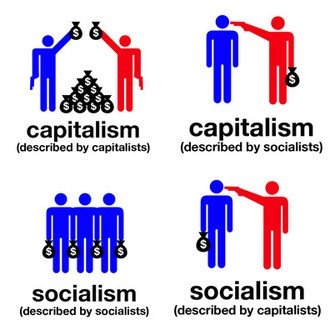
Capitalism vs. Socialism vs. Distributism by Bryan J. Neva, Sr. Since ancient times, people have bought, sold, and traded land,...
-
 Whose Ox Is Being Gored? by Bryan J. Neva, Sr. You've probably heard the old cliché, "It all depends on whose ox is...
 -
 The Parable of the Lost Coin LUKE 15 8 “Or what woman, having ten silver coins, if she loses one coin, does not light a lamp and sweep ...
 -
 What Business can Learn from Sheep Herding by Bryan J. Neva, Sr. Business can learn a lot from the business of sheep herding. Sheep her...
 -
Loving Your Enemies by Fritz Chery, Feb 15, 2015, biblereasons.com Bible verses about loving your enemies This topic is something w...
-
 Capitalism vs. Socialism vs. Distributism by Bryan J. Neva, Sr. Since ancient times, people have bought, sold, and traded land,...
 -
 Elijah by Bryan Neva “Shout louder, Baal may be meditating, or retired, or on vacation, or asleep and needs to be awoken.” The grea...
 -
 The Leash Theory of Management by Bryan J. Neva, Sr. Have you ever heard a manager use phrases like, "I have to keep them on a sho...
 -
 The Parable of the Lost Son LUKE 15: 11 And he said, “There was a man who had two sons; 12 and the younger of them said to his fat...
 -
Thing 7 Free-market policies rarely make poor countries rich by Dr. Ha Joon Chang (Book Excerpt from 23 Things They Don't Tel...
