Translate

Monday, February 9, 2015

Tuesday, February 3, 2015

The Big Lie: 5.6% Unemployment by Jim Clifton

Here's something that many Americans -- including some of the smartest and most educated among us -- don't know: The official unemployment rate, as reported by the U.S. Department of Labor, is extremely misleading.
Right now, we're hearing much celebrating from the media, the White House and Wall Street about how unemployment is "down" to 5.6%. The cheerleading for this number is deafening. The media loves a comeback story, the White House wants to score political points and Wall Street would like you to stay in the market.
None of them will tell you this: If you, a family member or anyone is unemployed and has subsequently given up on finding a job -- if you are so hopelessly out of work that you've stopped looking over the past four weeks -- the Department of Labor doesn't count you as unemployed. That's right. While you are as unemployed as one can possibly be, and tragically may never find work again, you are not counted in the figure we see relentlessly in the news -- currently 5.6%. Right now, as many as 30 million Americans are either out of work or severely underemployed. Trust me, the vast majority of them aren't throwing parties to toast "falling" unemployment.
There's another reason why the official rate is misleading. Say you're an out-of-work engineer or healthcare worker or construction worker or retail manager: If you perform a minimum of one hour of work in a week and are paid at least $20 -- maybe someone pays you to mow their lawn -- you're not officially counted as unemployed in the much-reported 5.6%. Few Americans know this.
Yet another figure of importance that doesn't get much press: those working part time but wanting full-time work. If you have a degree in chemistry or math and are working 10 hours part time because it is all you can find -- in other words, you are severely underemployed -- the government doesn't count you in the 5.6%. Few Americans know this.
There's no other way to say this. The official unemployment rate, which cruelly overlooks the suffering of the long-term and often permanently unemployed as well as the depressingly underemployed, amounts to a Big Lie.
And it's a lie that has consequences, because the great American dream is to have a good job, and in recent years, America has failed to deliver that dream more than it has at any time in recent memory. A good job is an individual's primary identity, their very self-worth, their dignity -- it establishes the relationship they have with their friends, community and country. When we fail to deliver a good job that fits a citizen's talents, training and experience, we are failing the great American dream.
Gallup defines a good job as 30+ hours per week for an organization that provides a regular paycheck. Right now, the U.S. is delivering at a staggeringly low rate of 44%, which is the number of full-time jobs as a percent of the adult population, 18 years and older. We need that to be 50% and a bare minimum of 10 million new, good jobs to replenish America's middle class.
I hear all the time that "unemployment is greatly reduced, but the people aren't feeling it." When the media, talking heads, the White House and Wall Street start reporting the truth -- the percent of Americans in good jobs; jobs that are full time and real -- then we will quit wondering why Americans aren't "feeling" something that doesn't remotely reflect the reality in their lives. And we will also quit wondering what hollowed out the middle class.
Jim Clifton is Chairman and CEO at Gallup.

Monday, February 2, 2015

Apple Computer Reports Largest Profit in the History of Mankind

I was shocked recently when it was reported that Apple Computer reported it's largest profit ever... even in the history of mankind.  And it reminded me of an old blog I posted on August 27, 2013 (with help from my writing partner Allen Laudenslager).  Coincidentally, Forbes published an article soon-there-after in September 25, 2013: Forbes: If Apple Brought iPhone Manufacturing To The US It Would Cost Them $4.2 billion.

___________________

IF YOU HAD ALL THE MONEY IN THE WORLD


Let's pretend for a moment you're the guy in the three wishes joke stranded on a deserted island and you find an old bottle washed up on the beach; you pop the cork and out comes a genie who grants you three wishes.  What would you wish for?  


Well, you reply, the most logical choice is to be rescued from this deserted island.  


Good one; it’s our basic human need to survive or live.

Now what’s your second wish?

A good wife or husband, you answer.

Another good one; it’s our basic human need to love and to leave a legacy (children). 

You’ve made two good wishes.  Now for your third and final wish?

You think for a moment, well a million dollars would be good, a billion dollars would be better, but having all the money in the world would be the best!  Yes, I wish for all the money in the world.

BUUUUZZZZZZZZ!  Bad choice!  It’s our basic human vice of greed.

If you had all the money in the world then no one else would have any and it would become worthless.  By itself, money has no intrinsic value; it's only a medium of exchange for goods and services, a way to store and exchange your work for someone else’s without direct barter.

Corporate America is not much different than the foolish guy in the three wishes joke.  We all have a basic need to live, to love, and to leave a legacy.  Unfortunately, we’re all cursed with vices like greed (like wishing for all the money in the world).  How is Corporate America doing this?  Generally speaking, they pay their employees as little as possible, charge their customers as much as possible, hoard most of their cash, and avoid paying taxes.  Before they know it, they too will have all the money in the world but it will become worthless because no one else will have any to buy their products.

Apple epitomizes of what’s wrong with Corporate America today.  They pay their Chinese factory workers as little as possible (about $1.11 an hour), make them work as much as possible (twelve hours a day, six days a week), and treat them as poorly as possible.  Apple then charges their customers as much as possible for their products.  After this, they hoard their cash and do their level best to legally avoid paying taxes (mainly using overseas tax havens).  And before they know it, they too will have all the money in the world but it’ll become worthless because no one else will have any to buy their products.

According to the research firm iSuppli, they estimate the iPad2 (with 32Gb memory, WiFi and Cell) costs about $10 to assemble in China; the material costs about $325 for a total of $335 per unit for labor and material.  Apples then sells this device for $729, which gives them a gross profit margin of 54%. 

Now if Apple were to manufacture the iPad2 in the U.S. it would cost them about $292.77 to assemble (at a labor/benefit rate $32.53/hour); the material costs would be about the same $325 for a total of $617.77 per unit for labor and material.  Apple’s gross margin would then shrink to 15.25%.

Sure, manufacturing in the U.S. would shrink Apple’s gross margins.  It’s not a question of making a profit, but how BIG of a profit Apple would make.  They choose to manufacture in China because they can earn 54% gross margins instead of a measly 15% in the U.S.  The only problem is that consumers will no longer be able to afford Apple’s products because they’re earning much lower wages.

While Apple and the rest of Corporate America have not achieved their wish for all the money in the world they have purposely designed their business models to lock up as much cash as they can and sequester it at the corporate level as cash on hand or as bonuses to a few corporate mangers; in doing so their money is becoming worthless because no one else has any.

Much of today’s unemployment is caused by slow demand. People aren’t spending as much of their income for those products because they just don’t have the cash!  Flat salaries coupled with inflation have eroded the bulk of the buying public’s disposable income resulting in the slow recovery from the 2008 recession.  We'll be stuck in this quagmire unless and until the corporate mangers learn that their shortsighted wish for “all the money in the world” is the root cause of their financial woes.

Saturday, January 17, 2015

Discovering God's Will

Discovering God's Will
by Bryan J. Neva, Sr.


Life is what happens while you’re busy making other plans.  
It's not easy for any of us trudging through life trying to figure things out as we go along. Life's ambiguities don't offer easy choices.  We want to make the right choices so we can have happy and fulfilling lives, but somehow things don't always work out the way we planned.  Life surprises us. 

When we’re young, we all dream of bright futures.  We decide what we'd like to do for a living and hope we'll meet the right person along the way to share our lives with and maybe raise a family.  But as we all know, not everyone is dealt the same proverbial poker hand.  Some start out in life with huge advantages, while others have distinct disadvantages.  But we each do our best to play the hand we're dealt.  

By the time we reach middle age we look back on our lives and often wish we'd made different choices along the way; we wish life had given us that golden opportunity we’d hoped for; or we wish we had found true and lasting love; the list could go on and on.  Maybe we'll even make a course correction or two if we're not happy with the results. And by the time we reach our golden years we’re either filled with regrets or satisfied we’ve made the best possible choices along the way.
  

There's a better way to live your life.
But you know there is a better way to approach life and it doesn't have to be ruled by our random choices or what life has given us but rather by the Will of God.  Discovering God's Will for your life can give you the peace-of-mind and contentment you've been looking for knowing that the choices you make in life will be for the best and result in your greatest good. 

Ninety percent of God’s Will for you is found through Conversion, Prayer, God’s Word, and in Christ’s Church.  Through daily prayer, regularly reading the Bible, and attending Church, you’ll discover ninety percent of God’s General Will for your life.  Being a Christian is actually quite simple: Love God and your neighbor!  This seems so simple, but it’s quite true.  By doing these things, you'll slowly develop a personal relationship with God: the Father, the Son, and the Holy Spirit. 

St. Paul wrote in his letter to the Romans (10: 14-17), “But how are men to call upon him in whom they have not believed? And how are they to believe in him of whom they have never heard? And how are they to hear without a preacher?  And how can men preach unless they are sent? As it is written, ‘How beautiful are the feet of those who preach good news!’  But they have not all heeded the gospel; for Isaiah says, ‘Lord, who has believed what he has heard from us?’  So faith comes from what is heard, and what is heard comes by the preaching of Christ.”

God loves you, cares about you, has a plan for you, and wants you to have an abundant life.  
Jesus said in John 3:16-17, “For God so loved the world that he gave his only Son, that whoever believes in him should not perish but have eternal life.  For God sent the Son into the world, not to condemn the world, but that the world might be saved through him.” 

God, speaking to the prophet Jeremiah (29:11) said, “F0r I know the plans I have for you, declares the Lord, plans to prosper you and not to harm you, plans to give you hope and a future.”

Jesus said in John 10:10, "I came that they might have life, and have it more abundantly." That doesn’t mean you’ll become comfortably rich and successful or you’ll never have problems or setbacks.  It means to have a life overflowing with faith, hope, love, joy, and peace-of-mind.

God wants to save you and give you eternal life.  
As Christians, the concept of original sin is a dogma of our faith and it explains why there's good and evil in the world.  Our first parents (Adam and Eve) perfectly lived in God's Will. They were free from suffering and death and were given the freedom to make their own choices in life.  By obeying God's Will they could remain in that wonderful state of perfection, but God warned them that if they disobeyed then suffering and death would come upon them and their descendants.  Unfortunately for us, they disobeyed God and this is what brought suffering and death into the world.  As a result of this original sin, we're all born into a fallen, sinful state (Genesis3Romans5:12-21).

It was God's Will to save humanity, so He sent His dearly beloved Son, Jesus Christ, into the world to redeem and save it (John3:16-21). This is the Good News of our salvation: God offers this free gift of redemption and salvation to anyone who will believe and have faith in Him, is baptized in the name of the Father, the Son, and the Holy Spirit (Matthew 28:19), and then perseveres in a life of love for God and their neighbor (Matthew 22:37-40James 1:19-272:14-26).  St. Peter wrote in 2 Peter 3:9, "The Lord is not slow about his promise as some count slowness, but is forbearing toward you, not wishing that anyone should perish, but that everyone should come to repentance."

Jesus said in John 6:40, "For this is the will of my Father, that everyone who sees the Son and believes in Him should have eternal life; and I will raise him up on the last day."  But Jesus also cautioned in Matthew 7:21, "Not everyone who says to me 'Lord, Lord,' will enter the kingdom of heaven, but only the one who does the will of my Father in heaven."  So doing God's will is up to each of us.  It's a free choice.  If we cooperate with God's Will we'll spend eternity with Him in heaven, but if we don't we won't  (Matthew25:31-46).  Jesus said in Matthew 7:13-14, “Enter by the narrow gate; for the gate is wide and the way is easy, that leads to destruction, and those who enter by it are many.  For the gate is narrow and the way is hard, that leads to life, and those who find it are few.”

God's ways are superior to your ways.
Proverbs 14:12 reads, “There is a way that seems right to a man, but its end is the way of death.”   And Isaiah 55:6-9 reads, “Seek the Lord while he may be found, call upon him while he is near; let the wicked forsake his way, and the unrighteous man his thoughts; let him return to the Lord, that he may have mercy on him, and to our God, for he will abundantly pardon.  For my thoughts are not your thoughts, neither are your ways my ways, says the Lord.  For as the heavens are higher than the earth, so are my ways higher than your ways and my thoughts than your thoughts."

God wants you to persevere in love for Him and for others and to live a morally good life.  
Jesus said in Matthew 22:37-40 "Love the Lord your God with all your heart and with all your soul and with all your mind.  This is the first and greatest commandment.  And the second is like it: Love your neighbor as yourself.  All the Law and the Prophets hang on these two commandments."   This is the law of love that Jesus commanded for those who want to cooperate with God's Will.  This law of love is described in detail in Matthew 5, 6, and 7, and it makes the practical connection between the written moral law or the 10 Commandments (Exodus 20:1-17Deuteronomy 5:6-21Deuteronomy 11:26-28) and loving God and others.

The Apostle Paul in I Corinthians 13 explained this law of love further by writing, "Love is patient, love is kind.  It does not envy, it does not boast, it is not proud.  It is not rude, it is not self-seeking, it is not easily angered, it keeps no record of wrongs.  Love does not delight in evil but rejoices with the truth.  It always protects, always trusts, always hopes, always perseveres.  Love never fails."

Matthew 19:16-22 reads, “And behold, one came up to him, saying, ‘Teacher, what good deeds must I do, to have eternal life?’  And he said to him, ‘Why do you ask me about what is good?  There is only One who is good.  If you want to enter life, keep the commandments!”  He said to him, ‘Which commandments?’  And Jesus replied, ‘You shall not kill, You shall not commit adultery, You shall not steal, You shall not bear false witness, Honor your father and mother, and, You shall love your neighbor as yourself.’  The young man said to him, ‘All these I have observed from my youth; what do I still lack?’  Jesus answered him, ‘If you would be perfect, go, sell what you possess and give to the poor, and you will have treasure in heaven; then come and follow me.’  When the young man heard this he went away very sad for he had great possessions.”

Deuteronomy 11:26-28 reads, “Behold, I set before you this day a blessing and a curse: the blessing, if you obey the commandments of the Lord your God, which I command you this day, and the curse, if you do not obey the commandments of the Lord your God, but turn aside from the way which I command you this day, to go after other gods which you have not known.”

God wants you to use your natural reason to help solve your problems and make wise and prudent decisions.  
Proverbs 9:10 reads, “The fear of the Lord is the beginning of wisdom, and knowledge of the Holy One is understanding.”  And James 1:5 reads, “If any of you lacks wisdom, you should ask God, who gives generously to all without finding fault, and it will be given to you.”

Proverbs 2:1-11 reads, “My son, if you accept my words and store up my commands within you, turning your ear to wisdom and applying your heart to understanding—indeed, if you call out for insight and cry aloud for understanding, and if you look for it as for silver and search for it as for hidden treasure, then you will understand the fear of the Lord and find the knowledge of God.  For the Lord gives wisdom; from his mouth come knowledge and understanding.  He holds success in store for the upright, he is a shield to those whose walk is blameless, for he guards the course of the just and protects the way of his faithful ones.  Then you will understand what is right and just and fair—every good path.  For wisdom will enter your heart, and knowledge will be pleasant to your soul.  Discretion will protect you, and understanding will guard you.”

James 3:13-18 reads, “Who is wise and understanding among you? Let them show it by their good life, by deeds done in the humility that comes from wisdom.  But if you harbor bitter envy and selfish ambition in your hearts, do not boast about it or deny the truth.  Such ‘wisdom’ does not come down from heaven but is earthly, unspiritual, demonic.  For where you have envy and selfish ambition, there you find disorder and every evil practice.  But the wisdom that comes from heaven is first of all pure; then peace-loving, considerate, submissive, full of mercy and good fruit, impartial and sincere.  Peacemakers who sow in peace reap a harvest of righteousness.”

Life is what happens to you when God is making other plans.  
Romans 8:28 reads, “And we know that in all things God works for the good of those who love him, who have been called according to his purpose.”  There’s a reason for everything that happens.  Life may appear to be a chain of random events, but it’s really not.  God is in control of everything.  Nothing happens in life apart from His will.  It’s a great mystery how God works in our lives.

James 4:13-17 reads, “Come now, you who say, ‘Today or tomorrow we will go into such and such a town and spend a year there and trade and get gain’; whereas you do not know about tomorrow. What is your life?  For you are a mist that appears for a little time and then vanishes.  Instead, you ought to say, ‘If the Lord wills, we shall live and we shall do this or that.’  As it is, you boast in your arrogance.  All such boasting is evil.  Whoever knows what is right to do and fails to do it, for him it is sin.”

Psalms 37:4 reads, “Take delight in the Lord, and He will give you the desires of your heart.”  And Proverbs 3:5-6 reads, "Trust in the Lord with all your heart, and do not rely on your own insight. In all your ways acknowledge him, and He will make your paths straight."

Ecclesiastes 12:13-14 reads, "Fear God, and keep his commandments; for this is the whole duty of man.  For God will bring every deed into judgment, with every secret thing, whether good or evil."

Discovering God's will for your life is based on developing a personal relationship with God through conversion, baptism, daily prayer, regularly reading His Word, regularly attending Christ's Church, and persevering in a life of love for God and others.  You can discover ninety percent of God's general will for your life by doing these things.  Being a Christian is really quite simple: Love God and your neighbor!

So how do you discover God's Specific Will for your life?  That's a great mystery that each of us has to discover on our own.  God works differently with each of one of us.  But if you are truly cooperating with God's general will for your life as previously described, then God will somehow reveal his specific will for your life.   This requires faith.

Saint Augustine famously said, "Love God and then do what you will."  In other words, if you truly love God and want to discover His will for your life, then doing what you will, will, in fact, be doing what God wills.

Father Thomas Merton a Trappist monk from Kentucky wrote this beautiful prayer on Discovering God's Will:

My Lord God, I have no idea where I am going.
I do not see the road ahead of me.  I cannot know for certain where it will end.

Nor do I really know myself, and the fact that I think I am following your will does not mean that I am actually doing so.

But I believe that the desire to please you does, in fact, please you and I hope that I have that desire in all that I am doing.

And I know that if I do this, you will lead me by the right road although I may know nothing about it.

Therefore will I trust you always though I may seem to be lost and in the shadow of death, I will not fear, for you are ever with me and you will never leave me to face my perils alone.

Amen.

Sunday, January 11, 2015

Pope calls for more market regulation, denies he is Marxist

Pope calls for more market regulation, denies he is Marxist: paper

 January 11, 2015

ROME (Reuters) - - Pope Francis has called for more regulation of financial markets and rejected suggestions that his criticisms of unbridled capitalism smack of Marxism.
"Markets and financial speculation cannot enjoy absolute autonomy," he said in an interview published in La Stampa newspaper on Sunday, calling for greater ethics in the economy and a better distribution of the earth's resources.
"We cannot wait any longer to resolve the structural causes of poverty in order to cure our society of an illness that can only lead to new crises," he said.
Conservative Catholics, particularly in the United States, have criticized some of his past pronouncements on the economy, with several openly calling him a Marxist. But the Argentine pope said he was just stating Church teachings.
"If I repeat some sermons by the first fathers of the Church in the second or third centuries about how the poor must be treated, some would accuse me of preaching a Marxist homily," he said. "The New Testament does not condemn wealth but the idolatry of wealth."
He has condemned huge salaries and bonuses, calling them symptoms of an economy based on greed and also said speculation in food commodities was undermining the global fight against poverty and hunger.
The interview is from a chapter of an Italian book called "Pope Francis: This Economy Kills," to be published this week.
(Reporting By Philip Pullella; Editing by Raissa Kasolowsky)

Pope Says Concern for Poor Is Gospel, Not Communism

Pope Says Concern for Poor Is Gospel, Not Communism

Pope Francis is insisting that his concern for the poor and critique of the global economic system isn't some novel, communist-inspired ideology but rather the original and core "touchstone" of the Christian faith.
Some U.S. conservatives have branded the first Latin American pope a Marxist for his frequent critiques of consumerism and focus on a church "that is poor and for the poor." But in an interview contained in a new book, Francis explains that his message is rooted in the Gospel and has been echoed by church fathers since Christianity's first centuries.
"The Gospel does not condemn the wealthy, but the idolatry of wealth, the idolatry that makes people indifferent to the call of the poor," Francis says in "This Economy Kills," a study of the pope's economic and social teachings, excerpts of which were provided Sunday to The Associated Press.
Specifically, Francis summarized a verse from the Gospel of Matthew which is the essential mission statement of his papacy: "I was hungry, I was thirsty, I was in prison, I was sick, I was naked and you helped me, clothed me, visited me, took care of me."
"Caring for our neighbor, for those who are poor, who suffer in body and soul, for those who are in need: this is the touchstone. Is it pauperism? No. It is the Gospel."
He cites church fathers dating to St. Ambrose and St. John Chrysostom as expressing the same concerns, and noted somewhat wryly that if he had said the same "some would accuse me of giving a Marxist homily."
"As we can see, this concern for the poor is in the Gospel, it is within the tradition of the church, it is not an invention of communism and it must not be turned into some ideology, as has sometimes happened before in the course of history," an apparent reference to the Latin American-inspired liberation theology.
"This Economy Kills," by two seasoned Vatican reporters, comes out this week in Italian.

Sunday, January 4, 2015

15 Management DO’S and DON’TS

  1. DO: Treat your employees or subordinates as human beings and colleagues.
DO NOT: Treat them as units of production or inferiors.

- No one likes being treated like a mind numbed robot or a beast of burden.  We’re all human beings with our own struggles, hopes, dreams, friends, and family who want to live up to our full potential.


  1. DO: Treat your employees or subordinates as volunteers.
DO NOT: Treat them as slaves or indentured servants.

- Slavery and indentured servitude are illegal.  Your employees volunteered to work for you, so treat them as volunteers who could voluntarily go to work somewhere else. When you take away people's freedom, it denigrates them.  Don’t hold their job security, salary or benefits over their heads to motivate them.


  1. DO: Serve others.
DO NOT: Expect others to serve you.

- Management is really about serving others: employees, subordinates, colleagues, superiors etc. Being a manager does not make you Lord of the Manor.


  1. DO: Ask people.
DO NOT: Tell people.

- Asking others rather than telling others is in keeping with treating employees as volunteers and not indentured servants. Taking away someone's self-determination denigrates them and ultimately lowers productivity. You'll get the best work out of people if you allow them to make their own choices.


  1. DO: Love people.
DO NOT: Love money or things.

- History is full of examples where people's love of money and things led to their downfall. Nothing good comes from putting money and things ahead of people.


  1. DO: Lead your employees.  
DO NOT: Manage your employees.

- You can manage things, but you must lead people.  Get your employees to want to follow you; get them to want to take a bullet for you. When you reach that point with your followers, they'll give you their best work.


  1. DO: Praise and expect the best from your employees.
DO NOT: Criticize, complain, condemn, judge or expect the worst from your employees.

- The Pygmalion effect is the psychological phenomenon whereby the greater the expectation placed upon people, the better they perform.  Whereas, the opposite of lower expectations placed upon individuals leads to poorer performance.


  1. DO: Be honest and forthright with your employees.
DO NOT: Be dishonest or disingenuous with your employees.

- No one likes being lied to. No one likes being played.  You’ll lose the trust of your employees if you’re anything but honest.  If you need to keep something confidential, simply tell them you’re not at liberty to discuss that with them. They'll understand.


  1. DO: Keep secrets and confidences.
DO NOT: Betray someone’s confidence or spill the beans.

- No one will confide in you if you’re known to spill the beans or betray their confidence.


  1. DO: Set realistic and attainable goals and deadlines.
DO NOT: Set unrealistic and unattainable goals or deadlines.

- No one likes being pressured to perform.  Good work takes time, so give it time.  If you need something completed quickly, consider adding more people to work on the task, or rolling up your own sleeves and pitching in to help. Remember that prior planning prevents piss poor performance.


  1. DO: Be humble, honest, ethical, and moral in everything you do and say.
DO NOT:  Sacrifice your soul for profit, possessions, power, position, prestige, privilege, popularity, pride, or pleasure.

- Always seek to do the right thing even if it hurts you personally.  Goodness and virtue always triumphs over evil and vice.


  1. DO: Be forgiving of others and seek forgiveness for any hurt you’ve caused.
DO NOT: Hold grudges, give into anger, be vengeful, or be unforgiving of others.

- When you forgive others, God will forgive you.  So forgive and try to forget.  Bless those who hurt you or slander you. Always take the high road.


  1. DO: Work passionately, enthusiastically, and confidently with humility.
DO NOT: Have a poor work ethic.

- You owe it to yourself and many others to work hard.  Hard work is good for the soul.  Laziness is nothing to be proud of.


  1. DO: Keep your priorities straight.
DO NOT: Put work and your time ahead of your family.

- You owe it to your family to make them a top priority in your life.  If you have to consistently work overtime, maybe your organization needs to hire more people, or share your workload with others.


  1. DO: Build a safe and supportive work environment.
DO NOT: Use fear and intimidation to motivate your employees.

- Numerous studies have shown that building safe and supportive work environments leads
to higher productivity and loyalty. Managing by fear and intimidation will work in the sort
term but never in the long term.

Featured Post

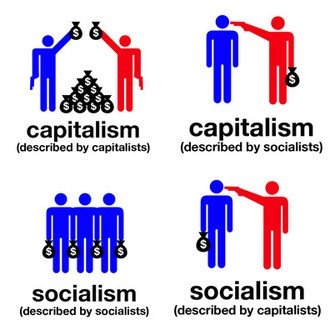
Capitalism vs. Socialism vs. Distributism

Capitalism vs. Socialism  vs. Distributism by Bryan J. Neva, Sr. Since ancient times, people have bought, sold, and traded land,...