Translate

Saturday, January 17, 2015

Discovering God's Will

Discovering God's Will
by Bryan J. Neva, Sr.


Life is what happens while you’re busy making other plans.  
It's not easy for any of us trudging through life trying to figure things out as we go along. Life's ambiguities don't offer easy choices.  We want to make the right choices so we can have happy and fulfilling lives, but somehow things don't always work out the way we planned.  Life surprises us. 

When we’re young, we all dream of bright futures.  We decide what we'd like to do for a living and hope we'll meet the right person along the way to share our lives with and maybe raise a family.  But as we all know, not everyone is dealt the same proverbial poker hand.  Some start out in life with huge advantages, while others have distinct disadvantages.  But we each do our best to play the hand we're dealt.  

By the time we reach middle age we look back on our lives and often wish we'd made different choices along the way; we wish life had given us that golden opportunity we’d hoped for; or we wish we had found true and lasting love; the list could go on and on.  Maybe we'll even make a course correction or two if we're not happy with the results. And by the time we reach our golden years we’re either filled with regrets or satisfied we’ve made the best possible choices along the way.
  

There's a better way to live your life.
But you know there is a better way to approach life and it doesn't have to be ruled by our random choices or what life has given us but rather by the Will of God.  Discovering God's Will for your life can give you the peace-of-mind and contentment you've been looking for knowing that the choices you make in life will be for the best and result in your greatest good. 

Ninety percent of God’s Will for you is found through Conversion, Prayer, God’s Word, and in Christ’s Church.  Through daily prayer, regularly reading the Bible, and attending Church, you’ll discover ninety percent of God’s General Will for your life.  Being a Christian is actually quite simple: Love God and your neighbor!  This seems so simple, but it’s quite true.  By doing these things, you'll slowly develop a personal relationship with God: the Father, the Son, and the Holy Spirit. 

St. Paul wrote in his letter to the Romans (10: 14-17), “But how are men to call upon him in whom they have not believed? And how are they to believe in him of whom they have never heard? And how are they to hear without a preacher?  And how can men preach unless they are sent? As it is written, ‘How beautiful are the feet of those who preach good news!’  But they have not all heeded the gospel; for Isaiah says, ‘Lord, who has believed what he has heard from us?’  So faith comes from what is heard, and what is heard comes by the preaching of Christ.”

God loves you, cares about you, has a plan for you, and wants you to have an abundant life.  
Jesus said in John 3:16-17, “For God so loved the world that he gave his only Son, that whoever believes in him should not perish but have eternal life.  For God sent the Son into the world, not to condemn the world, but that the world might be saved through him.” 

God, speaking to the prophet Jeremiah (29:11) said, “F0r I know the plans I have for you, declares the Lord, plans to prosper you and not to harm you, plans to give you hope and a future.”

Jesus said in John 10:10, "I came that they might have life, and have it more abundantly." That doesn’t mean you’ll become comfortably rich and successful or you’ll never have problems or setbacks.  It means to have a life overflowing with faith, hope, love, joy, and peace-of-mind.

God wants to save you and give you eternal life.  
As Christians, the concept of original sin is a dogma of our faith and it explains why there's good and evil in the world.  Our first parents (Adam and Eve) perfectly lived in God's Will. They were free from suffering and death and were given the freedom to make their own choices in life.  By obeying God's Will they could remain in that wonderful state of perfection, but God warned them that if they disobeyed then suffering and death would come upon them and their descendants.  Unfortunately for us, they disobeyed God and this is what brought suffering and death into the world.  As a result of this original sin, we're all born into a fallen, sinful state (Genesis3Romans5:12-21).

It was God's Will to save humanity, so He sent His dearly beloved Son, Jesus Christ, into the world to redeem and save it (John3:16-21). This is the Good News of our salvation: God offers this free gift of redemption and salvation to anyone who will believe and have faith in Him, is baptized in the name of the Father, the Son, and the Holy Spirit (Matthew 28:19), and then perseveres in a life of love for God and their neighbor (Matthew 22:37-40James 1:19-272:14-26).  St. Peter wrote in 2 Peter 3:9, "The Lord is not slow about his promise as some count slowness, but is forbearing toward you, not wishing that anyone should perish, but that everyone should come to repentance."

Jesus said in John 6:40, "For this is the will of my Father, that everyone who sees the Son and believes in Him should have eternal life; and I will raise him up on the last day."  But Jesus also cautioned in Matthew 7:21, "Not everyone who says to me 'Lord, Lord,' will enter the kingdom of heaven, but only the one who does the will of my Father in heaven."  So doing God's will is up to each of us.  It's a free choice.  If we cooperate with God's Will we'll spend eternity with Him in heaven, but if we don't we won't  (Matthew25:31-46).  Jesus said in Matthew 7:13-14, “Enter by the narrow gate; for the gate is wide and the way is easy, that leads to destruction, and those who enter by it are many.  For the gate is narrow and the way is hard, that leads to life, and those who find it are few.”

God's ways are superior to your ways.
Proverbs 14:12 reads, “There is a way that seems right to a man, but its end is the way of death.”   And Isaiah 55:6-9 reads, “Seek the Lord while he may be found, call upon him while he is near; let the wicked forsake his way, and the unrighteous man his thoughts; let him return to the Lord, that he may have mercy on him, and to our God, for he will abundantly pardon.  For my thoughts are not your thoughts, neither are your ways my ways, says the Lord.  For as the heavens are higher than the earth, so are my ways higher than your ways and my thoughts than your thoughts."

God wants you to persevere in love for Him and for others and to live a morally good life.  
Jesus said in Matthew 22:37-40 "Love the Lord your God with all your heart and with all your soul and with all your mind.  This is the first and greatest commandment.  And the second is like it: Love your neighbor as yourself.  All the Law and the Prophets hang on these two commandments."   This is the law of love that Jesus commanded for those who want to cooperate with God's Will.  This law of love is described in detail in Matthew 5, 6, and 7, and it makes the practical connection between the written moral law or the 10 Commandments (Exodus 20:1-17Deuteronomy 5:6-21Deuteronomy 11:26-28) and loving God and others.

The Apostle Paul in I Corinthians 13 explained this law of love further by writing, "Love is patient, love is kind.  It does not envy, it does not boast, it is not proud.  It is not rude, it is not self-seeking, it is not easily angered, it keeps no record of wrongs.  Love does not delight in evil but rejoices with the truth.  It always protects, always trusts, always hopes, always perseveres.  Love never fails."

Matthew 19:16-22 reads, “And behold, one came up to him, saying, ‘Teacher, what good deeds must I do, to have eternal life?’  And he said to him, ‘Why do you ask me about what is good?  There is only One who is good.  If you want to enter life, keep the commandments!”  He said to him, ‘Which commandments?’  And Jesus replied, ‘You shall not kill, You shall not commit adultery, You shall not steal, You shall not bear false witness, Honor your father and mother, and, You shall love your neighbor as yourself.’  The young man said to him, ‘All these I have observed from my youth; what do I still lack?’  Jesus answered him, ‘If you would be perfect, go, sell what you possess and give to the poor, and you will have treasure in heaven; then come and follow me.’  When the young man heard this he went away very sad for he had great possessions.”

Deuteronomy 11:26-28 reads, “Behold, I set before you this day a blessing and a curse: the blessing, if you obey the commandments of the Lord your God, which I command you this day, and the curse, if you do not obey the commandments of the Lord your God, but turn aside from the way which I command you this day, to go after other gods which you have not known.”

God wants you to use your natural reason to help solve your problems and make wise and prudent decisions.  
Proverbs 9:10 reads, “The fear of the Lord is the beginning of wisdom, and knowledge of the Holy One is understanding.”  And James 1:5 reads, “If any of you lacks wisdom, you should ask God, who gives generously to all without finding fault, and it will be given to you.”

Proverbs 2:1-11 reads, “My son, if you accept my words and store up my commands within you, turning your ear to wisdom and applying your heart to understanding—indeed, if you call out for insight and cry aloud for understanding, and if you look for it as for silver and search for it as for hidden treasure, then you will understand the fear of the Lord and find the knowledge of God.  For the Lord gives wisdom; from his mouth come knowledge and understanding.  He holds success in store for the upright, he is a shield to those whose walk is blameless, for he guards the course of the just and protects the way of his faithful ones.  Then you will understand what is right and just and fair—every good path.  For wisdom will enter your heart, and knowledge will be pleasant to your soul.  Discretion will protect you, and understanding will guard you.”

James 3:13-18 reads, “Who is wise and understanding among you? Let them show it by their good life, by deeds done in the humility that comes from wisdom.  But if you harbor bitter envy and selfish ambition in your hearts, do not boast about it or deny the truth.  Such ‘wisdom’ does not come down from heaven but is earthly, unspiritual, demonic.  For where you have envy and selfish ambition, there you find disorder and every evil practice.  But the wisdom that comes from heaven is first of all pure; then peace-loving, considerate, submissive, full of mercy and good fruit, impartial and sincere.  Peacemakers who sow in peace reap a harvest of righteousness.”

Life is what happens to you when God is making other plans.  
Romans 8:28 reads, “And we know that in all things God works for the good of those who love him, who have been called according to his purpose.”  There’s a reason for everything that happens.  Life may appear to be a chain of random events, but it’s really not.  God is in control of everything.  Nothing happens in life apart from His will.  It’s a great mystery how God works in our lives.

James 4:13-17 reads, “Come now, you who say, ‘Today or tomorrow we will go into such and such a town and spend a year there and trade and get gain’; whereas you do not know about tomorrow. What is your life?  For you are a mist that appears for a little time and then vanishes.  Instead, you ought to say, ‘If the Lord wills, we shall live and we shall do this or that.’  As it is, you boast in your arrogance.  All such boasting is evil.  Whoever knows what is right to do and fails to do it, for him it is sin.”

Psalms 37:4 reads, “Take delight in the Lord, and He will give you the desires of your heart.”  And Proverbs 3:5-6 reads, "Trust in the Lord with all your heart, and do not rely on your own insight. In all your ways acknowledge him, and He will make your paths straight."

Ecclesiastes 12:13-14 reads, "Fear God, and keep his commandments; for this is the whole duty of man.  For God will bring every deed into judgment, with every secret thing, whether good or evil."

Discovering God's will for your life is based on developing a personal relationship with God through conversion, baptism, daily prayer, regularly reading His Word, regularly attending Christ's Church, and persevering in a life of love for God and others.  You can discover ninety percent of God's general will for your life by doing these things.  Being a Christian is really quite simple: Love God and your neighbor!

So how do you discover God's Specific Will for your life?  That's a great mystery that each of us has to discover on our own.  God works differently with each of one of us.  But if you are truly cooperating with God's general will for your life as previously described, then God will somehow reveal his specific will for your life.   This requires faith.

Saint Augustine famously said, "Love God and then do what you will."  In other words, if you truly love God and want to discover His will for your life, then doing what you will, will, in fact, be doing what God wills.

Father Thomas Merton a Trappist monk from Kentucky wrote this beautiful prayer on Discovering God's Will:

My Lord God, I have no idea where I am going.
I do not see the road ahead of me.  I cannot know for certain where it will end.

Nor do I really know myself, and the fact that I think I am following your will does not mean that I am actually doing so.

But I believe that the desire to please you does, in fact, please you and I hope that I have that desire in all that I am doing.

And I know that if I do this, you will lead me by the right road although I may know nothing about it.

Therefore will I trust you always though I may seem to be lost and in the shadow of death, I will not fear, for you are ever with me and you will never leave me to face my perils alone.

Amen.

Sunday, January 11, 2015

Pope calls for more market regulation, denies he is Marxist

Pope calls for more market regulation, denies he is Marxist: paper

 January 11, 2015

ROME (Reuters) - - Pope Francis has called for more regulation of financial markets and rejected suggestions that his criticisms of unbridled capitalism smack of Marxism.
"Markets and financial speculation cannot enjoy absolute autonomy," he said in an interview published in La Stampa newspaper on Sunday, calling for greater ethics in the economy and a better distribution of the earth's resources.
"We cannot wait any longer to resolve the structural causes of poverty in order to cure our society of an illness that can only lead to new crises," he said.
Conservative Catholics, particularly in the United States, have criticized some of his past pronouncements on the economy, with several openly calling him a Marxist. But the Argentine pope said he was just stating Church teachings.
"If I repeat some sermons by the first fathers of the Church in the second or third centuries about how the poor must be treated, some would accuse me of preaching a Marxist homily," he said. "The New Testament does not condemn wealth but the idolatry of wealth."
He has condemned huge salaries and bonuses, calling them symptoms of an economy based on greed and also said speculation in food commodities was undermining the global fight against poverty and hunger.
The interview is from a chapter of an Italian book called "Pope Francis: This Economy Kills," to be published this week.
(Reporting By Philip Pullella; Editing by Raissa Kasolowsky)

Pope Says Concern for Poor Is Gospel, Not Communism

Pope Says Concern for Poor Is Gospel, Not Communism

Pope Francis is insisting that his concern for the poor and critique of the global economic system isn't some novel, communist-inspired ideology but rather the original and core "touchstone" of the Christian faith.
Some U.S. conservatives have branded the first Latin American pope a Marxist for his frequent critiques of consumerism and focus on a church "that is poor and for the poor." But in an interview contained in a new book, Francis explains that his message is rooted in the Gospel and has been echoed by church fathers since Christianity's first centuries.
"The Gospel does not condemn the wealthy, but the idolatry of wealth, the idolatry that makes people indifferent to the call of the poor," Francis says in "This Economy Kills," a study of the pope's economic and social teachings, excerpts of which were provided Sunday to The Associated Press.
Specifically, Francis summarized a verse from the Gospel of Matthew which is the essential mission statement of his papacy: "I was hungry, I was thirsty, I was in prison, I was sick, I was naked and you helped me, clothed me, visited me, took care of me."
"Caring for our neighbor, for those who are poor, who suffer in body and soul, for those who are in need: this is the touchstone. Is it pauperism? No. It is the Gospel."
He cites church fathers dating to St. Ambrose and St. John Chrysostom as expressing the same concerns, and noted somewhat wryly that if he had said the same "some would accuse me of giving a Marxist homily."
"As we can see, this concern for the poor is in the Gospel, it is within the tradition of the church, it is not an invention of communism and it must not be turned into some ideology, as has sometimes happened before in the course of history," an apparent reference to the Latin American-inspired liberation theology.
"This Economy Kills," by two seasoned Vatican reporters, comes out this week in Italian.

Sunday, January 4, 2015

15 Management DO’S and DON’TS

  1. DO: Treat your employees or subordinates as human beings and colleagues.
DO NOT: Treat them as units of production or inferiors.

- No one likes being treated like a mind numbed robot or a beast of burden.  We’re all human beings with our own struggles, hopes, dreams, friends, and family who want to live up to our full potential.


  1. DO: Treat your employees or subordinates as volunteers.
DO NOT: Treat them as slaves or indentured servants.

- Slavery and indentured servitude are illegal.  Your employees volunteered to work for you, so treat them as volunteers who could voluntarily go to work somewhere else. When you take away people's freedom, it denigrates them.  Don’t hold their job security, salary or benefits over their heads to motivate them.


  1. DO: Serve others.
DO NOT: Expect others to serve you.

- Management is really about serving others: employees, subordinates, colleagues, superiors etc. Being a manager does not make you Lord of the Manor.


  1. DO: Ask people.
DO NOT: Tell people.

- Asking others rather than telling others is in keeping with treating employees as volunteers and not indentured servants. Taking away someone's self-determination denigrates them and ultimately lowers productivity. You'll get the best work out of people if you allow them to make their own choices.


  1. DO: Love people.
DO NOT: Love money or things.

- History is full of examples where people's love of money and things led to their downfall. Nothing good comes from putting money and things ahead of people.


  1. DO: Lead your employees.  
DO NOT: Manage your employees.

- You can manage things, but you must lead people.  Get your employees to want to follow you; get them to want to take a bullet for you. When you reach that point with your followers, they'll give you their best work.


  1. DO: Praise and expect the best from your employees.
DO NOT: Criticize, complain, condemn, judge or expect the worst from your employees.

- The Pygmalion effect is the psychological phenomenon whereby the greater the expectation placed upon people, the better they perform.  Whereas, the opposite of lower expectations placed upon individuals leads to poorer performance.


  1. DO: Be honest and forthright with your employees.
DO NOT: Be dishonest or disingenuous with your employees.

- No one likes being lied to. No one likes being played.  You’ll lose the trust of your employees if you’re anything but honest.  If you need to keep something confidential, simply tell them you’re not at liberty to discuss that with them. They'll understand.


  1. DO: Keep secrets and confidences.
DO NOT: Betray someone’s confidence or spill the beans.

- No one will confide in you if you’re known to spill the beans or betray their confidence.


  1. DO: Set realistic and attainable goals and deadlines.
DO NOT: Set unrealistic and unattainable goals or deadlines.

- No one likes being pressured to perform.  Good work takes time, so give it time.  If you need something completed quickly, consider adding more people to work on the task, or rolling up your own sleeves and pitching in to help. Remember that prior planning prevents piss poor performance.


  1. DO: Be humble, honest, ethical, and moral in everything you do and say.
DO NOT:  Sacrifice your soul for profit, possessions, power, position, prestige, privilege, popularity, pride, or pleasure.

- Always seek to do the right thing even if it hurts you personally.  Goodness and virtue always triumphs over evil and vice.


  1. DO: Be forgiving of others and seek forgiveness for any hurt you’ve caused.
DO NOT: Hold grudges, give into anger, be vengeful, or be unforgiving of others.

- When you forgive others, God will forgive you.  So forgive and try to forget.  Bless those who hurt you or slander you. Always take the high road.


  1. DO: Work passionately, enthusiastically, and confidently with humility.
DO NOT: Have a poor work ethic.

- You owe it to yourself and many others to work hard.  Hard work is good for the soul.  Laziness is nothing to be proud of.


  1. DO: Keep your priorities straight.
DO NOT: Put work and your time ahead of your family.

- You owe it to your family to make them a top priority in your life.  If you have to consistently work overtime, maybe your organization needs to hire more people, or share your workload with others.


  1. DO: Build a safe and supportive work environment.
DO NOT: Use fear and intimidation to motivate your employees.

- Numerous studies have shown that building safe and supportive work environments leads
to higher productivity and loyalty. Managing by fear and intimidation will work in the sort
term but never in the long term.

Saturday, January 3, 2015

Pope Francis' suggested New Year's resolutions

Pope Francis’ suggested New Year’s resolutions

(CNS/Paul Haring)
(CNS/Paul Haring)
VATICAN CITY — When Pope Francis met before Christmas with Vatican employees, mostly lay people with families, he asked them to do 10 things. The list sounded remarkably like suggestions for New Year’s resolutions:
– “Take care of your spiritual life, your relationship with God, because this is the backbone of everything we do and everything we are.”
– “Take care of your family life, giving your children and loved ones not just money, but most of all your time, attention and love.”
– “Take care of your relationships with others, transforming your faith into life and your words into good works, especially on behalf of the needy.”
– “Be careful how you speak, purify your tongue of offensive words, vulgarity and worldly decadence.”
– “Heal wounds of the heart with the oil of forgiveness, forgiving those who have hurt us and medicating the wounds we have caused others.”
– “Look after your work, doing it with enthusiasm, humility, competence, passion and with a spirit that knows how to thank the Lord.”
– “Be careful of envy, lust, hatred and negative feelings that devour our interior peace and transform us into destroyed and destructive people.”
– “Watch out for anger that can lead to vengeance; for laziness that leads to existential euthanasia; for pointing the finger at others, which leads to pride; and for complaining continually, which leads to desperation.”
– “Take care of brothers and sisters who are weaker … the elderly, the sick, the hungry, the homeless and strangers, because we will be judged on this.”

Wednesday, December 31, 2014

How Much Are You Worth?

How much are you worth?  Well maybe that would depend on the amount of wealth you've accumulated in your lifetime.  Or maybe it's your earning potential?  Or maybe it's your intrinsic worth?  Just how do we define what a person is worth anyway?

The entire healthcare industry, which is dedicated to healing the body and the mind, places a very high value on human worth when you account for the billions worth of infrastructure (hospitals and clinics etc.) and equipment (beds, monitoring devices, diagnostic imaging devices etc.) dedicated to healthcare, and the high qualifications of the people who work in healthcare (surgeons, doctors, nurses, technicians, administrators, etc.).

Religious and charitable organizations, who are dedicated to healing the soul and providing for the poor and needy, place a very high value on human worth when you account for the billions worth of infrastructure (churches, buildings, etc.), the legions of paid and unpaid volunteers, and the direct assistance given to those in need.

Law enforcement and public safety organizations (police, firefighters, rescue etc.) place a very high value on human worth when you account for the billions worth of infrastructure (police stations, fire stations etc.), equipment (police cars, fire engines, ambulances, helicopters, etc.), salaries, and the sacrifices made to keep our society safe.

These are just some obvious examples of the value our society places on human worth.  Unfortunately many people don't see or appreciate their own human worth. They could be unemployed, down and out, poor, homeless, very old, sick, or a war veteran.  The Centers for Disease Control and Prevention (CDC) reports that after cancer and heart disease, suicide accounts for more years of life lost than any other cause of death in America.

From God's point of view, each and every one of us is priceless!  And there's nothing we can do (good or bad) which would lessen our value to God.  In fact, God loved us so much that he sacrificed his own Son to redeem us (John 3:16).

You cannot earn your human worth by what you do.  It's a false sense of self-worth when you base your human worth on accomplishments.  Achievements can bring you satisfaction but not happiness or increased human worth.

Further, you cannot base your human worth on your physical attractiveness, talent, fame, or fortune.  There are plenty of famous suicide victims who can attest to this grim truth.  Fame and fortune are just bubbles that eventually burst.

Moreover, you cannot base your inherent human worth on love, friendship, or the approval of others.  Only your own sense of self-worth determines how you feel about yourself.

So what do you have to do to have human worth or improve your self-esteem?  Why absolutely nothing!  You don't have to do anything worthwhile to deserve human worth or have high self-esteem.  You're already priceless in God's eyes.  All you have to do is just believe it!


During my research for this article, I ran across a couple of interesting web sites that I though you'd get a chuckle out of: 1) How much are you worth alive? and 2) How much are you worth dead?

Tuesday, December 23, 2014

American Management Explained

A Japanese company and an American company decided to have a canoe race on the St. Lawrence River.  Both teams practiced long and hard to reach their peak performance before the race.

On the big day, the Japanese won by a mile.  The Americans, very discouraged and depressed, decided to investigate the reason for the crushing defeat.

A management team made up of senior management was formed to investigate and recommended appropriate action.  Their conclusion was the Japanese had 8 people rowing and 1 person steering, while the American team had 8 people steering and 1 person rowing.  So, American management hired a consulting company and paid them a large amount of money for a second opinion.

They advised that too many people were steering the boat, while not enough people were rowing.

To prevent another loss to the Japanese, the rowing team’s management structure was totally reorganized to 4 steering supervisors, 3 area steering superintendents and 1 assistant superintendent steering manager.  They also implemented a new performance system that would give the 1 person rowing the boat greater incentive to work harder.

It was called the “Rowing Team Quality First Program”, with meetings, dinners and free pens for the rower.  There was discussion of getting new paddles, canoes and other equipment, extra vacation days for practices, and bonuses.

The next year the Japanese won by two miles.

Humiliated, the American management laid off the rower for poor performance, halted development of a new canoe, sold the paddles, and cancelled all capital investments in new equipment.  The money saved was distributed to the Senior Executives as bonuses and the next year’s racing team was outsourced to India.

Source: http://www.tickld.com/x/american-management-explained-this-guy-nails-it

Sunday, December 7, 2014

The Pygmalion effect

In Greek mythology, Pygmalion was a Cypriot sculptor who carved a statue of a beautiful woman out of ivory and named her Galatea.  He fell in love with his statue Galatea and secretly wished for a bride as beautiful and as perfect as her.

Aphrodite, the goddess of love, granted Pygmalion's wish and the ivory statue Galatea turned into a beautiful real woman after Pygmalion kissed her.  Pygmalion and Galatea were married and had a handsome son who they named Paphos from whom that city in Cyprus is named. 

The "Pygmalion effect" is the psychological phenomenon whereby the greater the expectation placed upon people, the better they perform. The opposite of this is the "Golem effect".  It's the psychological phenomenon in which lower expectations placed upon individuals leads to poorer performance.  Both of these phenomena are forms of a self-fulfilling prophecy

Good managers will use the Pygmalion effect to get the best out of their employees.  Good coaches will use it to get the best out of their athletes.  Good Teachers will use it to get the best out of their students.  And good parents will use it to get the best out of their children.  Ironically, economist tend to use the Golem effect when trying to predict the economic behavior of people.  (Go figure?)

When my son was born, a Catholic nun gave me a copy of a beautiful poem that really sums up the Pygmalion effect.  The poem is called Children Learn What They Live by Dorothy Law Nolte, Ph.D. (1924 - 2005).  The poem really helped me to be a good parent to my children.  And eventually I realized how the same concept could be used for other vital relationships.  So when you read the poem, substitute employees or students or managers or spouses or parents or siblings or friends or colleagues for children and you'll see how the Pygmalion effect can help you change your world for the better.

If children live with criticism, they learn to condemn.
If children live with hostility, they learn to fight.
If children live with fear, they learn to be apprehensive.
If children live with pity, they learn to feel sorry for themselves.
If children live with ridicule, they learn to feel shy.
If children live with jealousy, they learn to feel envy.
If children live with shame, they learn to feel guilty.
If children live with encouragement, they learn confidence.
If children live with tolerance, they learn patience.
If children live with praise, they learn appreciation.
If children live with acceptance, they learn to love.
If children live with approval, they learn to like themselves.
If children live with recognition, they learn it is good to have a goal.
If children live with sharing, they learn generosity.
If children live with honesty, they learn truthfulness.
If children live with fairness, they learn justice.
If children live with kindness and consideration, they learn respect.
If children live with security, they learn to have faith in themselves and in those about them.
If children live with friendliness, they learn the world is a nice place in which to live.

Saturday, November 29, 2014

Virtuous Capitalism

Virtuous Capitalism
by Bryan J. Neva, Sr.

In an early television episode of the science fiction series Star Trek the Next Generation, the crew of the USS Enterprise recovered an old, unmanned late 21st-century spacecraft carrying the cryogenically frozen bodies of dozens of people.  Rather than have their bodies buried, their families chose instead to have their bodies cryogenically frozen and sent into space in hopes that in the future there would be medical cures for the diseases they succumbed to.  Fortunately for them, the ship’s doctor managed to revive many of the deceased patients using advanced 24th-century medicine.

As the story unfolded, a man who’d been quite wealthy back in the 21st-century desperately wanted to reclaim his entire fortune (hopefully with interest).  But he was astonished to discover that in the 24th-century all forms of monetary economic exchange were now obsolete, and people no longer had to work for money to support themselves because all their human needs were met through technology, which costs nothing!  People only worked for altruistic reasons such as to improve themselves or help society advance.

But this story is only optimistic science fiction and unfortunately, in our lifetimes we’ll probably never live to see that day.  Life’s sad reality is that the natural law of scarcity decides how big of a piece of pie each of us will get in life.  Some will get more, others less, and some will get none at all.  

“Survival-of-the-fittest” is a famous phrase attributed to a man named Herbert Spencer (1820-1903), a contemporary of Charles Darwin.  Spencer was a proponent of a popular 19th and early 20th-century belief call eugenics.  Eugenics is a social philosophy which, among other things, tries to justify economic and social inequality on the basis of inherited traits.  Spencer, and many others of his day believed that if we just allowed the rich to get richer that it would be good for the whole of society because it would discourage the poor from having more children and ultimately surviving.  In the 19th century it was called "laissez-faire capitalism," but today it has been re-packaged under the name "free-market capitalism."

In the 19th century, the economic abuses of laissez-faire, free-market capitalism gave birth to the disastrous economic philosophies of socialism, communism, and fascism.  And when you examine the differences between laissez-faire, free-market capitalism and these opposing economic philosophies one thing you’ll discover they all have in common is their oppression and economic slavery of their workers.  Essentially they’re different sides of the same coin.  On one side, large multinational corporations control the means of production whereas on the other side the government does.  Since the 19th century, most developed economies have regulated capitalism in order to prevent a repeat of those abuses.


The famous economist Milton Friedman (1912 - 2006) of the University of Chicago was a big proponent of an unfettered, laissez-faire, free-market form of capitalism with little government intervention.  In an influential article he wrote for The New York Times Magazine in September 1970 titled The Social Responsibility of Business is to Increase its Profits, Friedman makes the case that nothing other than the profit motive should drive business decisions.  Not altruism, not the good of employees, not the good of society, not the good of any other business stakeholder should be considered other than what is good for the shareholders (or owners) of the company.  And what is good for the shareholders is simply maximizing profit.

Since the publication of Friedman’s article, there’s plenty of anecdotal evidence to show that the shift in focus to maximizing profits for shareholders has led to a profit-at-any-price mentality by business managers.  And today many academics, politicians, and pundits believe that we should return to the laissez-faire, free-market capitalism of the 19th century believing it will lead to greater economic prosperity.  They believe that if we loosen the reins of government regulation then businesses will prosper and the economy as a whole will improve.

So is the purpose of business to only make money as Friedman, and many others like him, believed, or is it something more than this?  Do we continue to follow this laissez-faire philosophy or do we develop new ones?  

In the July 30th, 2012 edition of the Wall Street Journal, Charles Murray (of the American Enterprise Institute) wrote an interesting essay called, Why Capitalism Has an Image Problem Murray makes a very good argument that in order to be successful capitalism must be coupled with virtue.  He writes, 

“Historically, the merits of free enterprise and the obligations of success were intertwined in the national catechism.  The freedom to act and a stern moral obligation to act in certain ways were seen as two sides of the same American coin.  Little of that has survived.  To accept the concept of virtue requires that you believe some ways of behaving are right and others are wrong always and everywhere.  Correspondingly, we have watched the deterioration of the sense of stewardship that once was so widespread among the most successful Americans and the near disappearance of the sense of seemliness that led successful capitalists to be obedient to unenforceable standards of propriety.  Many senior figures in the financial world were appalled by what was going on during the run-up to the financial meltdown of 2008.  Why were they so silent before and after the catastrophe?  Capitalists who behave honorably and with restraint no longer have either the platform or the vocabulary to preach their own standards and to condemn capitalists who behave dishonorably and recklessly.  And so capitalism's reputation has fallen on hard times and the principled case for capitalism must be made anew.”

So let’s start by changing our paradigm of the purpose of business.  It should be to satisfy a customer’s needs as well as survive.  When a business consistently and successfully satisfies a customer’s needs then they’ll make a profit and satisfy their own need to survive.  So the heresy I’d like to propose is that profit is a natural byproduct of consistently and successfully satisfying customer’s needs and not the other way around. 

If companies were only in business to make money than anything they did to make more money would be all right.  For example, if a business did not honor their warranties they’d leave their customers with defective merchandise or poorly performed services.  Customers, in turn, would stop buying from them.  If a business consistently mistreated and indiscriminately fired their employees, they’d have a hard time keeping their employees and getting new people to work for them.  And what if businesses wouldn’t pay their bills?  Suppliers and creditors would stop doing business with them.  If a company’s only business is making money without considering the consequences to its customers, employees, suppliers, and creditors then it won’t be in business for long.  To survive, a business has to strike the right balance between making money and satisfying their customer’s needs.

So if you think about it, businesses aren’t really in business just to make money; they’re really in business to satisfy their customer’s needs.  And if they’re consistent and successful in satisfying their customer’s needs, then they’ll earn a profit and the firm will thrive and survive.  If a business doesn’t make a profit it’s an indication they’re not successfully satisfying the needs of their customers.

Unfortunately, over the past three to four decades publicly traded companies have been more fixated on only satisfying the needs of their owners, short-term investors, and managers at the expense of their customers, employees, suppliers, creditors, and distributors.  And all the businesses that have behaved unethically, immorally, dishonesty, and illegally over the past few decades are just a reflection of the American business culture today.  Just as the crime-rate in a city is a general indicator of the health of a community, so the crime-rate in business is a general indicator of the general health of the business in our society.  Where corporate scandals are high, so are greed, profit-at-any-price, and unfair dealings with customers, employees, suppliers, creditors, and distributors.

For the most part, companies meet the community’s moral, ethical, and legal standards because it is in their own best interest to do so.  The consequences of breaking laws or being sued by consumers are higher than the cost of doing the right thing in first place.  Laws are generally made to criminalize what is wrong but do not legislate what is right.  There are unenforceable standards of right and wrong.  Some examples would be that murder is a crime, but no law can be passed forcing someone to love their neighbor.  Embezzlement is a crime, but no law can be passed forcing someone to be generous with their employees.  Perjury is a crime, but no law can be passed forcing someone to be consistently honest.

In the same way, many companies have rules set out in inspiring mission statements, guiding principles and value statements, but when push comes to shove their real mission and goals are to meet the shareholder's earnings expectations and to drive management bonuses (which are usually based on short-term profit goals).  And many times this is done at the expense of the other stakeholders (customers, employees, suppliers, creditors, and distributors) who really do add the most value to their organizations.

So companies focus on short-term profitability while keeping regulatory and liability issues in their peripheral vision. They avoid doing what is absolutely wrong, but their corporate culture does not focus on doing what is right.  Corporate America, in general, has become greedy and short sighted because most business leaders have lost their moral and ethical way. Without a moral and ethical foundation, people naturally choose what makes them feel good, or look good, but not always what is good.  They choose the least painful or the most profitable solution, and they use situational ethics because they have no absolute standard of what is right or wrong. There are only acceptable or unacceptable options in any given situation.

By developing a more virtuous form of capitalism by following tried and true moral and ethical guidelines we can define standards of conduct that will prevent moral and ethical lapses in business.  Just as the founding fathers of America applied Judeo-Christian values to our Constitution, yet separated religious organizations from civil affairs, so too can businesses apply these same Judeo-Christian moral and ethical teaching to create a culture of doing what is right while not infringing on anyone’s personal religious beliefs.

Fostering a business attitude of consistently and successfully satisfying customer’s needs is a legitimate profit strategy because it helps companies focus on what’s really important: their customers, employees, suppliers, creditors, and distributors.  These are the stakeholders who really do add the most value to a company.  If a company satisfies the needs of these important stakeholders it will ultimately be more profitable, and this will satisfy the needs of the other important stakeholders: the owners, investors, and managers of a company.  And society, in general, will benefit from a thriving business.  Warren Buffett said it well, “If a business does well, the stock eventually follows.”

It’s essential that a company makes a profit otherwise it will go out of business and not survive.  Rather than narrowly focusing on profits, companies should focus instead on satisfying the various needs of its primary stakeholders: the customers, employees, suppliers, creditors, and distributors.  Doing this will not only make a company more profitable, it will produce much better results, prolong its life, and provide its employees and managers with a more fulfilling livelihood.

Profit, after all, is a natural byproduct of consistently and successfully satisfying customer’s needs.  Over the long run, working and doing business in an honest, ethical and moral fashion will be more profitable and professionally rewarding.  Whereas giving in to short-term, expedient solutions is actually more expensive in the long run than doing the right thing in the first place.

If living in a utopian world like that of the fictional 24th-century Star Ship Enterprise is something we all dream of, then changing our paradigms on the purpose of business will bring us one step closer to realizing that dream.   

Featured Post

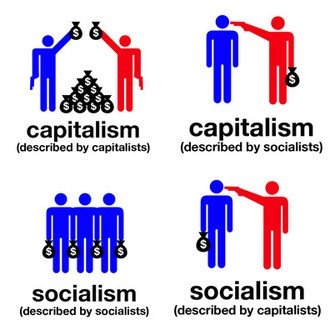
Capitalism vs. Socialism vs. Distributism

Capitalism vs. Socialism  vs. Distributism by Bryan J. Neva, Sr. Since ancient times, people have bought, sold, and traded land,...