In business school, they teach you there are basically four ingredients you need if you want to produce something of value: land (or raw materials), capital (or money), labor (or work), and entrepreneurship (or know-how).
For example, if you want to make a car you're going to need things like a big factory, raw materials like steel for the body and rubber for the tires (land); you're going to need a lot of money to buy these things (capital); you're going to need workers (labor) and money to pay them (more capital); and you're going to need to know how to make a car (entrepreneurship).
If you want to open a barber shop, you'll need things like a store, barber chairs, scissors, electric clippers, razors, and shaving cream (land); you'll need money to buy all these things (capital); you'll need licensed barbers (labor) and money to pay them (more capital); and you'll need to know how to run a barber shop (entrepreneurship).
It's a little more complicated than this, but in business you basically try to control these four ingredients of production in order to produce your product or service at the lowest possible cost, then you try to sell your product or service at the highest possible price. If your sales exceed your costs you'll make a profit (you're in the black); if your costs exceed your sales then you're losing money (you're in the red); if you continue to operate in the red you risk bankruptcy so you try to control the four ingredients of production in order to get yourself out of the red and into the black.
And it's not easy for a business manager to control these four ingredients of production. For example, it's not easy to buy the raw materials (land) at the lowest possible price. The cost to build a factory or the rent on a store are pretty much set in stone. Once you've built a factory or signed the lease on your store that money is gone (it's a sunk cost). The utilities to run your factory or store are also pretty much set in stone too. You're going to have to pay your light bill if you want to stay in business. The electric company doesn't care if you're losing money; they want to be paid at the end of the month. Your know-how (entrepreneurial idea) won't make you a dime until your idea pays off and that could take awhile. The only thing a business manager can really control is the amount and cost of labor which is why most businesses try to hire the fewest number of workers at the lowest possible salaries.
The textbook answer on how business works sounded really convincing didn't it? When I went through business school I was convinced too, but as a grew a little older and wiser I saw a big hole in the textbook answer.
Workers (labor) are people, they're not units of production like land and capital. People are made in the image of God. They have hopes and dreams, spouses and children, and lives outside of work. When you, as a business manager, follow the textbook answer of how a business should run and treat people like a line item on a spreadsheet or a unit of production, you're ethically running your business in the red and risk moral bankruptcy.
Friday, October 24, 2014
Saturday, October 18, 2014
Henry Ford the Epitome of American Capitalism
Henry Ford was the epitome of American Capitalism. His rags-to-riches success story of entrepreneurialism is an inspiration to all of us. Born and raised on a rural farm in Michigan, Ford only achieved an eighth-grade education, but he was a mechanical and industrial engineering genius. His greatest achievement was the implementation of industrial mass production which created an economy-of-scale to build the automobile. This made the automobile very affordable to the general public.
But working on an assembly line is repetitive, back-breaking, boring, and de-humanizing. There was a huge turn-over in the labor force. If the company needed one-hundred workers, they would have to hire 1000 due to attrition. So Ford came up with another ingenious idea: incentive pay. Workers could earn as much as $5 a day for an eight hour work day, more than double what the typical worker earned. Paying workers more would decrease attrition and enable his workers to buy his automobiles, a win-win solution. After it was announced, 10,000 people showed up the next day to apply for a job. The work still sucked, but hey they were earning $5 a day!
But earning that $5 a day came with a huge price. Workers would have to jump through ridiculous hoops to get it. For example, the company engaged in social engineering where they demanded emigrant workers learn English and become Americanized. The company would send their social police to their employees homes to ensure they were living wholesome American lives and not engaging in vices like smoking, drinking, or gambling.
In addition, workers were not allowed to talk while on the job. They weren't allowed to sit down or take potty breaks. They would have to be productive all the time even if they were ill. And the company's security force would brutally enforce Ford's work rules. It was classic management by fear, intimidation, and brutality. Latter, when automobile workers tried to organize a union, Ford, through his hired thugs, brutally fought the unions tooth and nail. The only reason Ford finally capitulated to the union's demands is because his wife Clara threatened to leave him. Henry Ford had, in fact, become a greedy, power hungry, obsessive-compulsive control freak.
Yes in-deed, Henry Ford epitomized the best and worst in American Capitalism. He epitomized the best because of his rags-to-riches story, his pioneering implimentation of the assembly line to make automobiles affordable, and his $5 dollar a day wages. And he epitomized the worst because of his love of money, power, control, and oppression of workers. Since then, working conditions in America have improved quite a bit through legislation, unionization, and evolving social norms and mores. But the dark side of American Capitalism is still alive and well and living in the hearts of many business managers today who, like Henry Ford, still try to earn a profit at any price.
But working on an assembly line is repetitive, back-breaking, boring, and de-humanizing. There was a huge turn-over in the labor force. If the company needed one-hundred workers, they would have to hire 1000 due to attrition. So Ford came up with another ingenious idea: incentive pay. Workers could earn as much as $5 a day for an eight hour work day, more than double what the typical worker earned. Paying workers more would decrease attrition and enable his workers to buy his automobiles, a win-win solution. After it was announced, 10,000 people showed up the next day to apply for a job. The work still sucked, but hey they were earning $5 a day!
But earning that $5 a day came with a huge price. Workers would have to jump through ridiculous hoops to get it. For example, the company engaged in social engineering where they demanded emigrant workers learn English and become Americanized. The company would send their social police to their employees homes to ensure they were living wholesome American lives and not engaging in vices like smoking, drinking, or gambling.
In addition, workers were not allowed to talk while on the job. They weren't allowed to sit down or take potty breaks. They would have to be productive all the time even if they were ill. And the company's security force would brutally enforce Ford's work rules. It was classic management by fear, intimidation, and brutality. Latter, when automobile workers tried to organize a union, Ford, through his hired thugs, brutally fought the unions tooth and nail. The only reason Ford finally capitulated to the union's demands is because his wife Clara threatened to leave him. Henry Ford had, in fact, become a greedy, power hungry, obsessive-compulsive control freak.
Yes in-deed, Henry Ford epitomized the best and worst in American Capitalism. He epitomized the best because of his rags-to-riches story, his pioneering implimentation of the assembly line to make automobiles affordable, and his $5 dollar a day wages. And he epitomized the worst because of his love of money, power, control, and oppression of workers. Since then, working conditions in America have improved quite a bit through legislation, unionization, and evolving social norms and mores. But the dark side of American Capitalism is still alive and well and living in the hearts of many business managers today who, like Henry Ford, still try to earn a profit at any price.


Monday, October 13, 2014
The Virtue of Responsible Citizenship
I urge, then, first of all, that petitions, prayers, intercession and thanksgiving be made for all people—for kings and all those in authority, that we may live peaceful and quiet lives in all godliness and holiness. This is good, and pleases God our Savior…” (St. Paul, 1 Timothy 2:1-3)
Every year or two in the U.S. we are asked to go to the voting booth and choose someone to represent us in local, state, or federal government. Both mainstream political parties try to convince us why we should vote for their candidate while at the same time disparaging the other party or candidate. Issues range from moral issues to fiscal issues, that is, how we should live our lives and how we should spend our money.
I chose several years ago to become a political independent and vote according to my conscience guided by my Roman Catholic beliefs. Often times this is not easy to do as there's hardly any candidate that completely meets all the criteria. But I try to keep an open mind. So I wanted to share with you the U.S. Council of Catholic Bishop's voting guide. It's in PDF format so you can print it out or save it to your hard drive for future reference. I realize that many of my readers are Protestant Christians, Jewish, or People of Good Will, but I think you'll discover we have much in common.
Finally, I urge all my readers not to disparage our political leaders but hold them up in your prayers. And don't engage in political one-up-man-ship with others who may see the world differently than you do. Just agree to disagree, keep them in your prayers, and continue to be cordial.
Every year or two in the U.S. we are asked to go to the voting booth and choose someone to represent us in local, state, or federal government. Both mainstream political parties try to convince us why we should vote for their candidate while at the same time disparaging the other party or candidate. Issues range from moral issues to fiscal issues, that is, how we should live our lives and how we should spend our money.
I chose several years ago to become a political independent and vote according to my conscience guided by my Roman Catholic beliefs. Often times this is not easy to do as there's hardly any candidate that completely meets all the criteria. But I try to keep an open mind. So I wanted to share with you the U.S. Council of Catholic Bishop's voting guide. It's in PDF format so you can print it out or save it to your hard drive for future reference. I realize that many of my readers are Protestant Christians, Jewish, or People of Good Will, but I think you'll discover we have much in common.
Finally, I urge all my readers not to disparage our political leaders but hold them up in your prayers. And don't engage in political one-up-man-ship with others who may see the world differently than you do. Just agree to disagree, keep them in your prayers, and continue to be cordial.
Tuesday, October 7, 2014
Bitcoin by Allen F. Laudenslager
The following article is by Allen F. Laudenslager who writes a Blog A Voice In the Wilderness
I remember once when I was about 13 (1958) and traveling with my parents, we stopped for gas in a small town in western Pennsylvania where my father tried to use an American Express Traveler’s Check. That was a matter of trust - this small town gas station had never seen one and didn’t know if he could trust it or not. He did know and expect that he could trust a 5 or 10 or 20 dollar bill!
Back to that ounce of gold you trust so much. In the depths of antiquity certain types of sea shells drilled and strung like beads were a medium of exchange. They were rare and hard to get, at least far from the coast, and people accepted them in return for goods and services. As travel became easier and the shells lost their rarity they were supplanted by other mediums. Iron, copper, silver and gold coins for a long time were the standard and later were replaced by paper that could be exchanged for set amounts of the actual metal.
Gold, silver or any other metal has only the value we give it. Each of these has a use in manufacturing. You can build things from iron and steel or even copper. Gold and silver have industrial uses beyond their use in jewelry. But if you are in the wilderness, and need a meal, that ounce of gold will not feed you unless someone else has food AND is willing to exchange that food for the gold.
So why might they give up an immediately useful thing like a meal for an immediately useless thing like an ounce of gold? Because they trust that someone else, somewhere else will want to trade what they have for that ounce of gold. So in a very real sense, that gold relies on exactly the same “value” that a Bitcoin does - trust!
For good or ill, Bitcoin is now a permanent part of the financial landscape and will be a permanent part in some form or another from now on. So before you start wailing and moaning about Bitcoin being worthless and the ultimate fiat currency; remember that it rests on the same foundation as gold, US dollars or a can of soup. We expect that someone else will accept gold or soup as unit of storage of value. And that they will be willing trade whatever they have for that gold, US dollar or can of soup.
If you think this is a new concept think about this, approximately 800 years ago St. Thomas Aquinas said, "Men could not live with one another if there were not mutual confidence that they were being truthful to one another."
A voice in the wilderness
A lone voice against conformity.
TUESDAY, OCTOBER 7, 2014
Bitcoin
Bitcoin is a full on fiat currency supported only by the user’s faith that someone else will accept it at what they paid for it. Looked at one way it is a fraud since there it has no intrinsic value supporting it.
In another sense it has exactly the same value as an ounce of gold. The trust that someone else will accept the value and exchange it for something we both agree is an equal value.
In another sense it has exactly the same value as an ounce of gold. The trust that someone else will accept the value and exchange it for something we both agree is an equal value.
I remember once when I was about 13 (1958) and traveling with my parents, we stopped for gas in a small town in western Pennsylvania where my father tried to use an American Express Traveler’s Check. That was a matter of trust - this small town gas station had never seen one and didn’t know if he could trust it or not. He did know and expect that he could trust a 5 or 10 or 20 dollar bill!
Back to that ounce of gold you trust so much. In the depths of antiquity certain types of sea shells drilled and strung like beads were a medium of exchange. They were rare and hard to get, at least far from the coast, and people accepted them in return for goods and services. As travel became easier and the shells lost their rarity they were supplanted by other mediums. Iron, copper, silver and gold coins for a long time were the standard and later were replaced by paper that could be exchanged for set amounts of the actual metal.
Gold, silver or any other metal has only the value we give it. Each of these has a use in manufacturing. You can build things from iron and steel or even copper. Gold and silver have industrial uses beyond their use in jewelry. But if you are in the wilderness, and need a meal, that ounce of gold will not feed you unless someone else has food AND is willing to exchange that food for the gold.
So why might they give up an immediately useful thing like a meal for an immediately useless thing like an ounce of gold? Because they trust that someone else, somewhere else will want to trade what they have for that ounce of gold. So in a very real sense, that gold relies on exactly the same “value” that a Bitcoin does - trust!
For good or ill, Bitcoin is now a permanent part of the financial landscape and will be a permanent part in some form or another from now on. So before you start wailing and moaning about Bitcoin being worthless and the ultimate fiat currency; remember that it rests on the same foundation as gold, US dollars or a can of soup. We expect that someone else will accept gold or soup as unit of storage of value. And that they will be willing trade whatever they have for that gold, US dollar or can of soup.
If you think this is a new concept think about this, approximately 800 years ago St. Thomas Aquinas said, "Men could not live with one another if there were not mutual confidence that they were being truthful to one another."
Friday, October 3, 2014
The Social Doctrine of the Catholic Church
2419 "Christian revelation . . . promotes deeper understanding of the laws of social living." The Church receives from the Gospel the full revelation of the truth about man. When she fulfills her mission of proclaiming the Gospel, she bears witness to man, in the name of Christ, to his dignity and his vocation to the communion of persons. She teaches him the demands of justice and peace in conformity with divine wisdom.
2420 The Church makes a moral judgment about economic and social matters, "when the fundamental rights of the person or the salvation of souls requires it." In the moral order she bears a mission distinct from that of political authorities: the Church is concerned with the temporal aspects of the common good because they are ordered to the sovereign Good, our ultimate end. She strives to inspire right attitudes with respect to earthly goods and in socio-economic relationships.
2421 The social doctrine of the Church developed in the nineteenth century when the Gospel encountered modern industrial society with its new structures for the production of consumer goods, its new concept of society, the state and authority, and its new forms of labor and ownership. the development of the doctrine of the Church on economic and social matters attests the permanent value of the Church's teaching at the same time as it attests the true meaning of her Tradition, always living and active.
2422 The Church's social teaching comprises a body of doctrine, which is articulated as the Church interprets events in the course of history, with the assistance of the Holy Spirit, in the light of the whole of what has been revealed by Jesus Christ. This teaching can be more easily accepted by men of good will, the more the faithful let themselves be guided by it.
2423 The Church's social teaching proposes principles for reflection; it provides criteria for judgment; it gives guidelines for action:
Any system in which social relationships are determined entirely by economic factors is contrary to the nature of the human person and his acts.
2424 A theory that makes profit the exclusive norm and ultimate end of economic activity is morally unacceptable. the disordered desire for money cannot but produce perverse effects. It is one of the causes of the many conflicts which disturb the social order.
A system that "subordinates the basic rights of individuals and of groups to the collective organization of production" is contrary to human dignity. Every practice that reduces persons to nothing more than a means of profit enslaves man, leads to idolizing money, and contributes to the spread of atheism. "You cannot serve God and mammon."
2425 The Church has rejected the totalitarian and atheistic ideologies associated in modem times with "communism" or "socialism." She has likewise refused to accept, in the practice of "capitalism," individualism and the absolute primacy of the law of the marketplace over human labor. Regulating the economy solely by centralized planning perverts the basis of social bonds; regulating it solely by the law of the marketplace fails social justice, for "there are many human needs which cannot be satisfied by the market." Reasonable regulation of the marketplace and economic initiatives, in keeping with a just hierarchy of values and a view to the common good, is to be commended.
Saturday, September 27, 2014
Fired Humvee whistleblower wins $990,000
Fired Humvee whistleblower wins $990,000
- Article by: RANDY FURST , Star Tribune
- Updated: September 17, 2014 - 5:33 AM

David McIntosh alerted the Army to a design change in an armored Humvee that he feared could have fatal consequences for soldiers in Iraq and it cost him his job, his home and was a "significant factor" in the collapse of his marriage. Tuesday, the U.S. attorney's office announced the 49-year-old whistleblower from Stacy, Minn., would receive nearly $1 million as part of a $5.5 million settlement.


- 21
- comments
resize text
- buy reprints


David McIntosh’s fight to expose a design change in a Humvee gun turret that he feared could have fatal consequences for soldiers in Iraq cost him his job and his home, and was a “significant factor” in the collapse of his marriage.
Tuesday, the 49-year-old whistleblower from Stacy, Minn., was awarded nearly $1 million as part of a $5.5 million settlement with the companies that produced backup batteries for the Humvee’s turret.
“It was never about the money,” McIntosh said Tuesday. “It was about doing the right thing and protecting the people who protect us.”
McIntosh lost his job that paid him “about six figures,” struggled for years to find work and now is employed as a laborer and truck driver on road construction projects.
The sealed acid batteries turn the turrets on the Humvees if the engine gives out, but unbeknownst to the Army, the manufacturing process was changed, cutting the battery’s life span by as much as 50 percent, McIntosh said
“Worst-case scenario, if the troops in a Humvee were in a firefight … they may have only half the power the Army was promised, which could mean life or death,” McIntosh said.
McIntosh was a regional sales representative for M.K. Battery when he tried to persuade top company officials to alert the Army, but after 14 months, they still would not do so, he said. So in 2007, he called the Defense Department. Three weeks later he was fired.
“They told me I was being terminated for insubordination,” he said.
Design changed
On Tuesday, U.S. Attorney Andy Luger announced the settlement agreement with M.K. Battery and several other companies, resolving allegations that they had violated the False Claims Act. It settled a suit brought by McIntosh’s attorneys, Clayton Halunen and Susan Coler of Minneapolis.
M.K. Battery, with offices in California and the company that owns it, East Penn Manufacturing, located in Pennsylvania, declined requests for an interview, but issued a statement Tuesday saying they “denied that the batteries at issue did not meet the required specifications and the settlement with the government acknowledges that denial.”
Still, the two firms said they “were pleased to resolve these claims with the government in order to demonstrate their commitment to supplying the government with high quality batteries as well as to avoid the expense, distraction and uncertainty of protracted litigation.”
McIntosh said he was first alerted to a potential problem by an e-mail from a company engineer saying that the design and manufacture of the battery had been changed “and he didn’t know how it would affect my accounts.”
McIntosh said he tested the batteries to measure their performance. “Many times” they had half their previous capacity, he said. The new manufacturing process, he said, was designed to reduce costs, but he worried about the impact.
‘A strange call’
Over 14 months, he corresponded and spoke with top company officials about his concerns, according to the lawsuit, and warned them if they did not contact the Department of Defense, he would. When he learned the company did not plan to disclose the results of his tests, he said he contacted the Defense Department on April 24, 2007.
“It was a strange call to make,” he said. “I know these agencies. I never thought I would be contacting them in my life.”
On June 13, 2007, the company fired him. “I felt alone,” he says. “I knew these individuals quite well.”
He struggled for six years to find full-time work, he said. “Battery companies tend to know each other,” he said. “I don’t know if I was blackballed, but it felt like it.”
So he did house remodeling for friends and families and tried some private ventures that did not pan out. “It was very difficult to get full-time, gainful employment,” he said, and the resulting stress was a factor in his divorce.
‘Classic … corporate greed’
A second part of the suit, dealing with McIntosh’s termination, is expected to go to trial next spring before U.S. District Judge Donovan Frank. “We are not interested in settling that case,” said Halunen, McIntosh’s attorney. “He wants to tell his story publicly at trial.”
A spokesman for the U.S. attorney’s office said it was unaware of any lives lost because of the batteries, but Chad Blumenfield, the assistant U.S. attorney in Minneapolis, issued this statement: “The Department of Defense relies on companies it deals with to be honest about the products they provide, especially when those products will be used on the battlefield. Inaccuracies about such products cannot be tolerated.”
Halunen offered a harsher assessment.
“From Day 1, it is a classic example of corporate greed,” he said. “Profit was more important than protecting human lives, in this case, the men and women serving our country, which is particularly repugnant.”
Randy Furst • 612-673-4224 Twitter: @randyfurst
This article can be found at this link: http://www.startribune.com/local/275386301.html?page=all&prepage=1&c=y#continue
Saturday, September 20, 2014
Lost in the Woods
I am the way, and the truth, and the life. - Jesus (John 14:6)
When I was around 12, my Dad moved our family from the
suburbs of Minneapolis to a rural area of Northern Minnesota. He’d started a new job there working in the
iron mines. I’ve always had a bit of
wanderlust in me, so I began exploring the woods surrounding our home. Before long, I’d become a pretty decent
woodsman able to successfully navigate my way through the dense underbrush of
Minnesota’s jungle-like forests. I
didn’t think much of it at the time, but those skills are actually not easy to
learn. In fact, the U.S. Army teaches
these basic skills to their soldiers and officers.
I moved away from home when I was 20 and have lived in
cities ever since. When I was in my
early 40s, I’d gone home to visit my folks and my little sister happen to have
her four-wheeler there. Impulsively, I
jumped on her four-wheeler and took off into the woods following a trail. I mistakenly got off the main trail and found
myself in a dense area of underbrush. I
tried to put the four-wheeler in reverse in order to get back on the main trail
but it wouldn’t go into gear. (I didn’t
know it at the time, but the reverse mechanism on her four-wheeler was
broken.) I kept going deeper into the
forest hoping to find a place to turn around but couldn't. I eventually got stuck and couldn’t move any
further and finally admitted to myself that I was lost!
I started to panic a bit, but then pulled out my cell phone
and used satellite navigation to find my way back home on foot. (As an aside, I actually stumbled upon a
newly born deer fawn; I was really in the boonies now.) When I got home, I called my nephew Micah to
come and save me. He’s a much better
woodsman than I ever was, and he was able to save the day.
Learning to navigate our way through the dense underbrush of
the forests of life is not easy either. When
we’re young, our parents try to teach us right from wrong, how to live, and how
to find our own way. They may bring us
to church, teach us to have faith in God, and guide us along the way. But as we grow older and get out on our own,
we oftentimes forget the basics of navigating through life and may lose our way. When that happens, call on God to save you
and show you the the way home. God is just a prayer away.
Monday, September 15, 2014
Robert Reich Calls Out Harvard Business School for Its Role in Widening Inequality The top educator of American CEOs needs to rethink what it is teaching.
Robert Reich Calls Out Harvard Business School for Its Role in Widening Inequality
Tuesday, September 2, 2014
On Raising the Mimimum Wage
On Labor Day (September 1st 2014), President Obama called on the U.S. Congress to raise the minimum wage in our country. I believe this is the right thing to do. First, I believe this is in line with the teachings of the Roman Catholic Church on just wages and benefits for workers. Fiscal conservatives will (hands down) always win the economic argument of why we shouldn’t raise the minimum wage, and fiscal liberals will (hands down) always win the moral argument of why we should raise the minimum wage. As a Christian I believe that paying just and fair wages is more of a moral than an economic argument. Of course, we have to be fair with employers too, so striking a balance is important in coming to a reasonable compromise.
Second, the minimum wage has not kept pace with the cost of living. I believe the Congress should consider indexing the minimum wage to the cost of living just as they do with Social Security. This way it’s not such of a political fight every time our Congress considers it. Back in the 1970s when I was earning the minimum wage of around $3.00 per hour, my wages went a lot further than they would now. In terms of buying power, $3.00 back then would equal about $11.00 today. Of course there are places like California and the Northeast where the cost of living is much higher than the national average. (The cost of living in San Diego for example is about 30% higher than the national average.) In these cases, each state could make adjustments accordingly.
Third, I believe the cost of goods and services won’t dramatically increase. Opponents say that raising the minimum wage will raise the cost of goods and services. That may be partially true; however, a business cannot charge more than consumers are willing and able to pay for those goods and services. If the cost of a McDonald’s quarter-pounder goes from $3.00 to $8.00, consumers will choose not to buy it. They’ll shop around for other food choices and McDonalds will be forced to lower their price to a point consumers are willing and able to pay (maybe around $3.50). The reality is the profit margins for businesses will decline, but they'll still make money (just not as much as they'd like to). In a previous blog, my writing partner Allen Laudenslager and I showed that the reason Apple manufactures their iPads in China rather than the U.S. is because their gross profit margins would shrink from 80% to 20%. When businesses use these scare tactics with consumers, they're being disingenuous and covertly greedy.
Fourth, I believe that raising the minimum wage will put upward pressure on all wages and ultimately stimulate the economy. The sad reality is that everyone’s wages have been stagnating for years as corporations are recording record profits and sitting on mountains of cash. Everyone has been adversely affected by the economic downturn which started in 2008. Raising the minimum wage would prime the economic pump of our economy. Inflation, is always a concern for any economy, but so is deflation. Ironically, the cost of goods and services have been increasing while wages have simultaneously been decreasing. Go figure?
Finally, there are people I admire and respect who may disagree with raising the minimum wage. I believe most fiscal conservatives care about the downtrodden of our country too, they just want to solve the problem in a different way than fiscal liberals do. So let's debate and discuss this issue and solve this problem together.
Second, the minimum wage has not kept pace with the cost of living. I believe the Congress should consider indexing the minimum wage to the cost of living just as they do with Social Security. This way it’s not such of a political fight every time our Congress considers it. Back in the 1970s when I was earning the minimum wage of around $3.00 per hour, my wages went a lot further than they would now. In terms of buying power, $3.00 back then would equal about $11.00 today. Of course there are places like California and the Northeast where the cost of living is much higher than the national average. (The cost of living in San Diego for example is about 30% higher than the national average.) In these cases, each state could make adjustments accordingly.
Third, I believe the cost of goods and services won’t dramatically increase. Opponents say that raising the minimum wage will raise the cost of goods and services. That may be partially true; however, a business cannot charge more than consumers are willing and able to pay for those goods and services. If the cost of a McDonald’s quarter-pounder goes from $3.00 to $8.00, consumers will choose not to buy it. They’ll shop around for other food choices and McDonalds will be forced to lower their price to a point consumers are willing and able to pay (maybe around $3.50). The reality is the profit margins for businesses will decline, but they'll still make money (just not as much as they'd like to). In a previous blog, my writing partner Allen Laudenslager and I showed that the reason Apple manufactures their iPads in China rather than the U.S. is because their gross profit margins would shrink from 80% to 20%. When businesses use these scare tactics with consumers, they're being disingenuous and covertly greedy.
Fourth, I believe that raising the minimum wage will put upward pressure on all wages and ultimately stimulate the economy. The sad reality is that everyone’s wages have been stagnating for years as corporations are recording record profits and sitting on mountains of cash. Everyone has been adversely affected by the economic downturn which started in 2008. Raising the minimum wage would prime the economic pump of our economy. Inflation, is always a concern for any economy, but so is deflation. Ironically, the cost of goods and services have been increasing while wages have simultaneously been decreasing. Go figure?
Finally, there are people I admire and respect who may disagree with raising the minimum wage. I believe most fiscal conservatives care about the downtrodden of our country too, they just want to solve the problem in a different way than fiscal liberals do. So let's debate and discuss this issue and solve this problem together.
Monday, September 1, 2014
Economic Justice For All: A Catholic Framework for Economic Life
Economic Justice For All
A Catholic Framework for Economic Life
A Statement of the U.S. Catholic Bishops November 1996
Copyright © 1996 by the United States Conference of Catholic Bishops Inc.; Washington, D.C. All rights reserved.
As followers of Jesus Christ and participants in a powerful economy, Catholics in the United States are called to work for greater economic justice in the face of persistent poverty, growing income-gaps, and increasing discussion of economic issues in the United States and around the world. We urge Catholics to use the following ethical framework for economic life as principles for reflection, criteria for judgment and directions for action. These principles are drawn directly from Catholic teaching on economic life.
1. The economy exists for the person, not the person for the economy.
2. All economic life should be shaped by moral principles. Economic choices and institutions must be judged by how they protect or undermine the life and dignity of the human person, support the family and serve the common good.
3. A fundamental moral measure of any economy is how the poor and vulnerable are faring.
4. All people have a right to life and to secure the basic necessities of life (e.g., food, clothing, shelter, education, health care, safe environment, economic security.)
5. All people have the right to economic initiative, to productive work, to just wages and benefits, to decent working conditions as well as to organize and join unions or other associations.
6. All people, to the extent they are able, have a corresponding duty to work, a responsibility to provide the needs of their families and an obligation to contribute to the broader society.
7. In economic life, free markets have both clear advantages and limits; government has essential responsibilities and limitations; voluntary groups have irreplaceable roles, but cannot substitute for the proper working of the market and the just policies of the state.
8. Society has a moral obligation, including governmental action where necessary, to assure opportunity, meet basic human needs, and pursue justice in economic life.
9. Workers, owners, managers, stockholders and consumers are moral agents in economic life. By our choices, initiative, creativity and investment, we enhance or diminish economic opportunity, community life and social justice.
10. The global economy has moral dimensions and human consequences. Decisions on investment, trade, aid and development should protect human life and promote human rights, especially for those most in need wherever they might live on this globe.
According to Pope John Paul II, the Catholic tradition calls for a “society of work, enterprise and participation” which “is not directed against the market, but demands that the market be appropriately controlled by the forces of society and by the state to assure that the basic needs of the whole society are satisfied.” (Centesimus Annus, 35). All of economic life should recognize the fact that we all are God’s children and members of one human family, called to exercise a clear priority for “the least among us.”
The sources for this framework include the Catechism of the Catholic Church, recent papal encyclicals, the pastoral letter Economic Justice for All, and other statements of the U.S. Catholic bishops. They reflect the Church’s teaching on the dignity, rights, and duties of the human person; the option for the poor; the common good; subsidiarity and solidarity.
A Catholic Framework for Economic Life
A Statement of the U.S. Catholic Bishops November 1996
Copyright © 1996 by the United States Conference of Catholic Bishops Inc.; Washington, D.C. All rights reserved.
As followers of Jesus Christ and participants in a powerful economy, Catholics in the United States are called to work for greater economic justice in the face of persistent poverty, growing income-gaps, and increasing discussion of economic issues in the United States and around the world. We urge Catholics to use the following ethical framework for economic life as principles for reflection, criteria for judgment and directions for action. These principles are drawn directly from Catholic teaching on economic life.
1. The economy exists for the person, not the person for the economy.
2. All economic life should be shaped by moral principles. Economic choices and institutions must be judged by how they protect or undermine the life and dignity of the human person, support the family and serve the common good.
3. A fundamental moral measure of any economy is how the poor and vulnerable are faring.
4. All people have a right to life and to secure the basic necessities of life (e.g., food, clothing, shelter, education, health care, safe environment, economic security.)
5. All people have the right to economic initiative, to productive work, to just wages and benefits, to decent working conditions as well as to organize and join unions or other associations.
6. All people, to the extent they are able, have a corresponding duty to work, a responsibility to provide the needs of their families and an obligation to contribute to the broader society.
7. In economic life, free markets have both clear advantages and limits; government has essential responsibilities and limitations; voluntary groups have irreplaceable roles, but cannot substitute for the proper working of the market and the just policies of the state.
8. Society has a moral obligation, including governmental action where necessary, to assure opportunity, meet basic human needs, and pursue justice in economic life.
9. Workers, owners, managers, stockholders and consumers are moral agents in economic life. By our choices, initiative, creativity and investment, we enhance or diminish economic opportunity, community life and social justice.
10. The global economy has moral dimensions and human consequences. Decisions on investment, trade, aid and development should protect human life and promote human rights, especially for those most in need wherever they might live on this globe.
According to Pope John Paul II, the Catholic tradition calls for a “society of work, enterprise and participation” which “is not directed against the market, but demands that the market be appropriately controlled by the forces of society and by the state to assure that the basic needs of the whole society are satisfied.” (Centesimus Annus, 35). All of economic life should recognize the fact that we all are God’s children and members of one human family, called to exercise a clear priority for “the least among us.”
The sources for this framework include the Catechism of the Catholic Church, recent papal encyclicals, the pastoral letter Economic Justice for All, and other statements of the U.S. Catholic bishops. They reflect the Church’s teaching on the dignity, rights, and duties of the human person; the option for the poor; the common good; subsidiarity and solidarity.
Subscribe to:
Posts (Atom)
Featured Post
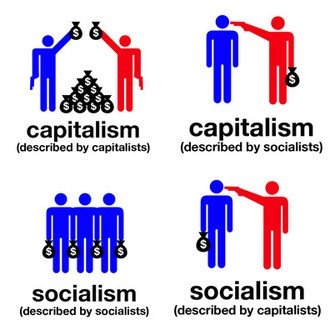
Capitalism vs. Socialism vs. Distributism
Capitalism vs. Socialism vs. Distributism by Bryan J. Neva, Sr. Since ancient times, people have bought, sold, and traded land,...
-
 Whose Ox Is Being Gored? by Bryan J. Neva, Sr. You've probably heard the old cliché, "It all depends on whose ox is...
 -
 The Parable of the Lost Coin LUKE 15 8 “Or what woman, having ten silver coins, if she loses one coin, does not light a lamp and sweep ...
 -
 What Business can Learn from Sheep Herding by Bryan J. Neva, Sr. Business can learn a lot from the business of sheep herding. Sheep her...
 -
Loving Your Enemies by Fritz Chery, Feb 15, 2015, biblereasons.com Bible verses about loving your enemies This topic is something w...
-
 Capitalism vs. Socialism vs. Distributism by Bryan J. Neva, Sr. Since ancient times, people have bought, sold, and traded land,...
 -
 Elijah by Bryan Neva “Shout louder, Baal may be meditating, or retired, or on vacation, or asleep and needs to be awoken.” The grea...
 -
 The Leash Theory of Management by Bryan J. Neva, Sr. Have you ever heard a manager use phrases like, "I have to keep them on a sho...
 -
 The Parable of the Lost Son LUKE 15: 11 And he said, “There was a man who had two sons; 12 and the younger of them said to his fat...
 -
Thing 7 Free-market policies rarely make poor countries rich by Dr. Ha Joon Chang (Book Excerpt from 23 Things They Don't Tel...
