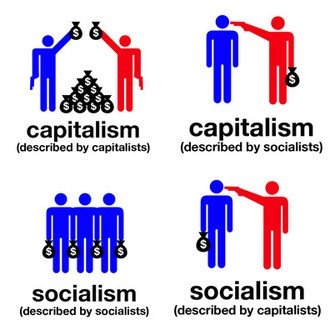
On Labor Day (September 1st 2014), President Obama called on the U.S. Congress to raise the minimum wage in our country. I believe this is the right thing to do. First, I believe this is in line with the teachings of the Roman Catholic Church on just wages and benefits for workers. Fiscal conservatives will (hands down) always win the economic argument of why we shouldn’t raise the minimum wage, and fiscal liberals will (hands down) always win the moral argument of why we should raise the minimum wage. As a Christian I believe that paying just and fair wages is more of a moral than an economic argument. Of course, we have to be fair with employers too, so striking a balance is important in coming to a reasonable compromise.
Second, the minimum wage has not kept pace with the cost of living. I believe the Congress should consider indexing the minimum wage to the cost of living just as they do with Social Security. This way it’s not such of a political fight every time our Congress considers it. Back in the 1970s when I was earning the minimum wage of around $3.00 per hour, my wages went a lot further than they would now. In terms of buying power, $3.00 back then would equal about $11.00 today. Of course there are places like California and the Northeast where the cost of living is much higher than the national average. (The cost of living in San Diego for example is about 30% higher than the national average.) In these cases, each state could make adjustments accordingly.
Third, I believe the cost of goods and services won’t dramatically increase. Opponents say that raising the minimum wage will raise the cost of goods and services. That may be partially true; however, a business cannot charge more than consumers are willing and able to pay for those goods and services. If the cost of a McDonald’s quarter-pounder goes from $3.00 to $8.00, consumers will choose not to buy it. They’ll shop around for other food choices and McDonalds will be forced to lower their price to a point consumers are willing and able to pay (maybe around $3.50). The reality is the profit margins for businesses will decline, but they'll still make money (just not as much as they'd like to). In a previous blog, my writing partner Allen Laudenslager and I showed that the reason Apple manufactures their iPads in China rather than the U.S. is because their gross profit margins would shrink from 80% to 20%. When businesses use these scare tactics with consumers, they're being disingenuous and covertly greedy.
Fourth, I believe that raising the minimum wage will put upward pressure on all wages and ultimately stimulate the economy. The sad reality is that everyone’s wages have been stagnating for years as corporations are recording record profits and sitting on mountains of cash. Everyone has been adversely affected by the economic downturn which started in 2008. Raising the minimum wage would prime the economic pump of our economy. Inflation, is always a concern for any economy, but so is deflation. Ironically, the cost of goods and services have been increasing while wages have simultaneously been decreasing. Go figure?
Finally, there are people I admire and respect who may disagree with raising the minimum wage. I believe most fiscal conservatives care about the downtrodden of our country too, they just want to solve the problem in a different way than fiscal liberals do. So let's debate and discuss this issue and solve this problem together.
Tuesday, September 2, 2014
Monday, September 1, 2014
Economic Justice For All: A Catholic Framework for Economic Life
Economic Justice For All
A Catholic Framework for Economic Life
A Statement of the U.S. Catholic Bishops November 1996
Copyright © 1996 by the United States Conference of Catholic Bishops Inc.; Washington, D.C. All rights reserved.
As followers of Jesus Christ and participants in a powerful economy, Catholics in the United States are called to work for greater economic justice in the face of persistent poverty, growing income-gaps, and increasing discussion of economic issues in the United States and around the world. We urge Catholics to use the following ethical framework for economic life as principles for reflection, criteria for judgment and directions for action. These principles are drawn directly from Catholic teaching on economic life.
1. The economy exists for the person, not the person for the economy.
2. All economic life should be shaped by moral principles. Economic choices and institutions must be judged by how they protect or undermine the life and dignity of the human person, support the family and serve the common good.
3. A fundamental moral measure of any economy is how the poor and vulnerable are faring.
4. All people have a right to life and to secure the basic necessities of life (e.g., food, clothing, shelter, education, health care, safe environment, economic security.)
5. All people have the right to economic initiative, to productive work, to just wages and benefits, to decent working conditions as well as to organize and join unions or other associations.
6. All people, to the extent they are able, have a corresponding duty to work, a responsibility to provide the needs of their families and an obligation to contribute to the broader society.
7. In economic life, free markets have both clear advantages and limits; government has essential responsibilities and limitations; voluntary groups have irreplaceable roles, but cannot substitute for the proper working of the market and the just policies of the state.
8. Society has a moral obligation, including governmental action where necessary, to assure opportunity, meet basic human needs, and pursue justice in economic life.
9. Workers, owners, managers, stockholders and consumers are moral agents in economic life. By our choices, initiative, creativity and investment, we enhance or diminish economic opportunity, community life and social justice.
10. The global economy has moral dimensions and human consequences. Decisions on investment, trade, aid and development should protect human life and promote human rights, especially for those most in need wherever they might live on this globe.
According to Pope John Paul II, the Catholic tradition calls for a “society of work, enterprise and participation” which “is not directed against the market, but demands that the market be appropriately controlled by the forces of society and by the state to assure that the basic needs of the whole society are satisfied.” (Centesimus Annus, 35). All of economic life should recognize the fact that we all are God’s children and members of one human family, called to exercise a clear priority for “the least among us.”
The sources for this framework include the Catechism of the Catholic Church, recent papal encyclicals, the pastoral letter Economic Justice for All, and other statements of the U.S. Catholic bishops. They reflect the Church’s teaching on the dignity, rights, and duties of the human person; the option for the poor; the common good; subsidiarity and solidarity.
A Catholic Framework for Economic Life
A Statement of the U.S. Catholic Bishops November 1996
Copyright © 1996 by the United States Conference of Catholic Bishops Inc.; Washington, D.C. All rights reserved.
As followers of Jesus Christ and participants in a powerful economy, Catholics in the United States are called to work for greater economic justice in the face of persistent poverty, growing income-gaps, and increasing discussion of economic issues in the United States and around the world. We urge Catholics to use the following ethical framework for economic life as principles for reflection, criteria for judgment and directions for action. These principles are drawn directly from Catholic teaching on economic life.
1. The economy exists for the person, not the person for the economy.
2. All economic life should be shaped by moral principles. Economic choices and institutions must be judged by how they protect or undermine the life and dignity of the human person, support the family and serve the common good.
3. A fundamental moral measure of any economy is how the poor and vulnerable are faring.
4. All people have a right to life and to secure the basic necessities of life (e.g., food, clothing, shelter, education, health care, safe environment, economic security.)
5. All people have the right to economic initiative, to productive work, to just wages and benefits, to decent working conditions as well as to organize and join unions or other associations.
6. All people, to the extent they are able, have a corresponding duty to work, a responsibility to provide the needs of their families and an obligation to contribute to the broader society.
7. In economic life, free markets have both clear advantages and limits; government has essential responsibilities and limitations; voluntary groups have irreplaceable roles, but cannot substitute for the proper working of the market and the just policies of the state.
8. Society has a moral obligation, including governmental action where necessary, to assure opportunity, meet basic human needs, and pursue justice in economic life.
9. Workers, owners, managers, stockholders and consumers are moral agents in economic life. By our choices, initiative, creativity and investment, we enhance or diminish economic opportunity, community life and social justice.
10. The global economy has moral dimensions and human consequences. Decisions on investment, trade, aid and development should protect human life and promote human rights, especially for those most in need wherever they might live on this globe.
According to Pope John Paul II, the Catholic tradition calls for a “society of work, enterprise and participation” which “is not directed against the market, but demands that the market be appropriately controlled by the forces of society and by the state to assure that the basic needs of the whole society are satisfied.” (Centesimus Annus, 35). All of economic life should recognize the fact that we all are God’s children and members of one human family, called to exercise a clear priority for “the least among us.”
The sources for this framework include the Catechism of the Catholic Church, recent papal encyclicals, the pastoral letter Economic Justice for All, and other statements of the U.S. Catholic bishops. They reflect the Church’s teaching on the dignity, rights, and duties of the human person; the option for the poor; the common good; subsidiarity and solidarity.


Sunday, August 31, 2014
Satisfying the Needs of People by Allen Laudenslager & Bryan Neva (2005)
Satisfying the Needs of People
by Allen Laudenslager & Bryan Neva (circa 2005)
by Allen Laudenslager & Bryan Neva (circa 2005)
Around 1914, Henry Ford announced that he’d decided to pay his workers the unheard of sum of $5 for an eight-hour workday (which replaced the going wage of $2.34 for a nine-hour workday). The business community in general thought that wage was unsupportable and that he would soon have to reduce wages or risk closing shop.
It is not the employer who pays the wages. Employers only handle the money. It is the customer who pays the wages. — Henry Ford
Ford knew that paying his workers well would have several benefits. First, by reducing worker turnover, employees fought to stay in the best paying job in the area. Ford saved money by not having to train new workers.
Second, more experienced workers were more productive than less experienced workers. Simple things like floor sweepers picking up tools and small parts that were dropped rather than just throwing them away created their own savings.
Third, Ford believed that his own workers should be his best customers, and the higher wage meant that his workers purchased more goods and services in their communities and subsequently the community had more money to spend with Ford.
Ford essentially primed the economic pump; whereas, greed and shortsightedness by some, trying to satisfy their short term needs at the expense of others, stopped the money from circulating through the economy causing undue hardship and limiting overall economic growth.
In many direct and indirect ways all the stakeholders of a business enterprise—owners (entrepreneurs and investors), managers, employees, customers, creditors, suppliers, distributors, governments, communities, societies, and the environment—derive benefits from businesses. Entrepreneurs like Ford conceive an idea for a business and investors provide the capital funding to start it. Managers are hired to operate the business enterprise and employees are hired to create and add value to the products or services that meet the needs of a certain group of customers. Suppliers and creditors provide the business with the raw materials and short-term loans to make the products or provide the services. Distributors (wholesalers, retailers, or salespeople) actually sell the products or services to customers. And it’s the customer who buys these products or services in order to meet their own specific needs. The income generated from the sales of these products or services pays the overhead, taxes, and salaries of the managers and employees, and the net profits help repay the owners (entrepreneurs and investors) for the risks they took starting the business. The managers and employees must pay income taxes on their salaries, which support their communities, and their earnings help them pay for their needs and wants.
Using their individual talents, many people work together to produce and distribute a product or service that ultimately adds value to everyone’s lives. The business enterprise satisfies the needs of the owners (entrepreneurs and investors) through the products or services that were created and the profits returned to them to spend or to reinvest in their business. It satisfies the needs of the managers and employees by providing them and their families with a livelihood. It satisfies the needs of the suppliers, creditors, and distributors through interest income and sales of their products or services. And most importantly, it satisfies the needs of the customers who purchased the products or services created by the business.
Indirectly, the business satisfies the ancillary needs of governments through local, state, and federal taxes. It satisfies the ancillary needs of communities and societies through employment for their citizens, taxes for the local infrastructure, and goods and services purchased by the business, managers, and employees. And it satisfies the needs of the environment through the responsible use of our natural resources so that the business itself and future generations can enjoy and prosper from them.
The ultimate purpose of business then must be to satisfy the needs of people! All the stakeholders who have a vested interest in the success of the business have different needs to meet and a good business enterprise must balance all these competing needs. A business must also balance its own long-term survival against its responsibility to its stakeholders. Only by satisfying the greatest number of needs for the greatest number of stakeholders can a business thrive and ultimately survive in the long-term.
A business has to balance all the competing demands of its stakeholders as its long-term goal, but the demand to survive the short-term is the first order of business. This includes making a profit to ensure future survival. The second order of business is to plan for long-term survival. This includes employee development so that workers are trained in newer, more productive methods, and planning for future products and services it can sell to customers. The third order of business is the development of the community where the business is located. This includes being good corporate citizens so that its employees and their families have a good place to live and work and the business can continue to produce and sell its product.
At first glance, the idea that a business serves all these stakeholders may seem odd, but we assure you that any business that does not serve customers by filling a need will not survive. We’ve all heard of businesses that failed miserably because they did not provide a good product or service, over-charged, defrauded, or mistreated their customers or employees. On the other hand, we’ve also heard of businesses that failed because they were simply unprofitable despite having great products and working environments. This dichotomy between satisfying people’s needs and profitability is perplexing.
While absolutely necessary, profit is really only one indicator of business success. It’s a scorecard on how well a business has performed over a small period of time. Satisfying the needs of stakeholders is also an indicator of business success, but it’s more difficult to measure and manage. Rather than focusing only on profits, a business should instead focus on satisfying the needs of its stakeholders especially those who add the most value to its business. Doing this will make the business more profitable in the long-term.
Fostering a business attitude of satisfying the needs of people is a legitimate profit strategy because it helps businesses focus on the stakeholders who add the most value to their companies—customers, employees, suppliers, creditors, and distributors. If a business satisfies these important stakeholders, it will ultimately be more profitable and successful in the long-term. And if the business is successful over the long-term, then it will satisfy the needs of its owners, investors, and managers, and society in general will benefit from a thriving business.
Customers, employees, suppliers, creditors and distributors really do add the most value to a business. Without customers a business wouldn’t have any income; without employees a business couldn’t make products and provide services; without suppliers and creditors a business wouldn’t have the raw materials and money to produce its products and services; and without distributors (wholesalers, retailers, and salespeople), the business couldn’t sell its products and services to its customers. And ultimately, it’s customers who pay for everything!
On the other hand, the owners, investors, and mangers add the least value to a business. Without owners or investors a business wouldn’t exist in the first place. But after the initial investments of time and money, a business no longer needs the owners or investors to function unless they perform management roles. Managers, more importantly, provide the overall leadership an organization needs to accomplish its goals. But managers are still overhead in an organization and don’t add as much value as the people doing the day-to-day work of the organization (i.e. employees). This idea is supported by the fact that companies today are getting rid of many layers of management in favor of empowering their employees.
In summary, we’ve offered further evidence that the ultimate purpose of business is to satisfy the needs of people, and that profit is a natural byproduct of satisfying people’s needs. And who are the people? They’re the stakeholders of a business: the entrepreneurs, investors, managers, customers, employees, suppliers, creditors, distributors, governments, communities, societies, and the environment. To be successful, businesses must balance all the competing needs of their stakeholders. However, a business should focus their energies on satisfying the needs of its principal stakeholders who add the most value to their business: the customers, employees, suppliers, creditors, and distributors. If the business succeeds in satisfying the needs of these principal stakeholders, then the needs of the other important stakeholders will also be satisfied. Understanding how the economic business cycle works and how money flows through our economy is the first step in making the leap to a better way of doing business.
Saturday, August 23, 2014
Living with ALS: Todd Neva's story by Sarah Blakely FOX TV6
Living with ALS: Todd Neva's story: When Todd Neva was diagnosed with Amyotrophic Lateral Sclerosis in 2010, he didn't believe it was true
HANCOCK -- “I just didn’t think I had it. I thought he was wrong. Who would believe it?”
Todd Neva describes the day a neurologist told him he was showing early signs of ALS as uneventful, as he sat in disbelief that he really had the disease. He first noticed possible symptoms of ALS in 2010 when he struggled to lift his daughter out of her carseat. Just a few months later, he was diagnosed.
Amyotrophic lateral sclerosis, or Lou Gehrig’s Disease, is a neurological condition in which the voluntary muscles in the body progressively lose their ability to function. It has no cure, no known cause, and the end result is sadly death. Todd and his wife, Kristin, struggled to come to terms with their new reality.
“It was devastating,” said Kristin. “We had two young kids. Isaac was nine months old, and we thought there was a great likelihood that he would never even remember Todd.”
“I remember the first time that I couldn’t swing a golf club, and I thought, ‘Well, that’s ok. I can do without golf,’” recalled Todd. “But then the first time I couldn’t squeeze a mustard bottle, I cried. It was hard.”
Todd now uses a powerchair to move around and voice control software on his computer to write emails. Everyday tasks, like putting on clothes or reading a book to his kids, Sara, now 8, and Isaac, now 4, are a challenge.
“Now I’m sitting in the passenger seat and she’s driving, and that’s hard. It’s hard for a guy to have your wife drive!” he laughed. “But it takes a little bit of time to adapt to it, and I’ve surrendered and I’ve relaxed.”
They have since published a book titled "Heavy" cataloging their journey and how they came to find joy in the midst of suffering by taking life one day at a time.
“We can’t go for a bike ride as a family anymore, but today I can be thankful that Todd can still watch a movie with us, or go to the fair. We just went to the fair last night,” said Kristin. “So there’s still joy that we can find in life and things that we can be thankful for.”
Todd and Kristin said they’ve also found some comfort in the thousands of videos of the ice bucket challenge, which, according to the ALS Association, is credited for raising over $53 million. Kristin, Sara, and Isaac, even took the challenge themselves Friday.
The Nevas said they hope their story will serve as an encouragement to others suffering through any hardship and that the ice bucket challenge will teach people how to be compassionate.
“Soon enough, their newsfeeds will go back to cat videos and covers of ‘Let It Go,’ but right now ALS has the spotlight,” said Todd. “I think what’s wonderful about that is somewhere in there, somebody’s heart will be changed.”
The Nevas’ book, "Heavy," can be purchased on Amazon here. For more information about ALS and the ALS Association, visit their website.
Todd Neva describes the day a neurologist told him he was showing early signs of ALS as uneventful, as he sat in disbelief that he really had the disease. He first noticed possible symptoms of ALS in 2010 when he struggled to lift his daughter out of her carseat. Just a few months later, he was diagnosed.
Amyotrophic lateral sclerosis, or Lou Gehrig’s Disease, is a neurological condition in which the voluntary muscles in the body progressively lose their ability to function. It has no cure, no known cause, and the end result is sadly death. Todd and his wife, Kristin, struggled to come to terms with their new reality.
“It was devastating,” said Kristin. “We had two young kids. Isaac was nine months old, and we thought there was a great likelihood that he would never even remember Todd.”
“I remember the first time that I couldn’t swing a golf club, and I thought, ‘Well, that’s ok. I can do without golf,’” recalled Todd. “But then the first time I couldn’t squeeze a mustard bottle, I cried. It was hard.”
Todd now uses a powerchair to move around and voice control software on his computer to write emails. Everyday tasks, like putting on clothes or reading a book to his kids, Sara, now 8, and Isaac, now 4, are a challenge.
“Now I’m sitting in the passenger seat and she’s driving, and that’s hard. It’s hard for a guy to have your wife drive!” he laughed. “But it takes a little bit of time to adapt to it, and I’ve surrendered and I’ve relaxed.”
They have since published a book titled "Heavy" cataloging their journey and how they came to find joy in the midst of suffering by taking life one day at a time.
“We can’t go for a bike ride as a family anymore, but today I can be thankful that Todd can still watch a movie with us, or go to the fair. We just went to the fair last night,” said Kristin. “So there’s still joy that we can find in life and things that we can be thankful for.”
Todd and Kristin said they’ve also found some comfort in the thousands of videos of the ice bucket challenge, which, according to the ALS Association, is credited for raising over $53 million. Kristin, Sara, and Isaac, even took the challenge themselves Friday.
The Nevas said they hope their story will serve as an encouragement to others suffering through any hardship and that the ice bucket challenge will teach people how to be compassionate.
“Soon enough, their newsfeeds will go back to cat videos and covers of ‘Let It Go,’ but right now ALS has the spotlight,” said Todd. “I think what’s wonderful about that is somewhere in there, somebody’s heart will be changed.”
The Nevas’ book, "Heavy," can be purchased on Amazon here. For more information about ALS and the ALS Association, visit their website.
Wednesday, August 20, 2014
Ice Bucket Challenge by Todd Neva
Ice Bucket Challenge
August 19, 2014, by Todd Neva

Isaac Neva taking ALS Ice Bucket Challenge for Daddy
“What happened to you?”
I’ve been asked that question, or some variation of it, many times by people I meet.
“I got sick,” I would answer. “I have a neurological disease. It’s a brain disease, called ALS.”
If my new friend is older, I tell him I have Lou Gehrig’s disease. Older folks know that disease, heard of the man, the baseball legend Lou Gehrig, and how he died.
But I wouldn’t call it Lou Gehrig’s disease if my new friend is younger than, say, 50.
“ALS stands for amyotrophic lateral sclerosis,” I explain. “Amyotrophic is Greek for no-muscle-nourishment. Every voluntary muscle in my body will weaken, and I will become completely paralyzed, even losing my ability to swallow and breathe.”
“Oh! How do they treat that?”
“They don’t. There’s no known cause, no cure.”
“Oh!” His eyes widen, suddenly realizing the significance of this disease that has put me in a wheelchair, robbed me of my independence, took everything from me but the love and support of my family and friends.
“But life is good,” I ease the tension. “Not everybody gets to retire at age 41.”
For conversations like those, I am glad to see the ALS Ice Bucket Challenge.
The ALS Ice Bucket Challenge is raising awareness of this orphan disease, this devastating disease that cuts down a small percentage of people,* but does so cruelly and quickly, usually within two to five years.
The disease impacts each pALS, person with ALS, differently. For some the disease starts in the arms, then moves to the legs, then to the bulbar, which are the muscles in the core of the body controlling breathing , swallowing, and speech. For others, the disease starts in the legs, then moves to the arms, then to the bulbar. For some the disease shows up first in bulbar, slurring speech and sometimes leading to an initial misdiagnoses of stroke.
However it starts, every pALS has to deal with change. The toughest challenge for me has been change. At any given point, I think to myself, “If it would just stop now, I could deal with it.” But it doesn’t stop. This disease, ALS, is relentless, robbing me of independence month after month. I vividly remember the first time I couldn’t swing a golf club. “It’s okay, I thought, I can do without golf.” As clearly as I remember where I was when I saw the twin towers collapse, I can picture myself sitting at the kitchen table when I was first unable to squeeze a mustard bottle. “It’s okay,” I thought, “my wife can put mustard on my hamburger.” There were more setbacks, month after month, each devastating: unable to comb my hair, unable to button my shirt, unable to pull on my cowboy boots, unable to drive, unable to bathe myself, unable to lift a glass to my mouth, etc. I have very limited use of my hands. I struggle to walk. I fall occasionally. I sleep a lot. I require a personal caregiver for the most basic tasks. But even now, I think, “If it would just stop, I could deal with it.” But it doesn’t stop. ALS is relentless.
The ALS Ice Bucket Challenge is raising money for a worthy organization. The ALS Association announced on Monday, August 18, that it has received $15.6 million in donations compared to $1.8 million during the same time period the year before.
ALSA provides practical support for pALS and their caregivers, such as adaptive equipment, support groups, social service guidance, and financial assistance to help with medical expenses. I have benefited personally from the organization, and I’m very grateful for them.
ALSA also provides grants for medical research. This is a wonderful time to be funding ALS research because recent discoveries have given valuable insight into the mechanism of the disease. There are a few medical trials, which are in progress now, that are looking promising.
So whether someone chooses to just dump the ice water over themselves, to just donate, or both, it’s all good. Thank you! People are becoming aware of this disease, the money is flowing to the ALSA, and we’re all getting a good laugh in the meantime.
* Less than 2 in 100,000 people are diagnosed with ALS each year in the United States. About 30,000 people are living with ALS in the United States at any given time.
Startups by Allen Laudenslager A voice in the wilderness
StartupsA voice in the wilderness |
|
Allen Laudenslager 19 Aug 2014
Startups are fundamentally different from anything else you can do in business.
In many ways a starting a company is just like raising a child. Everything is for the first time - new and untried. No matter how much experience the people have designing the product or servicing the customer; with a startup it’s still the first time that particular task has ever been done with those people in exactly that way.
Just as an established company has to build a relationship and reputation with a new customer, a new company has to build a relationship and reputation with every customer. An established company has staff interrelationships that are just being built in a startup and will inevitably impact how and how well those people work together.
Every new product or service will have problems to solve. Just think about the last time you bought a new TV or a new car. You had a learning curve just to figure out how to set the clock or the date since every TV or car has a slightly different procedure.
An established company has processes and procedures for most of its day-to-day operations. A policy for handling customer complaints and refunds, and a set dollar amount that the service person is authorized to spend without asking permission and so on.
The first key lesson for a startup to learn comes from the French philosopher Rene Descartes – Each problem that I solved became a rule, which served afterwards to solve other problems.
The takeaway from this is for you to keep close track of problems and successes to develop processes, procedures and guidelines to deal with future issues. This deceptively simple practice is the key to scaling your business and allowing you to add staff without losing the very things that set you apart from the competition.
Every startup begins with an idea and that must be turned into a plan to actually create a product or to deliver a service. Depending on the business that plan might be very simple or complex but just like planning a trip to the grocery store without a list you end up forgetting the lunchmeat!
While a better plan generally leads to better results, its far too easy for you to get caught up in trying to write the perfect plan and to account for every possibility, leading to the well known “analysis paralysis”.
The second key lesson for a start up is - A good plan implemented today is better than a perfect plan implemented tomorrow.
George Patton
Your takeaway this time is that while you must do enough planning to know were to start, what you need to start with and where you are going, you should start actually doing something as soon as practical. Just like that mythical trip to the grocery store I mentioned earlier, you can always add or subtract items from the during your shopping trip, but start filling your cart!
Reading the startup advice in most business magazines you will see the reoccurring theme to not let finance hold you back. While this is good advice in the main you still need some cash to get started.
I can start a ditch digging service with a car or truck (or a bus ticket) to get to the job and a $15 shovel. Without that transportation and the shovel I can’t start a ditch digging business! I specifically chose a ditch digging business since the cost of tools is just about as low as you can get, but as you can see there is a minimum you need to get started.
How many times have you seen a need for a service or product that you’ve thought “I could make a lot of money building that or doing that for that customer”? In looking at exactly how you could make the product or deliver the service you find that you need some cash up front to buy the raw materials and tools to actually build the product or deliver the service (and by the way feed yourself till you get paid) and decide that you just don’t have the cash to make it work?
Most of us have shelved the idea and moved on looking for something we can do with the resources we already have or use what we do have to get a sample together to get more funding.
Its OK to look for opportunities within your budget or skill set, it is also OK to look for ways to expand your budget or acquire new skills but to you really only have those two choices. My business experience has taught me that more ideas fail for lack of funding than funding is wasted on bad ideas.
The key to places like Silicon Valley and Austin, Texas is not the universities that turn out educated people, although that helps, Its not the co-location of research and development branches of big businesses although that helps too. The “secret sauce” is the people willing to risk their cash on new ideas!
 |
Sunday, August 10, 2014
Remembering Megan Jarvis
 |
| Megan and Susan Jarvis vacationing in Northern California circa 2011 |
Our daughter, Megan, had suffered from headaches for years which doctors said were migraines. However, on December 1, 2004, an MRI revealed our worst nightmare. We got the news no parent wants to hear – “your daughter has a brain tumor.” Our lives would be changed forever that day.
A biopsy revealed a grade two Oligoastrocytoma. After three surgeries and years of chemo, fast-forward to August 2009, her tumor had now progressed to a grade four Glioblastoma. This time treatment would be radiation and more chemo. Fast-forward to February 2012, more words no parent wants to hear – “Megan’s tumor is growing, and we have run out of options. “ Basically, nothing more we can do for your daughter, and then I asked the dreaded question – how much time does she have, and the dreaded answer – six months. So we took that special trip, had fun with family and friends, ate good food and we didn’t focus on what was going to happen tomorrow.
On August 10, 2012, Megan passed away from this terrible disease. It was a long journey of so many ups and downs that Megan handled with such grace and dignity – never complaining. She had a beautiful spirit that shined through in how to live day-by-day with the challenges of a terminal illness.
Six months after Megan’s death, I found the following paper she wrote for an English class at Old Dominion University. The paper was a hidden gift to us, as Megan was very private about her illness. It gives such an insight as to what life is like with a brain tumor. Megan just wanted to live a normal life like any young adult.
“English 101
Megan Jarvis
March 6, 2008
Megan Jarvis
March 6, 2008
I believe that life is something that should never be taken for granted. In my first year at college I have met many people who do this every single day, not thinking anything will happen to them; that they are untouchable. I, like any young healthy person, thought that I would be fine forever, but realized that disease does not discriminate. It can affect anyone at any time, no matter how perfect they think their life is.
When I was sixteen years old I found out I had a brain tumor. I had three major surgeries, each setting me back physically and mentally. I had to deal with pain, speech therapy, seizures, chemotherapy and radiation. It has been hard, but it has helped me understand how precious every little thing in one’s life is. Since the surgeries it has been hard for me to remember my friend’s name, drink a cup of coffee, drive a car, swim, or play my piano. It is even more difficult to take a piece of paper and write my thoughts into words. Another thing that is different is all of the medication I am on. Before this I never took any medicine, and now I can’t go a day without it. It is a lot to remember and also come many side effects. The worst is when I become toxic, which has happened many times. This hurts me the most by having to miss important things, like school. I had to be home-schooled part of my senior year. I have lost almost all of my short-term memory and have trouble finding words. This can be very frustrating.
With things being the way they are, it is distressing for me to see people act in ways that are so perilous and think nothing of it. They won’t wear their seatbelt in their car; they don’t need it. They start smoking cigarettes; it makes them look cool. Lying out in the sun all day is smart and makes them look better. And after all of these things, they believe they are so healthy that they have no need for medical insurance. Then they start with their complaints – I’m not getting paid enough, I don’t like my car, I’m not tall enough, my clothes aren’t pretty enough. I want to tell them to stop wasting their time complaining about these petty things that don’t mean anything. Start appreciating things that do matter. Volunteering in a hospital I have met many elderly people with terminal diseases. When talking to them, almost all say that their sickness is due to decisions they made when they were young.
I met a person at school and when I told him about my situation, he was surprised at the way I was living my life. He said with something like this I needed to carpe diem, or “seize the day”. That was the motto by which he lived. And I did agree with him. Eat, drink, and be merry is something everyone should do; live a happy life. But don’t lose concern for the future. I told him my saying is memento mori,“remember that you are mortal”. Life is something that’s value should not be underestimated.
I know what I have experienced is more than significant. It has completely changed my life. Everything now is opposite of what I had planned it to be. It did have some good with it though. I was able to meet so many great people, people who have gone through much more than me. It showed me that I have more friends than I ever thought I did. It showed me how kind people are, but unfortunately how unkind others can be.
I am strong inside, not fearful of my future. I don’t look ahead, just the present. I don’t even know what I am doing tomorrow. I was never scared of what was going to happen to me, and I was the one holding up my family through the ordeal. I don’t know what I want for the immediate future. I think my goal is to just get through another day and see what happens from there.
My life is nowhere close to where it was before any of this happened, but I wouldn’t change anything.”
Megan had wisdom beyond her years like so many children and young adults who have to deal with cancer. Their lives remind us that it’s not the number of years we are given, but how we use them.
The question of what I wish I knew before Megan was diagnosed. I wish this were all a bad dream! I wish I wasn’t in the grieving parent club that I didn’t ask to join. Someone I knew who had also passed away from a brain tumor last words still stay etched in my mind. Confront reality, confront the end.
I thought I knew what life would be like after Megan was gone. I thought I would be prepared. But no one can be prepared for death, let alone the death of their own child. I knew how this story would end. After all, you don’t read of too many people living a long, full-life with a GBM. Sometimes statistics don’t lie. But that’s not to say we ever gave up hope. I grieved for many years being her mother and primary caregiver and watching her go through so much pain and suffering. That grief journey is over and now I’m on a new journey. Learning to live with the loneliness and emptiness. Learning to live with the reality that my hopes, dreams and future for Megan – gone. All the thoughts of what could have been, should have been, would have been – gone. From the time Megan was little, she always wanted to be a doctor – ironically, a Neurosurgeon.
So for my future – I will strive to live my life with Megan’s positive attitude, courage, perseverance, compassion, faith and living for today like there may be no tomorrow on this earth. I do believe there is hope that each day can get better – it’s a minute-by-minute process that may take me a lifetime to achieve.
Megan, may the wind be always at your back, and may the sun shine warm upon your face. And until we meet again, may God hold you in the palm of his hand.
Love Mom
Saturday, August 2, 2014
Dashing hope against the rocks of despair
My daughter, who
recently graduated from college, and I were talking over dinner the
other night about her plans for the future. And I finally had to come clean with her that even
though she's been a good kid and has worked and studied hard it's no
guarantee of success in life; people don't get hired or promoted because
of their qualifications but more because someone in a position of
authority likes them.
As parents, most of us don't want to tell our children the sad truth about life: how unfair it really is! (When I was a kid, my parents withheld this vital piece of information from me too.) I guess the reason most of us do this is because we don't want to dash our children's hopes and dreams against the rocks of despair.
Despite playing by the rules, serving my country, getting an education, working hard, and trying to be a good person, I still lament over the opportunities and promotions I never got. So what did I do wrong? I probably rubbed the person hiring or promoting the wrong way. In other words, they simply didn't like me.
The Great Prophet St. John the Baptizer once said, "A man can have nothing unless it's given to him from God!" (John 3:27) And when questioning Jesus, Pontius Pilate said to Him, "Don't you know that I have it in my power to release you or to crucify you?" Jesus replied, "You wouldn't have any power over me unless it had been given to you from God." (John 19:10,11)
Don't think that Bill Gates or Warren Buffet became fabulously wealthy on their own; God gave them their wealth. All the powerful corporate CEOs and managers in the world, all the people who hold public office from the President or Prime Minister on down, all the rich and powerful people, and all the beautiful and talented people in the world received what they have from God. So don't feel bad about yourself just because you never got that job or promotion you wanted. Or don't feel cheated because you're not wealthy, beautiful, or talented. If it was God's will for you to have those things, then you would have them.
So while it is true that life is not fair, it's also true that God is in control of things and nothing happens apart from His will. So don't measure your success in life by the world's standards. Becoming rich and powerful does not make you any better than anyone else in God's eyes. Concentrate instead on discovering God's will for your life and becoming the person He wants you to be.
As parents, most of us don't want to tell our children the sad truth about life: how unfair it really is! (When I was a kid, my parents withheld this vital piece of information from me too.) I guess the reason most of us do this is because we don't want to dash our children's hopes and dreams against the rocks of despair.
Despite playing by the rules, serving my country, getting an education, working hard, and trying to be a good person, I still lament over the opportunities and promotions I never got. So what did I do wrong? I probably rubbed the person hiring or promoting the wrong way. In other words, they simply didn't like me.
The Great Prophet St. John the Baptizer once said, "A man can have nothing unless it's given to him from God!" (John 3:27) And when questioning Jesus, Pontius Pilate said to Him, "Don't you know that I have it in my power to release you or to crucify you?" Jesus replied, "You wouldn't have any power over me unless it had been given to you from God." (John 19:10,11)
Don't think that Bill Gates or Warren Buffet became fabulously wealthy on their own; God gave them their wealth. All the powerful corporate CEOs and managers in the world, all the people who hold public office from the President or Prime Minister on down, all the rich and powerful people, and all the beautiful and talented people in the world received what they have from God. So don't feel bad about yourself just because you never got that job or promotion you wanted. Or don't feel cheated because you're not wealthy, beautiful, or talented. If it was God's will for you to have those things, then you would have them.
So while it is true that life is not fair, it's also true that God is in control of things and nothing happens apart from His will. So don't measure your success in life by the world's standards. Becoming rich and powerful does not make you any better than anyone else in God's eyes. Concentrate instead on discovering God's will for your life and becoming the person He wants you to be.
Wednesday, July 30, 2014
The Average American Family Is Poorer Than It Was 10 Years Ago

The Average American Family Is Poorer Than It Was 10 Years Ago
The typical American household is worth a third less than it was in 2003, according to a new study
The typical American household was significantly poorer in 2013than it was ten years earlier as a result of the Great Recession, a new study shows, an effect that is compounded by growing wealth inequality in the United States.
The net worth of the typical American household in 2003 was $87,992, adjusting for inflation. Ten years later, it was just $56,335, a decline of 36 percent, according to a study by theRussell Sage Foundation.
But even as the average American household’s wealth declined, the net worth of wealthy households increased substantially. The average wealth of the American household in the 95th percentile was $1,192,639 in 2003, and $1,364,834 ten years later, an increase of 14 percent.
The authors of the study said the reason for the disparity was that affluent households were able to ride the success of the surging stock market after the 2008 crash, while middle class families were severely impacted by the decreasing value of their homes.
Wealth declined for everyone in the aftermath of the Great Recession, but better-off families were able to rebound. Households at the bottom of the wealth distribution, on the other hand, lost the largest share of their wealth.
‘The American economy has experienced rising income and wealth inequality for several decades, and there is little evidence that these trends are likely to reverse in the near term,” wrote the authors of the study.
Saturday, July 26, 2014
On Justice and Mercy
by Bryan Neva and Allen Laudenslager
When I was younger, if someone harmed me I wanted to see them “pay the price”. Whether that was reimbursing me for a financial loss they caused or having their feelings hurt just as badly as they hurt mine. I wanted things to be fair and even. As I got older, I found that I too had hurt many other people. Some on purpose because of some supposed hurt they did to me and others I hurt as I blundered through life making the inevitable mistakes that being human cause.
No one can go through life without getting hurt by someone else. In fact, if we’re really honest with ourselves, all of us at sometime have—intentionally or not—hurt someone else. It’s just human nature. And Oh do we love to complain to our confidants when someone else hurts us. We’ll often hear the ol’ cliché, “what goes around comes around.” In other words, the Buddhist teaching of karma will somehow balance everything out in the end, and hopefully our enemies will be reincarnated as cockroaches!
The whole world in general is crying out for justice and fairness. But if we rightfully demand justice in the world then justice demands we also accept it for ourselves. As Christians, we believe that all of us will be held accountable by God for the way we lived our lives (good or bad). So justice is inevitable, but mercy is not.
Consider what Jesus taught on justice and mercy (excerpts from Matthew 5 - 7):
Blessed are the merciful, for they shall obtain mercy! You have heard that it was said to the men of old, ‘You shall not kill; and whoever kills shall be liable to judgment.’ But I say to you that every one who is angry with his brother shall be liable to judgment. You have heard that it was said, ‘An eye for an eye and a tooth for a tooth.’ But I say to you, Do not resist one who is evil. But if any one strikes you on the right cheek, turn to him the other also. And if any one forces you to go one mile, go with him two miles. Give to him who begs from you, and do not refuse him who would borrow from you. You have heard that it was said, ‘You shall love your neighbor and hate your enemy.’ But I say to you, Love your enemies and pray for those who persecute you, so that you may be sons of your Father who is in heaven; for he makes his sun rise on the evil and on the good, and sends rain on the just and on the unjust. For if you love those who love you, what reward have you? Judge not, that you be not judged. For with the judgment you pronounce you will be judged, and the measure you give will be the measure you get. Why do you see the speck that is in your brother’s eye, but do not notice the log that is in your own eye?
So if we want mercy from God then we must also be merciful to others. At my age, having had to go back and apologize and make amends for the mistakes I’ve made or the harm I've caused others, I much prefer mercy over justice.
When I was younger, if someone harmed me I wanted to see them “pay the price”. Whether that was reimbursing me for a financial loss they caused or having their feelings hurt just as badly as they hurt mine. I wanted things to be fair and even. As I got older, I found that I too had hurt many other people. Some on purpose because of some supposed hurt they did to me and others I hurt as I blundered through life making the inevitable mistakes that being human cause.
No one can go through life without getting hurt by someone else. In fact, if we’re really honest with ourselves, all of us at sometime have—intentionally or not—hurt someone else. It’s just human nature. And Oh do we love to complain to our confidants when someone else hurts us. We’ll often hear the ol’ cliché, “what goes around comes around.” In other words, the Buddhist teaching of karma will somehow balance everything out in the end, and hopefully our enemies will be reincarnated as cockroaches!
The whole world in general is crying out for justice and fairness. But if we rightfully demand justice in the world then justice demands we also accept it for ourselves. As Christians, we believe that all of us will be held accountable by God for the way we lived our lives (good or bad). So justice is inevitable, but mercy is not.
Consider what Jesus taught on justice and mercy (excerpts from Matthew 5 - 7):
Blessed are the merciful, for they shall obtain mercy! You have heard that it was said to the men of old, ‘You shall not kill; and whoever kills shall be liable to judgment.’ But I say to you that every one who is angry with his brother shall be liable to judgment. You have heard that it was said, ‘An eye for an eye and a tooth for a tooth.’ But I say to you, Do not resist one who is evil. But if any one strikes you on the right cheek, turn to him the other also. And if any one forces you to go one mile, go with him two miles. Give to him who begs from you, and do not refuse him who would borrow from you. You have heard that it was said, ‘You shall love your neighbor and hate your enemy.’ But I say to you, Love your enemies and pray for those who persecute you, so that you may be sons of your Father who is in heaven; for he makes his sun rise on the evil and on the good, and sends rain on the just and on the unjust. For if you love those who love you, what reward have you? Judge not, that you be not judged. For with the judgment you pronounce you will be judged, and the measure you give will be the measure you get. Why do you see the speck that is in your brother’s eye, but do not notice the log that is in your own eye?
So if we want mercy from God then we must also be merciful to others. At my age, having had to go back and apologize and make amends for the mistakes I’ve made or the harm I've caused others, I much prefer mercy over justice.
Subscribe to:
Posts (Atom)
Featured Post
Capitalism vs. Socialism vs. Distributism
Capitalism vs. Socialism vs. Distributism by Bryan J. Neva, Sr. Since ancient times, people have bought, sold, and traded land,...