Translate

Sunday, July 13, 2014

A Parable on Farming

I’m descended from Finnish peasant farmers, so I’ve always enjoyed working in the yard, mowing the grass, and planting new flowers, shrubs, and trees.  When I lived in Virginia, the soil was dark and rich and there was always plenty of rain so my yard was always one of the most attractive in the neighborhood.  But it took a lot of work to keep my corner of the world looking pretty.  I spent on average at least ten hours a week working my 10,000 square foot property.   

When my wife and I moved to Southern California a couple of years ago, we bought a neglected, distressed property.  The grass was brown, the weeds were taking over, the trees and shrubs were overgrown, and the house needed a lot of TLC.  So we’ve been slowly trying to fix up the place as we battle ground hogs and the semi-arid climate.  It’s not easy to grow stuff here!  There’s not the dark, rich soil we had in Virginia; and there’s very little rain too, so I have to spend on average at least ten hours a week working my 1,000 square foot property!

Most of the people in Jesus’ day were farmers too.  The semi-arid, Mediterranean climate of Palestine is similar to the climate of Southern California.  It’s not easy to grow things there.  So it was no coincidence when Jesus told his listeners this parable about farming (Matthew chapter 13):

“A sower went out to sow. 
And as he sowed, some seed fell on the path,
and birds came and ate it up. 
Some fell on rocky ground, where it had little soil. 
It sprang up at once because the soil was not deep,
and when the sun rose it was scorched,
and it withered for lack of roots. 
Some seed fell among thorns, and the thorns grew up and choked it. 
But some seed fell on rich soil, and produced fruit,
a hundred or sixty or thirtyfold.”

Privately latter, Jesus told his Disciples the meaning of his parable on farming:

“Hear then the parable of the sower.
The seed sown on the path is the one
who hears the word of the kingdom without understanding it,
and the evil one comes and steals away
what was sown in his heart.
The seed sown on rocky ground
is the one who hears the word and receives it at once with joy. 
But he has no root and lasts only for a time. 
When some tribulation or persecution comes because of the word,
he immediately falls away. 
The seed sown among thorns is the one who hears the word,
but then worldly anxiety and the lure of riches choke the word
and it bears no fruit. 
But the seed sown on rich soil
is the one who hears the word and understands it,
who indeed bears fruit and yields a hundred or sixty or thirtyfold.”

Just like the previous owner of my home who neglected the property, if we neglect our hearts and souls then we too won’t grow and progress as human beings.  And it’s not easy to grow good things in our semi-arid hearts either.  We have to spend time and effort cultivating our heart’s soil and watering the plants so they’ll grow.  There’s just no substitute for time and effort in order to become a better person.


Saturday, July 5, 2014

A Human Being Problem

I’ve always been quite sensitive and tend to wear my feelings on my sleeves. This disarming personality trait of mine has encouraged others to frequently confide in me about their problems such as their mistreatment by others or the injustices they experience in their personal or work-a-day lives.

A frequent complaint I hear about is when people who have worked hard all their lives for little if any recognition or promotional opportunities.  They see other, less qualified, people promoted over them or hired at higher staring salaries than they are currently earning.  Many of these folks bitterly give up in despair and grudgingly do their jobs until they either quit or retire.  This problem is so common and widespread that there’s a name for it: envy!

Covetousness or envy is the inordinate desire for profit, possessions, power, prestige, popularity, pride, or pleasure.   The 10th Commandment says you shall not covet anything that belongs to your neighbor.  (See Exodus 20:2-17, Deut 5:6-12, or CCC: Part 3, Section 2, the 10th Commandment.)  Whether it be your collogues’ promotion, their status, their position, their salary, their popularity, their possessions, their spouse, their family, their friends, their health, or their attractiveness, we should never envy them.

We all agree that life is not fair and not one of us gets everything we want or need or deserve in life.  We work hard in life and in our jobs so we should be rewarded, right?  But we all know that rarely happens.  So we become filled with bitterness, resentment, and envy of others who we feel are less deserving than we are.  What begins with a noble desire to be treated fairly ends with the vice of covetousness or envy.

This Human Being Problem of covetousness or envy has plagued mankind since the beginning and has led to the downfall of too many souls.  You see, covetousness or envy is a problem of the heart and a lack of love for your neighbor, colleague, or coworker.  John the Baptist once said, “A man can have nothing unless it’s given to him from God.” (John 3:27)  

So instead of being resentful of another’s good fortune we should be thankful for what God had given us and praise God for blessing others?  There are reasons (which no one can quite explain) why God gives profit, possessions, power, prestige, popularity, or pleasures to some people and not others.  I think that God is the Grand Weaver of the tapestry of life, and our lives are woven together in such a way that it'll only make sense when we see the finished cloth.  But one of the best explanations I’ve ever read comes from St. Alphonsus de Liguori (1696 - 1787) who wrote: 

Who knows perhaps if God had given us greater talent, better health, a more personable appearance, we might have lost our souls!  Great talent and knowledge have caused many to be puffed up with the idea of their own importance and in their pride they have despised others.  How easily those who have gifts fall into grave danger to their salvation!  How many on account of physical beauty or robust health have plunged headlong into a life of debauchery!  How many, on the contrary, who by reason of poverty, infirmity, or physical deformity, have become saints and have saved their souls; who if given health, wealth, or physical attractiveness had else lost their souls?  Let us then be content with what God has given us.  But one thing is necessary and it is not beauty, not health, not talent, [and I might add: profit, possessions, power, pride, prestige, popularity, or pleasure].  It is the salvation of our immortal souls.

Friday, July 4, 2014

Happy Independence Day

On this day July 4th 1776 the Continental Congress comprised of representatives of the 13 original States declared their independence from the Kingdom of Great Britain.  The famous Virginian Thomas Jefferson wrote these famous and inspiring words: "We hold these truths to be self-evident, that all men are created equal, that they are endowed by their Creator with certain unalienable Rights, that among these are Life, Liberty, and the pursuit of Happiness."


Monday, June 23, 2014

The Moral Bedrock of Management by Tom Peters (19 June 2014)

Here's a great article (downloadable in PDF format) from Tom Peters called The Moral  Bedrock of  Management.  Peters makes the same argument I have been making for years that the purpose of business and management is to serve others and profit comes as a natural result of serving others.

Sunday, June 8, 2014

8 Core Beliefs of Extraordinary Bosses

8 Core Beliefs of Extraordinary Bosses
 

The best managers have a fundamentally different understanding of workplace, company, and team dynamics. See what they get right.

This post is in partnership with Inc., which offers useful advice, resources, and insights to entrepreneurs and business owners. The article below was originally published at Inc.com.

A few years back, I interviewed some of the most successful CEOs in the world in order to discover their management secrets. I learned that the "best of the best" tend to share the following eight core beliefs.

1. Business is an ecosystem, not a battlefield.

Average bosses see business as a conflict between companies, departments and groups. They build huge armies of "troops" to order about, demonize competitors as "enemies," and treat customers as "territory" to be conquered.
Extraordinary bosses see business as a symbiosis where the most diverse firm is most likely to survive and thrive. They naturally create teams that adapt easily to new markets and can quickly form partnerships with other companies, customers ... and even competitors.

2. A company is a community, not a machine.

Average bosses consider their company to be a machine with employees as cogs. They create rigid structures with rigid rules and then try to maintain control by "pulling levers" and "steering the ship."
Extraordinary bosses see their company as a collection of individual hopes and dreams, all connected to a higher purpose. They inspire employees to dedicate themselves to the success of their peers and therefore to the community–and company–at large.

3. Management is service, not control.

Average bosses want employees to do exactly what they're told. They're hyper-aware of anything that smacks of insubordination and create environments where individual initiative is squelched by the "wait and see what the boss says" mentality.
Extraordinary bosses set a general direction and then commit themselves to obtaining the resources that their employees need to get the job done. They push decision making downward, allowing teams form their own rules and intervening only in emergencies.

4. My employees are my peers, not my children.

Average bosses see employees as inferior, immature beings who simply can't be trusted if not overseen by a patriarchal management. Employees take their cues from this attitude, expend energy on looking busy and covering their behinds.
Extraordinary bosses treat every employee as if he or she were the most important person in the firm. Excellence is expected everywhere, from the loading dock to the boardroom. As a result, employees at all levels take charge of their own destinies.

5. Motivation comes from vision, not from fear.

Average bosses see fear--of getting fired, of ridicule, of loss of privilege--as a crucial way to motivate people.  As a result, employees and managers alike become paralyzed and unable to make risky decisions.
Extraordinary bosses inspire people to see a better future and how they'll be a part of it.  As a result, employees work harder because they believe in the organization's goals, truly enjoy what they're doing and (of course) know they'll share in the rewards.

6. Change equals growth, not pain.

Average bosses see change as both complicated and threatening, something to be endured only when a firm is in desperate shape. They subconsciously torpedo change ... until it's too late.
Extraordinary bosses see change as an inevitable part of life. While they don't value change for its own sake, they know that success is only possible if employees and organization embrace new ideas and new ways of doing business.

7. Technology offers empowerment, not automation.

Average bosses adhere to the old IT-centric view that technology is primarily a way to strengthen management control and increase predictability. They install centralized computer systems that dehumanize and antagonize employees.
Extraordinary bosses see technology as a way to free human beings to be creative and to build better relationships. They adapt their back-office systems to the tools, like smartphones and tablets, that people actually want to use.

8. Work should be fun, not mere toil.

Average bosses buy into the notion that work is, at best, a necessary evil. They fully expect employees to resent having to work, and therefore tend to subconsciously define themselves as oppressors and their employees as victims. Everyone then behaves accordingly.
Extraordinary bosses see work as something that should be inherently enjoyable–and believe therefore that the most important job of manager is, as far as possible, to put people in jobs that can and will make them truly happy.

9 Core Beliefs of Truly Horrible Bosses

9 Core Beliefs of Truly Horrible Bosses

The worst managers have a fundamentally broken understanding of workplace, company, and team dynamics. Don't make these mistakes.

This post is in partnership with Inc., which offers useful advice, resources, and insights to entrepreneurs and business owners. The article below was originally published at Inc.com.
A year ago, in 8 Core Beliefs of Extraordinary Bosses, I contrasted the great bosses with average ones. Many readers commented that what I described as an “average” boss was actually an awful boss.
Not so! Truly horrible bosses have beliefs about work and management that are so dysfunctional that they can’t even be measured on that scale. Based upon my experience and observation, the absolute worst bosses believe the following:

1. Management is command and control.

Horrible bosses think their job is to order employees to do things and make certain that they do them.
Smart bosses know that the job of managing is mostly helping employees be more successful and making difficult decision that employees can’t make on their own.

2. Employees should WANT to work long hours.

Horrible bosses are convinced that employees who don’t want to work 60-hour work weeks are slackers and goldbricks.
Smart bosses know that numerous studies have shown that any attempt to consistently work more than 40 hours a week reduces productivity.

3. I manage numbers rather than people.

Horrible bosses put all their energy into making certain that the numbers come up right, even if it means changing the numbers.
Smart bosses know that the only real way to get good numbers is to help your people make their numbers.

4. If I really need something done, I do it myself.

Horrible bosses think of themselves as the star performer who can fix any problem by yanking back authority and responsibility.
Smart bosses realize that true leadership entails motivating people to own their own successes and failures.

5. I don’t decide until I have ALL the data.

Horrible bosses are so risk averse that they require mountains of information before making any important decision.
Smart bosses understand that there’s a point (and it usually comes fairly quick) that additional information merely muddies the waters.

6. I own the success and you own the failure.

Horrible bosses take the credit when things go well and point the finger when things go poorly.
Smart bosses know that their real job is to 1) fix the failures before they happen and 2) publicize the wins that employees achieve.

7. I like to keep them guessing.

Horrible bosses play their cards close to the chest and never let employees into the decision-making process.
Smart bosses know that decisions are more successful when those tasked with the implementation of them are involved from the start.

8. The salary review is the perfect time to coach.

Horrible bosses sandbag their complaints, criticisms, and advice until the employee’s performance review.
Smart bosses realize that employees panic when they’re bushwhacked and can only change behavior when they’re coached gradually and regularly.

9. I’m so important I don’t have to be polite.

Horrible bosses are so puffed up with grandiosity that they can’t be bothered to control themselves.
Smart bosses know that corporate bullies eventually get what they deserve–a staff of lickspittles whose lack of talent destroys the company.
Geoffrey James writes the Sales Source column on Inc.com, the world’s most visited sales-oriented blog. His newly published book is Business to Business Selling: Power Words and Strategies From the World’s Top Sales Experts.

Featured Post

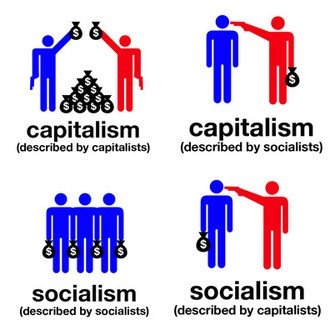
Capitalism vs. Socialism vs. Distributism

Capitalism vs. Socialism  vs. Distributism by Bryan J. Neva, Sr. Since ancient times, people have bought, sold, and traded land,...