Translate

Thursday, April 3, 2014

Does God Even Care?

Throughout the storms of life, most of us have asked ourselves if God even cares?  Does God care when we're suffering, or struggling, or lonely, or doubting?  Here's something to consider from Mark chapter 4: 


35 On that day, when evening had come, he said to them, “Let us go across to the other side.”36 And leaving the crowd behind, they took him with them in the boat, just as he was. Other boats were with him. 37 A great windstorm arose, and the waves beat into the boat, so that the boat was already being swamped. 38 But he was in the stern, asleep on the cushion; and they woke him up and said to him, “Teacher, do you not care that we are perishing?” 39 He woke up and rebuked the wind, and said to the sea, “Peace! Be still!” Then the wind ceased, and there was a dead calm. 40 He said to them, “Why are you afraid? Have you still no faith?” 41 And they were filled with great awe and said to one another, “Who then is this, that even the wind and the sea obey him?”

Yes God cares!  And He's in the boat with us throughout life's storms.

Tuesday, March 18, 2014

Breaking Bad or Building Good

I'll confess that I've been a fan of the AMC drama series Breaking Bad starring Bryan Cranston, Aaron Paul, Anna Gunn, Dean Norris and many others.

In case you haven't seen it, Breaking Bad is the two-year long story (shown over five seasons on television from 2008 to 2013) about Walter White (Bryan Cranston) of Albuquerque, New Mexico, a mild-mannered, married, father, and underemployed high school chemistry teacher who is diagnosed with inoperable lung cancer at age 50 (the beginning of the series).  Partnering up with his former failed chemistry student Jesse Pinkman (Aaron Paul), a Meth cooker and addict himself, Walter turns to a life of crime by producing (cooking) and selling methamphetamine in order to pay for his cancer treatment and secure his family's financial future before he dies.  He tells Jesse in the beginning that he only needs around $700,000 and he'll quit the Meth business.  Towards the end of the series, Walter has become a drug kingpin accumulating over $80 million but leaves behind him a trail of bodies and broken lives. (I won't spoil the show for you in case you too want to watch the series on Netflix.)

I think all of us who've been around awhile can identify somewhat with the character Walter White and the moral and ethical choices he makes in his life. Over the course of the series, we learn that when Walter was in graduate school he co-founded a company with two classmates; they had a falling out and Walter sold his interest in the company for a mere $5000. Fast forward to Walter's 50th birthday and the company is now worth over a billion dollars!  Walter feels life has cheated him.  He lost out on the profits of the business he started with his two classmates, he's underemployed as a high school chemistry teacher, he's still living in a small starter home with his wife and handicapped son (with another child on the way), and he's just been given a cancer death sentence. Believing he has nothing to lose and everything to gain, he gets into the dangerous, deadly, and illegal Meth business.

This is why it's so important to have an Ethos, or a set of guiding ethical and moral beliefs in which we consistently strive to live our lives by such as the 10 Commandments, the Golden Rule, the teachings of Jesus, or societal mores. The character Walter White's god was his love of money and success. Literally he was willing to earn a profit at any price by lying, cheating, stealing, murdering, breaking the law etc.

Most of us wouldn't go to the extremes Walter did to earn a profit; nevertheless, we're all tempted to (in varying degrees) throughout our lives.  I'm reminded of a chilling story Jesus once told (in Matthew 12:43-45): "When an unclean spirit has gone out of a man, he passes through waterless places seeking rest, but he finds none.  Then he says, 'I will return to my house from which I came.' And when he comes he finds it empty, swept, and put in order. Then he goes and brings with him seven other spirits more evil than himself, and they enter and dwell there; and the last state of that man becomes worse than the first."

One way of looking at this passage is that when we strive to become more virtuous by getting rid of our vices (unclean spirits) we essentially "clean house." But if we don't fill our house (our characters) with virtues our former vices can return with a vengeance and we can end up worse-off than before. Virtue is something we have to strive for despite the ups and downs of life. It's more common than not when bad things happen to us we digress to our vices. So if we stop persevering in virtue then our vices naturally return and it will be even harder to get rid of them. Ask any alcoholic, drug addict, or ex-smoker and they'll tell you they could relapse anytime if they don't stay vigilant in maintaining their sobriety or smoke-free lifestyle. Work to rid yourself of vices, but replace them with virtues so your vices don't return.

Breaking Bad is something that can happen to any of us which is why we need to keep Building Good.


Friday, January 31, 2014

A good person values the life of their animal (Proverbs 10:12)

"Are not two sparrows sold for a penny?  Yet not one of them will fall to the ground without your Father knowing it."  - Jesus (Matthew 10:29)

Neka Neva  2006 - Jan 31, 2014
Our beloved pet cat Neka died today. She was about 8 years old (were not exactly sure) and was a rescue cat we adopted in 2008.  She was a Russian blue so her fur was really soft, and she was very loving and affectionate.

When my wife and I moved from Virginia to California a year and a half ago, she drove across America with us, and comforted us during the tough times of our transition.

I think God used her to help us during our struggles especially when each of us were between jobs and hope was in short supply.

Neka was just a cat, but she filled our lives with so much joy and happiness, and we're very thankful to God for bringing her into our lives.  I gave her a proper burial in my back yard laying her under a beautiful Norfolk Island Pine. So if there is a "cat heaven" she most certainly deserves to go there.  She was one of God's beautiful creatures.  We'll really miss her.

Tuesday, January 28, 2014

Why Does No Good Deed Go Unpunished?

 "This is the verdict: Light has come into the world, but people loved darkness instead of light because their deeds were evil."                                                       - St. John the Apostle (John 3:19)

Why does no good deed go unpunished?  The short answer is that good deeds will eventually be rewarded by God (if not in this life, then in the next).  But why does the world tend to punish those who do good deeds and live good lives?  Because the world lives in darkness and opposes those who live in the light.  Those who live good lives and do good deeds shine the light on darkness and expose evil deeds.  All of life is a struggle between light and darkness, good and evil, right and wrong, etcetera, etcetera.

The famous philosopher Plato (a student of Socrates) wrote in his book The Republic (circa 387 B.C.) an allegory called The Cave.  In the story, Socrates has a conversation with Plato’s brother Glaucon in which he describes a prehistoric theater deep inside a dark cave where the audience members, since their childhoods, are chained and held captive watching shadow puppet shows (similar to a movie theater today).  The shows the captive audience watched were images of the real things and events in the world outside the cave. 

So one day an audience member was set free and told that the shadow puppet show he’d been watching since childhood were not at all real but merely illusions of reality.  At first he was skeptical and didn’t believe it.  So to prove it to him, he was shown the puppets and fire that produced the shadows he’d watched since childhood, but he still wouldn’t believe it.  Finally, he was forcibly dragged out of the dark cave into the light of the real world!

Initially he was shocked by what he saw as his eyes painfully adjusted to the bright sunlight.  But after awhile, he came to see and appreciate the beauty of the world as it really is outside of the dark cave.

Later on, however, he started to feel pity for the captives still imprisoned deep inside the dark cave.  So after much thought, he decided to venture back inside the cave in order to tell them the truth about the real world and the light outside of the cave.

After he went back into the cave and told the others about the real world outside the cave they just laughed at him and said he’d lost his sight and his mind.  He desperately tried to prove it to them, but they still wouldn’t believe him.  So eventually they killed him since they didn’t want him to lead others astray.

The protagonist in this famous allegorical story represents the countless seers and sages throughout history that have tried to enlighten society by speaking the truth but were punished for their good deeds.  For example, Socrates, John the Baptist, Jesus of Nazareth, Gandhi, Martin Luther King, Jr., etc.  

Arthur Schopenhauer (1788 – 1860 A.D., a famous German philosopher) wrote, All truth passes through three stages: first, it is ridiculed; second, it is violently opposed; third, it is accepted as being self-evident.
   

Monday, January 20, 2014

Why Do Nice Guys/Girls Finish Last?

Why Do Nice Guys/Girls Finish Last? 

by Allen Laudenslager & Bryan Neva


The last will be first, and the first will be last.
     - Jesus (Matt 20:16) 
     
So why do nice guys/girls finish last?  The short answer is that nice guys/girls don’t really finish last but appear to finish last because they play by a different set of rules than the world does.  The world's standards of success are the polar opposite of God's standards of success, and nice guys/girls play by God’s rules for living a decent and wholesome life.

The world says you’re a winner if you’re financially wealthy; God says you’re a winner if you’re spiritually wealthy by laying up treasures in heaven through kindness and generosity.  The world says you're a winner if you're powerful; God says you're a winner if you serve others.  The world says you’re a winner if you’re smart and articulate; God says you’re a winner if you use the gifts and talents he has given you in order to live up to your full human potential. The world says you're a winner if you earn awards and accolades; God says you're a winner if you earn the "crown of life" by spending eternity with Him in heaven.  The world says you're a winner if you're popular and well-liked; God says you're a winner if He's pleased with your behavior.  The world says you’re a winner if you’re physically attractive; God says you’re a winner if you’re beautiful on the inside. 

In a worldly sense, playing by God's rules is just not as exciting or immediately satisfying as playing by the world's rules.  As human beings, we're wired to enjoy that lift and sense of well being that a “hit” of adrenalin gives us.  Almost everyone can remember that high they got as a kid every time they rode their bicycle as fast as they could downhill right on the edge of control. We get that same sense of pleasure when we push the boundaries of behavior, like that bicycle, right on the edge of control.

Conversely, nice guys/girls seem to finish last because they add something beyond instant gratification to the mix.  They ask the question, "Is what I am doing and measuring success by right in God’s eyes?"  Even non-religious, humanist nice guys/girls live by a different set of standards than the world does. They ask a similar question, "Is what I'm doing right, honest, and ethical?  If the answer yes, they do it; if no, they don't do it.  They ask, "Is what I'm doing going to hurt anyone or anything?"  If the answer is no, they do it; if yes, they don't do it.

If we want to become true winners in the game of life, then we must live by God's standards of right conduct and not the world's.

Sunday, January 12, 2014

ABBA and the price of fame

Bright Lights Dark Shadows: The Real Story of ABBA by Carl Magnus Palm (2009)

I'm an ABBA fan!  (Yes, I'll admit it.)  I started listening to them back in the 70s when I was a teenager.  My brother Wayne and I had several of their long-playing 33 rpm albums and 45 rpm singles in our record collection.  (No, they didn't have CDs back then.)  So I was really excited when I recently came across a serious biography of the the pop-music group.


ABBA was a popular music group formed in Stockholm, Sweden in 1972 which comprised Agnetha Faltskog (A, high soprano vocals, married/divorced to Bjorn), Bjorn Ulvaeus (B, guitar, vocals, composer, producer, married/divorced to Agnetha), Benny Andersson (B, keyboard, vocals, composer, producer, married/divorced to Anni-Frid), and Anni-Frid Lyngstad (A, low soprano vocals, married/divorced to Benny).  Managed by Stig Anderson under the Polar Music label, they became one of the most commercially successful music groups in the history of popular music selling well over 381 million albums and singles worldwide and have been inducted into the Rock-n-Roll Hall of Fame.  Their record sales and popularity are right up there with Elvis Presley and the Beatles.  
Their success made each of the ABBA members quite wealthy and their manger, Stig Anderson, the wealthiest man in Sweden.  At one time, worldwide earnings from ABBA made up a significant portion of the Swedish GNP (exceeded only by Volvo). 

Here's few interesting things I learned:
  • Agnetha (A) is actually extremely introverted and private, was never comfortable performing in public, touring, or being in the public eye, and has more-or-less shunned the limelight since the group broke up in the early 80s.  She was also a very doting mother to her two children, hating leaving them to do appearances, and has never emotionally recovered from her divorce with Bjorn.
  • Bjorn (B) is actually a brilliant composer and lyricist and wrote most of the lyrics to ABBA's songs.  He and Benny have been song writing partners since the 60s. He is also an avowed atheist.
  • Benny (B) is also a brilliant composer but not very good with lyrics.  He and Bjorn are right up there with Lennon and McCartney in their music composing abilities and successes.  His first instrument was the accordion.  He also became a father when he was a teenager, and left his wife and two children to pursue a music career.
  • Anni-Frid (A) was actually from Norway and was the illegitimate daughter of a German soldier and a Norwegian teenage girl.  Her grandmother brought her to Sweden to raise her because of extreme prejudice in Norway.  Anni-Frid also became a mother when she was a teenager, and like Benny left her husband and two children in her early twenties to pursue a music career.  Later on in life, her daughter was tragically killed in a car accident in New York in 1998, and her third husband, Prince Heinrich Reuss, died of cancer in 1999.
  • Stig Anderson like Anni-Frid came from a very poor, single parent background and through hard work and determination built a successful music business.  Like Bjorn, he was also a talented lyricist and helped write the lyrics to several of ABBA's biggest hits including Waterloo.  Unfortunately, he also was quite abrasive, a cheapskate, a workaholic, and an alcoholic.  After the breakup of ABBA, there was a falling out between Stig and the ABBA members due to financial improprieties.          
The book details how popularity and profit has their price and how their lives epitomize the old saying, "be careful of what you wish for...it might just come true." 

Here are a few links to some of my favorite ABBA hits:

Waterloo (this won the Eurovision song contest and catapulted ABBA to super-stardom), Bang-A-Boomerang, Dancing Queen, Fernando, Knowing Me Knowing You (written by Bjorn after Agnetha and the kids moved out of the mansion),  Take a Chance on Me,  The Winner Takes It All (Agnetha's favorite, written by Bjorn after the divorce), Cassandra (see my essay The Cassandra Complex),  The Day Before You Came (ABBA's last recording)


Tuesday, January 7, 2014

"What defines a genus?" by Adam Ketola

Today's guest blog comes from my nephew Adam Ketola.  Adam is a Chemist and lives and works in Minneapolis.

I've been reading this book about Nikola Tesla written by Sean Patrick.  The author posts a question in the beginning, "What defines a genius?"  One would think that having a high IQ would make one more successful to the point of labeling them a genius, but IQ is only a number and in reality we only need just high enough of an IQ to present opportunity.  So the answer is no, we don't need a high IQ to be successful.

The next theory is the 10,000-hour rule.  The rule states that by practicing or studying something for a total of 10,000 hours that is when one will be truly great at something.  This seems to be only true for professional athletes such as Tiger Woods, but not the case for everyone. 

Finally, Dr. Barrios did a study on truly great minds such as Nikola Tesla.  What he found was that people who were successful and considered a genius lived by a certain code.  They lived life on the basis of not what life offered them, but on the basis of how they could empower themselves to add meaning to life. 

Unfortunately, most people these days live life the way society tells them to.  Society says we need an education and to work hard in order to find a job and that will make us successful.  This is true to a certain extent, but by living by this code, one will never step out to become a genius. 

The way to becoming a genius is not living the way society tells us, but rather stepping out, empowering ourselves and making a difference!  Everyone has the capability of becoming a genius, but one must first accept the opportunity.


Sunday, December 29, 2013

The Cassandra Complex

In Greek mythology, Cassandra was the daughter of the Trojan King Priam and his wife Hecuba.  Apollo, the god of prophecy, was infatuated with Cassandra’s beauty and gave her the gift of prophecy in order to win her love.  But Cassandra spurned Apollo’s romantic advances.  So Apollo cursed her so that no one would ever believe her prophetic warnings.  Cassandra, unable to convince people of her dire predictions, then had to spend the rest of her life watching helplessly as her prophetic warnings came true.  She knew what the future held but was unable to change it.

A “Cassandra complex” occurs when valid warnings about the future are ignored or dismissed and has become a metaphor used in psychology, environmentalism, science, medicine, politics, religion, and business. 

There are many “Cassandra’s” in our world today.  They write blogs, editorials, and books; they’re the talking heads on television news shows; they’re the voices on talk radio; they preach from the pulpits every Sunday; they debate and make political speeches; they warn people of unhealthy practices; they predict market trends; they advise people on how to invest their money; they warn people about the perils of climate change; and they put their jobs on the line for something they believe in, etcetera, etcetera.  Sometimes they’re right and other times they’re wrong which are why most of us remain skeptical because we can’t tell the difference between the warnings of true and false prophets.

Six months before the fatal Space Shuttle Challenger disaster on January 28, 1986, Roger Boisjoly, a top ranking engineer with Morton Thiokol, tried to warn his superiors about the looming danger posed by the O-rings on the solid rocket boosters designed and manufactured by Morton Thiokol.  He warned Thiokol management of the adverse effects of cold weather on the O-ring seals of the boosters writing, “the result could be a catastrophe of the highest order, loss of human life.” 


The night before the launch, when the weather at the Florida launchpad dipped below freezing temperatures, Mr. Boisjoly and four other Thiokol engineers joined in a teleconference with NASA and Thiokol vice presidents, urging the Thiokol representatives to exercise their rights as the manufacturer of a critical component to postpone the launch.  However, the vice presidents felt that the case for postponing the launch had been based more on gut feelings and hunches, and lacked the conclusive data required to delay the launch, which had already been postponed twice.  After advising the other Thiokol VPs to “take off their engineering hats and put on their management hats,” Thiokol general manager Jerry Mason gave the launch approval.

In the investigation that followed the disaster, Boisjoly became widely known as a whistle-blower when he provided internal Thiokol corporate documents to a presidential commission.  Included in the documents was the memo he had written warning of the danger to the O-rings in cold weather.  Following his testimony at the commission, he was cut off from space work at Thiokol and was shunned by colleagues and friends.  Morton Thiokol management even tried to make him a scapegoat for the disaster.  Boisjoly resigned from Thiokol in protest and never worked as an engineer again.

Boisjoly would later be vindicated for his actions, and awarded the Prize for Scientific Freedom and Responsibility.  He went on to speak at more than 300 universities and civics groups about corporate ethics, and became sought after as an expert in forensic engineering.  He died of cancer on January 6, 2012 at the age of 73.  [This was taken from an article by Joel Spark in Space Safety Magazine; also see this wikipedia article on Roger Boisjoly and this on his scapegoating at Morton Thiokol]

Roger Boisjoly was a true prophet or "Cassandra" and put his job on the line to avert the Challenger disaster.  But no one would listen to his warnings.  All management at Morton Thiokol and NASA had to do was use their natural reason and look at the empirical (observational) evidence Boisjoly provided.  

Much of our natural reason involves “pattern recognition”: we see A, B, and C occurring and we conclude D will result.  Meteorologists use this concept extensively to predict the weather; intelligence analysts use this concept to predict the actions of our enemies; and physicians use this concept to diagnose illnesses; psychologists use this concept to understand human behavior.  Often times in life it's nearly impossible to collect enough data to support our conclusions using deductive reasoning (top-down logic), so we must use our natural reason to make inferences and draw conclusions.  This is called inductive reasoning (bottom-up logic). 

There are some people who may have the gift of true prophecy like Cassandra and can predict the future.  But all the false prophets in the world drown out their message.  So use your God given ability of natural reason to filter truth from falsehood and strive to look for the truth.

(Note: Here's a link to one of my favorite ABBA songs Cassandra.)

Featured Post

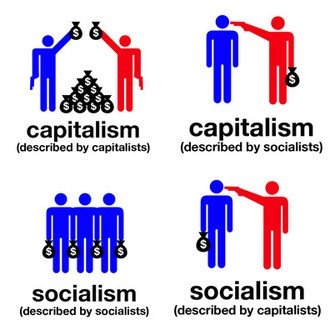
Capitalism vs. Socialism vs. Distributism

Capitalism vs. Socialism  vs. Distributism by Bryan J. Neva, Sr. Since ancient times, people have bought, sold, and traded land,...