You've probably thought it's strange that I would post a series of articles on the need for repentance and salvation before Christmas. But the Advent Season celebrated during the four weeks before Christmas is kind of a miniature Lent (the 40 days preceding Easter). It's a time to prepare for the coming of Christ when God became human in order to save the human race.
We're living in a difficult time in history when violence, terrorism, war, famine, natural disasters, social unrest, and moral decline are changing our world's landscape. It seems that peace on earth and good will towards men has become a thing of the past. One only need to watch the evening news, drive out on the highways, or navigate through the shopping mall parking lots to see this. Our world is going to Hell in a hand-basket!
As much as we may complain about it, we can't force the rest of the world to behave well and treat others with love and kindness. The only thing we can do is to work at changing ourselves for the better. When we start becoming better people, the world starts to become better (one person at a time).
In a spiritual sense, think about one aspect of your life you'd like to change? Are you enslaved to bad habits? Are you addicted to something? Is there something in your life that's dragging you down? Ask God for a present this year for Christmas; ask God to free you from the slavery of sin! Because this is why Christ came into the world in order to save us.
Thursday, December 19, 2013
Wednesday, December 11, 2013
R U Ready for Christmas? (Part 4)
The Centrality of Salvation
by Blessed Pope John Paul II (excerpts from the book Crossing the Threshold of Hope, 1994)
[T]he Enlightenment [movement] strikes at the heart of Christian soteriology, that is, [the] theological reflection on salvation and of redemption. "God so loved the world that he gave his only Son, so that everyone who believes in him might not perish but might have eternal life" (Jn 3:16). In this conversation with Nicodemus every word of Christ's response constitutes a point of contention for a mind-set born of the Enlightenment [movement].
Addressing the question, "Why is the history of salvation so complicated?" Actually, it is very simple! We can easily demonstrate its profound simplicity and wonderful internal logic by starting with the words Jesus addressed to Nicodemus. The first affirmation is: "God so loved the world." According to the Enlightenment mentality, the world does not need God's love. The world is self-sufficient. And God, in turn, is not, above all, Love. If anything, He is Intellect, an intellect that eternally knows. No one needs His intervention in the world that exists, that is self-sufficient, that is transparent to human knowledge, that is ever more free of mysteries thanks to scientific research, that is ever more an inexhaustible mine of raw materials for man-the demigod of modern technology. This is the world that must make man happy.
Christ instead says to Nicodemus: "God so loved the world that he gave his only Son, so that everyone who believes in him might not perish" (cf. Jn 3:16). In this way Jesus makes us understand that the world is not the source of man's ultimate happiness. Rather, it can become the source of his ruin. This world which appears to be a great workshop in which knowledge is developed by man, which appears as progress and civilization, as a modern system of communications, as a structure of democratic freedoms without any limitations, this world is not capable of making man happy.
When Christ speaks of the love that the Father has for the world, He merely echoes the first affirmation in the Book of Genesis which accompanies the description of creation: "God saw how good it was.... He found it very good" (Gn 1:12-31). But this affirmation in no way constitutes the absolute assurance of salvation. The world is not capable of making man happy. It is not capable of saving him from evil, in all of its types and forms-illness, epidemics, cataclysms, catastrophes, and the like. This world, with its riches and its wants, needs to be saved, to be redeemed. The world is not able to free man from suffering; specifically it is not able to free him from death.
The entire world is subject to "precariousness," as Saint Paul says in the Letter to the Romans; it is subject to corruption and mortality. Insofar as his body is concerned, so is man. Immortality is not a part of this world. It can come to man exclusively from God. This is why Christ speaks of God's love that expresses itself in the offering of His only Son, so that man "might not perish but might have eternal life" (Jn 3:16). Eternal life can be given to man only by God; it can be only His gift. It cannot be given to man by the created world. Creation-and man together with it-is subject to "futility" (cf. Rom 8:20).
"God did not send his Son into the world to condemn the world, but that the world might be saved through him" (cf. Jn 3:17). The world that the Son of man found when He became man deserved condemnation, because of the sin that had dominated all of history, beginning with the fall of our first parents. This is another point that is absolutely unacceptable to post-Enlightenment thought. It refuses to accept the reality of sin and, in particular, it refuses to accept original sin.
Saint John expresses in the words of Christ, who announced the coming of the Holy Spirit who "will convince the world in regard to sin" (cf. Jn16:8). What else can the Church do? Nevertheless, convincing the world of the existence of sin is not the same as condemning it for sinning. "God did not send his Son into the world to condemn the world, but that the world might be saved through him." Convincing the world of sin means creating the conditions for its salvation. Awareness of our own sinfulness, including that which is inherited, is the first condition for salvation; the next is the confession of this sin before God, who desires only to receive this confession so that He can save man.
To save means to embrace and lift up with redemptive love, with love that is always greater than any sin. In this regard the parable of the prodigal son is an unsurpassable paradigm. The history of salvation is very simple. And it is a history that unfolds within the earthly history of humanity, beginning with the first Adam, through the revelation of the second Adam, Jesus Christ (cf. 1 Cor 15:45), and ending with the ultimate fulfillment of the history of the world in God, when He will be "all in all" (1 Cor 15:28).
At the same time, this history embraces the life of every man. In a certain sense it is entirely contained in the parable of the prodigal son, or in the words of Christ when He addresses the adulteress: "Neither do I condemn you. Go, [and] from now on do not sin anymore" (Jn 8:11).
The history of salvation is synthesized in the fundamental observation of God's great intervention in the history of humankind. This intervention reaches its culmination in the Paschal Mystery-the Passion, Death, Resurrection, and Ascension of Christ to heaven-and is completed at Pentecost, with the descent of the Holy Spirit upon the apostles. This history, while it reveals the redemptive will of God, also reveals the mission of the Church. It is the history of every individual and the entire human family, created in the beginning and then re-created in Christ and in the Church.
Saint Augustine had a profound insight into this history when he wrote The City of God. But he was not the only one. The history of salvation continues to offer new inspiration for interpreting the history of humanity, but also confronts the problem of the meaning of man's existence.
by Blessed Pope John Paul II (excerpts from the book Crossing the Threshold of Hope, 1994)
[T]he Enlightenment [movement] strikes at the heart of Christian soteriology, that is, [the] theological reflection on salvation and of redemption. "God so loved the world that he gave his only Son, so that everyone who believes in him might not perish but might have eternal life" (Jn 3:16). In this conversation with Nicodemus every word of Christ's response constitutes a point of contention for a mind-set born of the Enlightenment [movement].
Addressing the question, "Why is the history of salvation so complicated?" Actually, it is very simple! We can easily demonstrate its profound simplicity and wonderful internal logic by starting with the words Jesus addressed to Nicodemus. The first affirmation is: "God so loved the world." According to the Enlightenment mentality, the world does not need God's love. The world is self-sufficient. And God, in turn, is not, above all, Love. If anything, He is Intellect, an intellect that eternally knows. No one needs His intervention in the world that exists, that is self-sufficient, that is transparent to human knowledge, that is ever more free of mysteries thanks to scientific research, that is ever more an inexhaustible mine of raw materials for man-the demigod of modern technology. This is the world that must make man happy.
Christ instead says to Nicodemus: "God so loved the world that he gave his only Son, so that everyone who believes in him might not perish" (cf. Jn 3:16). In this way Jesus makes us understand that the world is not the source of man's ultimate happiness. Rather, it can become the source of his ruin. This world which appears to be a great workshop in which knowledge is developed by man, which appears as progress and civilization, as a modern system of communications, as a structure of democratic freedoms without any limitations, this world is not capable of making man happy.
When Christ speaks of the love that the Father has for the world, He merely echoes the first affirmation in the Book of Genesis which accompanies the description of creation: "God saw how good it was.... He found it very good" (Gn 1:12-31). But this affirmation in no way constitutes the absolute assurance of salvation. The world is not capable of making man happy. It is not capable of saving him from evil, in all of its types and forms-illness, epidemics, cataclysms, catastrophes, and the like. This world, with its riches and its wants, needs to be saved, to be redeemed. The world is not able to free man from suffering; specifically it is not able to free him from death.
The entire world is subject to "precariousness," as Saint Paul says in the Letter to the Romans; it is subject to corruption and mortality. Insofar as his body is concerned, so is man. Immortality is not a part of this world. It can come to man exclusively from God. This is why Christ speaks of God's love that expresses itself in the offering of His only Son, so that man "might not perish but might have eternal life" (Jn 3:16). Eternal life can be given to man only by God; it can be only His gift. It cannot be given to man by the created world. Creation-and man together with it-is subject to "futility" (cf. Rom 8:20).
"God did not send his Son into the world to condemn the world, but that the world might be saved through him" (cf. Jn 3:17). The world that the Son of man found when He became man deserved condemnation, because of the sin that had dominated all of history, beginning with the fall of our first parents. This is another point that is absolutely unacceptable to post-Enlightenment thought. It refuses to accept the reality of sin and, in particular, it refuses to accept original sin.
Saint John expresses in the words of Christ, who announced the coming of the Holy Spirit who "will convince the world in regard to sin" (cf. Jn16:8). What else can the Church do? Nevertheless, convincing the world of the existence of sin is not the same as condemning it for sinning. "God did not send his Son into the world to condemn the world, but that the world might be saved through him." Convincing the world of sin means creating the conditions for its salvation. Awareness of our own sinfulness, including that which is inherited, is the first condition for salvation; the next is the confession of this sin before God, who desires only to receive this confession so that He can save man.
To save means to embrace and lift up with redemptive love, with love that is always greater than any sin. In this regard the parable of the prodigal son is an unsurpassable paradigm. The history of salvation is very simple. And it is a history that unfolds within the earthly history of humanity, beginning with the first Adam, through the revelation of the second Adam, Jesus Christ (cf. 1 Cor 15:45), and ending with the ultimate fulfillment of the history of the world in God, when He will be "all in all" (1 Cor 15:28).
At the same time, this history embraces the life of every man. In a certain sense it is entirely contained in the parable of the prodigal son, or in the words of Christ when He addresses the adulteress: "Neither do I condemn you. Go, [and] from now on do not sin anymore" (Jn 8:11).
The history of salvation is synthesized in the fundamental observation of God's great intervention in the history of humankind. This intervention reaches its culmination in the Paschal Mystery-the Passion, Death, Resurrection, and Ascension of Christ to heaven-and is completed at Pentecost, with the descent of the Holy Spirit upon the apostles. This history, while it reveals the redemptive will of God, also reveals the mission of the Church. It is the history of every individual and the entire human family, created in the beginning and then re-created in Christ and in the Church.
Saint Augustine had a profound insight into this history when he wrote The City of God. But he was not the only one. The history of salvation continues to offer new inspiration for interpreting the history of humanity, but also confronts the problem of the meaning of man's existence.


Sunday, December 8, 2013
R U Ready for Christmas? (Part 3)
Consider what Jesus taught about the final judgment (Matthew 25:31-46): he never said we’d be judged on how religious we were, but on how we treated others especially the poor, the dispossessed, the powerless, and the disenfranchised. Did we feed the hungry, give drink to the thirsty, cloth the naked, shelter the homeless, care for the sick, or visit the imprisoned? In other words, did we help bring the Kingdom of God into the world through love, peace, justice, and good behavior? Or, did we act like everyone else and oppress the poor and downcast, lie to others, cheat others, treat others badly, and hate our neighbors?
Christians believe that we cannot separate our faith from our everyday lives. We cannot compartmentalize our lives by behaving righteously in some circumstances and behaving unrighteously in others. What good does it do to go the church on Sundays but behave poorly during the rest of the week? We can oftentimes fool other people; sometimes we can even fool ourselves; but we can never fool God!
Persevering in our Christian faith is an integral and necessary part of becoming better people. But ultimately, Christians don’t believe we become better people by getting smarter or through our own hard work, but through our trust and faith in God to work in us and through us. We must try to do our best and then let God do the rest.
Some call this cooperating with God because all we can really offer to God is our free will. St. Paul wrote (Ephesians 2:8-10): For by grace you have been saved through faith—and this is not from yourselves, it is the gift of God—not by works, so that no one can boast. For we are God’s workmanship, created in Christ Jesus to do good works, which God prepared in advance for us to do.
Because of this, practicing Christians don’t claim to always be perfect, upstanding citizens. We’re human beings—just like everyone else—full of flaws, weaknesses, and insecurities. But the process of persevering to overcome our sinful ways and live honestly, decently, ethically, and morally is what God is looking for from us, and then his grace will do the rest in us. St. Paul discussed the necessity of persevering in our Christian faith this way (Philippians 2:12-13): Continue to work out your salvation with fear and trembling, for it is God who works in you to will and to act according to his good purpose.
These are all encouraging things to meditate on, but what about the big problem that the philosopher Qoheleth brought up in his book Ecclesiastes: the problem of death? Recall that Qoheleth believed that it is death and our fear of death that make life so pointless, frustrating and meaningless for all of us. Well salvation is not only being liberated from evil or the undesirable but it’s also being liberated from death!
For practicing Christians, our hope is in the resurrection from the dead so that we no longer have to live in fear of death. As Christ conquered death by rising from the dead, we believe that someday he’ll raise us from the dead as well. Our belief in the resurrection from the dead is what gives Christians hope beyond our futile existence that somehow God will one day raise us from the dead to an everlasting life with Him in heaven. And since we no longer have to live in fear of death (our necessary end), we can live a meaningful life knowing that our persistence in living honestly, decently, ethically, and morally won’t go unrewarded.
In short, based on the premise of original sin, redemption, and salvation, we can become Christians through faith and baptism. And then we become better people by persevering in a life of love for God and others through honest, decent, ethical, and moral living. These are what save us. For Christians, faith is the beginning but the end result is love for God and others.
Friday, December 6, 2013
R U Ready for Christmas? (Part 2)
Christ's redemptive act is beautifully summarized in St. John’s Gospel (3:16, 17): For God so loved the world that he gave
his one and only Son, that whoever believes in him shall not perish but have
eternal life. For God did not send his
Son into the world to condemn the world, but to save the world through him.
Why
would God do this? Because he loves us
all dearly! We’re his children. He could no more abandon us than a good
mother could abandon her children.
This
in a nutshell is the Good News (or Gospel) of our salvation: God offers
this free gift of redemption and salvation from original and actual sin to
anyone who will believe in Him or
have faith, is baptized in His name: the Father, the Son, and the Holy Spirit
(or the Holy Trinity), and then perseveres
in a life of love for God and their neighbor by striving to live honestly,
decently, ethically, and morally good in accordance with God’s teachings.
Since
the early years of the Christian Church they have faithfully recited the
Apostles Creed (or variation of it) during their worship services. And it succinctly describes what Christians
believe in: I believe in God, the Father almighty, creator of heaven and
earth. I believe in Jesus Christ, his
only Son, our Lord. He was conceived by
the power of the Holy Spirit and born of the Virgin Mary. He suffered under Pontius Pilate, was
crucified, died, and was buried. He
descended into hell. On the third day he
rose again. He ascended into heaven and
is seated at the right hand of the Father.
He will come again to judge the living and the dead. I believe in the Holy Spirit, the holy
catholic church, the communion of saints, the forgiveness of sins, the
resurrection of the body, and the life everlasting. Amen.
When
people asked Jesus how a person should live a truly good life he answered (Matthew
22:37-40): Love the Lord your God with
all your heart and with all your soul and with all your mind. This is the first and greatest
commandment. And the second is like it:
Love your neighbor as yourself. All the
Law and the Prophets hang on these two commandments.
This
is the law of love that Jesus commanded for his followers, which is beautifully
described in detail in His Sermon on the Mount in Matthew chapters 5, 6,
and 7. In His Sermon on the Mount,
he made the practical connection between the written Jewish law and loving God
and others.
He
taught that it’s not enough to have faith
in God to save us we must also persevere in love for God and others. For example, He taught that it wasn’t enough
to love our friends and relatives or those who love us; we must also love our
enemies or those who treat us poorly.
The
Apostle Paul in his first letter to the Corinthians (13:4-8,13) explained this
law of love further by describing the virtues of faith, hope, and love that
practicing Christians should strive for: Love is patient, love is kind. It does not envy, it does not boast, it is
not proud. It is not rude, it is not
self-seeking, it is not easily angered, it keeps no record of wrongs. Love does not delight in evil but rejoices
with the truth. It always protects,
always trusts, always hopes, always perseveres.
Love never fails. And now these
three remain: faith, hope and love. But
the greatest of these is love.
Persevering
in a life of love for God and others is what practicing Christians strive for
their whole lives. Salvation is a
process of being liberated or freed from evil or from the undesirable
through the redemptive work of Jesus Christ.
We can’t simply say, “I believe in God!”, and all our troubles and bad habits will magically disappear. It doesn’t work that way. Ask anyone who’s addicted to alcohol, drugs, or anything else? God certainly
didn’t need our help to create us, but He certainly won’t save us without our
help. It takes time and effort and
perseverance. The old adage God helps those who help themselves is
quite true. There’s also an old adage
that says For every step you take towards
God, God takes two steps towards you.
And
remember, that God has given all of us the capacity to choose good rather
than evil; although, our freedom to choose good is wounded by
this curse of original sin. We
overcome sin and bad behavior in our lives through our daily, continued faith
and trust in God’s mercy, grace, and forgiveness, and through our continued
obedience to His will and moral edicts.
When we fail to live up to God’s high standards, we pick ourselves up, dust ourselves off, pray for God’s mercy and forgiveness, and continue on our Christian struggle. And, if we’ve wronged anyone, we need to reconcile with him or her by asking forgiveness and making amends. But what we don’t do is give up and become despondent because it’s too difficult! It is more challenging and difficult to live a life of love than it is to live a life of hate. It’s harder to be good than it is to be bad. If you don’t want to be good, then all you have to do is nothing!
Wednesday, December 4, 2013
R U Ready for Christmas? (Part 1)
This is the Advent Season in the Church's Liturgical Year. It's observed over the four weeks before Christmas, and it's a time to get ready for Christmas, a time to take personal inventory of our lives, and a time to clean house. Christmas, of course, is the time we celebrate the birth of Jesus Christ, our Savior. But what does all this really mean? Over the course of the next four weeks I'll be posting a series of articles to answer these questions.
___________________________________________
God spoke to us in various ways throughout the ages reminding us of his love for us and his desire for us to return to him through righteous living. And eventually, God spoke to us directly through His own Son Jesus Christ. God’s redemptive plan to free mankind from this curse of original sin and restore our original destiny to share God’s blessed life was fulfilled through the life, death, burial, and resurrection of Jesus. We couldn’t save ourselves, so God sent His Son into the world to do it for us.
___________________________________________
How do we become better people?
How do we become more kind to others?
How do we live more honestly, decently, ethically, and morally? How do we change ourselves for the better? These are the sixty-four thousand dollar
questions mankind has been asking for generations? And there are no simple answers. If it were so easy to become better people,
we would be living in a utopia by now. There wouldn't be war, terrorism, murders, rapes, robbery, injustice, poverty, starvation, etcetera, etcetera, etcetera....
So
rather than first asking how do we become better people, let’s first ask how
did we get into this mess in the first place? How did our world become so unfair,
unkind, and unjust?
Christians believe that God is the Supreme Being who created
everything in the universe, and according to His divine will and providence,
keeps them in existence. God is
infinitely perfect and the source of all life, knowledge and truth. God is all-holy, almighty, all-eternal,
all-good, all-knowing, all-present, all-wise, all-loving, all-just, and all-merciful
(just to name a few).
Surprisingly, Christians believe that just by natural reason we can
come to know God. All you have to do is
consider the universe we live in…. All
the created realities from the stars in the night sky, our sun and moon, the earth
we live on, the wonder of nature, all the creatures that inhabit or world (from
the smallest to the greatest), or our own human bodies give evidence of God’s
existence. Consider the phenomena found
in nature and the physical, mathematical, life, and social sciences that study them and
try to explain them with varying degrees of success. Yes, mankind has learned much over the ages,
but it’s still only a drop in the ocean compared with what we still don’t
know. But actually there’s a much
simpler way to know God: just look deep within yourself—into the recesses of
your mind and heart—and you’ll know there IS a God!
In
the beginning, men and women perfectly reflected God’s own perfect holiness,
goodness, wisdom, knowledge, power, and love.
They were free from suffering and death and were given the freedom to
choose or free-will. By obeying God,
they could remain in this wonderful state of perfection; but by disobeying God,
they’d lose the wonderful gifts He gave them.
Our
God-given ability to freely choose
or free-will means that God will not force us to love him or to obey him, nor
will God force us to act honestly, decently, ethically, and morally in our
dealings with other people; but ultimately, God will hold us all accountable for
the way we lived our lives and how we treated other people.
Unfortunately,
men and women fell from this original state of perfection through pride,
selfishness, and disobedience to God.
They lost these wonderful gifts God gave them, and this is what brought
suffering and death into the world.
Since
the fall of man and woman, all generations that followed have failed to live up
to God’s moral and ethical laws; this is what Christians call original sin and it disrupted man’s intimate, loving
relationship with God our creator.
As
a result of this original sin every man and woman was born into a fallen
state of separation and alienation from God and became subject to suffering,
death, ignorance, and a strong inclination to sin and to disobey God. Men and women lost God’s wonderful gifts of
holiness, justice, grace, great knowledge, control of their passions, and
freedom from suffering and death.
History
has clearly shown that we cannot save ourselves or reverse the effects of this
curse of original sin—only God
can! Every generation that has
come and gone has tried and failed miserably.
Some would argue that the world is slowly getting better and we’re more
advanced than previous generations. Our
technology and scientific understanding have grown. They could argue that we’re no longer stuck
in the dark ages and there’s relative peace in most of the developed
world. But before long, someone or
something will change all that: murder, mayhem, misunderstandings, conflict,
war, famine, natural disasters, sickness, disease, etcetera, etcetera, etcetera…. The more things change, the more they stay
the same. And deep down inside each of
us we know that the world is basically unfair, unkind, and unjust?
Fortunately,
God didn’t give up on us! He immediately
began to save the human race from our fallen condition. The history recounted throughout the Bible
recounts the unfolding of God’s plan to save the human race from this curse of original
sin.
God
made covenants (or solemn, unbreakable agreements) with our forefathers
beginning with Noah and continuing with Abraham, Isaac, Jacob/Israel, and Moses. He sent prophets (or seers) to tell us the
right way to live and warn humanity of the consequence of bad behavior.
God spoke to us in various ways throughout the ages reminding us of his love for us and his desire for us to return to him through righteous living. And eventually, God spoke to us directly through His own Son Jesus Christ. God’s redemptive plan to free mankind from this curse of original sin and restore our original destiny to share God’s blessed life was fulfilled through the life, death, burial, and resurrection of Jesus. We couldn’t save ourselves, so God sent His Son into the world to do it for us.
Monday, December 2, 2013
A flood, a truck, a boat, and a helicopter...
Jesus said to his disciples: “As it was in the days of Noah, so it will be at the coming of the Son of Man. In those days before the flood, they were eating and drinking, marrying and giving in marriage, up to the day that Noah entered the ark. They did not know until the flood came and carried them all away. So will it be also at the coming of the Son of Man.” (Matthew 24: 37ff)
The rains came, the dam was overflowing, a flood was coming, and a man stood on his front porch watching the waters rise in the street when a National Guard Army truck drove up and the soldier called out to the man, "The dam is overflowing and a flood is coming! The Governor has declared a state of emergency and we're evacuating everybody. Get on the truck and we'll bring you to safety."
"I'm not leaving my home," said the man, "I believe God'll save me!"
A few hours later the water was up to the porch and coming in the front door when a rescue boat came by. The people in the boat called out to the man, "The dam is overflowing! This place will all be under water in an hour or two. Get in the boat and we'll bring you to safety."
"I'm not leaving my home," said the man, "I believe God'll save me!"
A couple of hours later the flood waters were over the second story and the man was clinging to the roof of his house when a Coast Guard helicopter came by. The pilot called through the loudspeaker, "WE'LL DROP A LADDER AND PULL YOU UP TO SAFETY!" The man shook his head and waved the helicopter off refusing to go. He thought to himself, God'll save me.
A couple of hours later the dam broke, the deluge came and flooded everything and the man drowned.... Standing in front of God, the man asked the Lord, "Why didn't you save me?"
God replied, "I sent you an army truck, a rowboat, and a helicopter! What else did you expect me to do?"
My friend Allen often shares this funny story (http://aflaude.wordpress.com). The point is that God serendipitously sends us all help to save us from the problems and challenges we all face in our lives. We just have to be on the look out for the help he sends. God doesn't need our help to save us, but He most certainly won't save us without our cooperation.
Friday, November 29, 2013

Wednesday, November 27, 2013
The Bible and Money: 10 Tips from Scripture
(The following article comes from beliefnet.com http://www.beliefnet.com/Faiths/Christianity/2008/09/The-Bible-and-Money-10-Tips-from-Scripture.aspx
)
Finance guides come and go, but as Christians throughout the
centuries have known, the Bible is a finance guide for all time. From stories
about rich men and paupers to proverbs with sharp insights, God's word is
filled with good advice on money. The
Bible cannot tell you how to diversify your portfolio, but it can tell you how
to be the kind of person who saves enough money, spends wisely, plans ahead,
gives generously, and learns to enjoy money.
Tip #1: Remember that God creates wealth
"Remember the Lord your God, for it is He who gives you
the ability to produce wealth." (Deuteronomy 8:18)
Tip #2: Feeling rich? Give thanks to God
"This is what the Lord says: 'Let not the wise man
boast of his wisdom or the strong man boast of his strength or the rich man
boast of his riches, but let him who boasts boast about this: that he
understands and knows Me, that I am the Lord, who exercises kindness, justice
and righteousness on earth, for in these I delight,' declares the Lord." (Jeremiah 9:23-24)
Tip #3: Save for the kids' inheritance
"A good man leaves an inheritance to his children's
children." (Proverbs 13:22)
Tip #4: Get out of debt in order to be free
"The poor are always ruled over by the rich, so don't
borrow and put yourself under their power" (Proverbs 22:7)
Tip #5: Guard against greed
"Then [Jesus] said to them, 'Watch out! Be on your
guard against all kinds of greed; a man's life does not consist in the
abundance of his possessions.'" (Luke 12:15)
Tip #6: Remember that money isn't evil, but loving it is
"For the love of money is a root of all sorts of evil,
and some people by longing for it have wandered away from the faith and pierced
themselves with many griefs". (I
Timothy 6:10)
Tip #7: Give back to God
"Honor the Lord with your wealth, with the first-fruits
of all your crops; then your barns will be filled to overflowing, and your vats
will brim over with new wine." (Proverbs 3:9)
Tip #8: Know that everything belongs to God
"And remember, the land is Mine, so you may not sell it
permanently. You are merely My tenants and sharecroppers!" (Leviticus
25:23)
Tip #9: Put God before money
"But seek first His kingdom and His righteousness, and
all these things will be given to you as well." (Matthew 6:33)
Tip #10: Count the cost of your spending
"For which of you, intending to build a tower, does not
sit down first and count the cost, whether he has enough to finish it?" (Luke
14:28)
Tuesday, November 19, 2013
The Story of Zacchae'us the Chief Tax Collector
The Story of Zacchae'us the Chief Tax Collector
by Bryan J. Neva, Sr.
by Bryan J. Neva, Sr.
As Jesus entered Jericho and was passing through, there was a man named Zacchae'us who was a chief tax collector and rich. He wanted to see Jesus but couldn’t on account of the crowd because he was a dwarf. So he ran on ahead and climbed up into a sycamore tree to see Jesus for he was about to pass that way. And when Jesus came to the tree, he looked up and said to him, "Zacchae'us, come down quickly because I’m going to stay at your house today.” So he quickly climbed down, and happily received him. And when the crowd saw these they all murmured, "Jesus has gone in to be the guest of a sinful man." And Zacchae'us stood and said to the Lord, "Behold, Lord, the half of my goods I’ll give to the poor; and if I have defrauded anyone of anything, I’ll repay it four times over." And Jesus said to him, "Today salvation has come to this house… for the Son of man came to seek and to save the lost." (Luke 19:1-10)
In Jesus’ time, tax collectors were despised and treated as outcasts because they typically over-charged people and dishonestly accumulated great wealth at the expense of others. Zacchae'us, as a chief tax collector, was especially despised by his fellow Jews for compromising his principles and collaborating with Rome (the enemy of the Jewish people). Zacchae’us had been anything but honest and ethical. But he repented and subsequently was saved.
I think Zacchae'us epitomized the Profit-at-any-price attitude of many people and businesses today. They’ll do anything: lie, cheat, steal, and sacrifice their souls just to get ahead. Zacchae'us too didn’t earn his wealth honestly and ethically. There’s absolutely nothing wrong with earning money (even great wealth) as long as it’s done in an honest and ethical manner. So when Zacchae'us repented, he promised to make restitution for his sins by giving half of his wealth to the poor and repaying anyone he cheated four-times over. This probably left Zacchae'us a poor man. But in a spiritual sense, Zacchae'us actually became even wealthier by gaining a share in the Kingdom of God. He lost his life in order to find it again.
Saturday, November 16, 2013

Subscribe to:
Posts (Atom)
Featured Post
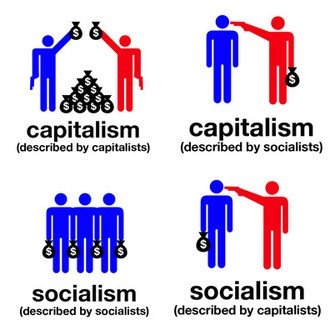
Capitalism vs. Socialism vs. Distributism
Capitalism vs. Socialism vs. Distributism by Bryan J. Neva, Sr. Since ancient times, people have bought, sold, and traded land,...
-
 Whose Ox Is Being Gored? by Bryan J. Neva, Sr. You've probably heard the old cliché, "It all depends on whose ox is...
 -
 The Parable of the Lost Coin LUKE 15 8 “Or what woman, having ten silver coins, if she loses one coin, does not light a lamp and sweep ...
 -
 What Business can Learn from Sheep Herding by Bryan J. Neva, Sr. Business can learn a lot from the business of sheep herding. Sheep her...
 -
Loving Your Enemies by Fritz Chery, Feb 15, 2015, biblereasons.com Bible verses about loving your enemies This topic is something w...
-
 Capitalism vs. Socialism vs. Distributism by Bryan J. Neva, Sr. Since ancient times, people have bought, sold, and traded land,...
 -
 Elijah by Bryan Neva “Shout louder, Baal may be meditating, or retired, or on vacation, or asleep and needs to be awoken.” The grea...
 -
 The Leash Theory of Management by Bryan J. Neva, Sr. Have you ever heard a manager use phrases like, "I have to keep them on a sho...
 -
 The Parable of the Lost Son LUKE 15: 11 And he said, “There was a man who had two sons; 12 and the younger of them said to his fat...
 -
Thing 7 Free-market policies rarely make poor countries rich by Dr. Ha Joon Chang (Book Excerpt from 23 Things They Don't Tel...
