Translate

Monday, October 14, 2013

A Moving Target

A Moving Target
by Bryan J. Neva, Sr. 

If you were ever in the military and had to qualify for marksmanship with a weapon, you know how hard it can be to consistently hit 40 stationary targets at various distances (50 to 300 meters away) from various shooting positions.  First, you have to shoot from the prone position (lying on your stomach) with the rifle resting on sandbags.  That’s the easiest position to shoot from; any twelve-year-old kid could do it.  Next, you have to shoot from the sitting, kneeling, and standing positions.  To qualify as a marksman you have to hit 40 stationary targets 24 times (60% success rate), as a sharpshooter 29 times (73% success rate), and as an expert 36 times (90% success rate).  (I qualified as a sharpshooter with an M-14 rifle while in the Navy. Qualifying with an M-16 rifle is even harder as it's about half the weight of an M-14.)

Now imagine how hard it would be to consistently hit the target if it were moving?  You’d have to be an expertly trained sniper to do that.  On April 12th 2009, a three-man U.S. Navy SEAL sniper team firing from the fantail of the U.S.S. Bainbridge (DDG-96) simultaneously killed three Somali pirates on a moving lifeboat saving the life of their hostage Captain Richard Phillips.  Imagine how hard that would be with the ship and the lifeboat simultaneously bobbing up and down in the ocean?  Very few people in the world could pull those shots off.

Most organizations have target goals they want their employees to shoot for.  Maybe their target goal is to have a certain level of sales; maybe it’s a certain level of customer satisfaction, or maybe it’s some other metrics they want their employees to hit.  Of course, there are rules to follow while doing these (distance and shooting positions): you have to abide by the organization's policies, procedures, and guidelines.  An ethical company would teach you that how you shoot is as important as hitting the target.  It’s pretty easy to hit 40 targets from 50 meters in the prone position, but not from further distances or in the sitting, kneeling, or standing positions.  Hitting the target goals would even be harder if they were moving such as in the case of the Navy SEALs and Somali pirates.

When I worked for PHILIPS Healthcare, they set multiple target goals every year.  The big targets to hit though were sales, service, and customer satisfaction.  The hard part was that most of the issues I had to deal with were moving targets (ambiguous situations).  Every day the targets moved and the rules changed.  I had to think on my feet while trying to make wise decisions (there wasn’t a company guidebook to help me).  I only knew that if the customer or the company weren't happy with my decisions there would be hell to pay.  So I had to balance sales, service, and customer satisfaction, with making me and my family happy.  In other words, I had to find a win-win-win solution to most issues.  I was one man doing the job of ten for the good of hundreds, and there simply weren't enough hours in the day or week to provide deluxe service to everyone.

Unfortunately, most of the time it was a win for the company (they made money), it was a win for the customer (they were satisfied), but a lose for me and my family as I had to consistently work and sacrifice over-and-above the norm without any rewards or recognition.  I could have hit the moving target 90% of the time during the year, but it would be the 10% of the time that I missed the company would penalize me for.  In fact, when it came time for annual reviews, the company’s attitude was “You missed the target 10% of the time . . . no raise for you!”  In other words, they wanted a highly trained expert Navy SEAL sniper that could hit a moving target 100% of the time.  (I suspect the real reasons for their lack of generosity were they didn't want to share the wealth or vindictive managers who just wanted to get rid of someone.)    

One thing I learned in business school is that it’s important to set realistic and attainable goals for your employees and to reward them fairly just as the military does for their marksmanship qualification.  The military doesn't expect the average sailor, soldier, airman, or marine to be 100% accurate 100% of the time; 60% to 90% is acceptable.  In fact, in actual combat, their expectations are that their accuracy will decline 50% because of stress.  They don’t expect everyone to be as good as a U.S. Navy SEAL sniper shooting at a moving target. Psychologists have shown that the average person makes at least a dozen mistakes an hour and that mistakes double or triple while in stressful situations.  And this should put your mind at ease the next time you're flying: the average pilot makes at least two dozen mistakes an hour! 

Companies too have to be realistic about their performance expectations of their employees.  Some can only be average performers (marksman), some can be high performers (sharpshooters), some can be star performers (experts), and maybe rarely can one be a superstar performer (sniper).  You can’t expect everyone to be a superstar sniper and only reward superstar performance.  The marksman, sharpshooter, and expert deserve recognition and rewards too.  There's no faster way to demotivate employees than to set unrealistic and unattainable goals. 

In my case, while I usually hit the moving targets 90% of the time (an expert marksman), PHILIPS' failure to account for the moving targets and reward success eventually burned me out and I quit after an eighteen-year career with them.  Ironically enough, the last year I worked for them I was number one in sales and customer satisfaction.  Someone once said, “Any fool can applaud, real appreciation comes in the form of folding green cash!”

Sunday, October 13, 2013

Moving the Goal Post by Allen Laudenslager

This guest blog comes from my good friend Allen.  Read his blog A Voice in the Wilderness at http://allenandson.blogspot.com/ 

I once worked as a foreman in a factory that made wooden ladders, stepladders, extension ladders, tall ladders and short ladders.  Production was measured in feet of ladder per day so a 6-foot tall stepladder counted as 6 feet of production and a 32-foot tall extension ladder counted as 32 feet of production and so on.

The extension ladder department that I worked in was producing about 900 feet of ladder a day when I took over as the department manger.  Management offered the workers a bonus on every foot of ladder built over 1,000 feet produced.  So I reorganized the work area to create a better workflow and within a few days the output had risen to 1,200 feet a day.  The workers were overjoyed because without working any harder (just a little smarter) they were earning bonus money.

The factory manager and the owners had seen how much extra money these workers were earning in bonuses every week and decided to move the goal posts.  The workers would now have to produce 1,800 feet of ladder to make their bonuses.  

My team worked harder, but was only able to reach 1,500 feet of ladder a day.  So I looked at the workflow again, made some improvements in how the work was performed, and before we all knew it production jumped to 2,000 feet of ladder per day.   Once again my workers made their bonuses.

I started to see the strain in my workers.  In order to produce 2,000 feet of ladder a day, they not only had to work smarter, they had to work much harder as well.  I did what I could to improve moral and keep the work interesting by rotating daily tasks and the like, but I felt my team had reached their maximum potential.

Unfortunately, the factory manager and the owners looked at how much money the workers in my department were making compared with the rest of the factory and moved the goal post yet again to 2,200 feet a day! 

My team pushed as hard as they could and finally got up to 2,300 feet a day and earned small bonuses.  But by the end of the next month my workers began to quit in droves.  They were working much harder than the rest of the factory, and they could find less physically demanding work with other companies for the same pay.  And as the experienced workers left, production declined back to 900 feet a day.   So the factory manager and the owners moved the goal post back down to 1,200 feet.  

The mentality of the factory manager and owners was “these workers are making too much money, we need to keep that money we’re paying in bonuses for ourselves.”  This kind of short-term thinking caused them to loose two ways in the long-term: first, they didn’t have a dependable production team in that department which could consistently produce 2,000 feet of ladder a day (double what they were originally producing); and second, they didn’t see the improvements I as a foreman made and ask themselves “how can we use these methods in other departments in the factory to raise production?”

As the cycle began to repeat itself I finally recognized the game the factory manager and the owners were playing was nothing more than a sophisticated version of the old “dangle a carrot in front of a donkey trick.”  I soon followed my workers and left for another job!


The last time I heard, they were still stable around 1,000 feet of ladder a day from the same assembly line that had been producing a stable 1,800 feet a day. So much for continuous process improvement!

Wednesday, October 9, 2013

What is Truth?


“Pilate said to him, ‘So you are a king?’  Jesus answered, ‘You say that I am a king.  For this reason I was born, and for this reason I have come into the world, to bear witness to the truth.  Everyone who is committed to the truth listens to me.’  Pilate [sarcastically] said to him, ‘What is truth?’” –John 18:37, 38

“What is truth?” seems like a simple enough question, but the answer is not simple at all.  Philosophers, scientist, and great thinkers throughout the ages have debated this very question.  And institutions of higher learning throughout all generations and civilizations have dedicated themselves to discovering and discerning the truth in all its varied forms.  We as humans with finite, limited minds can only grasp so much; we’re not omniscient or all-knowing and all-seeing.

Throughout our history, mankind, by our very nature, has always been drawn to the truth.  Although we’ve always been deluded by lies, falsehoods, misunderstandings, misconceptions, prejudices, superstitions, and the like, we’ve all tended to look for the truth because truth can be very liberating.  Jesus said, “You will know the truth, and the truth will set you free.” (John 8:32).

Webster’s defines truth as the true or actual state of a matter; conformity with fact, reality, actuality, or actual existence; a verified or indisputable fact, proposition, principle, observation, or the like (e.g. mathematical or scientific truths).

Throughout the Old and New Testaments of the Bible, discovering and revealing the truth is a common theme.  The Old Testament asserts that God is the source of all truth, and the New Testament asserts that Jesus Christ is the manifestation of the whole truth about God.  Jesus said, “I am the way, and the truth, and the life; no one comes to the Father but by me.” (John 14:6).

Truth can be a demanding task master.  Living a life of truth can be a hard, rocky, and difficult path to follow.  Falsehood is easy.  Committing yourself to the truth can cost you a lot; it can mean the difference between worldly success or failure, fame or obscurity, fortune or poverty, pleasure or pain, reward or sacrifice, life or death, etcetera, etcetera. 

So why live by the truth if living by lies and falsehood is so much easier and rewarding?  That is a question each one of us must answer for ourselves; but it’s probably why so few of us actively pursue and live by the truth.  Personally, I believe that being committed to the truth is its own reward, and being a follower of Jesus Christ demands that one live according to the truth and not lies.  Being truthful in all that we say and do, being discrete and not divulging secrets, and being careful not to be duplicitous or hypocritical is a virtue worth striving for.  St. Thomas Aquinas once said, “Men could not live with one another if there were not mutual confidence that they were being truthful to one another.”


Friday, October 4, 2013

Saint Francis of Assisi (1182 - 1226)

Today (Friday, October 4th) is the Memorial of Saint Francis of Assisi (1182 - 1226).

(The following was taken from a Wikipedia article)  Saint Francis was an Italian Catholic friar and preacher.  He founded the men's religious Order of Friars Minor (OFM or the Franciscans), the women’s Order of St. Clare (the Poor Clares), and the Order of Brothers and Sisters of Penance (the Third Order) for men and women not able to live the lives of itinerant preachers.  Though he was never ordained to the Catholic priesthood, Francis is one of the most venerated religious figures in history.

Francis' father was a prosperous silk merchant.  Francis lived the high-spirited life typical of a wealthy young man, even fighting as a soldier for Assisi.  While going off to war in 1204, Francis had a vision that directed him back to Assisi, where he lost his taste for his worldly life.  On a pilgrimage to Rome, he joined the poor in begging at St. Peter's Basilica.  The experience moved him to live in poverty.  Francis returned home, began preaching on the streets, and soon amassed a following.  His Order was authorized by Pope Innocent III in 1210. 

In 1219, he went to Egypt in an attempt to convert the Sultan to put an end to the conflict of the Crusades.  In 1224, he received the stigmata, making him the first recorded person to bear the wounds of Christ's Passion.  He died during the evening hours of October 3, 1226, while listening to a reading he had requested of Psalm 140.

On July 16, 1228, he was pronounced a saint by Pope Gregory IX. He is known as the patron saint of animals, the environment, and is one of the two patron saints of Italy (with Catherine of Siena).  It is customary for Catholic and Anglican churches to hold ceremonies blessing animals on his feast day of October 4.  He is also known for his love of the Eucharist, his sorrow during the Stations of the Cross, and for the creation of the Christmas Nativity Scene.

My thoughts:  
Saint Francis literally lived Jesus' Sermon on the Mount: "Blessed are the poor in spirit for theirs is the kingdom of heaven."; "Blessed are the meek for they will inherit the earth."; "Blessed are the peacemakers, for they will be called children of God."  

We are not all called to live a life of poverty as Saint Francis was, but he is an excellent roll model for us to follow.  In a world that lives by a "profit at any price" attitude, it's grounding to keep in mind the example of Saint Francis that money can't buy lasting happiness. 


Thursday, October 3, 2013

Those with the most gold get to rule

Thank you Allen for sending me this article found at:  http://mac360.com/2013/10/apple-and-the-21st-century-golden-rule-those-with-the-most-gold-get-to-rule/

This is an example of Accounting & Finance 101: when a startup company needs to raise capital they go to Wall Street and have an Initial Public Offering (IPO).  They offer shares of ownership in the company at a certain price (let's say $10.00 per share to make the math easy).  They raise $1,000,000, which would be 100,000 shares of ownership in the company.  After that, the startup company doesn't make anything if their share price increases (say to $20.00 per share); that profit goes to the person who bought the shares at $10.00.

Now that the Accounting & Finance 101 lesson is over, my take is this is just another example of greed and "profit at any price" thinking.  This relates to the article I wrote previously call "If you had all the money in the world".

Apple And The 21st Century Golden Rule (those with the most gold get to rule)

Apple is a money making machine and that’s not in dispute by the legions of Apple watchers, technology pundits, or anyone on Wall Street.
What’s really at issue is what Apple should do with all those billions in riches, right? The options are numerous. Sit on the cash. Give cash to shareholders. Buy stock to inflate the stock price. Acquire a company or buy into new technology.
My personal fear is that the 21st century Golden Rule will apply to Apple’s future.

A Circle Of Sharks

The option that scares me the most is one proffered by none other than corporate raider and shark extraordinaire, Carl Icahn who wants Apple to buy back $150-billion in stock.
Apple has about $150-billion in cash. Does the option to spend it all on stock make sense? It does if you apply the 21st century Golden Rule.
Icahn claims to have $2-billion in Apple stock. If the stock goes up, Icahn becomes richer than rich. If the stock stagnates, Icahn becomes a publicly noisy shareholder (but still rich).
It would be less expensive for Apple to give Icahn $3-billion for his $2-billion worth of stock just to make him go away. That, however, sets a bad precedent for the future.
The problem I have with this whole ‘return of capital to Apple’s shareholders‘ movement is that it’s based on a false premise. As a company, Apple gains little from an exuberant stock price, and loses little from a crazy low price-to-earnings ratio and a low stock price. What does Apple gain by giving money to shareholders in the form of a dividend or a stock buy back?
Less noisy shareholders. Otherwise, what’s the point?
Icahn did not give Apple $2-billion in exchange for stock. Apple doesn’t profit from Icahn as a shareholder. Only Icahn profits, and only if Apple’s stock rises, or Apple’s dividends grow, or the company buys its own stock to temporarily inflate the stock price.
To the extent that Icahn and other sharks can intimidate or influence Apple’s executives and board of directors in his favor, the new Golden Rule applies. Those with the most gold get to rule.
What disappoints me about Apple is that the company is not creative enough or daring enough to know what to do with $150-billion in cash other than to give it away to shareholders who don’t provide anything in return. Apple’s shareholders don’t invest in Apple. They invest in Apple’s stock in a form of legalized and popular Las Vegas-like betting on the price.
Those with the most gold can influence Apple’s decision making in ways not available to you or me. That’s the new Golden Rule.


Thursday, September 26, 2013

The Long View: Why “Maximizing Shareholder Value” Is On Its Way Out

Thanks to my friend Allen (http://allenandson.blogspot.com/) for sharing this great article from TIME Business & Money.

"First, there are graduate students, many of whom are passionate about changing the world—and not just getting rich. The trouble is that all too many business and law schools undermine this spirit by teaching traditional classes that reinforce a short-term mindset. As Cornell law professor Lynn Stout, one of those at the Claremont gathering, has made abundantly clear, by the time these students hit the job market, they’ve come to falsely believe that the primary purpose of the corporation is to “maximize shareholder value.”


Read more: http://business.time.com/2013/09/25/the-long-view-why-maximizing-shareholder-value-is-on-its-way-out/#ixzz2g35c2D00

Monday, September 23, 2013

The god of money

"No servant can serve two masters; for either he will hate the one and love the other, or he will be devoted to the one and despise the other. You cannot serve God and money.” - Luke 16:12-14


Pope attacks global economics for worshipping 'god of money'


CAGLIARI, Sardinia (Reuters) - Pope Francis made one of his strongest attacks on the global economic system on Sunday, saying it could no longer be based on a "god called money" and urged the unemployed to fight for work.

Francis, at the start of a day-long trip to the Sardinian capital, Cagliari, put aside his prepared text at a meeting with unemployed workers, including miners in hard hats who told him of their situation, and improvised for nearly 20 minutes.

"I find suffering here ... It weakens you and robs you of hope," he said. "Excuse me if I use strong words, but where there is no work there is no dignity."

He discarded his prepared speech after listening to Francesco Mattana, a 45-year-old married father of three who lost his job with an alternative energy company four years ago.

Mattana, his voice trembling, told the pope that unemployment "oppresses you and wears you out to the depths of your soul".

The crowd of about 20,000 people in a square near the city port chanted what Francis called a prayer for "work, work, work". They cheered each time he spoke of the rights of workers and the personal devastation caused by joblessness.

The pope, who later celebrated Mass for some 300,000 people outside the city's cathedral, told them: "We don't want this globalised economic system which does us so much harm. Men and women have to be at the centre (of an economic system) as God wants, not money."

"The world has become an idolator of this god called money," he said.
Sardinia's coast is famous for its idyllic beaches, exclusive resorts and seaside palatial residences of some of the world's richest people, including former Italian prime minister Silvio Berlusconi and a host of Hollywood actors.

But much of the island, particularly its large cities and the vast agricultural and industrial interior, has been blighted by the economic crisis, with factories closed and mines operating at low capacity.

YOUTH UNEMPLOYMENT, CLOSING MINES

Cagliari has a youth unemployment rate of about 51 percent. The Sulcis area in the southwest of the island is threatened with more unemployment from the looming closures of the Carbosulcis coal mine and an aluminum smelter.

The pope made clear that his assessment was not limited to the local situation.

"It is not a problem of Italy and Europe ... It is the consequence of a world choice, of an economic system that brings about this tragedy, an economic system that has at its centre an idol which is called money," he said to the cheers of the crowd.

While Francis's predecessor Benedict also called for changes to economic systems, he was more likely to use dense intellectual language.

Francis, who as bishop of Buenos Aires sided with unemployed workers in their conflict with government austerity plans, ended his improvised speech with a prayer asking God to "give us work and teach us to fight for work".

Francis said he did not want the crowd to see him as a smiling "cordial manager of the Church who comes here and says to you 'have courage'".

He added: "I don't want this. I want this courage to come from inside me and push me to do everything I can as a pastor and a man."

Francis brought tears to the eyes of some in the crowd when he told his own family's story of emigration from Italy to Argentina and how they lost everything in the Great Depression.

"I was not born yet, but as a child I remember hearing talk of this suffering," he said.
Francis said globalization had brought with it a culture where the weakest in society suffered the most and often, those on the fringes "fall away", including the elderly, who he said were victims of a "hidden euthanasia" caused by neglect of those no longer considered productive.

"To defend this economic culture, a throwaway culture has been installed. We throw away grandparents, and we throw away young people. We have to say no to his throwaway culture. We want a just system that helps everyone," he said.

Sunday, September 22, 2013

Recognizing the Signs and Symptoms of Stress Overload

Left untreated, chronic stress may lead to serious health problems. Learn how to recognize the signs and symptoms of stress.


Your typical day might go something like this: get up, check your email quickly, eat something and head to work. You work hard all day, get home, cook dinner. Ready to do it all over again tomorrow?

You may be, but you may not be ready for much else. Any change to your daily routine may cause you to feel stress. These changes might include getting stuck in traffic or having problems with your boss. Or you might hear bad news about a family member.

Stress is your body’s response to something that makes you feel threatened. It may be real or imagined. When this happens, your nervous system releases stress hormones. These hormones prepare your body for “fight-or-flight” or emergency action.

A little stress isn’t bad for you. It can even help you perform well under pressure. The dangerous effects of stress come when stress is constant or chronic. Under chronic stress, your body remains in high gear — off and on — for days or weeks on end.

Continuous and long-term stress may lead to serious health problems. Recognizing the signs and symptoms of stress and learning how to manage it may help you stay one step ahead of an overload.

What are the signs of stress?

Because of the many demands of life today, too much stress may feel normal to you. It may seem familiar and almost comfortable. You might not be able to recognize it.

Can you remember what being relaxed feels like? If you don’t feel calm, alert, focused and productive most of the time, you may be dealing with too much stress. People perceive stress and its effects differently, so be sure not to compare yourself with others.

It may be difficult to spot the outward signs of stress. Watch for one of these responses: You may zone out and withdraw, you may become more easily angry and agitated or you may freeze up. These are the three typical ways that people respond to stress.

What are the symptoms of stress?

Everyone experiences stress differently. And some people may not experience any symptoms at all. Still, there are many common symptoms to be aware of.

Symptoms of stress may include:
  • Emotional: Feeling out of control, overwhelmed, lonely, isolated, unhappy, depressed, helpless, irritable, short-tempered, moody, impatient, unable to relax or agitated.
  • Physical: Aches and pains, tight muscles, a clenched jaw, nausea, dizziness, rapid heartbeat, chest pain, diarrhea or constipation, headaches, back problems/pain, frequent colds or loss of sex drive.
  • Behavioral: Sleeping too much or too little, eating too much or too little, speaking and eating quickly, procrastinating or neglecting responsibilities, isolating yourself or using alcohol, cigarettes or drugs to relax.
  • Cognitive: Poor judgment, constant worrying, anxious or racing thoughts, inability to concentrate, memory problems or seeing only the negative.
Keep in mind that the more symptoms you notice, the closer you may be to stress overload. Some of these symptoms may be caused by other medical or psychological problems. See your doctor if you are experiencing any of these symptoms. Your doctor can determine if they are stress-related or not.

The dangers of stress overload

Untreated chronic stress has the potential to harm nearly system in your body. It has been associated with a variety of health problems including: pain, sleep problems and digestive problems. Chronic stress may contribute to infertility and menstrual problems. It may also aggravate acne and other skin conditions like eczema.

Chronic stress alone does not cause heart disease. But scientists agree that chronic stress may worsen risk factors such as high cholesterol levels and hypertension. Chronic stress may even speed up the aging process. It is also linked with osteoporosis, inflammatory arthritis and frailty. It is also associated with type 2 diabetes and certain cancers.

Additionally, chronic stress may rewire the brain. This may make you more susceptible to depression and anxiety. Stress may also make emotional problems from your past worse. This may increase thoughts of suicide.

If you have thoughts of hurting yourself or others, call your health care professional, 911 or a suicide hotline such as 1-800-SUICIDE (1-800-784-2433) or have someone drive you to your nearest emergency department.

Recognizing the signs and symptoms of stress is one of the first steps to overcoming stress overload. Once these are recognized, the next step is learning how to deal with your stress by seeking help. You can try a variety of self-help techniques, such as meditation, relaxation, journaling and positive thinking.

Depending on the severity of the stress, you may want to seek counseling. Ask your doctor for referrals. If you have the benefits, you may find a mental health professional through your health insurer, your employee assistance program or the mental health division of your local health department. The American Psychological Association or National Association of Social Workers may have information about getting help. If you find names of local therapists online, be sure to run them by your doctor, spiritual leaders and friends first.

Wednesday, September 18, 2013

The Definition of Instanity!

in·san·i·ty / inˈsanitē/  noun: insanity

1. the state of being seriously mentally ill; madness. "he suffered from bouts of insanity" synonyms: mental illness, madness, dementia; 

2. such unsoundness of mind or lack of understanding as prevents one from having the mental capacity required by law to enter into a particular relationship, status, or transaction or as removes one from criminal or civil responsibility

3. a: extreme folly or unreasonableness   
    b: something utterly foolish or unreasonable

4. doing the same thing over and over again and expecting different results. (Albert Einstein)

Tuesday, September 3, 2013

Prayer for Work

My heavenly father, as I enter this work place, I bring your presence with me. I speak your peace, your grace, your mercy and your perfect order into my work. I acknowledge your power over all that will be done, spoken, thought and decided within these walls. I commit to use them responsibly in your honor. Give me a fresh supply of strength to do my job. Anoint my projects, ideas, and energy, so that even my smallest accomplishment may bring you glory. Lord, when I am confused, guide me. When I am weary, energize me. When I am burned out, infuse me with the light of the Holy Spirit. May the work that I do and the way I do it bring faith, joy and a smile to all that I come in contact with today. And oh Lord, When I leave this place, give me traveling mercy. Bless my family and home to be in order as I left it. Lord, I thank you for everything you've done, everything you are doing, and everything you are going to do. Lord, I thank you for the gifts you have blessed me with. In the name of Jesus I pray, with much love and thanksgiving. In the name of the Father, and of the Son, and of the Holy Spirit, Amen

Featured Post

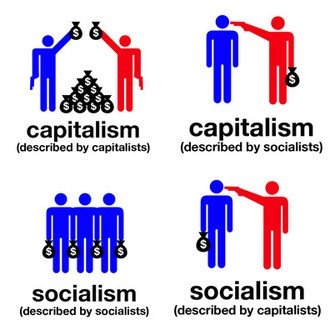
Capitalism vs. Socialism vs. Distributism

Capitalism vs. Socialism  vs. Distributism by Bryan J. Neva, Sr. Since ancient times, people have bought, sold, and traded land,...