Thanks to my friend Allen (http://allenandson.blogspot.com/) for sharing this great article from TIME Business & Money.
"First, there are graduate students, many of whom are passionate about changing the world—and not just getting rich. The trouble is that all too many business and law schools undermine this spirit by teaching traditional classes that reinforce a short-term mindset. As Cornell law professor Lynn Stout, one of those at the Claremont gathering, has made abundantly clear, by the time these students hit the job market, they’ve come to falsely believe that the primary purpose of the corporation is to “maximize shareholder value.”
Read more: http://business.time.com/2013/09/25/the-long-view-why-maximizing-shareholder-value-is-on-its-way-out/#ixzz2g35c2D00
Thursday, September 26, 2013
Monday, September 23, 2013
The god of money
"No servant can serve two masters; for either he will hate the one and love the other, or he will be devoted to the one and despise the other. You cannot serve God and money.”
Pope attacks global economics for worshipping 'god of money'
 By Philip Pullella | Reuters – Sun, 22 Sep, 2013
Francis, at the start of a day-long trip to the Sardinian capital, Cagliari, put aside his prepared text at a meeting with unemployed workers, including miners in hard hats who told him of their situation, and improvised for nearly 20 minutes.
"I find suffering here ... It weakens you and robs you of hope," he said. "Excuse me if I use strong words, but where there is no work there is no dignity."
He discarded his prepared speech after listening to Francesco Mattana, a 45-year-old married father of three who lost his job with an alternative energy company four years ago.
Mattana, his voice trembling, told the pope that unemployment "oppresses you and wears you out to the depths of your soul".
The crowd of about 20,000 people in a square near the city port chanted what Francis called a prayer for "work, work, work". They cheered each time he spoke of the rights of workers and the personal devastation caused by joblessness.
The pope, who later celebrated Mass for some 300,000 people outside the city's cathedral, told them: "We don't want this globalised economic system which does us so much harm. Men and women have to be at the centre (of an economic system) as God wants, not money."
"The world has become an idolator of this god called money," he said.
Sardinia's coast is famous for its idyllic beaches, exclusive resorts and seaside palatial residences of some of the world's richest people, including former Italian prime minister Silvio Berlusconi and a host of Hollywood actors.
But much of the island, particularly its large cities and the vast agricultural and industrial interior, has been blighted by the economic crisis, with factories closed and mines operating at low capacity.
YOUTH UNEMPLOYMENT, CLOSING MINES
Cagliari has a youth unemployment rate of about 51 percent. The Sulcis area in the southwest of the island is threatened with more unemployment from the looming closures of the Carbosulcis coal mine and an aluminum smelter.
The pope made clear that his assessment was not limited to the local situation.
"It is not a problem of Italy and Europe ... It is the consequence of a world choice, of an economic system that brings about this tragedy, an economic system that has at its centre an idol which is called money," he said to the cheers of the crowd.
While Francis's predecessor Benedict also called for changes to economic systems, he was more likely to use dense intellectual language.
Francis, who as bishop of Buenos Aires sided with unemployed workers in their conflict with government austerity plans, ended his improvised speech with a prayer asking God to "give us work and teach us to fight for work".
Francis said he did not want the crowd to see him as a smiling "cordial manager of the Church who comes here and says to you 'have courage'".
He added: "I don't want this. I want this courage to come from inside me and push me to do everything I can as a pastor and a man."
Francis brought tears to the eyes of some in the crowd when he told his own family's story of emigration from Italy to Argentina and how they lost everything in the Great Depression.
"I was not born yet, but as a child I remember hearing talk of this suffering," he said.
Francis said globalization had brought with it a culture where the weakest in society suffered the most and often, those on the fringes "fall away", including the elderly, who he said were victims of a "hidden euthanasia" caused by neglect of those no longer considered productive.
"To defend this economic culture, a throwaway culture has been installed. We throw away grandparents, and we throw away young people. We have to say no to his throwaway culture. We want a just system that helps everyone," he said.


Sunday, September 22, 2013
Recognizing the Signs and Symptoms of Stress Overload
Left untreated, chronic stress may lead to serious health problems. Learn how to recognize the signs and symptoms of stress.

Your typical day might go something like this: get up, check your email quickly, eat something and head to work. You work hard all day, get home, cook dinner. Ready to do it all over again tomorrow?
You may be, but you may not be ready for much else. Any change to your daily routine may cause you to feel stress. These changes might include getting stuck in traffic or having problems with your boss. Or you might hear bad news about a family member.
Stress is your body’s response to something that makes you feel threatened. It may be real or imagined. When this happens, your nervous system releases stress hormones. These hormones prepare your body for “fight-or-flight” or emergency action.
A little stress isn’t bad for you. It can even help you perform well under pressure. The dangerous effects of stress come when stress is constant or chronic. Under chronic stress, your body remains in high gear — off and on — for days or weeks on end.
Continuous and long-term stress may lead to serious health problems. Recognizing the signs and symptoms of stress and learning how to manage it may help you stay one step ahead of an overload.
What are the signs of stress?
Because of the many demands of life today, too much stress may feel normal to you. It may seem familiar and almost comfortable. You might not be able to recognize it.
Can you remember what being relaxed feels like? If you don’t feel calm, alert, focused and productive most of the time, you may be dealing with too much stress. People perceive stress and its effects differently, so be sure not to compare yourself with others.
It may be difficult to spot the outward signs of stress. Watch for one of these responses: You may zone out and withdraw, you may become more easily angry and agitated or you may freeze up. These are the three typical ways that people respond to stress.
What are the symptoms of stress?
Everyone experiences stress differently. And some people may not experience any symptoms at all. Still, there are many common symptoms to be aware of.
Symptoms of stress may include:
The dangers of stress overload
Untreated chronic stress has the potential to harm nearly system in your body. It has been associated with a variety of health problems including: pain, sleep problems and digestive problems. Chronic stress may contribute to infertility and menstrual problems. It may also aggravate acne and other skin conditions like eczema.
Chronic stress alone does not cause heart disease. But scientists agree that chronic stress may worsen risk factors such as high cholesterol levels and hypertension. Chronic stress may even speed up the aging process. It is also linked with osteoporosis, inflammatory arthritis and frailty. It is also associated with type 2 diabetes and certain cancers.
Additionally, chronic stress may rewire the brain. This may make you more susceptible to depression and anxiety. Stress may also make emotional problems from your past worse. This may increase thoughts of suicide.
If you have thoughts of hurting yourself or others, call your health care professional, 911 or a suicide hotline such as 1-800-SUICIDE (1-800-784-2433) or have someone drive you to your nearest emergency department.
Recognizing the signs and symptoms of stress is one of the first steps to overcoming stress overload. Once these are recognized, the next step is learning how to deal with your stress by seeking help. You can try a variety of self-help techniques, such as meditation, relaxation, journaling and positive thinking.
Depending on the severity of the stress, you may want to seek counseling. Ask your doctor for referrals. If you have the benefits, you may find a mental health professional through your health insurer, your employee assistance program or the mental health division of your local health department. The American Psychological Association or National Association of Social Workers may have information about getting help. If you find names of local therapists online, be sure to run them by your doctor, spiritual leaders and friends first.
You may be, but you may not be ready for much else. Any change to your daily routine may cause you to feel stress. These changes might include getting stuck in traffic or having problems with your boss. Or you might hear bad news about a family member.
Stress is your body’s response to something that makes you feel threatened. It may be real or imagined. When this happens, your nervous system releases stress hormones. These hormones prepare your body for “fight-or-flight” or emergency action.
A little stress isn’t bad for you. It can even help you perform well under pressure. The dangerous effects of stress come when stress is constant or chronic. Under chronic stress, your body remains in high gear — off and on — for days or weeks on end.
Continuous and long-term stress may lead to serious health problems. Recognizing the signs and symptoms of stress and learning how to manage it may help you stay one step ahead of an overload.
What are the signs of stress?
Because of the many demands of life today, too much stress may feel normal to you. It may seem familiar and almost comfortable. You might not be able to recognize it.
Can you remember what being relaxed feels like? If you don’t feel calm, alert, focused and productive most of the time, you may be dealing with too much stress. People perceive stress and its effects differently, so be sure not to compare yourself with others.
It may be difficult to spot the outward signs of stress. Watch for one of these responses: You may zone out and withdraw, you may become more easily angry and agitated or you may freeze up. These are the three typical ways that people respond to stress.
What are the symptoms of stress?
Everyone experiences stress differently. And some people may not experience any symptoms at all. Still, there are many common symptoms to be aware of.
Symptoms of stress may include:
- Emotional: Feeling out of control, overwhelmed, lonely, isolated, unhappy, depressed, helpless, irritable, short-tempered, moody, impatient, unable to relax or agitated.
- Physical: Aches and pains, tight muscles, a clenched jaw, nausea, dizziness, rapid heartbeat, chest pain, diarrhea or constipation, headaches, back problems/pain, frequent colds or loss of sex drive.
- Behavioral: Sleeping too much or too little, eating too much or too little, speaking and eating quickly, procrastinating or neglecting responsibilities, isolating yourself or using alcohol, cigarettes or drugs to relax.
- Cognitive: Poor judgment, constant worrying, anxious or racing thoughts, inability to concentrate, memory problems or seeing only the negative.
The dangers of stress overload
Untreated chronic stress has the potential to harm nearly system in your body. It has been associated with a variety of health problems including: pain, sleep problems and digestive problems. Chronic stress may contribute to infertility and menstrual problems. It may also aggravate acne and other skin conditions like eczema.
Chronic stress alone does not cause heart disease. But scientists agree that chronic stress may worsen risk factors such as high cholesterol levels and hypertension. Chronic stress may even speed up the aging process. It is also linked with osteoporosis, inflammatory arthritis and frailty. It is also associated with type 2 diabetes and certain cancers.
Additionally, chronic stress may rewire the brain. This may make you more susceptible to depression and anxiety. Stress may also make emotional problems from your past worse. This may increase thoughts of suicide.
If you have thoughts of hurting yourself or others, call your health care professional, 911 or a suicide hotline such as 1-800-SUICIDE (1-800-784-2433) or have someone drive you to your nearest emergency department.
Recognizing the signs and symptoms of stress is one of the first steps to overcoming stress overload. Once these are recognized, the next step is learning how to deal with your stress by seeking help. You can try a variety of self-help techniques, such as meditation, relaxation, journaling and positive thinking.
Depending on the severity of the stress, you may want to seek counseling. Ask your doctor for referrals. If you have the benefits, you may find a mental health professional through your health insurer, your employee assistance program or the mental health division of your local health department. The American Psychological Association or National Association of Social Workers may have information about getting help. If you find names of local therapists online, be sure to run them by your doctor, spiritual leaders and friends first.
Wednesday, September 18, 2013
The Definition of Instanity!
in·san·i·ty / inˈsanitē/ noun: insanity
1. the state of being seriously mentally ill; madness. "he suffered from bouts of insanity" synonyms: mental illness, madness, dementia;
2. such unsoundness of mind or lack of understanding as prevents one from having the mental capacity required by law to enter into a particular relationship, status, or transaction or as removes one from criminal or civil responsibility
3. a: extreme folly or unreasonableness
b: something utterly foolish or unreasonable
4. doing the same thing over and over again and expecting different results. (Albert Einstein)
1. the state of being seriously mentally ill; madness. "he suffered from bouts of insanity" synonyms: mental illness, madness, dementia;
2. such unsoundness of mind or lack of understanding as prevents one from having the mental capacity required by law to enter into a particular relationship, status, or transaction or as removes one from criminal or civil responsibility
3. a: extreme folly or unreasonableness
b: something utterly foolish or unreasonable
4. doing the same thing over and over again and expecting different results. (Albert Einstein)
Tuesday, September 3, 2013
Prayer for Work
My heavenly father, as I enter this work place, I bring your presence with me. I speak your peace, your grace, your mercy and your perfect order into my work. I acknowledge your power over all that will be done, spoken, thought and decided within these walls. I commit to use them responsibly in your honor. Give me a fresh supply of strength to do my job. Anoint my projects, ideas, and energy, so that even my smallest accomplishment may bring you glory. Lord, when I am confused, guide me. When I am weary, energize me. When I am burned out, infuse me with the light of the Holy Spirit. May the work that I do and the way I do it bring faith, joy and a smile to all that I come in contact with today. And oh Lord, When I leave this place, give me traveling mercy. Bless my family and home to be in order as I left it. Lord, I thank you for everything you've done, everything you are doing, and everything you are going to do. Lord, I thank you for the gifts you have blessed me with. In the name of Jesus I pray, with much love and thanksgiving. In the name of the Father, and of the Son, and of the Holy Spirit, Amen
Sunday, September 1, 2013
Stated Goal Analysis by Allen Laudenslager
Here's a really great article by Allen Laudenslager (my good friend and writing partner). You can read more of Allen's blogs at http://allenandson.blogspot.com/
My two cents are that managers often have a hidden agenda in the rules they make, and oftentimes there's corporal punishment for the infractions of the few. People aren't stupid either, they can usually connect the dots and figure out the hidden agenda.
My two cents are that managers often have a hidden agenda in the rules they make, and oftentimes there's corporal punishment for the infractions of the few. People aren't stupid either, they can usually connect the dots and figure out the hidden agenda.
Stated Goal Analysis by Allen Laudenslager
Years ago I worked as a civilian contractor on an Army post and I wanted to ride my motorcycle to work. The Army required that everyone riding a motorcycle on the post take a motorcycle safety course. Their stated goal was:
Years ago I worked as a civilian contractor on an Army post and I wanted to ride my motorcycle to work. The Army required that everyone riding a motorcycle on the post take a motorcycle safety course. Their stated goal was:
“In order to reduce the number of motorcycle accidents, all motorcycle riders will be required to take the motorcycle safety course.”
While taking the course, I learned that over 80% of all motorcycle accidents involved an automobile, and that the automobiles were at fault 80% of the time. In other words, automobiles were at fault for 64% of all motorcycle accidents! I was scratching my head trying to understand why the Army required this class only for motorcycle riders who were only at fault 36% of the time? Why didn’t they require the class for automobile drivers too since they were at fault 64% of the time?
The Stated Goal method of analyzing an idea is to clearly state the goal and the recommended solution in a simple sentence or paragraph. If the resulting statement includes all the significant information and sounds logical then the plan is fundamentally sound. Conversely, if the statement sounds ridiculous then the planned steps are flawed.
If the Army was being completely honest and logical, their stated goal should have been:
“In order to reduce the number of motorcycle accidents, all motorcycle riders (who are generally NOT at fault) will be required to take the motorcycle safety course, while all automobile drivers (who are generally AT fault) will NOT be required to take a safety course.”
Well let’s apply the Army’s logic to an OSHA regulated industrial machine. Their stated goal could be:
“In order to reduce the number of industrial accidents, all machine operators will be required to take the machine operator safety course, while the machines will NOT be modified to remove any hazards.”
Common sense tells you that both are needed to reduce industrial accidents!
The Army’s motorcycle safety course requirement had an unstated goal…they really preferred that solders NOT ride motorcycles at all! The motorcycle training course requirement acted as a disincentive to solders thinking about riding motorcycles to the base. The goal was unstated because the individuals making the decisions didn't want to be recognized as being responsible for creating an obstacle to riding motorcycles. Once the stated and unstated goals are merged, the Army’s stated goal becomes:
"In order to reduce the number of motorcycle riders and thus reduce the number of motorcycle accidents, motorcycle riders (who are generally NOT at fault) will have to take a motorcycle safety class, while automobile drivers (who are generally AT fault) will NOT be required to take a safety course.”
Now I’m not against motorcycle safety courses…statistics show they actually DO decrease the number of motorcycle accidents. My point is only that managers use the stated goal method honestly and ethically to identify and evaluate any unstated goals before a plan is implemented.
Whenever you clearly state the goal together with the desired outcome in the form of “By doing this we will end up with this” you can clearly see whether or not all the goals have been clearly identified or if there is some end goal being hidden.
Only by understanding the full and complete goals can you effectively contribute to achieving those goals. When some part of the goal is not clearly stated it’s usually because the person stating the goals doesn’t want to have to admit to some part of their goal they want from their audience.
In business, managers often keep some part of their true goals secret because they know that their workers would not willingly participate. If you catch yourself hiding some part of your goals, it's a pretty clear indication that you really shouldn't be doing that in the first place.
Tuesday, August 27, 2013
IF YOU HAD ALL THE MONEY IN THE WORLD
Let's pretend for a moment you're the guy in the three wishes joke stranded on a deserted island and you find an old bottle washed up on the beach; you pop the cork and out comes a genie who grants you three wishes. What would you wish for?
Well, you reply, the most logical choice is to be rescued from this deserted island.
Good one; it’s our basic human need to survive or live.
Now what’s your second wish?
A good wife or husband, you answer.
Another good one; it’s our basic human need to love and to leave a legacy (children).
You’ve made two good wishes. Now for your third and final wish?
You think for a moment, well a million dollars would be good, a billion dollars would be better, but having all the money in the world would be the best! Yes, I wish for all the money in the world.
BUUUUZZZZZZZZ! Bad choice! It’s our basic human vice of greed.
If you had all the money in the world then no one else would have any and it would become worthless. By itself, money has no intrinsic value; it's only a medium of exchange for goods and services, a way to store and exchange your work for someone else’s without direct barter.
Corporate America is not much different than the foolish guy in the three wishes joke. We all have a basic need to live, to love, and to leave a legacy. Unfortunately, we’re all cursed with vices like greed (like wishing for all the money in the world). How is Corporate America doing this? Generally speaking, they pay their employees as little as possible, charge their customers as much as possible, hoard most of their cash, and avoid paying taxes. Before they know it, they too will have all the money in the world but it will become worthless because no one else will have any to buy their products.
Apple epitomizes of what’s wrong with Corporate America today. They pay their Chinese factory workers as little as possible (about $1.11 an hour), make them work as much as possible (twelve hours a day, six days a week), and treat them as poorly as possible. Apple then charges their customers as much as possible for their products. After this, they hoard their cash and do their level best to legally avoid paying taxes (mainly using overseas tax havens). And before they know it, they too will have all the money in the world but it’ll become worthless because no one else will have any to buy their products.
According to the research firm iSuppli, they estimate the iPad2 (with 32Gb memory, WiFi and Cell) costs about $10 to assemble in China; the material costs about $325 for a total of $335 per unit for labor and material. Apples then sells this device for $729, which gives them a gross profit margin of 54%.
Now if Apple were to manufacture the iPad2 in the U.S. it would cost them about $292.77 to assemble (at a labor/benefit rate $32.53/hour); the material costs would be about the same $325 for a total of $617.77 per unit for labor and material. Apple’s gross margin would then shrink to 15.25%.
Sure, manufacturing in the U.S. would shrink Apple’s gross margins. It’s not a question of making a profit, but how BIG of a profit Apple would make. They choose to manufacture in China because they can earn 54% gross margins instead of a measly 15% in the U.S. The only problem is that consumers will no longer be able to afford Apple’s products because they’re earning much lower wages.
While Apple and the rest of Corporate America have not achieved their wish for all the money in the world they have purposely designed their business models to lock up as much cash as they can and sequester it at the corporate level as cash on hand or as bonuses to a few corporate mangers; in doing so their money is becoming worthless because no one else has any.
Much of today’s unemployment is caused by slow demand. People aren’t spending as much of their income for those products because they just don’t have the cash! Flat salaries coupled with inflation have eroded the bulk of the buying public’s disposable income resulting in the slow recovery from the 2008 recession. We'll be stuck in this quagmire unless and until the corporate mangers learn that their shortsighted wish for “all the money in the world” is the root cause of their financial woes.
Well, you reply, the most logical choice is to be rescued from this deserted island.
Good one; it’s our basic human need to survive or live.
Now what’s your second wish?
A good wife or husband, you answer.
Another good one; it’s our basic human need to love and to leave a legacy (children).
You’ve made two good wishes. Now for your third and final wish?
You think for a moment, well a million dollars would be good, a billion dollars would be better, but having all the money in the world would be the best! Yes, I wish for all the money in the world.
BUUUUZZZZZZZZ! Bad choice! It’s our basic human vice of greed.
If you had all the money in the world then no one else would have any and it would become worthless. By itself, money has no intrinsic value; it's only a medium of exchange for goods and services, a way to store and exchange your work for someone else’s without direct barter.
Corporate America is not much different than the foolish guy in the three wishes joke. We all have a basic need to live, to love, and to leave a legacy. Unfortunately, we’re all cursed with vices like greed (like wishing for all the money in the world). How is Corporate America doing this? Generally speaking, they pay their employees as little as possible, charge their customers as much as possible, hoard most of their cash, and avoid paying taxes. Before they know it, they too will have all the money in the world but it will become worthless because no one else will have any to buy their products.
Apple epitomizes of what’s wrong with Corporate America today. They pay their Chinese factory workers as little as possible (about $1.11 an hour), make them work as much as possible (twelve hours a day, six days a week), and treat them as poorly as possible. Apple then charges their customers as much as possible for their products. After this, they hoard their cash and do their level best to legally avoid paying taxes (mainly using overseas tax havens). And before they know it, they too will have all the money in the world but it’ll become worthless because no one else will have any to buy their products.
According to the research firm iSuppli, they estimate the iPad2 (with 32Gb memory, WiFi and Cell) costs about $10 to assemble in China; the material costs about $325 for a total of $335 per unit for labor and material. Apples then sells this device for $729, which gives them a gross profit margin of 54%.
Now if Apple were to manufacture the iPad2 in the U.S. it would cost them about $292.77 to assemble (at a labor/benefit rate $32.53/hour); the material costs would be about the same $325 for a total of $617.77 per unit for labor and material. Apple’s gross margin would then shrink to 15.25%.
Sure, manufacturing in the U.S. would shrink Apple’s gross margins. It’s not a question of making a profit, but how BIG of a profit Apple would make. They choose to manufacture in China because they can earn 54% gross margins instead of a measly 15% in the U.S. The only problem is that consumers will no longer be able to afford Apple’s products because they’re earning much lower wages.
While Apple and the rest of Corporate America have not achieved their wish for all the money in the world they have purposely designed their business models to lock up as much cash as they can and sequester it at the corporate level as cash on hand or as bonuses to a few corporate mangers; in doing so their money is becoming worthless because no one else has any.
Much of today’s unemployment is caused by slow demand. People aren’t spending as much of their income for those products because they just don’t have the cash! Flat salaries coupled with inflation have eroded the bulk of the buying public’s disposable income resulting in the slow recovery from the 2008 recession. We'll be stuck in this quagmire unless and until the corporate mangers learn that their shortsighted wish for “all the money in the world” is the root cause of their financial woes.
Saturday, August 17, 2013
Guest Blog Post at A Voice In The Wilderness
Read My guest blog on my friend and writing partner's blog site A Voice In The Wilderness
http://allenandson.blogspot.com/2013/08/three-wishes.html
http://allenandson.blogspot.com/2013/08/three-wishes.html
Monday, August 12, 2013
Lifelong Learning: a lesson from my parents
Lifelong Learning: a lesson from my parents
by Bryan J. Neva, Sr.
A year into my new career, at age 50, the learning curve is steep, but I love it. After eighteen years working in the medical device industry, I had a choice: cruise to retirement or learn new skills. I chose the latter. I'm now working in the aerospace industry.
“Why would you take this job at half the pay?” several people have asked me in various ways.
“The pay cut is more than made up by the reward and the excitement of learning new things.”
My parents influenced me and my siblings to pursue lifelong learning. “Society will pay more for your brain than for your back,” they advised us.
It was never a question of if I would go to college, but how. It took me ten years, including a four-year tour in the Navy, for me to graduate from college with a bachelors degree, and an additional nine years of night school to earn a masters degree, all this while working full-time and raising two small children. I had many nights at the kitchen table typing on the computer while rocking the baby with my foot.
My dad is my intellectual hero. He's a bibliophile, always with his head in a book. He carefully reads the newspaper daily, and current events are often the topic of our discussions. He was my first engineering teacher: he taught me mechanics, machine shop work, and carpentry. I’ve always been amazed at his ability to calculate fractions in his head.
My mom taught me how to sew, type, and solder. (She worked many years in an electronics assembly plant.) Unfortunately, she failed at teaching me to cook, but that was entirely my fault. She also taught me how to garden and to freeze and can produce. And of course I always enjoyed having heart-to-heart talks with her while we were doing these.
My parents, well into their 70s continue to learn, playing Scrabble and working crosswords and Sudoku puzzles. Each of them continue to build on their college level vocabularies, and continue to read the Bible daily.
A desire for lifelong learning begins at home. Thank you Mom and Dad!
by Bryan J. Neva, Sr.
A year into my new career, at age 50, the learning curve is steep, but I love it. After eighteen years working in the medical device industry, I had a choice: cruise to retirement or learn new skills. I chose the latter. I'm now working in the aerospace industry.
“Why would you take this job at half the pay?” several people have asked me in various ways.
“The pay cut is more than made up by the reward and the excitement of learning new things.”
My parents influenced me and my siblings to pursue lifelong learning. “Society will pay more for your brain than for your back,” they advised us.
It was never a question of if I would go to college, but how. It took me ten years, including a four-year tour in the Navy, for me to graduate from college with a bachelors degree, and an additional nine years of night school to earn a masters degree, all this while working full-time and raising two small children. I had many nights at the kitchen table typing on the computer while rocking the baby with my foot.
My dad is my intellectual hero. He's a bibliophile, always with his head in a book. He carefully reads the newspaper daily, and current events are often the topic of our discussions. He was my first engineering teacher: he taught me mechanics, machine shop work, and carpentry. I’ve always been amazed at his ability to calculate fractions in his head.
My mom taught me how to sew, type, and solder. (She worked many years in an electronics assembly plant.) Unfortunately, she failed at teaching me to cook, but that was entirely my fault. She also taught me how to garden and to freeze and can produce. And of course I always enjoyed having heart-to-heart talks with her while we were doing these.
My parents, well into their 70s continue to learn, playing Scrabble and working crosswords and Sudoku puzzles. Each of them continue to build on their college level vocabularies, and continue to read the Bible daily.
A desire for lifelong learning begins at home. Thank you Mom and Dad!
Sunday, July 14, 2013
FABLE OF THE STARFISH author unknown
In a popular
motivational fable by an unknown author there was once an old man who had a
habit of walking along the beach every morning.
One morning when he went to the beach he discovered there had been a
strong storm the previous night that had washed thousands of starfish up onto
the beach.
Then at a distance, he
spotted a young man dancing along the beach. How odd the old man thought to
himself; the beach is littered with soon to be rotting starfish and this young
guy is dancing? So he ran up to him to
see why he was dancing. As he got closer
he saw that the young man wasn't dancing at all but instead was reaching down
and picking up starfish and very gently throwing them back into the ocean.
The old man asked him,
“Good morning! What are you doing?”
The young man replied,
“Throwing starfish into the ocean!”
“Why are you throwing
starfish into the ocean?” the old man asked.
The young man replied,
“The sun is up, and the tide is going out; and if I don’t throw them back in
the ocean they’ll surely die!”
“Young man, don’t you
realize that there are miles and miles of beach, and there must be thousands
and thousands of starfish along it. You can’t possibly make a difference!”
The young man listened
politely, then bent down and picked up another starfish and gently threw it
back into the ocean and said, “It made a difference for that one!”
The old man paused a bit
and contemplated the enormity of the task and then bent down, picked up a
starfish and gently threw it back into the ocean....
Subscribe to:
Posts (Atom)
Featured Post
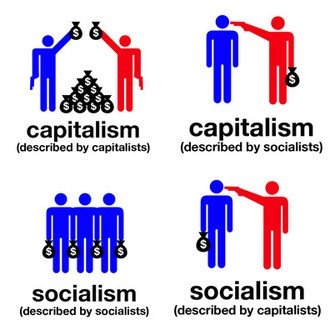
Capitalism vs. Socialism vs. Distributism
Capitalism vs. Socialism vs. Distributism by Bryan J. Neva, Sr. Since ancient times, people have bought, sold, and traded land,...
-
 Whose Ox Is Being Gored? by Bryan J. Neva, Sr. You've probably heard the old cliché, "It all depends on whose ox is...
 -
 The Parable of the Lost Coin LUKE 15 8 “Or what woman, having ten silver coins, if she loses one coin, does not light a lamp and sweep ...
 -
 What Business can Learn from Sheep Herding by Bryan J. Neva, Sr. Business can learn a lot from the business of sheep herding. Sheep her...
 -
Loving Your Enemies by Fritz Chery, Feb 15, 2015, biblereasons.com Bible verses about loving your enemies This topic is something w...
-
 Capitalism vs. Socialism vs. Distributism by Bryan J. Neva, Sr. Since ancient times, people have bought, sold, and traded land,...
 -
 Elijah by Bryan Neva “Shout louder, Baal may be meditating, or retired, or on vacation, or asleep and needs to be awoken.” The grea...
 -
 The Leash Theory of Management by Bryan J. Neva, Sr. Have you ever heard a manager use phrases like, "I have to keep them on a sho...
 -
 The Parable of the Lost Son LUKE 15: 11 And he said, “There was a man who had two sons; 12 and the younger of them said to his fat...
 -
Thing 7 Free-market policies rarely make poor countries rich by Dr. Ha Joon Chang (Book Excerpt from 23 Things They Don't Tel...
