Let's pretend for a moment you're the guy in the three wishes joke stranded on a deserted island and you find an old bottle washed up on the beach; you pop the cork and out comes a genie who grants you three wishes. What would you wish for?
Well, you reply, the most logical choice is to be rescued from this deserted island.
Good one; it’s our basic human need to survive or live.
Now what’s your second wish?
A good wife or husband, you answer.
Another good one; it’s our basic human need to love and to leave a legacy (children).
You’ve made two good wishes. Now for your third and final wish?
You think for a moment, well a million dollars would be good, a billion dollars would be better, but having all the money in the world would be the best! Yes, I wish for all the money in the world.
BUUUUZZZZZZZZ! Bad choice! It’s our basic human vice of greed.
If you had all the money in the world then no one else would have any and it would become worthless. By itself, money has no intrinsic value; it's only a medium of exchange for goods and services, a way to store and exchange your work for someone else’s without direct barter.
Corporate America is not much different than the foolish guy in the three wishes joke. We all have a basic need to live, to love, and to leave a legacy. Unfortunately, we’re all cursed with vices like greed (like wishing for all the money in the world). How is Corporate America doing this? Generally speaking, they pay their employees as little as possible, charge their customers as much as possible, hoard most of their cash, and avoid paying taxes. Before they know it, they too will have all the money in the world but it will become worthless because no one else will have any to buy their products.
Apple epitomizes of what’s wrong with Corporate America today. They pay their Chinese factory workers as little as possible (about $1.11 an hour), make them work as much as possible (twelve hours a day, six days a week), and treat them as poorly as possible. Apple then charges their customers as much as possible for their products. After this, they hoard their cash and do their level best to legally avoid paying taxes (mainly using overseas tax havens). And before they know it, they too will have all the money in the world but it’ll become worthless because no one else will have any to buy their products.
According to the research firm iSuppli, they estimate the iPad2 (with 32Gb memory, WiFi and Cell) costs about $10 to assemble in China; the material costs about $325 for a total of $335 per unit for labor and material. Apples then sells this device for $729, which gives them a gross profit margin of 54%.
Now if Apple were to manufacture the iPad2 in the U.S. it would cost them about $292.77 to assemble (at a labor/benefit rate $32.53/hour); the material costs would be about the same $325 for a total of $617.77 per unit for labor and material. Apple’s gross margin would then shrink to 15.25%.
Sure, manufacturing in the U.S. would shrink Apple’s gross margins. It’s not a question of making a profit, but how BIG of a profit Apple would make. They choose to manufacture in China because they can earn 54% gross margins instead of a measly 15% in the U.S. The only problem is that consumers will no longer be able to afford Apple’s products because they’re earning much lower wages.
While Apple and the rest of Corporate America have not achieved their wish for all the money in the world they have purposely designed their business models to lock up as much cash as they can and sequester it at the corporate level as cash on hand or as bonuses to a few corporate mangers; in doing so their money is becoming worthless because no one else has any.
Much of today’s unemployment is caused by slow demand. People aren’t spending as much of their income for those products because they just don’t have the cash! Flat salaries coupled with inflation have eroded the bulk of the buying public’s disposable income resulting in the slow recovery from the 2008 recession. We'll be stuck in this quagmire unless and until the corporate mangers learn that their shortsighted wish for “all the money in the world” is the root cause of their financial woes.
Tuesday, August 27, 2013
Saturday, August 17, 2013
Guest Blog Post at A Voice In The Wilderness
Read My guest blog on my friend and writing partner's blog site A Voice In The Wilderness
http://allenandson.blogspot.com/2013/08/three-wishes.html
http://allenandson.blogspot.com/2013/08/three-wishes.html


Monday, August 12, 2013
Lifelong Learning: a lesson from my parents
Lifelong Learning: a lesson from my parents
by Bryan J. Neva, Sr.
A year into my new career, at age 50, the learning curve is steep, but I love it. After eighteen years working in the medical device industry, I had a choice: cruise to retirement or learn new skills. I chose the latter. I'm now working in the aerospace industry.
“Why would you take this job at half the pay?” several people have asked me in various ways.
“The pay cut is more than made up by the reward and the excitement of learning new things.”
My parents influenced me and my siblings to pursue lifelong learning. “Society will pay more for your brain than for your back,” they advised us.
It was never a question of if I would go to college, but how. It took me ten years, including a four-year tour in the Navy, for me to graduate from college with a bachelors degree, and an additional nine years of night school to earn a masters degree, all this while working full-time and raising two small children. I had many nights at the kitchen table typing on the computer while rocking the baby with my foot.
My dad is my intellectual hero. He's a bibliophile, always with his head in a book. He carefully reads the newspaper daily, and current events are often the topic of our discussions. He was my first engineering teacher: he taught me mechanics, machine shop work, and carpentry. I’ve always been amazed at his ability to calculate fractions in his head.
My mom taught me how to sew, type, and solder. (She worked many years in an electronics assembly plant.) Unfortunately, she failed at teaching me to cook, but that was entirely my fault. She also taught me how to garden and to freeze and can produce. And of course I always enjoyed having heart-to-heart talks with her while we were doing these.
My parents, well into their 70s continue to learn, playing Scrabble and working crosswords and Sudoku puzzles. Each of them continue to build on their college level vocabularies, and continue to read the Bible daily.
A desire for lifelong learning begins at home. Thank you Mom and Dad!
by Bryan J. Neva, Sr.
A year into my new career, at age 50, the learning curve is steep, but I love it. After eighteen years working in the medical device industry, I had a choice: cruise to retirement or learn new skills. I chose the latter. I'm now working in the aerospace industry.
“Why would you take this job at half the pay?” several people have asked me in various ways.
“The pay cut is more than made up by the reward and the excitement of learning new things.”
My parents influenced me and my siblings to pursue lifelong learning. “Society will pay more for your brain than for your back,” they advised us.
It was never a question of if I would go to college, but how. It took me ten years, including a four-year tour in the Navy, for me to graduate from college with a bachelors degree, and an additional nine years of night school to earn a masters degree, all this while working full-time and raising two small children. I had many nights at the kitchen table typing on the computer while rocking the baby with my foot.
My dad is my intellectual hero. He's a bibliophile, always with his head in a book. He carefully reads the newspaper daily, and current events are often the topic of our discussions. He was my first engineering teacher: he taught me mechanics, machine shop work, and carpentry. I’ve always been amazed at his ability to calculate fractions in his head.
My mom taught me how to sew, type, and solder. (She worked many years in an electronics assembly plant.) Unfortunately, she failed at teaching me to cook, but that was entirely my fault. She also taught me how to garden and to freeze and can produce. And of course I always enjoyed having heart-to-heart talks with her while we were doing these.
My parents, well into their 70s continue to learn, playing Scrabble and working crosswords and Sudoku puzzles. Each of them continue to build on their college level vocabularies, and continue to read the Bible daily.
A desire for lifelong learning begins at home. Thank you Mom and Dad!
Sunday, July 14, 2013
FABLE OF THE STARFISH author unknown
In a popular
motivational fable by an unknown author there was once an old man who had a
habit of walking along the beach every morning.
One morning when he went to the beach he discovered there had been a
strong storm the previous night that had washed thousands of starfish up onto
the beach.
Then at a distance, he
spotted a young man dancing along the beach. How odd the old man thought to
himself; the beach is littered with soon to be rotting starfish and this young
guy is dancing? So he ran up to him to
see why he was dancing. As he got closer
he saw that the young man wasn't dancing at all but instead was reaching down
and picking up starfish and very gently throwing them back into the ocean.
The old man asked him,
“Good morning! What are you doing?”
The young man replied,
“Throwing starfish into the ocean!”
“Why are you throwing
starfish into the ocean?” the old man asked.
The young man replied,
“The sun is up, and the tide is going out; and if I don’t throw them back in
the ocean they’ll surely die!”
“Young man, don’t you
realize that there are miles and miles of beach, and there must be thousands
and thousands of starfish along it. You can’t possibly make a difference!”
The young man listened
politely, then bent down and picked up another starfish and gently threw it
back into the ocean and said, “It made a difference for that one!”
The old man paused a bit
and contemplated the enormity of the task and then bent down, picked up a
starfish and gently threw it back into the ocean....
Friday, July 12, 2013
All I Really Need to Know I Learned in Kindergarten by Rev. Robert Fulghum
All I really need to know about how to live and what to do and how to be, I learned in kindergarten. Wisdom was not at the top of the graduate-school mountain, but there in the sand pile at Sunday school. These are the things I learned:
Share everything.
Play fair.
Don’t hit people.
Put things back where you found them.
Clean up your own mess.
Don’t take things that aren’t yours.
Say you’re sorry when you hurt somebody.
Wash your hands before you eat.
Flush.
Warm cookies and cold milk are good for you.
Live a balanced life—learn some and think some and draw and paint and sing and dance and play and work every day some.
Take a nap every afternoon.
When you go out into the world, watch out for traffic, hold hands, and stick together.
Be aware of wonder. Remember the little seed in the Styrofoam cup: the roots go down and the plant goes up and nobody really knows how or why, but we are all like that.
Goldfish and hamsters and white mice and even the little seed in the Styrofoam cup—they all die. So do we.
And then remember the Dick-and-Jane books and the first word you learned—the biggest word of all—LOOK.
Everything you need to know is in there somewhere: The Golden Rule and love and basic sanitation; ecology and politics and equality and sane living. Take any one of those items and extrapolate it into sophisticated adult terms and apply it to your family life or your work or your government or your world and it holds true and clear and firm. Think what a better world it would be if we all—the whole world—had cookies and milk about three o’clock every afternoon and then lay down with our blankies for a nap. Or if all governments had as a basic policy to always put things back where they found them and to clean up their own mess. And it is still true, no matter how old you are—when you go out into the world, it is best to hold hands and stick together.
Share everything.
Play fair.
Don’t hit people.
Put things back where you found them.
Clean up your own mess.
Don’t take things that aren’t yours.
Say you’re sorry when you hurt somebody.
Wash your hands before you eat.
Flush.
Warm cookies and cold milk are good for you.
Live a balanced life—learn some and think some and draw and paint and sing and dance and play and work every day some.
Take a nap every afternoon.
When you go out into the world, watch out for traffic, hold hands, and stick together.
Be aware of wonder. Remember the little seed in the Styrofoam cup: the roots go down and the plant goes up and nobody really knows how or why, but we are all like that.
Goldfish and hamsters and white mice and even the little seed in the Styrofoam cup—they all die. So do we.
And then remember the Dick-and-Jane books and the first word you learned—the biggest word of all—LOOK.
Everything you need to know is in there somewhere: The Golden Rule and love and basic sanitation; ecology and politics and equality and sane living. Take any one of those items and extrapolate it into sophisticated adult terms and apply it to your family life or your work or your government or your world and it holds true and clear and firm. Think what a better world it would be if we all—the whole world—had cookies and milk about three o’clock every afternoon and then lay down with our blankies for a nap. Or if all governments had as a basic policy to always put things back where they found them and to clean up their own mess. And it is still true, no matter how old you are—when you go out into the world, it is best to hold hands and stick together.
Thursday, July 4, 2013
ON TIME TRAVEL
On Time Travel
by Bryan J. Neva, Sr.
How many of us have used the cliches, "If only I could go back in time and do things differently.", or "If I knew then what I know now.", or "If only I could-a/should-a/would-a done this or that etc."? Time travel is a popular science-fiction topic enjoyed by millions of people everywhere including me. The most popular scenario is for the protagonist to travel back in time and change something so that the future changes for the better.
All Judeo-Christian faith traditions dogmatically believe that God is timeless, eternal, and everlasting. God is not limited by time and space. In fact, God's Hebrew name "Yahweh" literally means "I Am." God has no beginning or end. He created time and space. To God, a day is like a thousand years and a thousand years is like a day. God is also all-knowing. He knows what the future holds. He knows every possible alternate future or reality. But out of deep love and respect for mankind, God gives each of us the freedom to choose our own futures and destinies (i.e. freewill).
Nevertheless, God knows the weakness of our human nature and tries to lovingly lead and guide us in the best path for us to follow. Some choose to listen to God and follow him wherever he leads them; unfortunately, most do not. They do what seems right to them at the time.
Having faith in God is infinitely better than having a time machine and traveling back in time to make different choices. Like the movie Groundhog Day, there are just too many different combinations of choices we'd have to make in order to affect change. We just don't know all the possible combinations that would produce the most ideal results. But God knows.
If you program an address into your GPS navigation device it will guide you turn-by-turn to get you to your destination. But if you miss a turn or an exit, the GPS will announce, "Recalculating" and try to reroute you to your destination. Sometimes the route the GPS brings you on does not make sense, but if you trust the programming of the GPS and stay on the pre-planned route eventually you'll hear the GPS announce, "You have arrived at your destination."
In a sense, God is like the GPS device. He has a pre-planned destiny for each of us and he tries to lovingly guide us to our ultimate destination (eternity with Him in heaven). Since he knows the future consequences of our human decisions, sometimes He has to reroute us in order to get us back on course. Sometimes we do not understand the route that God has us on and we complain and want to go a different way.
Trust in God's all-knowing plan for your life and it will turn out infinitely better than you could ever have imagined!
by Bryan J. Neva, Sr.
How many of us have used the cliches, "If only I could go back in time and do things differently.", or "If I knew then what I know now.", or "If only I could-a/should-a/would-a done this or that etc."? Time travel is a popular science-fiction topic enjoyed by millions of people everywhere including me. The most popular scenario is for the protagonist to travel back in time and change something so that the future changes for the better.
All Judeo-Christian faith traditions dogmatically believe that God is timeless, eternal, and everlasting. God is not limited by time and space. In fact, God's Hebrew name "Yahweh" literally means "I Am." God has no beginning or end. He created time and space. To God, a day is like a thousand years and a thousand years is like a day. God is also all-knowing. He knows what the future holds. He knows every possible alternate future or reality. But out of deep love and respect for mankind, God gives each of us the freedom to choose our own futures and destinies (i.e. freewill).
Nevertheless, God knows the weakness of our human nature and tries to lovingly lead and guide us in the best path for us to follow. Some choose to listen to God and follow him wherever he leads them; unfortunately, most do not. They do what seems right to them at the time.
Having faith in God is infinitely better than having a time machine and traveling back in time to make different choices. Like the movie Groundhog Day, there are just too many different combinations of choices we'd have to make in order to affect change. We just don't know all the possible combinations that would produce the most ideal results. But God knows.
In a sense, God is like the GPS device. He has a pre-planned destiny for each of us and he tries to lovingly guide us to our ultimate destination (eternity with Him in heaven). Since he knows the future consequences of our human decisions, sometimes He has to reroute us in order to get us back on course. Sometimes we do not understand the route that God has us on and we complain and want to go a different way.
Trust in God's all-knowing plan for your life and it will turn out infinitely better than you could ever have imagined!
Sunday, June 30, 2013
THE BUTTERFLY EFFECT by Allen Laudenslager & Bryan Neva
Predictability: Does the Flap of a Butterfly’s Wings in Brazil set off a Tornado in Texas? —Edward N. Lorenz, MIT meteorologist, 1972; aka “The Butterfly Effect!”
How does any one of us change the world for the better? We see problems all around us: in our families, at work, in our neighborhoods, in our cities, in or society, in our nation, and we feel totally helpless to change anything. Well here's a few things to consider.
For starters, if you want to change the world first begin with yourself. Start by reexamining your belief system. After all is said and done, if you haven’t bought into a new paradigm for living you’ll just be spinning your wheels. Repentance literally means to change your mind, and changing your mind is half the battle to changing your life.
It takes time to become a better person; it doesn't happen overnight. Psychologists tell us it takes at least six weeks just to start building one good habit. So if you’re trying to lose weight or stop smoking it’ll take time and effort, but the rewards you’ll reap will be tremendous. The process of working towards our goals each day is what makes life so interesting and enjoyable. Breaking old habits is not easy and it won’t happen overnight, but if you start today you’ll be one day closer to a better way of living.
You must begin wherever we are. The Stoic philosophers believed that in life there are things within our control and things outside our control. We shouldn't concern ourselves with things outside of our control; we should only worry about what’s within our control. And when you really think about it, the only thing really within our control is our ability to choose. You can choose good rather than evil. You can choose to behave honestly, ethically, and morally rather than dishonestly, unethically, and immorally. Everyday is full of choices including the choice to do nothing!
So when we choose to cut corners, to lie, to cheat, to steal, to mistreat others, or to turn a blind eye to injustice, we should ask ourselves who else is affected by my choices? Here’s a clue: there’s a lot more than you think!
Unless someone like you cares a whole awful lot, nothing’s going to get better, it’s not! —From the book The Lorax, by Dr. Seuss
Whatever we choose to do we must keep in mind that we’re not only responsible for what we do but for what we don’t do. If you legitimately have it in your power to improve things, then, by all means, you should. Sometimes it only takes the flap of a butterfly’s wings to cause great change in the world. History is peppered with great men and women such as Mahatma Gandhi and Mother Teresa of Calcutta who flapped their “butterfly” wings and affected great change in the world. History is also littered with the corpses of bad men and woman whose unethical and immoral behavior has been harshly judged. God loves to use simple people to help bring His Kingdom into the world.
We can start today by not returning evil for evil or injustice for injustice. We don’t have to be dishonest, unethical, or immoral because others are. We don’t have to hold grudges against others and get even with them every chance we get. Instead we can help to change the world by choosing wisely, and by living a life of love and forgiveness for others. Then and only then we’ll be able to help change our world for the better. And maybe if we’re really blessed, people will see our good-works and want to emulate our honest, ethical, and moral behavior. Little by little, when each of us does our part to make our corner of the universe a little better, the rest of the world will slowly but surely get better.
Thursday, June 27, 2013
ON HOPE AND MERCY
“Man can live about forty days without food, about three days without water, about eight minutes without air...but only for about one second without hope!” ― Hal Lindsey
A true story is told of a man who was a close follower of a good, peaceful, and charismatic reformer in a developing country. The reformer spoke out against the corruption, hypocrisy, and social injustices occurring there, and he became very popular with the people of his country especially the poor and the oppressed. They even wanted to make him their King. And this man (who was his follower) thought that he'd be able to ride his coattails into a powerful and lucrative position when the reformer became King.
Unfortunately, the peaceful reformer made many powerful enemies among the political intelligentsia who worried that once he became King they'd lose all their perks and privileges. But they were worried that if they arrested him on some trumped up charges the people would riot and civil war might ensue. So they hatched a plan and enlisted the help of this man (his close follower) by offering him a huge bribe to betray the reformer.
This man, having grown disillusioned with the peaceful reformer because he felt his political star was falling, took the bribe and betrayed him to his enemies. The reformer was arrested in the middle of the night, brutally tortured, and finally executed. His enemies wanted to make an example of him in order to keep the people in subjection.
After the reformer's gruesome torture and death, this man became deeply remorseful over what he had done to cause the death of this innocent man. He didn't think his political enemies would go so far as to torture and execute a good and peaceful man. He just thought they'd put him in prison for awhile and that would be the end of it. The man was so overcome with guilt that he took his own life! Indeed, a tragic story worthy of a play by William Shakespeare.
And the moral of the story is this: essentially this man took his own life because he lost all hope. He didn't believe that God could forgive him for the terrible thing he had done. And by despairing of God's infinite mercy Judas Iscariot committed the greatest and most unforgivable sin of all.
God's mercy is greater than all the sins of the world! Sooner would heaven and earth cease to exist than God would cease to be merciful to a repentant sinner.
A true story is told of a man who was a close follower of a good, peaceful, and charismatic reformer in a developing country. The reformer spoke out against the corruption, hypocrisy, and social injustices occurring there, and he became very popular with the people of his country especially the poor and the oppressed. They even wanted to make him their King. And this man (who was his follower) thought that he'd be able to ride his coattails into a powerful and lucrative position when the reformer became King.
Unfortunately, the peaceful reformer made many powerful enemies among the political intelligentsia who worried that once he became King they'd lose all their perks and privileges. But they were worried that if they arrested him on some trumped up charges the people would riot and civil war might ensue. So they hatched a plan and enlisted the help of this man (his close follower) by offering him a huge bribe to betray the reformer.
This man, having grown disillusioned with the peaceful reformer because he felt his political star was falling, took the bribe and betrayed him to his enemies. The reformer was arrested in the middle of the night, brutally tortured, and finally executed. His enemies wanted to make an example of him in order to keep the people in subjection.
After the reformer's gruesome torture and death, this man became deeply remorseful over what he had done to cause the death of this innocent man. He didn't think his political enemies would go so far as to torture and execute a good and peaceful man. He just thought they'd put him in prison for awhile and that would be the end of it. The man was so overcome with guilt that he took his own life! Indeed, a tragic story worthy of a play by William Shakespeare.
And the moral of the story is this: essentially this man took his own life because he lost all hope. He didn't believe that God could forgive him for the terrible thing he had done. And by despairing of God's infinite mercy Judas Iscariot committed the greatest and most unforgivable sin of all.
God's mercy is greater than all the sins of the world! Sooner would heaven and earth cease to exist than God would cease to be merciful to a repentant sinner.
Saturday, June 22, 2013
ON ANXIETY AND MONEY by Don Schwager
"We can be ruled by many different things – the love of money and possessions, the power of position and prestige, the glamour of wealth and fame, and the driving force of unruly passions, harmful desires, and addictive cravings."
- Don Schwager
In today's Gospel Reading we read from Mt 6:24-34:
Jesus said to his disciples: “No one can serve two masters. He will either hate one and love the other, or be devoted to one and despise the other. You cannot serve God and mammon. “Therefore I tell you, do not worry about your life, what you will eat or drink, or about your body, what you will wear. Is not life more than food and the body more than clothing? Look at the birds in the sky; they do not sow or reap, they gather nothing into barns, yet your heavenly Father feeds them. Are not you more important than they? Can any of you by worrying add a single moment to your life-span? Why are you anxious about clothes? Learn from the way the wild flowers grow. They do not work or spin. But I tell you that not even Solomon in all his splendor was clothed like one of them. If God so clothes the grass of the field, which grows today and is thrown into the oven tomorrow, will he not much more provide for you, O you of little faith? So do not worry and say, ‘What are we to eat?’ or ‘What are we to drink?’ or ‘What are we to wear?’ All these things the pagans seek. Your heavenly Father knows that you need them all. But seek first the Kingdom of God and his righteousness, and all these things will be given you besides. Do not worry about tomorrow; tomorrow will take care of itself. Sufficient for a day is its own evil.”
The following reflection is courtesy of Don Schwager (c) 2013, whose website is located at www.DailyScripture.net.
What does the expression “serving two masters” and “being anxious” have in common? They both have the same root problem – being divided within oneself. The root word for “anxiety” literally means “being of two minds.” An anxious person is often “tossed to and fro” and paralyzed by fear, indecision, and insecurity. Fear of some bad outcome cripples those afflicted with anxiety. It’s also the case with someone who wants to live in two opposing kingdoms – God's kingdom of light, truth, and goodness or Satan's kingdom of darkness, sin, and deception – following God's standards and way of happiness or following the world’s standards of success and happiness. Who is the master in charge of your life? Our “master” is whatever governs our thought-life, shapes our ideals, and controls the desires of our heart and the values we choose to live by. We can be ruled by many different things – the love of money and possessions, the power of position and prestige, the glamour of wealth and fame, and the driving force of unruly passions, harmful desires, and addictive cravings. Ultimately the choice of who is our master boils down to two: God or “mammon”. What is mammon? “Mammon” stands for “material wealth or possessions” or whatever tends to “control our appetites and desires.”
There is one master alone who has the power to set us free from slavery to sin, fear, pride, and greed, and a host of other hurtful desires. That master is the Lord Jesus Christ who alone can save us from all that would keep us bound up in fear and anxiety. Jesus used an illustration from nature – the birds and the flowers – to show how God provides for his creatures in the natural order of his creation. God provides ample food, water, light, and heat to sustain all that lives and breathes. How much more can we, who are created in the very image and likeness of God, expect our heavenly Father and creator to sustain not only our physical bodies, but our mind, heart, and soul as well? God our Father is utterly reliable because it is his nature to love, heal, forgive, and make whole again. Jesus taught his disciples to pray with confidence to their heavenly Father: Give us this day our daily bread. What is bread, but the very staple of life and symbol of all that we need to live and grow. Anxiety is neither helpful nor necessary. It robs us of faith and confidence in God’s help and it saps our energy for doing good. Jesus admonishes his followers to put away anxiety and preoccupation with material things and instead to seek first the things of God – his kingdom and righteousness. Anxiety robs the heart of trust in the mercy and goodness of God and in his loving care for us. God knows our needs even before we ask and he gives generously to those who trust in him. Who is your master – God or mammon?
- Don Schwager
In today's Gospel Reading we read from Mt 6:24-34:
Jesus said to his disciples: “No one can serve two masters. He will either hate one and love the other, or be devoted to one and despise the other. You cannot serve God and mammon. “Therefore I tell you, do not worry about your life, what you will eat or drink, or about your body, what you will wear. Is not life more than food and the body more than clothing? Look at the birds in the sky; they do not sow or reap, they gather nothing into barns, yet your heavenly Father feeds them. Are not you more important than they? Can any of you by worrying add a single moment to your life-span? Why are you anxious about clothes? Learn from the way the wild flowers grow. They do not work or spin. But I tell you that not even Solomon in all his splendor was clothed like one of them. If God so clothes the grass of the field, which grows today and is thrown into the oven tomorrow, will he not much more provide for you, O you of little faith? So do not worry and say, ‘What are we to eat?’ or ‘What are we to drink?’ or ‘What are we to wear?’ All these things the pagans seek. Your heavenly Father knows that you need them all. But seek first the Kingdom of God and his righteousness, and all these things will be given you besides. Do not worry about tomorrow; tomorrow will take care of itself. Sufficient for a day is its own evil.”
The following reflection is courtesy of Don Schwager (c) 2013, whose website is located at www.DailyScripture.net.
What does the expression “serving two masters” and “being anxious” have in common? They both have the same root problem – being divided within oneself. The root word for “anxiety” literally means “being of two minds.” An anxious person is often “tossed to and fro” and paralyzed by fear, indecision, and insecurity. Fear of some bad outcome cripples those afflicted with anxiety. It’s also the case with someone who wants to live in two opposing kingdoms – God's kingdom of light, truth, and goodness or Satan's kingdom of darkness, sin, and deception – following God's standards and way of happiness or following the world’s standards of success and happiness. Who is the master in charge of your life? Our “master” is whatever governs our thought-life, shapes our ideals, and controls the desires of our heart and the values we choose to live by. We can be ruled by many different things – the love of money and possessions, the power of position and prestige, the glamour of wealth and fame, and the driving force of unruly passions, harmful desires, and addictive cravings. Ultimately the choice of who is our master boils down to two: God or “mammon”. What is mammon? “Mammon” stands for “material wealth or possessions” or whatever tends to “control our appetites and desires.”
There is one master alone who has the power to set us free from slavery to sin, fear, pride, and greed, and a host of other hurtful desires. That master is the Lord Jesus Christ who alone can save us from all that would keep us bound up in fear and anxiety. Jesus used an illustration from nature – the birds and the flowers – to show how God provides for his creatures in the natural order of his creation. God provides ample food, water, light, and heat to sustain all that lives and breathes. How much more can we, who are created in the very image and likeness of God, expect our heavenly Father and creator to sustain not only our physical bodies, but our mind, heart, and soul as well? God our Father is utterly reliable because it is his nature to love, heal, forgive, and make whole again. Jesus taught his disciples to pray with confidence to their heavenly Father: Give us this day our daily bread. What is bread, but the very staple of life and symbol of all that we need to live and grow. Anxiety is neither helpful nor necessary. It robs us of faith and confidence in God’s help and it saps our energy for doing good. Jesus admonishes his followers to put away anxiety and preoccupation with material things and instead to seek first the things of God – his kingdom and righteousness. Anxiety robs the heart of trust in the mercy and goodness of God and in his loving care for us. God knows our needs even before we ask and he gives generously to those who trust in him. Who is your master – God or mammon?
Thursday, June 20, 2013
MAKING A DIFFERENCE AT WORK by Allen Laudenslager & Bryan Neva (2005)
You've got to know when to hold them, know when to fold
them, know when to walk away, and know when to run. —Kenny Rogers, from the song “The Gambler”
The famous Kenny Rogers song, "The Gambler" is about a gambler’s
strategy for playing high-stakes poker games, but metaphorically the song is about
the strategy for playing the game of life. By
knowing what battles in life to fight, we can live to fight another day, and
survive the entire war.
Often times in our working lives, there’s little or nothing
we can personally do to make a bad situation better. Regardless of our personal belief system, if
we’re working in a den of thieves it’s easy to be overcome by evil. So we must know when to tough it out and
endure it, when to quietly leave, and when to burn our bridges behind us. Having the street smarts to
out-maneuver, out-fight, or out-run our opponents will give us the endurance to
continue fighting the war to stop dishonest, unethical, and immoral behavior at
work and in business.
We cannot force or coerce others into behaving honestly,
ethically, and morally. We’re
responsible for our actions, and they’re responsible for theirs. After all, companies are human organizations,
and when each person in the organization starts to act honorably and ethically
eventually it’ll make a difference. But
if each person perpetuates the cycle of unethical behavior, conflicts, hatred,
revenge, dishonesty, and immorality then things will only get worse. As business stakeholders, we can ask
ourselves what we’re doing today, tomorrow, next week, next month, or next year
to satisfy the needs of all the other stakeholders?
Business owners who set unrealistic expectations on their
managers will drive them to make unethical, immoral, or unfair decisions that
harm the other stakeholders especially the employees. On the other hand, if business owners set
realistic goals and ensured their managers are treating their customers, employees,
suppliers, and distributors the way they’d want to be treated, their business
will thrive and everyone will benefit.
Investors who put money into profitable yet unethical
companies just because they offer a high return on investment (ROI) are
rewarding unethical behavior. On the
other hand, if each private investor decided only to invest in honest and
ethical companies, in the long run, they’d earn higher dividends than ever
imagined, and it would encourage the unethical companies to clean up their
acts. But it all starts with one investor
making a choice to invest in companies that are honest, ethical, just, and fair
with their customers, employees, suppliers, and distributors.
Managers who are dishonest, unfair, or habitually mistreat
their customers, employees, suppliers, and distributors will only perpetuate
this ethical crisis in business. On the
other hand, if managers acted as servants to those who work for them they’d
become much better stewards to the owners and investors of the business, and
they would earn the respect and admiration of their employees. Paying workers just and fair wages, ensuring
a safe and friendly work environment, and being honest and fair in every
decision will go a long way towards making companies better places to work.
Workers who don’t give an honest-days-work for an
honest-days-pay are not only hurting their employers, they’re hurting
themselves and their families, and they’re sabotaging their own
livelihoods. On the other hand, if
workers do the best job they’re capable of doing each day they’ll help their
companies become more successful. By
working smarter and harder, improving our skills, getting along with others,
showing up on time, and not leaving early will pay enormous benefits.
To a certain degree, each of us is responsible for the impressions
others have of us. What others think of
us is a reaction to what we say and do.
If there’s a difference between what we say and what we do,
people will naturally believe what we do. If companies do not publicly praise and
reward workers who do the right thing, then they’ll discourage others from
doing the right thing. A lot of
companies protect powerful and unethical managers at the expense of honest and
hardworking employees. Rather than
standing up for what’s right, they choose the more expedient alternative of
looking the other way.
Shooting the messenger ensures that no one else will
ever report that something’s wrong. When
honest and hardworking employees see good people sacrificed for unethical
managers, they’ll learn not to stick their necks out. And when employees stop reporting problems,
companies eventually get into bigger trouble.
When employees start quitting in droves, maybe it’s an indication there’s
something wrong with the management.
Nevertheless, you should always do your part to keep your company’s
actions honest and ethical, and sometimes that includes reporting unethical
behavior.
It’s sad that some companies encourage their employees to
report safety violations but not other forms of wrongdoing. If you find yourself working for a company
that consistently punishes employees for reporting wrongdoing, you’re working
for an unethical company. This is not to
say that all reports of wrongdoing are founded.
Sometimes there are misunderstandings when people take things out of
context or don’t know all the facts. In
these cases, an honest and ethical company will make sure that every employee
knows that it’s better to report problems and discover it’s a misunderstanding
than to allow real wrongdoing to go unreported.
At some point it will be clear from how your company treats people who
report problems whether or not you are working for a company that truly
believes in honest and ethical behavior or if they’re just paying lip service
to it.
Unless you’re highly placed within the organization, there’s
probably little you can do to improve a bad situation and you’ll need to decide
whether or not you should stay with that organization. For some managers and workers, the issues may
be important enough to put their careers on the line; however, we can both tell
you from hard-learned personal experience that we don’t recommend it. In most cases, it’s better to just quietly
leave and find another job than to suffer the emotional and financial turmoil
of fighting the system.
How much do you really owe an organization that has demonstrated
that you will have to commit professional suicide to solve problems? And, how much do you owe your coworkers
balanced against meeting your family’s needs?
At some point, senior management is being willfully ignorant, so if
you’re caught in a situation like this we highly recommend that you run—do not walk—to the
nearest exit!
At your exit interview, resist the temptation to blast
them. Just say that you were ready for a
change, smile, and walk away. Nothing
you do at this point will make the slightest bit of difference for those left
behind. Getting ground up by the
corporate machine won’t do your former coworkers any good and may ruin your
future with a new more ethical organization.
Deciding to make a difference in the world takes genuine
courage. It’s far easier to keep a low
profile and go with the flow than to stick your neck out. But there are subtler ways to make a difference
such as working hard and being honest and ethical in everything you do. Sometimes this is very difficult when you
find yourself working in a den of thieves.
Given Allen’s German heritage and Bryan’s Scottish heritage,
it has always come naturally for us to speak our minds. But you may not have our genetic
predispositions, so only you can decide how far you want to stick your neck
out. The old adage, you catch more
flies with honey than you do with vinegar really apply here. Oftentimes you can do more to positively
influence others just by doing the little things like working honestly and
ethically, and treating others the way you want to be treated.
Subscribe to:
Posts (Atom)
Featured Post
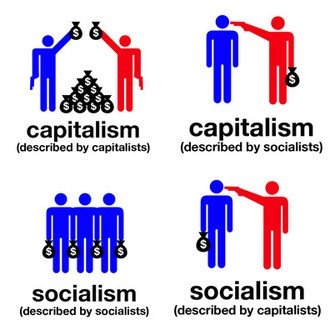
Capitalism vs. Socialism vs. Distributism
Capitalism vs. Socialism vs. Distributism by Bryan J. Neva, Sr. Since ancient times, people have bought, sold, and traded land,...
-
 Whose Ox Is Being Gored? by Bryan J. Neva, Sr. You've probably heard the old cliché, "It all depends on whose ox is...
 -
 The Parable of the Lost Coin LUKE 15 8 “Or what woman, having ten silver coins, if she loses one coin, does not light a lamp and sweep ...
 -
 What Business can Learn from Sheep Herding by Bryan J. Neva, Sr. Business can learn a lot from the business of sheep herding. Sheep her...
 -
Loving Your Enemies by Fritz Chery, Feb 15, 2015, biblereasons.com Bible verses about loving your enemies This topic is something w...
-
 Capitalism vs. Socialism vs. Distributism by Bryan J. Neva, Sr. Since ancient times, people have bought, sold, and traded land,...
 -
 Elijah by Bryan Neva “Shout louder, Baal may be meditating, or retired, or on vacation, or asleep and needs to be awoken.” The grea...
 -
 The Leash Theory of Management by Bryan J. Neva, Sr. Have you ever heard a manager use phrases like, "I have to keep them on a sho...
 -
 The Parable of the Lost Son LUKE 15: 11 And he said, “There was a man who had two sons; 12 and the younger of them said to his fat...
 -
Thing 7 Free-market policies rarely make poor countries rich by Dr. Ha Joon Chang (Book Excerpt from 23 Things They Don't Tel...
