"We can be ruled by many different things – the love of money and possessions, the power of position and prestige, the glamour of wealth and fame, and the driving force of unruly passions, harmful desires, and addictive cravings."
- Don Schwager
In today's Gospel Reading we read from Mt 6:24-34:
Jesus said to his disciples: “No one can serve two masters. He will either hate one and love the other, or be devoted to one and despise the other. You cannot serve God and mammon. “Therefore I tell you, do not worry about your life, what you will eat or drink, or about your body, what you will wear. Is not life more than food and the body more than clothing? Look at the birds in the sky; they do not sow or reap, they gather nothing into barns, yet your heavenly Father feeds them. Are not you more important than they? Can any of you by worrying add a single moment to your life-span? Why are you anxious about clothes? Learn from the way the wild flowers grow. They do not work or spin. But I tell you that not even Solomon in all his splendor was clothed like one of them. If God so clothes the grass of the field, which grows today and is thrown into the oven tomorrow, will he not much more provide for you, O you of little faith? So do not worry and say, ‘What are we to eat?’ or ‘What are we to drink?’ or ‘What are we to wear?’ All these things the pagans seek. Your heavenly Father knows that you need them all. But seek first the Kingdom of God and his righteousness, and all these things will be given you besides. Do not worry about tomorrow; tomorrow will take care of itself. Sufficient for a day is its own evil.”
The following reflection is courtesy of Don Schwager (c) 2013, whose website is located at www.DailyScripture.net.
What does the expression “serving two masters” and “being anxious” have in common? They both have the same root problem – being divided within oneself. The root word for “anxiety” literally means “being of two minds.” An anxious person is often “tossed to and fro” and paralyzed by fear, indecision, and insecurity. Fear of some bad outcome cripples those afflicted with anxiety. It’s also the case with someone who wants to live in two opposing kingdoms – God's kingdom of light, truth, and goodness or Satan's kingdom of darkness, sin, and deception – following God's standards and way of happiness or following the world’s standards of success and happiness. Who is the master in charge of your life? Our “master” is whatever governs our thought-life, shapes our ideals, and controls the desires of our heart and the values we choose to live by. We can be ruled by many different things – the love of money and possessions, the power of position and prestige, the glamour of wealth and fame, and the driving force of unruly passions, harmful desires, and addictive cravings. Ultimately the choice of who is our master boils down to two: God or “mammon”. What is mammon? “Mammon” stands for “material wealth or possessions” or whatever tends to “control our appetites and desires.”
There is one master alone who has the power to set us free from slavery to sin, fear, pride, and greed, and a host of other hurtful desires. That master is the Lord Jesus Christ who alone can save us from all that would keep us bound up in fear and anxiety. Jesus used an illustration from nature – the birds and the flowers – to show how God provides for his creatures in the natural order of his creation. God provides ample food, water, light, and heat to sustain all that lives and breathes. How much more can we, who are created in the very image and likeness of God, expect our heavenly Father and creator to sustain not only our physical bodies, but our mind, heart, and soul as well? God our Father is utterly reliable because it is his nature to love, heal, forgive, and make whole again. Jesus taught his disciples to pray with confidence to their heavenly Father: Give us this day our daily bread. What is bread, but the very staple of life and symbol of all that we need to live and grow. Anxiety is neither helpful nor necessary. It robs us of faith and confidence in God’s help and it saps our energy for doing good. Jesus admonishes his followers to put away anxiety and preoccupation with material things and instead to seek first the things of God – his kingdom and righteousness. Anxiety robs the heart of trust in the mercy and goodness of God and in his loving care for us. God knows our needs even before we ask and he gives generously to those who trust in him. Who is your master – God or mammon?
Saturday, June 22, 2013
Thursday, June 20, 2013
MAKING A DIFFERENCE AT WORK by Allen Laudenslager & Bryan Neva (2005)
You've got to know when to hold them, know when to fold
them, know when to walk away, and know when to run. —Kenny Rogers, from the song “The Gambler”
The famous Kenny Rogers song, "The Gambler" is about a gambler’s
strategy for playing high-stakes poker games, but metaphorically the song is about
the strategy for playing the game of life. By
knowing what battles in life to fight, we can live to fight another day, and
survive the entire war.
Often times in our working lives, there’s little or nothing
we can personally do to make a bad situation better. Regardless of our personal belief system, if
we’re working in a den of thieves it’s easy to be overcome by evil. So we must know when to tough it out and
endure it, when to quietly leave, and when to burn our bridges behind us. Having the street smarts to
out-maneuver, out-fight, or out-run our opponents will give us the endurance to
continue fighting the war to stop dishonest, unethical, and immoral behavior at
work and in business.
We cannot force or coerce others into behaving honestly,
ethically, and morally. We’re
responsible for our actions, and they’re responsible for theirs. After all, companies are human organizations,
and when each person in the organization starts to act honorably and ethically
eventually it’ll make a difference. But
if each person perpetuates the cycle of unethical behavior, conflicts, hatred,
revenge, dishonesty, and immorality then things will only get worse. As business stakeholders, we can ask
ourselves what we’re doing today, tomorrow, next week, next month, or next year
to satisfy the needs of all the other stakeholders?
Business owners who set unrealistic expectations on their
managers will drive them to make unethical, immoral, or unfair decisions that
harm the other stakeholders especially the employees. On the other hand, if business owners set
realistic goals and ensured their managers are treating their customers, employees,
suppliers, and distributors the way they’d want to be treated, their business
will thrive and everyone will benefit.
Investors who put money into profitable yet unethical
companies just because they offer a high return on investment (ROI) are
rewarding unethical behavior. On the
other hand, if each private investor decided only to invest in honest and
ethical companies, in the long run, they’d earn higher dividends than ever
imagined, and it would encourage the unethical companies to clean up their
acts. But it all starts with one investor
making a choice to invest in companies that are honest, ethical, just, and fair
with their customers, employees, suppliers, and distributors.
Managers who are dishonest, unfair, or habitually mistreat
their customers, employees, suppliers, and distributors will only perpetuate
this ethical crisis in business. On the
other hand, if managers acted as servants to those who work for them they’d
become much better stewards to the owners and investors of the business, and
they would earn the respect and admiration of their employees. Paying workers just and fair wages, ensuring
a safe and friendly work environment, and being honest and fair in every
decision will go a long way towards making companies better places to work.
Workers who don’t give an honest-days-work for an
honest-days-pay are not only hurting their employers, they’re hurting
themselves and their families, and they’re sabotaging their own
livelihoods. On the other hand, if
workers do the best job they’re capable of doing each day they’ll help their
companies become more successful. By
working smarter and harder, improving our skills, getting along with others,
showing up on time, and not leaving early will pay enormous benefits.
To a certain degree, each of us is responsible for the impressions
others have of us. What others think of
us is a reaction to what we say and do.
If there’s a difference between what we say and what we do,
people will naturally believe what we do. If companies do not publicly praise and
reward workers who do the right thing, then they’ll discourage others from
doing the right thing. A lot of
companies protect powerful and unethical managers at the expense of honest and
hardworking employees. Rather than
standing up for what’s right, they choose the more expedient alternative of
looking the other way.
Shooting the messenger ensures that no one else will
ever report that something’s wrong. When
honest and hardworking employees see good people sacrificed for unethical
managers, they’ll learn not to stick their necks out. And when employees stop reporting problems,
companies eventually get into bigger trouble.
When employees start quitting in droves, maybe it’s an indication there’s
something wrong with the management.
Nevertheless, you should always do your part to keep your company’s
actions honest and ethical, and sometimes that includes reporting unethical
behavior.
It’s sad that some companies encourage their employees to
report safety violations but not other forms of wrongdoing. If you find yourself working for a company
that consistently punishes employees for reporting wrongdoing, you’re working
for an unethical company. This is not to
say that all reports of wrongdoing are founded.
Sometimes there are misunderstandings when people take things out of
context or don’t know all the facts. In
these cases, an honest and ethical company will make sure that every employee
knows that it’s better to report problems and discover it’s a misunderstanding
than to allow real wrongdoing to go unreported.
At some point it will be clear from how your company treats people who
report problems whether or not you are working for a company that truly
believes in honest and ethical behavior or if they’re just paying lip service
to it.
Unless you’re highly placed within the organization, there’s
probably little you can do to improve a bad situation and you’ll need to decide
whether or not you should stay with that organization. For some managers and workers, the issues may
be important enough to put their careers on the line; however, we can both tell
you from hard-learned personal experience that we don’t recommend it. In most cases, it’s better to just quietly
leave and find another job than to suffer the emotional and financial turmoil
of fighting the system.
How much do you really owe an organization that has demonstrated
that you will have to commit professional suicide to solve problems? And, how much do you owe your coworkers
balanced against meeting your family’s needs?
At some point, senior management is being willfully ignorant, so if
you’re caught in a situation like this we highly recommend that you run—do not walk—to the
nearest exit!
At your exit interview, resist the temptation to blast
them. Just say that you were ready for a
change, smile, and walk away. Nothing
you do at this point will make the slightest bit of difference for those left
behind. Getting ground up by the
corporate machine won’t do your former coworkers any good and may ruin your
future with a new more ethical organization.
Deciding to make a difference in the world takes genuine
courage. It’s far easier to keep a low
profile and go with the flow than to stick your neck out. But there are subtler ways to make a difference
such as working hard and being honest and ethical in everything you do. Sometimes this is very difficult when you
find yourself working in a den of thieves.
Given Allen’s German heritage and Bryan’s Scottish heritage,
it has always come naturally for us to speak our minds. But you may not have our genetic
predispositions, so only you can decide how far you want to stick your neck
out. The old adage, you catch more
flies with honey than you do with vinegar really apply here. Oftentimes you can do more to positively
influence others just by doing the little things like working honestly and
ethically, and treating others the way you want to be treated.


Monday, June 17, 2013
DISCOVERING OUR TALENTS
Do what you love, and you’ll never have to work a day in your life is a truism that we all should aspire to. If we’re doing something we’re passionate about, work is no longer drudgery. Even if we’re not paid very well, the sheer joy of getting paid to do what we love more than compensates for the low pay.
This is how Christians explain why some people persevere in low-paying service professions like teaching, law-enforcement, or public-safety; it explains why some become religious ministers and missionaries; and, it explains why some choose to live austere or altruistic lives. So if we hate our jobs, it’s probably a good indication we haven’t discovered our true calling in life.
The recognition that we all have different innate gifts, talents, personalities, and temperaments dates back to 370 b.c. in the writings of Hippocrates. In the 1920s, the famous Swiss physician Carl Jung, published a book called Psychological Types where he claimed that people have multiple instincts that drive them internally. In the 1950s Isabel Myers and her mother Kathryn Briggs rediscovered Jung’s book and they devised a questionnaire for identifying different kinds of personalities; they called it The Myers-Briggs Type Indicator.
According to Myers and Briggs, there are 16 possible combinations of Introversion or Extroversion (I or E), Sensors or Intuitives (S or N), Thinkers or Feelers (T or F), and Perceivers and Judgers (P or J). These 16 combinations, however, can be categorized into 4 dominant categories: NT, NF, SJ, and SP.
Since the 1960s, the Myers-Briggs Type Indicator has been used to help employers better understand their employees and customers. Organizational psychologists have developed even more in-depth testing to identify certain traits that will make an individual more likely to succeed in a position such as management or sales, and most human resource departments are trained to match individual talent with job openings.
Since the 1960s, the Myers-Briggs Type Indicator has been used to help employers better understand their employees and customers. Organizational psychologists have developed even more in-depth testing to identify certain traits that will make an individual more likely to succeed in a position such as management or sales, and most human resource departments are trained to match individual talent with job openings.
St. Paul in his letter to the Romans and first letter to the Corinthians describes various spiritual or innate gifts or talents that God has given each of us (chapters 12 respectively). These are:
1. Perceiver or Discerner—the ability to quickly and accurately discern good from evil as well as the ability to reveal truth for understanding, correction, or edification; people involved in law enforcement, the legal professions, teaching, or the religious professions may have this gift.
2. Teacher—the ability to clearly communicate truths and applications in such a way that others can learn and understand; not only would pre-school through college teachers most likely have this gift, but also managers, corporate trainers, or soccer coaches to name a few.
3. Mercy—the ability to feel genuine empathy and compassion for individuals who suffer distressing physical, mental, or emotional problems and to translate that compassion into cheerfully done deeds; people involved in the healthcare and mental health professions such as, physicians, nurses, psychologists, or counselors may have this gift.
4. Server—the ability to identify the unmet needs involved in a task and to make use of available resources to meet those needs. This is not one-on-one, person centered like mercy but task-oriented; people involved in the various customer or food service professions may have this gift, as well as managers and other people who plan things.
5. Giver—the ability to understand the material needs of others and then meet those needs generously—above what is considered to be a reasonable standard for giving; philanthropist, social workers, clergymen, missionaries, or charitable volunteers may have this gift.
6. Encourager—the ability to minister words of comfort, consolation, encouragement, and counsel in such a way that others feel helped and healed; the religious clergy, professional counselors, teachers, coaches, or mothers may have this gift.
7. Leadership—the ability to set purposeful goals for the future and to communicate these goals to others in a way that they harmoniously work together; politicians and business managers may have this gift.
St. Paul also described the one capacity that everyone shares—our capacity to love others (I Corinthians 13). Love is the glue that holds us all together, and without love, spiritual gifts and talents are meaningless.
The point of all this is that God gives everyone different personalities, temperaments, interests, gifts and talents in order to make the world go around. Whether it’s Hippocrates, St. Paul, Jung, Myers and Briggs, or just plain common sense, it proves that we all have unique talents we can share with the world.
Delving into the subject of personality types is beyond the
scope of this blog. To learn more about
this subject, I’d like to recommend the following books:
Please Understand
Me II by David Keirsey;
Do What You Are and The Art of Speed
Reading People by Paul and Barbara Tieger;
First, Break All The Rules
by Marcus Buckingham and Curt Coffman; Now,
Discover Your Strengths by
Marcus Buckingham and Donald O. Clifton, Ph.D.;
Rediscovering Our
Spiritual Gifts by Charles V. Bryant.
Tuesday, June 11, 2013
ON WORKMANSHIP by Allen Laudenslager and Bryan Neva (2005)
People are the key value in a business enterprise!
(Rimini, Italy) François Michelin, for 51 years head of the Michelin Group, highlighted the importance of Catholic culture in valuing the person, who he said is fundamental to success in business. Addressing last week's "Meeting for Friendship Among Peoples," organized by the Communion and Liberation movement, the French entrepreneur revealed the secrets of his tire-making enterprise, demonstrating that a Christian can successfully apply evangelical teachings in the production process and in the market. Michelin, now his firm's honorary president, explained that "a true businessman responds to the client, and this is why he is always looking for a product of better quality that can be offered, while controlling the price." Vital for a well-functioning business is the ability "to bring out into the light the diamond that is in each person," he said. In this connection, Michelin said that one of the people who contributed most to the development of tires was a worker who had been hired as a printer. Eventually, the personnel office realized that he had many other qualities, such as imagination and the ability to do research. Referring to the importance of people, Michelin emphasized the specific contribution of Catholic culture and recalled the work of Mother Teresa of Calcutta, who valued even the most seemingly miserable life. "Every human being is unique, irrepeatable," Michelin said. "Functions and labels don't count, the person does." "Both in the factory as well as in society, life is possible only if we listen to and understand the other's reasons," he added. "To love is to see in people what they are." [Source: The Catholic Virginian, Richmond, VA, September 2003, http://www.catholicvirginian.org]
Christians believe that
the ultimate purpose of business is to satisfy the needs of people rather than
to increase profit, power, or material possessions for the owners, investors,
and managers of a business. Profit is
only a byproduct of a successfully run business. Part of running a successful business is
recognizing the contributions of the employees through effective leadership and
management. But these can only take a
company so far; workers must do their part in order for a business to succeed.
Christians believe that
honest work gives each of us meaning and purpose in our lives, as we help
contribute to God’s continued work of creation.
All of us have a duty to work, as this is how we satisfy our needs and
the needs of those dependent on us. “If
anyone will not work, let him not eat,” St. Paul wrote in 2nd
Thessalonians 3.10. Work also gives us
honor and glorifies God when we use our gifts and talents to help others. Work can also be redemptive as we endure the
hardships of work throughout our lives it helps build character, and we grow in
our love for God, our families, and others.
Work encompasses a large
part of our lives, but it’s not the-end-all-and-be-all of our existence. There’s a cycle to life: a time to be born,
to grow, to develop, to learn, to love, to hate, to laugh, to cry, to work, to
play, to eat, to sleep, to create, to mature, to rest, and finally to die. But there are some who believe that life’s
a bitch and then we die! They’ve
lost their hope in life, and they take no pleasure in their work. There are others who believe they work for
the weekend! Rather than trying to
live up to their full potential, they work to accumulate material possessions
and satisfy their sensual cravings. In
both these cases, work is meaningless and a form of slavery. But it doesn’t have to be that way.
Some years back, there
was a documentary on public television about people who’d won multi-million
dollar lotteries. After the euphoria was
over, they felt something missing in their lives. Their expensive homes, cars, material
possessions, exotic vacations, and country club memberships no longer fulfilled
their needs. One man who’d been a
long-haul truck driver before winning the lottery actually wanted to start
driving a truck again because he was so bored with his life.
The lives of many popular
entertainers are the subject of newspapers, magazines, and television shows,
and most of us are shocked by their ostentatious, immoral, and self-indulgent
lifestyles. It’s fairly obvious that
their wealth and material possessions have not satisfied their innermost needs
for meaning and purpose in their lives.
From these examples we’re
reminded that money won’t buy us happiness. Part of the way we can satisfy our needs for
meaning and purpose is through honest work.
Work not only helps meet our physical needs, but it helps meet our
emotional, mental, social, and spiritual needs as well.
The world does not owe us
a living! We must take responsibility
for earning our own way in life. But,
many workers sabotage their own livelihoods through poor work habits. Some years back, the major automobile
manufacturers in Detroit, Michigan began to hire poor, chronically unemployed
people from the inner city to work on their assembly lines. Most people would have thought the lure of a
well paying automobile assembly line job would have motivated these people to
get to work on time…unfortunately, it didn’t!
As a result, these companies actually purchased alarm clocks for these
people and gave them classes to teach them responsible work habits. Ultimately, the social experiment failed
miserably because many of these workers were unable to learn responsible work
habits like simply showing up to work on time.
Many people who were once
good workers end up unemployed due to poor performance and their inability to
get along with others. Some may have had
personal setbacks such as a divorce, a death in the family, or a major illness,
but others simply got complacent.
Excuses run the gamete why employees don’t put forth their best effort
at work, but it really comes down to personal integrity. If an employer, a colleague, or a customer
doesn’t treat us right, it doesn’t excuse poor workmanship. It’s scandalous and poor stewardship for a
manager to cause their employees to be less productive; nevertheless, it’s
still wrong for employees not to do their best at work.
If we find ourselves in a
difficult working environment, it’s all right to honestly try to improve things
or to just quit. Unfortunately, most
people choose instead to silently protest through poor workmanship and
uncooperative behavior. In his letter to
the Ephesians (excerpted from 6.5-9, NIV), St. Paul wrote:
[Workers], obey [those in authority over you] with respect
and fear, and with sincerity of heart, just as you would obey Christ. Obey them not only to win their favor when
their eye is on you, but like [workers] of Christ, doing the will of God from
your heart. Serve wholeheartedly, as if
you were serving the Lord, not men, because you know that the Lord will reward
everyone for whatever good he does… And
[managers], treat your [workers] in the same way. Do not threaten them, since you know that he
who is both their [Lord] and yours is in heaven, and there is no favoritism
with [God].
Thursday, June 6, 2013
ON MANAGEMENT by Allen Laudenslager and Bryan Neva (2005)
It is important that an
aim never be defined in terms of activity or methods. It must always relate directly to how life is
better for everyone. The aim of the
system must be clear to everyone in the system.
The aim must include plans for the future. The aim is a value judgment. —Dr. W. Edwards Deming, the father of Total Quality Management
In an ideal world,
managers would lead people rather than manage them, but in the real world, this
is just not practical. In most cases,
managers exercise both leadership and management over their employees in order
to accomplish the work that needs to get done.
Most management practices
are based on theories about why people behave the way they do in organized
working environments. In the culture leading up through the 1970s,
most managers just assumed that most people worked
as little as possible, had very little ambition, avoided responsibility,
were selfish, resistant to change, gullible, stupid, and
easily manipulated. Consequently, they
formulated policies and management practices that tightly controlled and coerced
their employees to work. These coercive
management practices actually caused the very behaviors described above
resulting in a self-fulfilling prophecy and increased organizational
bureaucracy and control. Dr. Douglas M.
McGregor in 1960 called this Theory X.
Today it’s satirized in Scott Adam’s business cartoon Dilbert.
Over the past century,
organizational psychologists have proposed different theories about what
motivates people to work and how best managers can motivate them to be
productive. Generally speaking, these
theories about human work behavior include looking at people as need-satisfying
creatures, perceiving and rational information processors, emotional
creatures, or learning creatures.
Based on these assumptions about people, there are literally thousands
of different management practices in use today.
It all depends on the individual manager, the organization, and the type
of business.
Yet organizational
psychologists readily admit that each of these theories of human work behavior
is inadequate at best to explain why people behave the way they do in working
environments. In some circumstances
their assumptions and theories seem to apply; in other circumstances they do
not. This is why multiple perspectives
are needed. People are motivated by
their needs and goals, their emotions and moods, and the emotions and moods of
other people. People are also
information processors and are able to learn in a variety of ways. But there’s more to understanding human
behavior than just looking at one theory since all the theories are correct to
varying degrees and in varying circumstances.
Christians don’t pretend to have all the answers either, but they do believe that all truth is God’s truth regardless of its where it came from. Nevertheless, by looking at human behavior through the lens of Christian beliefs we can
better understand people and be more effective managers. This also helps to
filter the good management theories and practices from the bad ones (like Theory
X described above).
Christians readily agree
with organizational psychologists that human beings are need-satisfying
creatures, perceiving creatures, rational information processors, emotional
creatures, and learning creatures. But,
we imperfectly try to satisfy our needs; we imperfectly perceive and at times
irrationally process information; we imperfectly show our emotions; we
imperfectly react to the moods and feelings of others; and we imperfectly learn
information. At times all of us are
selfish and don’t work up to our full potential. We imperfectly behave these
ways because of our fallen human condition. And since we’re all imperfect, Christians
believe we must generously apply mercy, love, and forgiveness while at the same
time being just and fair in our dealings with others.
Just think about how God
treats us. Is God all-just or is God
all-merciful? Well He's both! But He prefers to be merciful! As a manager,
we believe that you should also be just and fair with your employees. This is just good stewardship. But you should also temper these with mercy. By doing this, you will (over
time) win the trust, respect, admiration, and loyalty of your employees, and in most cases employees will continue to give their best efforts.
Saturday, June 1, 2013
ON FOLLOWERSHIP by Allen Laudenslager and Bryan Neva (2005)
If anything goes bad, I
did it.
If anything goes semi-good, we did it.
If anything goes really good, then you did it. That’s all it takes to get people to win football games for you!
If anything goes semi-good, we did it.
If anything goes really good, then you did it. That’s all it takes to get people to win football games for you!
—Paul “Bear” Bryant (1913 – 1983) was an American college football player and
coach. He was best known as the longtime head coach of the University of
Alabama football team. During his 25-year tenure as Alabama's head coach, he
amassed six national championships and thirteen conference championships. Upon
his retirement in 1982, he held the record for most wins as head coach in
collegiate football history with 32 wins.
Everyone promotes, praises, and rewards great leadership,
but it’s the workers who actually do the work and deliver the product or
service, and they’re followers. Over the
last twenty years, the types of workers have changed as the nature of work has
changed from manufacturing to knowledge based.
These changes demand a change in how project teams interact. Leadership training attempts to teach
managers actions they should take to motivate teams of workers to accomplish a
desired result. It also teaches mangers
how to use group dynamics to achieve that result. But in order to be a leader you must
have willing followers. The followers
are people who (consciously or unconsciously) agree to let the leader make the
critical decisions and then follow those decisions to achieve the stated goal.
Most of us have seen projects that failed or fell short of
total success because team members didn't fully support the leader. The tendency is to blame the team leader
because he didn't motivate the team, but maybe the team members are to blame
because they wouldn’t follow the leader.
As a consulting project manager, Allen once managed a
cross-functional team for a client company.
Two of the team members worked for the same consulting firm I did; the
other five members of the team worked for other consulting firms. These five team members approached the
project meetings as if they were the general project manager rather than
subcontractors. Some of them believed
their company should have been hired to manage the total project, but most of
them just never learned to follow, and the entire project was hindered because
of this. Eventually, the project was
completed, but it was a lot harder than it needed to be. Henry Ford said, "Asking ‘who ought to
be the boss’ is like asking ‘who ought to be the tenor in the quartet?’ Obviously, the man who can sing
tenor." In the same way, at some point
the people doing the work must agree on “who can sing tenor” and lead them!
Teams are really about the division of labor. Most managers give lip service to this
concept, but they never really understand it.
For the typical worker, the division of labor means that he does this
part of the work; others do another part of the work; a product or service is
created and then I get paid! For
the typical manager, the division of labor means that this worker does that
part of the work; others do another part of the work; a product or service is
created and then I look good! But
for the great leader, the division of labor means that he removes most of the
obstacles while this worker does that part of the work; others do another part
of the work; the product or service is created and everyone succeeds! Scott Adams, the creator of the satirical
business cartoon Dilbert™, said, “I’m slowly becoming a convert to the
principle that you can’t motivate people to do things; you can only
de-motivate them. The primary job of
the manager is not to empower but to remove obstacles.”
Most businesses are organized as hierarchies. The people at the top supervise those at the
bottom, and the people at the bottom try to please those at the top. In the hierarchy organization, workers are
categorized as non-skilled, skilled, professionals, or managers. Workers follow because that's their place in the
chain of command. But as the nature
of work changes and requires higher education, workers are much more likely to
be categorized as professionals or managers.
Work today demands educated workers and those workers are
more likely to understand the entire scope of the work as well as many of the
other job skills used to complete the work.
Many workers today are more ambitious and aspire to be managers, so the
old style of management that says, do what I say because I told you, no
longer works.
Because of the complex nature of knowledge-based work,
workers may have a deeper understanding of the details of the work than their
managers do. The higher a manager is
within an organization, the less likely he or she fully understands all the
intricate details of the work. So the
manager must rely on a team of experts for that level of understanding. Sometimes this causes political turf wars as
some knowledge-workers hoard their information or won’t cooperate with others
when they feel management decisions are wrong.
Other times technical power is abused for personal advancement. In either case, the knowledge-worker has
never really learned to follow.
Good followership consists of giving our leaders the best of
our thinking on every subject and then executing his decisions with our full
support. Part of leadership is accepting
the team expert's advice and not giving directions that conflict with that
advice. Of course, sometimes the advice
is to spend $10,000 but the budget is only $5,000; good leadership will clearly
explain these constraints to the team.
When these types of roadblocks occur, the team may not be able to
deliver and the project may not succeed; however, if the team understands the
constraints, they may be able to find creative ways to work around the
roadblocks in order to arrive at the destination.
Encouraging knowledge-workers to be willing participants
means giving ownership of ideas and goals to every team member. It’s hard for followers to support a leader
who doesn’t support them. An example of
good followership is being a passenger in a car. The passenger accepts that someone else is
driving and agrees not to grab the steering wheel. The passenger can advise the driver about
faster routes or dangers on the road, but they trust the driver to make the
right decisions and get them to their destination safely. But the passenger won’t get into a car in the
first place unless the driver agrees to take them where they want to
go.
A good leader shows they believe in their team members by
trusting and supporting them as well as listening to and following their
advice. But when a leader decides not to
follow the team’s advice, he owes the team an explanation. On the other hand, good followers should give
the same support to their leaders that they would want from the other team
members. It’s hard for a leader to
support followers who won’t support them.
This means that there are times when a leader must eliminate a problem
team member for the good of the whole team.
Leaders must accept responsibility for a team’s failure, but the team
gets the credit for its success.
Followers usually don't work very hard for a leader who blames the team
members for failures but gets all the credit for its success.
Being a good follower is a prerequisite to being a good
leader. Most of us will spend the
majority of our working careers in followership positions. Constantly second-guessing the leader makes
his or her job one-hundred-times harder.
By working for an organization, you’re willing to get into the car and
allow someone else to drive. So
constantly asking, “are we there yet?” only makes the ride miserable.
Think back on the team experiences you had in school or work
that were not very good. More than likely,
there were team members who didn’t want to cooperate with others making the
project harder than it had to be. You
may have been one of the unlucky few that had to pick up the slack for those
uncooperative team members.
Now think back on the team experiences you had in school or
work that achieved outstanding results.
Did the team seem to function as efficiently and effectively as a Swiss
watch? Remember how great it felt when
your team was able to effectively produce something? The cooperation in the team more than likely
was due to good followership. By being a
good follower, you too could help your team achieve phenomenal results.
Monday, May 27, 2013
ON LEADERSHIP by Allen Laudenslager & Bryan Neva (2005)
Failing organizations are usually over-managed and under-led.
—Dr. Warren G. Bennis (MIT, Harvard, Boston, and USC Distinguished Professor and author of over 25 books on leadership)
Management can be defined as exerting control over others by making others submissive to our authority, discipline, or persuasion. Leadership can be defined as showing the way by conducting, escorting, directing, or going in advance.
In order to rule nations, a man must first learn to rule himself. —Confucius
—Dr. Warren G. Bennis (MIT, Harvard, Boston, and USC Distinguished Professor and author of over 25 books on leadership)
Management can be defined as exerting control over others by making others submissive to our authority, discipline, or persuasion. Leadership can be defined as showing the way by conducting, escorting, directing, or going in advance.
Management is coercive and manipulative whereas leadership is conducive and persuasive. One key difference between leading and managing is viewing people who report to us as colleagues rather than subordinates. Managers typically coerce employees into following them because it’s a job requirement, whereas leaders inspire employees to follow them because they infuse them with the business vision.
Management could be analogous to the carrot and the stick approach of driving a stubborn ass. That is, rewards and punishments are used to coerce people into doing what you want them to do. Leadership could be analogous to a harbor pilot guiding a large ship safely into port. That is, the captain of the ship could do the job, but since he is not familiar with the underwater hazards that could ground his ship on a sandbar, he lets the harbor pilot lead the way. Management generally is shortsighted; it looks at today, this week, this month, or at the most, this quarter. Leadership generally considers both the short-term and long-term affects of its business decisions.
Lead and inspire people. Don't try to manage and manipulate people. Inventories can be managed but people must be led. —H. Ross Perot
Ideally, professional managers should look at their job as managing things but leading people. We can manage budgets, schedules, inventories, logistics, equipment, or real estate, but we must lead people. Of course, in the real world there is no such thing as a pure manager or a pure leader; it’s almost always a mixture of both styles. Generally we find that the more hierarchal the workplace the more it leans toward management, whereas the less formal the chain of command the more it leans toward leadership.
In organizations that prize managers over leaders, managers are dependent on their subordinates following orders. At the subordinate’s level, supervisors are often viewed as demanding taskmasters who can never be satisfied. Any improvements will automatically become the new minimum standard. At the supervisor’s level, colleagues are often viewed as competitors and their managers are viewed as a superior who must be satisfied at any cost. Consequently, any failure by the workers and supervisors can spell disaster for the manager.
In an organization that prizes leaders over managers, colleagues are willing to help one another succeed because they understand that everyone ultimately benefits. Generally speaking, it’s much more satisfying to work with willing followers than to work with people who have to be coerced into compliance. Effective leaders build the trust of their subordinates by acting in a way that benefits the employee and the company. Once the subordinate can trust the leader, then and only then, the employee will make a superior effort for that leader.
From a leader’s perspective, loving their neighbors as themselves (Mark 12.31) means showing the same love and respect to their employees as they would show to their families and friends. Leaders empathize with their employees by putting themselves in their shoes. If a leader wouldn’t tolerate a dysfunctional working environment, he doesn’t expect his employees to tolerate it either. These help the leader build an effective team. In fact, being a good leader is not much different than being a good spouse or a good parent.
The final test of a leader is that he leaves behind him in other men the conviction and the will to carry on. The genius of a good leader is to leave behind him a situation which common sense, without the grace of genius, can deal with successfully. —Walter Lippmann, newspaper columnist
Truly great leaders build good and effective teams, and Jesus Christ epitomizes the ideal of a truly great leader. His goal was to save the human race and bring The Kingdom of God into the world. The Kingdom of God is not just a metaphor for a perfect world; it’s God’s Spiritual Kingdom here on earth where his followers (practicing Christians) help bring faith, hope, love, kindness, forgiveness, justice, and peace to a lost world.
In order to bring the Kingdom of God into the world, Jesus first built a team of loyal followers—his twelve disciples. During his three-year ministry, he trained, coached, and mentored his team of disciples in order to prepare them to carry on his work after he was gone. They, in turn, would train, coach, and mentor their replacements (the future leaders of the Church). Leadership, according to Jesus, is based on love, and it is demonstrated in serving others: this is called servant leadership. Jesus said in Matthew 20.25-28 (NIV):
You know that the rulers of the Gentiles lord it over them, and their high officials exercise authority over them. Not so with you. Instead, whoever wants to become great among you must be your servant, and whoever wants to be first must be your slave—just as the Son of Man did not come to be served, but to serve, and to give his life as a ransom for many.
In Mark 9.33-35 (NIV) an incident is told about Jesus’ disciples arguing who would be the greatest in The Kingdom of God, and Jesus is quoted as saying, “If anyone wants to be first, he must be the very last, and the servant of all.” Latter in John 13.4-17 (excerpts, NIV) a humbling incident is told about Jesus’ style of leadership:
So he got up from the meal, took off his outer clothing, and wrapped a towel around his waist. After that, he poured water into a basin and began to wash his disciples’ feet, drying them with the towel that was wrapped around him…When he had finished washing their feet, he put on his clothes and returned to his place. “Do you understand what I have done for you?” he asked them. “You call me Teacher and Lord, and rightly so, for that is what I am. Now that I, your Lord and Teacher, have washed your feet, you also should wash one another’s feet. I have set you an example that you should do as I have done for you. I tell you the truth, no servant is greater than his master, nor a messenger greater than the one who sent him. Now that you know these things, you will be blessed if you do them.
Jesus taught that in order to be a truly effective leader, a person must become a servant. This concept of servitude embodies the law of love that Jesus taught his followers to live by—putting the needs of others ahead of our own.
Nothing so conclusively proves a man’s ability to lead others as what he does from day to day to lead himself. —Thomas J. Watson, founder of IBM
The Apostle Paul started dozens of churches on his missionary journeys and appointed leaders for them. After leaving them, he wrote them encouraging letters and gave them practical advice. In his first letter to the Bishop Timothy 3.2-10 (excerpts, NIV), he described specific qualities church leaders should have:
Now [a leader] must be above reproach…temperate, self-controlled, respectable, hospitable, able to teach, not given to drunkenness, not violent but gentle, not quarrelsome, not a lover of money. He must manage his own family well and see that his children obey him with proper respect…He must also have a good reputation with outsiders, so that he will not fall into disgrace…[they should be] men worthy of respect, sincere, not indulging in much wine, and not pursuing dishonest gain.
Character, integrity, and honor, according to St. Paul, are vitally important for effective leadership. It’s very hard for employees to follow a leader they don’t admire and respect. There’s a big difference between being popular and being respected. A leader doesn’t have to be liked by his followers, but he does have to earn their respect in order to effectively lead them. A good leader earns the respect of his followers by his moral, ethical, honest, fair, and consistent behavior at work as well as outside of work.
In order to rule nations, a man must first learn to rule himself. —Confucius
You don’t have to be in a position or authority to lead others. In fact, informal leaders are often times more effective in leading a team of workers than the formal supervisor or manager…and informal leaders have no power. On the other hand, supervisors and managers, more often than not, rely on their position power to coerce others into doing what they want. Managing by fear and intimidation is usually effective in the short-term, but will inevitably fail in the long-term. History has proven this.
So if you want to be a good leader first start by learning to lead yourself. Learn to be self-disciplined and temperate in everything you do and say. Secondly, learn to lead your family through love, service, and self-sacrifice. Work hard on your marriage and family relationships to make them the best they can possibly be. And then and only then finally learn to lead others outside your immeadiate family by the same principals of service and self-sacrifice.
So if you want to be a good leader first start by learning to lead yourself. Learn to be self-disciplined and temperate in everything you do and say. Secondly, learn to lead your family through love, service, and self-sacrifice. Work hard on your marriage and family relationships to make them the best they can possibly be. And then and only then finally learn to lead others outside your immeadiate family by the same principals of service and self-sacrifice.
Sunday, May 26, 2013
Ruthless pursuit of profit at all cost is an excess that can't last by Ross Gittins
Ruthless Pursuit of Profit at All Cost is an Excess That Can't Last
by Ross Gittins, Sydney Morning Herald
Individuals and companies have strayed too far from recognizing the importance of human relationships.
I get to meet a lot of famous and interesting people in my job, but few have had more influence on me than Dr. Michael Schluter, the social thinker, social entrepreneur and founder of Britain's Relationships Foundation.
They say genius is being the first person to say the obvious. If so, Schluter is one. I'm sure Socrates or Aristotle beat him to it, but in our time Schluter is the first to forcefully remind us of something we all know: the importance of our human relationships. We are, above all, social animals. After we have secured our physical survival, the most important thing in each of our lives is our relationships: with friends, neighbors, workmates and, above all, with our families - our parents, siblings, spouse and children.
Even if we've avoided speaking to them for years, even if they're dead and gone, we can't stop thinking about them. If we have cut ourselves off from our family, be sure we've sought to fill the vacuum with other relationships. Take away all our relationships and who would have much reason to keep living?
So much for stating the obvious. But here's Schluter's simple, unarguably telling point: if our relationships are so fundamental to our well-being, why do we keep forgetting to take account of them in our strivings? Wouldn't we be better off if we got into the habit of viewing all our endeavors through a lens that focused on their implications for our relationships?
How often do divorce lawyers advise people to avoid all attempts at reconciliation with their estranged spouse for fear of weakening their legal position? How often do doctors treat physical symptoms that are not what's really troubling their patient?
How often do politicians loudly proclaim their support for the family, then consider 101 policy proposals without a thought as to their implications for people's relationships? As for economists, their model is so narrowly focused on the individual that they become oblivious to the potential effects of the policies they advocate on the relationships that sustain all individuals. The truth is that much of our ever-increasing material affluence over the past 200 years has been achieved at the expense of our relationships - by making the workings of the economy ever bigger, more complex and impersonal. And by encouraging economic transactions between people who have never met, let alone had a relationship.
Back to Schluter's insistent reminder: aren't we paying a price for ignoring the relational implications of all this? Wouldn't we be better off if we put the protection and promotion of our relationships back into the formula? So far have we strayed from recognizing the primacy of our relationships that the proposals of the mild-mannered, respectable, God-fearing Schluter sound positively radical.
About 150 years ago the invention of the limited-liability company allowed people with money to invest to become owners of companies without taking any part in their management. The development of stock exchanges allowed people to buy and sell their shares in a company as easily and often as they liked. From these innovations came the huge corporations that dominate the economy today.
Economists see them as milestones on our path to prosperity. Schluter sees the downside. So last month in troubled Britain he and a colleague, Jonathan Rushworth, launched the plan ''Transforming Capitalism from Within: a relational approach to the purpose, performance and assessment of companies''.
He proposes that enlightened companies submit themselves to the discipline of a 10-step ''relational business charter''. Step one is for a company to include in its articles of association its goal of becoming a profitable and sustainable business for the benefit of ALL its stakeholders - owners, directors, managers, employees, suppliers, customers and the wider society.
Step two is to promote dialogue between the stakeholders, preferably through regular, face-to-face meetings. Step three seeks to reduce ''relational distance'' between shareholders and employees and other stakeholders by promoting share ownership by named individuals and family trusts rather than institutional investors such as pension funds.
The goal could be 25 per cent direct ownership, pursued partly by encouraging employees to own shares. Ideally, a growing proportion of shareholders will live close to the company's main base.
Next, to achieve commitment, involvement and responsibility by shareholders, relational firms should encourage long-term ownership, perhaps by issuing additional shares to those who hold their shares for long periods. Step five is for companies to help their employees achieve work-life balance by minimizing long working hours and work at unsociable hours (including weekends) wherever possible.
These things have a direct effect on the families of employees, particularly if the employee will not be present to share the bringing up of children.
Then firms will seek to respect the dignity of all employees by minimizing remuneration differentials within the business. A ratio of 20:1 between top and bottom would be a good benchmark.
Relational companies will treat their suppliers fairly and with respect, paying them promptly and giving them support to develop their businesses.
Relational companies will treat their customers and the local community fairly, respecting their concerns about reasonable payment terms and adequate service.
Step nine involves companies protecting their business and stakeholders by minimizing the risk of financial instability, limiting their ''gearing'' - ratio of borrowings to shareholders' funds.
Finally, relational companies will fulfill their obligations to the wider society by paying a reasonable proportion of profits in tax in the country where those profits were earned and spending a reasonable proportion of profits on corporate social responsibility.
The musings of a hopeless dreamer? I think our companies' present ruthless pursuit of profit at any cost is an excess that can't last. Schluter is a prophet pointing the way back to more sensible capitalism.
BUSINESS ETHICS AIN'T ROCKET SCIENCE by Allen Laudenslager and Bryan Neva
This Blog was first published on Thought Leaders April 4, 2012
http://www.thoughtleadersllc.com/2012/04/business-ethics-aint-rocket-science/#more-6995
The famous U.S. Army General H. Norman Schwarzkopf once said, “The truth of the matter is that you always know the right thing to do… the hard part is doing it!” Likewise, the answer to most business problems is usually obvious as well.
Consider this – when was the last time you were really stumped for a solution to a problem? In most cases, the hardest things about solving the problem were the obstacles of personalities, politics, or cost. Taken together, these obstacles usually make the obvious solution very hard if not impossible to implement. These are failures of an organization’s values, guiding principles, and ethics.
Twenty years ago, my elderly mother came to live with me due to her declining health. She sold her home and hired a moving company to move her furniture and transport her car via trailer from New England to Virginia (primarily to minimize the mileage). When the moving van and car arrived, it was obvious that the car had not been transported but driven instead. When questioned, the driver admitted that they had driven the car and not transported it as they had been contracted to do.
When I called the moving company’s main office to complain, the representative asked what I wanted them to do about it. My only reply was “What would you expect someone to do if it was your mother!” Shortly thereafter, the driver came back to tell us that they were refunding the cost of transporting the car.
When a customer calls about a problem with your product or service. You generally know right off hand what the right thing to do is: either fix it, replace it, or refund their money. But company management may complain that “if we fix every problem for every customer then how are we supposed to make a profit?” Well, if your company’s product or service has so many customer problems that fixing them impacts profits, then fix the product or service! It ain’t rocket science!
If the only reason not to do it just like you would for your mother is the cost to the company, where do you think the savings to the company is coming from? It’s coming from your customer’s wallet. And if it’s not fair to your mother, what makes it fair to your customer?
The customer’s complaints (whether you like it or not) are a part of your company’s quality control process. If you’re a proactive company, then you’ll have worked out all the bugs before they even became an issue with your customer. Unfortunately in their rush for quick profits, many companies out there let their customer’s do all the beta testing for them.
One of the unintended consequences of making unethical or dishonest decisions in dealing with your customers is the message it sends to your employees: that you’ll mistreat them the same way whenever you think its in your best interest to do so. If you don’t care about your customers, then how can you expect your employees to care about them or the company for that matter?
So here are some suggestions for creating an environment where people just do the right thing:
- Allen Laudenslager is a semi-retired technical writer and former defense industry manager and writer on management and business practices.
Bryan Neva, Sr. is an electrical engineer with an MBA and an extensive background in customer field support who writes on improving management practices.
http://www.thoughtleadersllc.com/2012/04/business-ethics-aint-rocket-science/#more-6995
The famous U.S. Army General H. Norman Schwarzkopf once said, “The truth of the matter is that you always know the right thing to do… the hard part is doing it!” Likewise, the answer to most business problems is usually obvious as well.
Consider this – when was the last time you were really stumped for a solution to a problem? In most cases, the hardest things about solving the problem were the obstacles of personalities, politics, or cost. Taken together, these obstacles usually make the obvious solution very hard if not impossible to implement. These are failures of an organization’s values, guiding principles, and ethics.
Twenty years ago, my elderly mother came to live with me due to her declining health. She sold her home and hired a moving company to move her furniture and transport her car via trailer from New England to Virginia (primarily to minimize the mileage). When the moving van and car arrived, it was obvious that the car had not been transported but driven instead. When questioned, the driver admitted that they had driven the car and not transported it as they had been contracted to do.
When I called the moving company’s main office to complain, the representative asked what I wanted them to do about it. My only reply was “What would you expect someone to do if it was your mother!” Shortly thereafter, the driver came back to tell us that they were refunding the cost of transporting the car.
When a customer calls about a problem with your product or service. You generally know right off hand what the right thing to do is: either fix it, replace it, or refund their money. But company management may complain that “if we fix every problem for every customer then how are we supposed to make a profit?” Well, if your company’s product or service has so many customer problems that fixing them impacts profits, then fix the product or service! It ain’t rocket science!
If the only reason not to do it just like you would for your mother is the cost to the company, where do you think the savings to the company is coming from? It’s coming from your customer’s wallet. And if it’s not fair to your mother, what makes it fair to your customer?
The customer’s complaints (whether you like it or not) are a part of your company’s quality control process. If you’re a proactive company, then you’ll have worked out all the bugs before they even became an issue with your customer. Unfortunately in their rush for quick profits, many companies out there let their customer’s do all the beta testing for them.
One of the unintended consequences of making unethical or dishonest decisions in dealing with your customers is the message it sends to your employees: that you’ll mistreat them the same way whenever you think its in your best interest to do so. If you don’t care about your customers, then how can you expect your employees to care about them or the company for that matter?
So here are some suggestions for creating an environment where people just do the right thing:
- If a customer’s product or service failed the answer is simple and obvious; either fix it, replace it, or give them their money back. If the customer broke it, then don’t!
- Make sure your corporate policies, organizational politics, management personalities, and cost focus don’t interfere with the obvious solutions to most customer problems.
- Generally speaking, if you have to ask yourself if what you are planning to do is the right thing, then it probably isn’t!
- When deciding a course of action, the best question you can ask yourself is, “Would I do it this way if I were doing this for my mother?”
- Allen Laudenslager is a semi-retired technical writer and former defense industry manager and writer on management and business practices.
Bryan Neva, Sr. is an electrical engineer with an MBA and an extensive background in customer field support who writes on improving management practices.
HOW POWER, AUTHORITY, AND OBLIGATION IMPACT YOUR LEADERSHIP ABILITIES by Allen Laudenslager and Bryan Neva
This Blog was first published on Thought Leaders on March 13, 2013
http://www.thoughtleadersllc.com/2013/03/how-power-authority-and-obligation-impact-your-leadership-abilities/#more-8155
“Noblesse Oblige” is an old French phrase that literally translates as “nobility obligates.” It means that those who have power and authority, or who are privileged, rich or famous have a moral responsibility to display honorable, charitable, and exemplary behavior towards those less fortunate or to those dependent on them.
In other words, whoever claims to be noble must conduct themselves nobly. John D. Rockefeller, Jr. summed it up nicely when he said: every right implies a responsibility; every opportunity, an obligation; every possession, a duty.
The idea of “Noblesse Oblige” was created out of enlightened self-interest. The nobility had serfs who were dependent on them for land to farm, a place to live and protection from bandits. In medieval times all the land belonged to the nobility; the enlightened noble recognized that while he owned the land, without someone to plant and harvest the noble had no income. Seeing to the wellbeing of his serfs was his “noble obligation.”
The good old days of companies treating their employees as their most valuable assets have been set aside in favor of expecting them to work harder for the same pay and fewer benefits. In place of rewards they’re told they should be glad they still have a job. Corporate management has developed an entitlement mentality (like the old French nobility) by remembering their privileges (power, prestige, perks, and pay) but forgetting their obligations to their employees. So what does this mean for you?
Loyalty always starts with the person who has the power and authority and is earned not given. Power is the ability to grant or withhold rewards, and authority is the power to influence the behavior of a person with less power. And there’s no authority without a counterbalancing responsibility.
Some use their power and authority altruistically; unfortunately, many others use it capriciously or unfairly. Lord John Acton (1834—1902, British historian and moralist) famously wrote: Power tends to corrupt, and absolute power corrupts absolutely. So what tends to happen is that those in power begin to believe their own press releases and act as if their power is a natural right and their authority is to be unquestioned. After all, they must be right or they wouldn’t have been granted the authority in the first place, right?
The key to avoiding falling into the entitlement trap is simply by learning a little good ol’ fashioned humility. Start by walking over to your company’s customer service center and imagine there’s no one there to answer the phones, to take orders or to solve problems. You’re not going to sell anything.
Next, walk down to your company’s shipping and receiving department and watch the employees loading and unloading trucks. Now close your eyes and pretend that those workers aren’t there… your products are just sitting on the docks and the trucks are not getting loaded. How much money will you make if you don’t ship your products to customers?
It’s easy to think of all these workers as not being important because almost anyone could do these types of jobs. Answering the phones or loading and unloading trucks are cheap but also very critical. In other words, the labor costs are inexpensive but the work is valuable.
Now extrapolate these examples out to your entire organization. How much value are all your other employees contributing to your long-term success? Who really produces and who is overhead? Enlightened self-interest should tell you that without workers you’d have no income.
So while you may not be willing to pay much for a person working in customer service or shipping and receiving, enlightened self-interest should tell you that a relatively low paid employee might be critical to your long-term success and you should begin to treat that worker with the respect their contribution, not their cost, deserves.
- Allen Laudenslager is retired technical writer, defense industry manager, businessman, and Army veteran. He writes on management, business practices, and ethics. He currently lives in Seattle, WA
- Bryan Neva, Sr. is an electronics engineer with an MBA and has over 20 years of engineering, business management, and direct customer handling experience. He’s a Navy veteran and has worked in the defense, medical device and aerospace industries. He currently lives with his wife in Southern California.
http://www.thoughtleadersllc.com/2013/03/how-power-authority-and-obligation-impact-your-leadership-abilities/#more-8155
“Noblesse Oblige” is an old French phrase that literally translates as “nobility obligates.” It means that those who have power and authority, or who are privileged, rich or famous have a moral responsibility to display honorable, charitable, and exemplary behavior towards those less fortunate or to those dependent on them.
In other words, whoever claims to be noble must conduct themselves nobly. John D. Rockefeller, Jr. summed it up nicely when he said: every right implies a responsibility; every opportunity, an obligation; every possession, a duty.
The idea of “Noblesse Oblige” was created out of enlightened self-interest. The nobility had serfs who were dependent on them for land to farm, a place to live and protection from bandits. In medieval times all the land belonged to the nobility; the enlightened noble recognized that while he owned the land, without someone to plant and harvest the noble had no income. Seeing to the wellbeing of his serfs was his “noble obligation.”
The good old days of companies treating their employees as their most valuable assets have been set aside in favor of expecting them to work harder for the same pay and fewer benefits. In place of rewards they’re told they should be glad they still have a job. Corporate management has developed an entitlement mentality (like the old French nobility) by remembering their privileges (power, prestige, perks, and pay) but forgetting their obligations to their employees. So what does this mean for you?
Loyalty always starts with the person who has the power and authority and is earned not given. Power is the ability to grant or withhold rewards, and authority is the power to influence the behavior of a person with less power. And there’s no authority without a counterbalancing responsibility.
Some use their power and authority altruistically; unfortunately, many others use it capriciously or unfairly. Lord John Acton (1834—1902, British historian and moralist) famously wrote: Power tends to corrupt, and absolute power corrupts absolutely. So what tends to happen is that those in power begin to believe their own press releases and act as if their power is a natural right and their authority is to be unquestioned. After all, they must be right or they wouldn’t have been granted the authority in the first place, right?
The key to avoiding falling into the entitlement trap is simply by learning a little good ol’ fashioned humility. Start by walking over to your company’s customer service center and imagine there’s no one there to answer the phones, to take orders or to solve problems. You’re not going to sell anything.
Next, walk down to your company’s shipping and receiving department and watch the employees loading and unloading trucks. Now close your eyes and pretend that those workers aren’t there… your products are just sitting on the docks and the trucks are not getting loaded. How much money will you make if you don’t ship your products to customers?
It’s easy to think of all these workers as not being important because almost anyone could do these types of jobs. Answering the phones or loading and unloading trucks are cheap but also very critical. In other words, the labor costs are inexpensive but the work is valuable.
Now extrapolate these examples out to your entire organization. How much value are all your other employees contributing to your long-term success? Who really produces and who is overhead? Enlightened self-interest should tell you that without workers you’d have no income.
So while you may not be willing to pay much for a person working in customer service or shipping and receiving, enlightened self-interest should tell you that a relatively low paid employee might be critical to your long-term success and you should begin to treat that worker with the respect their contribution, not their cost, deserves.
- Allen Laudenslager is retired technical writer, defense industry manager, businessman, and Army veteran. He writes on management, business practices, and ethics. He currently lives in Seattle, WA
- Bryan Neva, Sr. is an electronics engineer with an MBA and has over 20 years of engineering, business management, and direct customer handling experience. He’s a Navy veteran and has worked in the defense, medical device and aerospace industries. He currently lives with his wife in Southern California.
Subscribe to:
Posts (Atom)
Featured Post
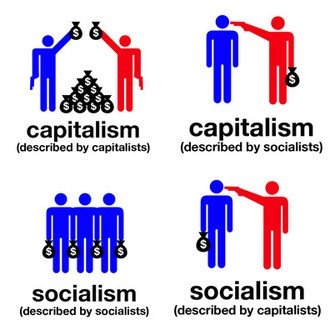
Capitalism vs. Socialism vs. Distributism
Capitalism vs. Socialism vs. Distributism by Bryan J. Neva, Sr. Since ancient times, people have bought, sold, and traded land,...
-
 Whose Ox Is Being Gored? by Bryan J. Neva, Sr. You've probably heard the old cliché, "It all depends on whose ox is...
 -
 The Parable of the Lost Coin LUKE 15 8 “Or what woman, having ten silver coins, if she loses one coin, does not light a lamp and sweep ...
 -
 What Business can Learn from Sheep Herding by Bryan J. Neva, Sr. Business can learn a lot from the business of sheep herding. Sheep her...
 -
Loving Your Enemies by Fritz Chery, Feb 15, 2015, biblereasons.com Bible verses about loving your enemies This topic is something w...
-
 Capitalism vs. Socialism vs. Distributism by Bryan J. Neva, Sr. Since ancient times, people have bought, sold, and traded land,...
 -
 Elijah by Bryan Neva “Shout louder, Baal may be meditating, or retired, or on vacation, or asleep and needs to be awoken.” The grea...
 -
 The Leash Theory of Management by Bryan J. Neva, Sr. Have you ever heard a manager use phrases like, "I have to keep them on a sho...
 -
 The Parable of the Lost Son LUKE 15: 11 And he said, “There was a man who had two sons; 12 and the younger of them said to his fat...
 -
Thing 7 Free-market policies rarely make poor countries rich by Dr. Ha Joon Chang (Book Excerpt from 23 Things They Don't Tel...
