Translate

Saturday, May 4, 2013

Your Work does not define your Human Worth!

Our American culture defines our worth as human beings by Hollywood’s standards: your age, attractiveness, verbal skills, intelligence, education, profession, job, income, net-worth, charisma, etcetera.   The young and beautiful are more valuable than the old and ugly; the living are more valuable than the unborn; the eloquent are more valuable than the inarticulate; smart, educated, white-collar professionals are more valuable than stupid, ignorant, blue-collar workers; those with higher incomes/net-worth are more valuable than those with lower incomes/net-worth; charismatic, extroverted people are more valuable than boring, introverted people.  The list could go on.

All these worldly standards are simply false!  How about adopting God’s standard which defines your human worth as priceless?  The old and ugly are as valuable as the young and attractive; the unborn are as valuable as the living; the stupid and ignorant are as valuable as the smart and educated; blue-collar workers are as valuable as white-collar professionals; lower-income folks are as valuable as higher-income people; the penniless homeless guy is as valuable as the rich powerful man.  Your work and what you have and what you've done does not define your human worth!  In the eyes of God each and every one of us are priceless! 
The world and all its cravings for prestige, power, profit, and pleasure do not last.  But the one who follows God's will lasts forever.

Sunday, March 17, 2013

Sunday, March 10, 2013

"It is what it is!"

“It is what it is!” is an often overused cliché in many organizations today.  It basically means that you are unwilling or unable to change things or your circumstances in order to improve the quality or efficiency of your life or work.  But most of the time it’s more because you’re unwilling than you’re unable.  If you speak out against something you believe to be ineffective or just plain wrong you’ll run the risk of repercussions.

For example, you may be frustrated by the roadblocks, bureaucracy, policies, or procedures in your organization and when you complain about them you’re told, “It is what it is!”  You may be stuck in a hopeless, no-win situation such as a bad job or relationship and you say, “It is what it is!”  You see crime and social injustice happening all around you and you say, “It is what it is!”  It’s a victim mentality.
For many years I used to work for a company where management’s solution to every problem (and there were too many to count) was to say, “It is what it is!” For example, I once had a very important customer who spent millions of dollars a year with the company and complained about the unreliability of their equipment; after reporting this to my management, their response was, “It is what it is!”  And when my customer refused to accept their excuses, management’s response was to shoot the messenger (me). Now, when I hear someone use that blasted cliché “It is what it is!” it’s like listening to nails on a chalk board!

Imagine if Jesus of Nazareth said, “The world is lost and going to hell in a hand basket; I better shut-up or they’ll crucify me; it is what it is!”  Imagine is Abraham Lincoln said, “If I keep speaking out against slavery the Southern States will secede from the Union; I better shut-up about slavery; it is what it is!”  Imagine if Martin Luther King, Jr. said, “If I keep speaking out against social injustice and the evils of segregation someone is going to kill me; I’d better shut-up; it is what it is!” 
Our world would be the poorer if great men and woman throughout history didn’t have the courage to speak out against the problems in society.  Working to make the world a better place involves risk and sacrifice.  George Bernard Shaw (1856 – 1950) wrote, “The reasonable man adapts himself to the world; the unreasonable one persists in trying to adapt the world to himself; therefore, all progress depends on the unreasonable man!”  I’m rather found of another great philosopher, Dr. Seuss, who wrote in his bestselling novel The Lorax, “Unless someone like you cares a whole awful lot nothing’s going to get better, it’s not!” 

Monday, March 4, 2013

The Economics of the Ten Commandments (Final Part)

The 9th and 10th Commandments

You shall not covet your neighbor’s wife; you shall not covet your neighbor’s goods (Ex 20.17, NAB).


When we covet, we start to put little gods before the one true God and we begin to break all the other commandments. When we covet, we begin to accept that it’s all right to steal the object of our desire or to lie to get what we want. When we covet, we begin the process of accepting that dishonest actions are acceptable to gain the object that we desire, such as another man or woman or a promotion or to curry favor etcetera. 

We need to remember that wanting to have the same things as others is not the same as wanting those things at another’s expense. It is the first step in a moral and ethical decline that ultimately ends in the loss of our honor and self-respect. And once we loose our honor and self-respect we loose our respect for others.

We covet when we desire and work for riches, social status, and power at the expense of honesty and truthfulness. We covet when we’re unfaithful to our spouse or leave them to marry another. We covet when we try to keep up with the Jones. We covet when we buy things we can’t afford and live beyond our means. We covet when we’re jealous of another’s status, possessions, or accomplishments. Coveting is at the root of all jealousy, theft, robbery, vandalism, murder, fraud, greed, adultery, fornication, rape, arrogance, and every other dishonest, unethical, or immoral practice. St. Paul in his first letter to the Bishop Timothy (6.6-10,17-19, NIV) talked about the dangers of covetousness in this way:

But godliness with contentment is great gain. For we brought nothing into the world, and we can take nothing out of it. But if we have food and clothing, we will be content with that. People who want to get rich fall into temptation and a trap and into many foolish and harmful desires that plunge men into ruin and destruction. For the love of money is a root of all kinds of evil. Some people, eager for money, have wandered from the faith and pierced themselves with many griefs. Command those who are rich in this present world not to be arrogant nor to put their hope in wealth, which is so uncertain, but to put their hope in God, who richly provides us with everything for our enjoyment. Command them to do good, to be rich in good deeds, and to be generous and willing to share. In this way they will lay up treasure for themselves as a firm foundation for the coming age, so that they may take hold of the life that is truly life.

Christians have always believed that relationships with others are not to be based on money. Businesses should not make profit their exclusive measure and ultimate end. The disordered desire for money will only result in perverse effects and conflicts with others. Any business practice that reduces people to nothing more than a means of profit enslaves men and women and leads to idolizing money (Matt 6.24).

History has clearly shown the adverse affects of the love of money. Over the nineteenth century, an industrial and economic revolution shook the very foundations of our civilization when unbridled greed, capitalism and competition oppressed the masses everywhere. Wealth became concentrated in the hands of fewer and fewer people and disparity grew between the rich and the poor. These changed the way people looked at society, the role of government, and work in general. Unfortunately, they also precipitated disastrous political ideologies like communism and fascism.

As a result of these social and economic changes, anti-trust laws were passed to control the oppressive use of money and power by individuals and corporations. Many leading Christians (especially in the Catholic Church) reminded businesses that they had an obligation to consider the good of people and not just the increase of profits, and that the ultimate purpose of business is meant to provide for the needs of people.

So what does this mean for you?


In this blog series, Allen and I have tried to show you the connection between economics, business and the central moral edicts of the Judeo-Christian faith traditions: the Ten Commandments. 

Here are ten simple rules to live by that we extrapolated into hundreds of rules to follow in life and in our economic dealings with others. The Ten Commandments were given to show us how to love God, our neighbors, and ourselves. St. Paul wrote, “Love does no wrong to a neighbor; therefore love is the fulfillment of the law (Romans 13.9-10).” 

We suggest that over the next week or so, you reread one section a day on each of the commandments. Then spend each day pondering the implications of that commandment for your daily life. On the final day, read Christ’s Sermon on the Mount in Matthew chapters 5, 6, and 7 and compare it with the Ten Commandments. 
 
Some commandments may not be an issue for you, whereas others might be quite challenging. No one can keep these commandments all the time, but making them our daily focus will keep us from the situational ethics that cause so many moral and ethical lapses in business today. These commandments are certainly not impossible to follow, but when we do fail (as most people do) to live up to God’s commands we should admit our mistakes and try to do better tomorrow.
 

Final Note

 
Even though I have an MBA, have studied economics in depth, and have many years of business experience, I don't filter the economic choices I make through the filter of modern day economics; I filter them through a moral filter first.  And after they've passed the moral test I then try to make wise and prudent choices based on economics.  Experts can argue all day that one way of solving economic problems is better than another, but ultimately if the solution isn't morally sound, then it's bound to fail.  And this is focus of my blog. 

Sunday, February 24, 2013

The Economics of the Ten Commandments (Part 7)

 The 7th Commandment

You shall not steal (Ex 20.15; Deut 5.19; Mt 19.18, NAB).


The 8th Commandment

You shall not bear false witness against your neighbor (Ex 20.16; Deut 5.20, NAB).  You will know the truth, and the truth will set you free. (John 8.32). 


Everyone knows that taking something that isn’t yours is stealing, but there are other ways to steal. An employee that spends hours each day surfing the Internet instead of working is stealing from their employer. An employer that doesn’t compensate their employees for all the hours they work is stealing from them. A company that expects employees to drive their own cars from their regular work place to visit a customer without reimbursement is stealing from them as well. When you advance your cause at someone else’s expense, you’re stealing! In practice, this commandment not to steal includes:

Not returning goods that were loaned to us; Not returning goods that were lost when you could discover the owner; Any form of business fraud; Not paying just wages, or withholding benefits; Not paying taxes or social security contributions; Forcing up prices by taking advantage of ignorance or hardship; Artificially manipulating the price of goods; Any form of corruption or bribery; Misusing company property; Excessive business expenses and waste; Poor workmanship; Forging checks and invoices; and Vandalizing property.

Most of us think of bearing false witness in the traditional sense of lying to or about someone else, especially in legal proceedings. In the business world, bearing false witness expands to include any form of deception. This includes the things we say as well as the things we don’t say.

The eighth commandment forbids misrepresenting the truth in our relations (word or deed) with others. Since God is the source of all truth, we as Christians are called to live in truth. Jesus said in John 8.32, “You will know the truth, and the truth will set you free.” In other words, truth is very liberating. We should always be true in deeds and truthful in words and guard against any duplicity, dissimulation, and hypocrisy.

Honesty means that we should always keep our promises and honor the spirit and letter of contracts we make with others. We should respect other people’s property, pay our debts, fulfill our obligations, and make reparation for injustices we committed.

Respect for the reputation of others means that we should avoid any attitude or say anything that would cause others unjust injury. We should not assume the moral faults of another without sufficient foundation. We should not disclose (without an objectively valid reason) another’s faults and failings to others who do not know them. We should not say anything that would harm another’s honor and reputation.

Furthermore, we should not use flattery in order to gain favor with others. We should not misrepresent what you have or what you have done in your life. And we should not lie in order to deceive others. St. Thomas Aquinas said, “Men could not live with one another if there were not mutual confidence that they were being truthful to one another.”

David Callahan, Ph.D. in his 2004 book, The Cheating Culture: Why More Americans Are Doing Wrong to Get Ahead (see his web site: www.cheatingculture.com) explores many of the sociological impetuses behind the American culture of cheating.  In nauseous detail, Dr. Callahan documents case after case after case of dishonest, unethical, hypocritical, immoral, and oftentimes illegal behavior in the legal profession (no surprise there), the judiciary, the government, in politics, in medicine, in business (no surprise there either), in accounting, in financial services, in sports, in journalism, and in academia (from preschool through graduate school). He also cites numerous examples of tax evasion at all economic levels, electronic piracy over the internet, and wealthy individuals who exploit the system at the expense of the poor and middle class. 

More than any one thing, the love of money seems to be the one common denominator to our cheating culture in America. Dr. Callahan makes a convincing argument that unless our American society reforms itself, our country may eventually end up like Brazil with pervasive corruption in every corner of society. He also offers many suggestions about how our society can transform to become more honest and ethical, but none so poignant as, “be a chump, and don’t be afraid to be a pain-in-the-ass!” In other words, be honest and ethical in everything you personally do regardless of the personal cost or what everyone else is doing. And at the same time, don’t be afraid to expose dishonest and unethical behavior whenever you encounter it.  My dad once told me even more eloquently, "Our famility doesn't eat sh*t, and we don't drink the kool-aid!"  


Thursday, February 21, 2013

The Economics of the Ten Commandments (Part 6)

The 6th Commandment

You shall not commit adultery (Ex 20.14; Deut 5.18, NAB). You have heard that it was said, “You shall not commit adultery.” But I say to you that everyone who looks at a woman lustfully has already committed adultery with her in his heart (Mt 5.27-28, NAB).

 
If we offer to sell you a gallon of milk and deliver a half-gallon of milk mixed with a half-gallon of water, we’ve committed adultery.   Mixing water with milk is not much different from breaking one’s marriage vows because it’s altering a contract between two people.   If a company reduces the pay and benefits they’ve agreed to provide their employees, they’ve altered the contract they had with them.   If we don’t keep our promises to our employees, customers, or employers we’ve committed adultery as well.

Companies justify reducing their employee’s pay and benefits packages as cost savings measures to keep the company profitable.  But to the employees this is a reduction in their compensation package and it creates both an immediate and future hardship.   For example, if an employee has an agreement with their company for medical and retirement benefits and their company decreases these benefits without an equal value increase somewhere else then the company has committed adultery.  If this seems strange, think about that gallon of milk: we’d feel cheated if we’d paid for a gallon of milk but only received a half-gallon of milk mixed with a half-gallon of water.   In exactly the same way employees feel cheated when their company reduces their pay or medical and retirement benefits.  If the employee doesn’t like it, his only recourse is to find another job and hope his next employer won't alter the contract he made with them.  But for retired employees who lose their pension and medical benefits they have no recourse.

There have been several reported stories of employees that had their pay and benefits reduced and later discovered that management was given huge bonuses.  In some cases these bonuses exceed the cost of the lost pay and benefits.  The adultery in modern business today is when management has the power to arbitrarily reduce their employee’s compensation package while increasing their own. This is nothing more than a selfish childhood attitude of I got mine and you’re on your own.
 
Loyalty is a two way street with employees on one side and the company on the other.  Cheating employees, customers, or employers is not only dishonest but disloyal as well.  If a company is so poorly structured and organized that it has to earn its profits out of the back pockets of its employees and customers, then it probably needs new leadership.


Featured Post

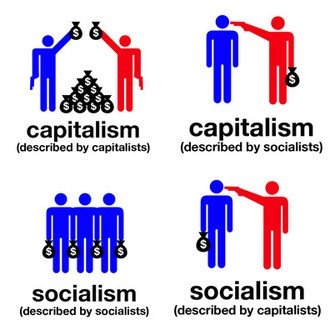
Capitalism vs. Socialism vs. Distributism

Capitalism vs. Socialism  vs. Distributism by Bryan J. Neva, Sr. Since ancient times, people have bought, sold, and traded land,...