Translate

Thursday, February 21, 2013

The Economics of the Ten Commandments (Part 6)

The 6th Commandment

You shall not commit adultery (Ex 20.14; Deut 5.18, NAB). You have heard that it was said, “You shall not commit adultery.” But I say to you that everyone who looks at a woman lustfully has already committed adultery with her in his heart (Mt 5.27-28, NAB).

 
If we offer to sell you a gallon of milk and deliver a half-gallon of milk mixed with a half-gallon of water, we’ve committed adultery.   Mixing water with milk is not much different from breaking one’s marriage vows because it’s altering a contract between two people.   If a company reduces the pay and benefits they’ve agreed to provide their employees, they’ve altered the contract they had with them.   If we don’t keep our promises to our employees, customers, or employers we’ve committed adultery as well.

Companies justify reducing their employee’s pay and benefits packages as cost savings measures to keep the company profitable.  But to the employees this is a reduction in their compensation package and it creates both an immediate and future hardship.   For example, if an employee has an agreement with their company for medical and retirement benefits and their company decreases these benefits without an equal value increase somewhere else then the company has committed adultery.  If this seems strange, think about that gallon of milk: we’d feel cheated if we’d paid for a gallon of milk but only received a half-gallon of milk mixed with a half-gallon of water.   In exactly the same way employees feel cheated when their company reduces their pay or medical and retirement benefits.  If the employee doesn’t like it, his only recourse is to find another job and hope his next employer won't alter the contract he made with them.  But for retired employees who lose their pension and medical benefits they have no recourse.

There have been several reported stories of employees that had their pay and benefits reduced and later discovered that management was given huge bonuses.  In some cases these bonuses exceed the cost of the lost pay and benefits.  The adultery in modern business today is when management has the power to arbitrarily reduce their employee’s compensation package while increasing their own. This is nothing more than a selfish childhood attitude of I got mine and you’re on your own.
 
Loyalty is a two way street with employees on one side and the company on the other.  Cheating employees, customers, or employers is not only dishonest but disloyal as well.  If a company is so poorly structured and organized that it has to earn its profits out of the back pockets of its employees and customers, then it probably needs new leadership.


Monday, February 18, 2013

The Economics of the 10 Commandments (Part 5)

The 5th Commandment

You shall not kill (Ex 20.13; Deut 5.17, NAB). You have heard that it was said to men of old, “You shall not kill: and whoever kills shall be liable to judgment.” But I say to you that every one who is angry with his brother shall be liable to judgment (Mt 5.21-22, NAB).


You shall not kill is not just a metaphor. In the societies of biblical times, killing someone else for their land or possessions was a common occurrence. God admonishes us not to kill because to God each life is his precious gift and not man’s to take away. In the days of the American west, stealing someone’s horse was a capital crime. At first glance, this seems unduly harsh until you understand that a man without a horse was certain to die either from the harsh environment or from the hostility of the people around him. Thus, the horse thief was killing the victim either directly or indirectly. In today’s job market, putting someone’s ability to earn a living at risk so that we can gain a short-term advantage isn’t much different than stealing a horse was in the American west.

Murder is conceived in anger and it is born out of hatred; therefore, Jesus commanded his followers not to even give into anger and hatred. Wishing, hoping, or facilitating ill upon another ultimately leads to greater evil. If someone else has wronged you, forgive him or her and try to forget about it. But if you really want to even the score, you should kill ‘em with kindness (Mt 5.38-48)!  Budda once wrote, "Holding onto anger is like drinking poison and expecting the other person to die."

In business, we are constantly faced with situations that seem to be them or us. If we don’t get the sale, the promotion, or whatever else there is, then the other person will.  It's a "zero-sum game".  The temptation is to metaphorically kill our adversary, or “kill the competition.” This means doing anything short of murder to gain the upper hand.

In Russia today, business rivals literally do kill anyone who gets in the way of their business activities. The tools commonly used to squash our rivals in the west are underhanded internal politics and unethical business tactics. Remember there is no such thing as them or us; there is only you and me! This commandment teaches us that it is a poor victory gained by someone else’s loss.

Read what our Lord God said to Moses in Leviticus 19.1-2, 11-18: The LORD said to Moses, "Speak to the whole assembly of the children of Israel and tell them: Be holy, for I, the LORD, your God, am holy.  You shal not steal.  You shall not lie or speak falsely to one another.  You shall not swear falsely by my name, thus profaning the name of your God.  I am the LORD." 

"You shall not defraud or rob your neighbor. You shall not withhold overnight the wages of your day laborer.  You shall not curse the deaf, or put a stumbling block in front of the blind, but you shall fear your God.  I am the LORD." 

"You shall not act dishonestly in rendering judgement. Show neither partiality to the weak nor deference to the mighty, but judge your fellow men justly.  You shall not go about spreading slander among your kin; nor shall you stand by idly when your neighbor's life is at stake.  I am the LORD."

"You shall not bear hatred for your brother in your heart. Though you may have to reprove him, do not incur sin because of him.  Take no revenge and cherish no grudge against your fellow countrymen.  You shall love your neighbor as yourself.   I am the LORD."

Friday, February 15, 2013

The Economics of The Ten Commandments (Part 4)

The 4th Commandment

Honor your father and mother, that you may have a long life in the land which the Lord, your God, gives you (Ex 20.12; Deut 5.16, NAB).

 
By honoring our parents we pay respect to them and the sacrifices they made to make our lives possible. Our mothers suffered the pangs of childbirth to bring us into the world and cared for us while we grew to maturity, and our fathers endured the hardships of earning a living to provide for our physical needs and protecting us from harm and danger.

Honoring our parents is also meant to remind us that most of the things we’ll face in life our parents faced before us and by their example showed us how or how-not-to deal with those challenges. They’ve been there first and their experience can guide us to the better path or method without having to personally try all of the less successful alternates. Rather than reinventing the wheel, we can grow as human beings and accomplish even greater things than our parents did. We’ve never met a parent who did not want their children to be more successful than they were.

Honoring our parents also means caring for those who cared for us before we could care for ourselves. In biblical times that meant actually providing for our own parents and our extended families in their old age or in times of sickness or trouble. In modern times, one extension of this is the contract between employers and employees for retirement benefits. If this commandment were honored, how could a company reduce or eliminate retirement benefits for their workers after those employees had already retired?

A business application of this commandment would be to honor the more experienced workers or managers. They’re the ones who’ve broken new ground and shown us the way. Remember that this is not slavish obedience to a higher authority; it is just showing respect for the efforts and experience of the people who went before. By doing this we hope our contribution will be worthy of respect by those who come after us.

The first corollary to this commandment of honoring our parents is to honor our extended families and friends: grandparents, uncles, aunts, elders etc. The second corollary to this is to honor those in authority over us: teachers, employers, leaders, administrators, judges, governors, presidents etc. Moreover, if we keep this command God promises long life and prosperity. We constantly read and hear about proper diets, lifestyles, and medication that will prolong our lives, but how much do we consider prolonging our lives through the habit of honoring our parents, elders, and those in authority over us.

Of course, there will always be people who abuse this trust and respect. When faced with those people we are obligated not to follow an example or direction that would lead us into improper actions.

Scandal is an attitude or behavior, which leads another to do evil. Jesus said in Matthew 18.6, “Whoever causes one of these little ones who believe in me to sin, it would be better for him to have a great millstone fastened around his neck and to be drowned in the depth of the sea.” Anyone who uses the power at his disposal in such a way that leads others to do wrong becomes guilty of scandal and is responsible if he or she has directly or indirectly caused evil. For example, if business leaders make rules or create an environment that encourages fraud or provokes their employees to anger, those leaders are guilty of scandal.

Scandal was rampant during our respective tours in the military. Allen served in the Army in the 1960s during the Vietnam War, and Bryan served in the Navy in the 1980s during peacetime. Poor leadership and treatment of the enlisted men caused many enlisted men and woman to do things they wouldn’t normally do.  Many veterans suffer sever remorse from the bad things they did while in the military. 

Businesses also create environments that force their employees to be less than honest or ethical in their business dealings. They provoke their employee’s anger and their employees retaliate by being vindictive, less productive, dishonest, unethical, or immoral.  Since the start of the Great Recession of 2008, there seems to be a trend in business to return to a 1950’s style of management by fear and intimidation where managers assume the worst about their workers and must prod them to work harder. Isn’t it amazing how old management ideas are resurrected with new labels in the name of greater productivity? In the short-term, these methods will work; in the long-term, they’re destined to fail!
 
Over our respective working careers, Allen and I have both faced hard choices between doing what was right or losing our jobs.  Thankfully, God gave us both the grace to choose what was right even though it cost us both our well-paying jobs.  Sometimes we look back and think of what we could have done differently, but in the end we both realize there's no compromising with evil.  Either you choose to do the right thing, or you choose to do the wrong thing.  It's that simple. 

If you're in a leadership or position of authority, you have a moral obligation to be a good example and not provoke your followers to do the wrong thing.  If your a follower, you have a moral obligation to always do the right thing regardless of what your leaders do.


Saturday, February 9, 2013

The Economics of the 10 Commandments (Part 3)

The Economics of the 10 Commandments (Part 3)

The 3rd Commandment

Remember the Sabbath day, to keep it holy. Six days you shall labor, and do all your work; but the seventh day is a Sabbath to the Lord your God; in it you shall not do any work (Ex 20.8-10; Deut 5.12-15, NAB). The Sabbath was made for man, not man for the Sabbath; so the Son of Man is Lord even of the Sabbath (Mk 2.27-28, NAB).

 
By setting aside one day a week to honor God we remind ourselves of values beyond our day-to-day existence. From those values we find wellsprings of honesty and restraint that keep us from putting material things above decent behavior. It also shows that we are not slaves to work; rather work (like exercise or food) is our servant and is meant to provide for our needs.

Some of us have jobs that require us to work on Sunday, which for most of us is the traditional Christian Sabbath day. Does that mean that we cannot live a good life without stopping our work on the Sabbath? Of course not, remember that the Rabbi, Priest, or Minister works on the Sabbath!  Nurses, Doctors, Firefighters, Policemen and many others must work on the Sabbath day too.  The key element is to remember to put God before worldly demands and ourselves. Doing this simple sounding exercise will help us to keep the worlds demands in perspective and guide our actions with honesty and fairness. These are an outward expression of the principles in our hearts.

In most Judeo-Christian faith traditions, one day a week is set aside to rest and honor God. It’s the one day a week we all should refrain from business, work or any activities that hinder our worship of God, works of mercy, and our mental and physical relaxation. The Sabbath should also be a day we spend nurturing our relationships with our families and loved ones. Like sleep deprivation, over the long run you’ll become burned-out and less productive if you don’t set aside one day a week—the Sabbath—to recharge your physical, spiritual and emotional batteries.

Truett Cathy, founder of Chick-fil-A restaurants, wanted to ensure that every employee and operator of his restaurants had an opportunity to worship, spend time with family and friends as well as rest from the work week; so he mandated that all Chick-fil-A restaurants be closed on Sundays. Closing all Chick-fil-A restaurants every Sunday makes the company a rarity in this day and age of corporate greed, but it's a little habit that has served the owners, managers, and employees of Chick-fil-A for over 50 years.
 
When Allen and I served in the military, we really came to appreciate our Sundays off (or half day off if we had duty).  Even the U.S. Government has realized that you can't work your people to death.  Solders, Airmen, Sailors, Marines, and Coast Guardsmen are more effective if they're given at least one day off to rest, relax, and recharge. 
 
In addition to honoring God on the Sabbath day, we should also try to set aside some time each day to remember God and keep him foremost in our thoughts. In that way, we will keep his precepts for living and it will help us overcome the temptation to take those shortcuts that lead to dishonesty, unethical behavior, and immorality.

Wednesday, February 6, 2013

The Economics of the 10 Commandments (Part 2)

The Economics of the 10 Commandments (Part 2)
 

The 2nd Commandment

Thou shall not take the name of the LORD in vain (Ex 20.7; Deut 5.11, NAB). You have heard that it was said to the men of old, “You shall not swear falsely…but I say to you, do not swear at all (Mt 5.33-34, NAB).”

 
Most people, even non-Christians, recognize that the words we use help identify who we are to those around us, and that many are offended by the regular use of profanity and obscenity. Speaking with thoughtfulness and respect draws people to us because they know, even if it’s at the subconscious level, that we respect ourselves, and with self-respect comes the ability to respect others.
 
For better or for worse, we judge the value of an idea by how well it is presented. The slicker the speaker, the smoother the presentation, then the more likely we are to accept what was said. The eye catching glossy brochure is more likely to sell us a product than a less well-prepared presentation. The words that come out of our mouths reflect the attitudes on the inside and we must guard against falling into the bad habit of sloppy speech. Most of us have misjudged another’s intelligence because that individual didn’t speak well, had a limited vocabulary, poor grammar, or a regional accent. By the same measure, we will be judged by those around us based on the words we use. In the letter from St. James (3.3-5, NIV) he describes an important corollary to this commandment:
 
When we put bits into the mouths of horses to make them obey us, we can turn the whole animal. Or take ships as an example. Although they are so large and are driven by strong winds, they are steered by a very small rudder wherever the pilot wants to go. Likewise the tongue is a small part of the body, but it makes great boasts.
 
This commandment is more than just not taking the Lord’s name in vain. By not using profanity or obscenity in our daily speech, and by keeping an attitude of respect for God, yourself, and those around you, you will automatically help create a more pleasant and productive working environment. This attitude of respect will also help you to act in an honest and professional manner when making business decisions.


Saturday, February 2, 2013

The Economics of the 10 Commandments (Part 1)

The Economics of the Ten Commandments

(Part 1) 


By Allen Laudenslager & Bryan Neva, Sr. (Note: I wrote this with my friend Allen in 2005; read his blog "A Voice in the Wilderness" at http://allenandson.blogspot.com/)

The Ten Commandments are the central moral edicts of all the Judeo-Christian faith traditions. All these commandments can be summarized in loving God with our whole heart, soul, mind, and strength, as well as loving our neighbors as ourselves (Matthew 22.37-40). St. Paul summarized the Ten Commandments in Romans 13.9-10 by saying, “Love does no wrong to a neighbor; therefore love is the fulfillment of the law.” We can learn to live by God’s standards by extrapolating these commandments into lessons for business. We may not always be successful in living up to these standards, but making them our daily focus will keep us from the situational ethics that cause so many moral and ethical lapses in business today.

The 1st Commandment

I am the LORD your GOD; you shall have no other gods before me (Ex 20.2-5; Deut 5.6-9, NAB). You shall worship the LORD your GOD and him only shall you serve (Mt 4.10, NAB).

 
God desires that we all relate to him very personally; not superficially, or mechanically. He wants us to love him as intensely as he loves us, and he’s personally offended when people sin because it not only hurts us, but more importantly, it hurts others. So in order to gain the happiness of heaven in the next life, we must know, love, and serve God—as well as love our neighbors as much as we love ourselves—in this life.

The secular world falsely teaches that we can find happiness in wealth, pleasure, power, or fame. But Jesus said in Matthew 6.24, “No one can serve two masters. He will either hate one and love the other, or be devoted to one and despise the other. You cannot serve God and money.”

Keeping God first in our lives isn’t just about worship: it also means not putting money or prestige or anything else before God! By making a little god from the material trappings of success (like a house, a car, or a successful career) we bow down to those things and loose our ability to judge our actions as good or bad. When we judge our actions based on how much money we make, we are bound to forget that how we made that money is more important than making it.

Putting God first and not money, power, or prestige ensures that when it’s time to make the hard decisions we will use clear consistent guidelines and not just the path that is self-serving or expedient. The problem with self-serving or expedient decisions is that all too often they are short-term solutions that result in long-term problems. Imagine the senior management at Enron putting God (or the secular world’s principle of honesty) first. Had they done so, they never would have succumbed to the temptation to cheat their investors, customers, and employees.  Imagine all those business people involved in the unethical mortgage crisis which precipitated the 2008 recession; had they put God first we wouldn't be in the mess we're in today.  

How many business people today sacrifice their friends, family, and even their own health in serving their companies and careers? How many books have been written and movies made about the unsatisfied businessman? These generally end with the businessman recognizing that self-satisfaction comes from relationships with family, friends, community, and a spiritual relationship with God and not from material possessions.

These books and movies are popular because most people identify with the character’s dilemma in choosing between short-term personal gain and those things that return long-term happiness. Jesus said in Matthew 16.26 (DRV), “For what does it profit a man, if he gain the whole world, but suffer the loss of his own soul? Or what will a man give in exchange for his soul?”

Tuesday, January 22, 2013

The Power of Positive Thinking (Part 12)

Putting it all together

In Order to Kill the ANTs…Feed the emotional ANTeater:
1. Whenever you notice an ANT entering your mind, train yourself to recognize it and write it down on a piece of paper.
2. Identify the type of ANT.

3. Kill the ANTs by feeding your emotional ANTeater by talking back to your ANTs. This will take away their power to control your moods. 

Examples:   
              ANT: "
This person doesn’t like me!" 
Type of ANT: Mind Reading 
Kill the ANT: I don’t know that, maybe she’s having a bad day?

              ANT: "Mr. Smith is a Jerk!"

Type of ANT: Labeling
Kill the ANT: Sometimes all of us are jerks. He may be under a lot of pressure?

How can you improve your self-esteem using this technique?
• You cannot earn worth through what you do.
• Achievements can bring you satisfaction but not happiness. Self-worth based on accomplishments is "pseudo-esteem."
• You cannot base a valid sense of self-worth on your looks, talent, fame, or fortune. Marilyn Monroe, Freddie Prinz, Kurt Cobain and other famous suicide victims attest to this grim truth.
• You cannot base your inherent self-worth on love, approval, friendship, or a capacity for close, caring human relationships. You cannot truly love others unless you first love yourself.
• Only your own sense of self-worth determines how you feel.
• The first step to improved self-esteem or self-love is to pay attention to what YOU say and think about yourself. What type of ANTs do you have?
• So how can one develop a sense of self-esteem? You don’t have to! You don’t have to do anything worthy to create or deserve self-esteem; all you have to do is Kill the ANTs. Because your ANTs are wrong!

Something to think about:
Watch your THOUGHTS, they become feelings.
Watch your feelings, they become words.
Watch your words, they become actions.
Watch your actions, they become habits.
Watch your habits, they become your character.
Watch your character, it becomes your destiny!

Monday, January 21, 2013

The Power of Positive Thinking (Part 11)

Red ANT 10 "Blaming"

• Blaming is very harmful! It's one of the worst of all ANTs. When you blame something or someone else for the problems in your life, you become a passive victim of circumstances and you make it very difficult to do anything to change your situation. You take very little responsibility for your problems. When something goes wrong at home or at work, you try to find someone or something to blame.

• Examples: "It wasn’t my fault that___"; "That wouldn’t have happened if___."; "How was I supposed to know___"; "If you'd only done this differently then____."; "You ruined my life!"

• REALITY CHECK: Whenever you play the "blame game" you become powerless to change anything. Taking personal responsibility for the circumstances in your life will be empowering and uplifting.

 
• Remember the lessons so far: YOU are ONLY responsible for your thoughts, feelings, and actions! You Are NOT responsible for other's thoughts, feelings, or actions; They are!  You can only try to Influence others; You cannot Control others!  It doesn't matter what You ask of Life, but what Life asks of You that matters!  

Sunday, January 20, 2013

The Power of Positive Thinking (Part 10)

ANT 9 "Personalizing"

• You see yourself as the cause of some negative external event which in fact you were not primarily responsible for. This is the mother of all guilt. You feel like you have the weight of the world on your shoulders.

• For example: "My boss was short with me today, he/she must be mad at me." "My child is failing in school, it’s my fault for not spending more time tutoring him." "This person was rude to me, I must have said something wrong." "That person was mean and angry with me, what did I do to make them so mad?"

• REALITY CHECK: There are many other reasons for other’s behavior besides your negative explanations. You confuse influence with control over others. In your role (no matter how powerful or menial) you can certainly influence others, but you cannot control them. What the other person does is ultimately their responsibility, not yours!


• Blessed Mother Teresa once said:
People are often unreasonable, illogical and self-centered; Forgive them anyway. 
If you are kind, people may accuse you of selfish, ulterior motives; Be kind anyway.
If you are successful, you will win some false friends and some true enemies; Succeed anyway.
If you are honest and frank, people may cheat you; Be honest and frank anyway.
What you spend years building, someone could destroy overnight; Build anyway.
If you find serenity and happiness, they may be jealous; Be happy anyway.
The good you do today, people will often forget tomorrow; Do good anyway.
Give the world the best you have and it may never be enough; Give the world the best you've got anyway.
You see, in the final analysis it is between you and God; It was never between you and them anyway.

Friday, January 18, 2013

The Power of Positive Thinking (Part 9)

ANT 8 "Labeling and Mislabeling"

• Whenever you attach a negative label to yourself or to someone else, you stop your ability to take a clear look at the situation. You over-generalize! Instead of describing your or someone else’s error, you attach a negative label to yourself or others.


• Examples: "He/She’s arrogant, condescending, or a jerk." When you use colorful language it’s mislabeling. "I’m/You’re a !@#$%." "He/She is a @#$%."

• REALITY CHECK: No one can be equated with any one thing they do! You are not exclusively a "breather" just because you breathe; you are not exclusively an "eater" just because you eat. We all are an extremely complex array of ever-changing thoughts, feelings, and actions. When you focus on other people’s weaknesses and imperfections and label them you prove to yourself their worthlessness as human beings.

• No one (except for God) is completely good. All of us are shades of gray. Some are more dark than light (we call these people sinners); some are more light than dark (we call these people saints); most of us are somewhere in between. With very few exceptions, absolutes do not exist in nature.

• Each of us is a work in progress. The more accepting and forgiving you are of others, the more others will be accepting and forgiving of you.


Featured Post

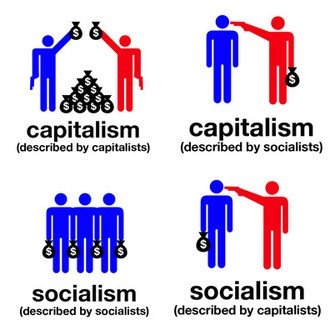
Capitalism vs. Socialism vs. Distributism

Capitalism vs. Socialism  vs. Distributism by Bryan J. Neva, Sr. Since ancient times, people have bought, sold, and traded land,...