ANT 8 "Labeling and Mislabeling"
• Whenever you attach a negative label to yourself or to someone else, you stop your ability to take a clear look at the situation. You over-generalize! Instead of describing your or someone else’s error, you attach a negative label to yourself or others.
• Examples: "He/She’s arrogant, condescending, or a jerk." When you use colorful language it’s mislabeling. "I’m/You’re a !@#$%." "He/She is a @#$%."
• REALITY CHECK: No one can be equated with any one thing they do! You are not exclusively a "breather" just because you breathe; you are not exclusively an "eater" just because you eat. We all are an extremely complex array of ever-changing thoughts, feelings, and actions. When you focus on other people’s weaknesses and imperfections and label them you prove to yourself their worthlessness as human beings.
• No one (except for God) is completely good. All of us are shades of gray. Some are more dark than light (we call these people sinners); some are more light than dark (we call these people saints); most of us are somewhere in between. With very few exceptions, absolutes do not exist in nature.
• Each of us is a work in progress. The more accepting and forgiving you are of others, the more others will be accepting and forgiving of you.
Friday, January 18, 2013
Wednesday, January 16, 2013
The Power of Positive Thinking (Part 8)
ANT 7 "Time Traveling"
• Time traveling is when you try to re-live past unpleasant events or second-guess previous choices you or someone else made.
• You may use phrases like, "If only...could'a, should'a, would'a"
• REALITY CHECK: Time travel has not been invented yet so no one can travel back in time and make different choices or undo what has already occurred. Since we can't change the past, all we can do is try to make better choices today and forgive those who've wronged us in the past. And when we make wiser, more prudent choices today, and forgive others for the past, it not only helps us atone for our previous mistakes or poor choices, it frees us of the burdent of holding grudges and gives us more hope for the future, and then we'll spend a lot less time second-guessing our past.
Here's a few good ol' cliches:
• Yesterday is already a memory; Tomorrow is only a dream; but Today, well lived, makes every Yesterday a happy memory, and every Tomorrow a hope filled dream.
• Commit the Past to God's mercy and forgiveness, and the Future to God's providencial care, and be thankful for the Present which God has given you.
• Time traveling is when you try to re-live past unpleasant events or second-guess previous choices you or someone else made.
• You may use phrases like, "If only...could'a, should'a, would'a"
• REALITY CHECK: Time travel has not been invented yet so no one can travel back in time and make different choices or undo what has already occurred. Since we can't change the past, all we can do is try to make better choices today and forgive those who've wronged us in the past. And when we make wiser, more prudent choices today, and forgive others for the past, it not only helps us atone for our previous mistakes or poor choices, it frees us of the burdent of holding grudges and gives us more hope for the future, and then we'll spend a lot less time second-guessing our past.
Here's a few good ol' cliches:
• Yesterday is already a memory; Tomorrow is only a dream; but Today, well lived, makes every Yesterday a happy memory, and every Tomorrow a hope filled dream.
• Commit the Past to God's mercy and forgiveness, and the Future to God's providencial care, and be thankful for the Present which God has given you.


Tuesday, January 15, 2013
The Power of Positive Thinking (Part 7)
ANT 6 "Guilt Beating" (Should statements)
• This happens when you think with words like should, must, ought to, or have to in order to motivate yourself or others. Guilt, shame, and self-loathing are side-effects of "should statements" for yourself. Anger, frustration, bitterness, resentment, and self-righteousness are side-effects of "should statements" for others. For example:
• "I/You should quite smoking." "I/You ought to to lose weight." "I/You must get this done today." "I/You have to go there." "I/You shouldn’t do___."
• REALITY CHECK: Instead of "should statements" use phrases like: "It would be nice if___", "I wish that___", "I prefer if___", "I accept that___", "Who cares if___" "Don’t worry about it."
• This happens when you think with words like should, must, ought to, or have to in order to motivate yourself or others. Guilt, shame, and self-loathing are side-effects of "should statements" for yourself. Anger, frustration, bitterness, resentment, and self-righteousness are side-effects of "should statements" for others. For example:
• "I/You should quite smoking." "I/You ought to to lose weight." "I/You must get this done today." "I/You have to go there." "I/You shouldn’t do___."
• REALITY CHECK: Instead of "should statements" use phrases like: "It would be nice if___", "I wish that___", "I prefer if___", "I accept that___", "Who cares if___" "Don’t worry about it."
• Examples: Rather than say, "I should quite smoking." Say instead, "I wish I could quite smoking; but I know nicotine is more addictive than cocaine and heroin combined; so with the help of some smoking cessation aids, I'll try my best; and if I fail the first time, then I'll try again..."
Monday, January 14, 2013
The Power of Positive Thinking (Part 6)
ANT 5 "Thinking with your Feelings"
• This occurs when you believe your negative feelings without ever questioning them. You tell yourself, "I feel this way, so it must be true."
• For example:
"I feel I’ll never be successful."
"I feel stupid."
"I feel this person doesn’t like me."
"I feel like a failure."
"I feel unloved, so I'm going to...<bad choice>..."
"I feel guilty, so I’m a bad person."
"I feel angry with you, so you did me wrong."
"I feel 'in-love with' this person, so I'm going to...<bad choice>..."
"I feel 'I don't love' this person, so I'm going to...<bad choice>..."
"I feel 'I hate' this person, so I'm going to...<bad choice>..."
etcetera, etcetera.
• REALITY CHECK: Feelings are very complex and often based on powerful memories from the past. Feelings oftentimes LIE to you, and they’re not always true. They are just feelings. Whenever you have a strong negative feeling, check it out to see if it’s true. Do you have evidence to support your feelings now or are they based on past experiences. What is true, and what is a feeling? Just because you feel a certain way, don't make bad choices or decisions based on how you feel no matter how powerful the feelings are.
• This is why it's critically important to have an Ethos, or a set of guiding ethical and moral beliefs in which you live your life by (such as the 10 Commandments or the Golden Rule). If your feelings are telling you to do something contrary to your Ethos then your feeling are lying to you and you need to talk back to them.
• This is an extreme example: Your feelings say: "Everyone hates me; I can't do anything right; I wish I'd never been born; I just want crawl under a rock and die!"
Say back to your feelings: "The Ethos I live by says that suicide is never an option in life; It's not normal to want to die; So my feelings are lying to me; I must be seriously depressed; this would explain my irrational feelings; I should call a professional couselor, healthcare provider, or religious minister (e.g. pastor, priest, rabbi) as soon as possible and ask for help!"
• This occurs when you believe your negative feelings without ever questioning them. You tell yourself, "I feel this way, so it must be true."
• For example:
"I feel I’ll never be successful."
"I feel stupid."
"I feel this person doesn’t like me."
"I feel like a failure."
"I feel unloved, so I'm going to...<bad choice>..."
"I feel guilty, so I’m a bad person."
"I feel angry with you, so you did me wrong."
"I feel 'in-love with' this person, so I'm going to...<bad choice>..."
"I feel 'I don't love' this person, so I'm going to...<bad choice>..."
"I feel 'I hate' this person, so I'm going to...<bad choice>..."
etcetera, etcetera.
• REALITY CHECK: Feelings are very complex and often based on powerful memories from the past. Feelings oftentimes LIE to you, and they’re not always true. They are just feelings. Whenever you have a strong negative feeling, check it out to see if it’s true. Do you have evidence to support your feelings now or are they based on past experiences. What is true, and what is a feeling? Just because you feel a certain way, don't make bad choices or decisions based on how you feel no matter how powerful the feelings are.
• This is why it's critically important to have an Ethos, or a set of guiding ethical and moral beliefs in which you live your life by (such as the 10 Commandments or the Golden Rule). If your feelings are telling you to do something contrary to your Ethos then your feeling are lying to you and you need to talk back to them.
• This is an extreme example: Your feelings say: "Everyone hates me; I can't do anything right; I wish I'd never been born; I just want crawl under a rock and die!"
Say back to your feelings: "The Ethos I live by says that suicide is never an option in life; It's not normal to want to die; So my feelings are lying to me; I must be seriously depressed; this would explain my irrational feelings; I should call a professional couselor, healthcare provider, or religious minister (e.g. pastor, priest, rabbi) as soon as possible and ask for help!"
Sunday, January 13, 2013
The Power of Positive Thinking (Part 5)
ANT 4 "Mind Reading"
• This happens when you believe that you know what other people are thinking even when they haven’t told you. You arbitrarily conclude that someone is reacting negatively to you, and you don’t bother to check this out. You may erroneously overreact to the situation and create a self-fulfilling prophecy.
• REALITY CHECK: You CAN NOT read anyone else’s mind! If you could you’d be a wealthy card shark by now. We have enough trouble reading our own minds let alone trying to read other people’s minds.
• You never know what others are thinking unless they tell you, and even then, they can change their minds tomorrow. Besides all this, you're not responsible for what others are thinking; you're only responsible for what you're thinking, and you can choose to think positive, uplifting thoughts.
• This happens when you believe that you know what other people are thinking even when they haven’t told you. You arbitrarily conclude that someone is reacting negatively to you, and you don’t bother to check this out. You may erroneously overreact to the situation and create a self-fulfilling prophecy.
• REALITY CHECK: You CAN NOT read anyone else’s mind! If you could you’d be a wealthy card shark by now. We have enough trouble reading our own minds let alone trying to read other people’s minds.
• You never know what others are thinking unless they tell you, and even then, they can change their minds tomorrow. Besides all this, you're not responsible for what others are thinking; you're only responsible for what you're thinking, and you can choose to think positive, uplifting thoughts.
Saturday, January 12, 2013
The Power of Positive Thinking (Part 4)
ANT 3 "Fortune-Telling"
• This is where you predict the worst possible outcome to a situation or crucial conversation (like a job interview).
• For example: Before you discuss an unpleasant issue with a family member, a customer, a coworker, your boss, or a future employer you predict they will respond poorly. In doing this you setup a self-fulfilling prophesy. When you predict bad things, you unconsciously help make them happen. If you go to a job interview thinking they'll hate you and you'll never get the job, then you'll unconsciously sabotage your interview.
• REALITY CHECK: If you could accurately predict the future, you’d be a lottery billionaire by now! Even highly trained and experienced stock brokers cannot predict if a stock will go up or go down. No one can accurately predict the future, so why worry about it.
• And besides, you cannot control how others behave or react; you can certainly try to positively influence them, but ultimately they're responsible for their own behavior, and you're responsible for yours. Just do the best you can and let life take care of itself.
• This is where you predict the worst possible outcome to a situation or crucial conversation (like a job interview).
• For example: Before you discuss an unpleasant issue with a family member, a customer, a coworker, your boss, or a future employer you predict they will respond poorly. In doing this you setup a self-fulfilling prophesy. When you predict bad things, you unconsciously help make them happen. If you go to a job interview thinking they'll hate you and you'll never get the job, then you'll unconsciously sabotage your interview.
• REALITY CHECK: If you could accurately predict the future, you’d be a lottery billionaire by now! Even highly trained and experienced stock brokers cannot predict if a stock will go up or go down. No one can accurately predict the future, so why worry about it.
• And besides, you cannot control how others behave or react; you can certainly try to positively influence them, but ultimately they're responsible for their own behavior, and you're responsible for yours. Just do the best you can and let life take care of itself.
Friday, January 11, 2013
The Power of Positive Thinking (Part 3)
ANT 2 "Focusing on the Negative"
• This occurs when your thoughts reflect only the bad in a situation and ignore any of the good.
• For example, you may have 100 customers, coworkers, or people you just know. Ninety five of them may love you but the other 5 do not. You dwell on the five who do not like you rather than the 95 who love you.
• REALITY CHECK: this is the proverbial pessimist versus the optimist. Is the glass half-empty or half-full? One needs to consider the good in things while acknowledging the bad. Remember that life is shades of gray. There’s no one who’s perfect. Statistically, 95% is considered perfect!
• Don’t be a Pollyanna by looking at the world through rose colored glasses, but try to be more optimistic by looking for the Positive in any situation. This will help you feel better.
• Don’t be a Pollyanna by looking at the world through rose colored glasses, but try to be more optimistic by looking for the Positive in any situation. This will help you feel better.
Wednesday, January 9, 2013
The Power of Positive Thinking (Part 2)
ANT 1 "Always/Never Thinking"
• This happens when you think something that happens will "always" repeat itself, or you’ll "never" get what you want.
• Thinking in words like always, never, no one, everyone, every time, every thing; for example:
• "He/She always puts me down.", "I’ll never get a raise.", "Everyone always takes advantage of me.", "No one ever listens to me."
• REALITY CHECK: A single event cannot predict a pattern of events or measure correlation. Statistically, one must have about 1000 random events to measure correlation. For example, a salesman typically will be told "no" dozens of times before he is told "yes".
Monday, January 7, 2013
The Power of Positive Thinking (Part 1)
Overview
I'm going to be posting a series of articles on the power of positive thinking. What I'm presenting here are not my original ideas (see sources at end) but scientifically proven strategies for helping you to think more positively in the New Year and beyond. Here is a brief outline on the upcoming posts:
What’s the big Secret to Life?
Your Thoughts ….............................................
..........................Affect Your Feelings …........................
.............................................................Which Become your Life!
So how do you enhance positive thoughts?
You have to Kill the ANTs…by feeding your emotional ANTeater
What are ANTs?
Automatic Negative Thoughts
ANT 1 "Always/Never Thinking"
ANT 2 "Focusing on the Negative"
ANT 3 "Fortune-Telling"
ANT 4 "Mind Reading"
ANT 5 "Thinking with your Feelings"
ANT 6 "Guilt Beating" (Should statements)
ANT 7 "Time Traveling"
ANT 8 "Labeling and Mislabeling"
ANT 9 "Personalizing"
ANT 10 "Blaming"
Sources:
Change Your Brain Change Your Life by Daniel Amen, M.D.
Making a Good Brain Great by Daniel Amen, M.D.
Feeling Good by David Burns, M.D.
The Secret by Rhonda Byrne
The Power of Positive Thinking by Norman Vincent Peale
The Bible by God
I'm going to be posting a series of articles on the power of positive thinking. What I'm presenting here are not my original ideas (see sources at end) but scientifically proven strategies for helping you to think more positively in the New Year and beyond. Here is a brief outline on the upcoming posts:
What’s the big Secret to Life?
Your Thoughts ….............................................
..........................Affect Your Feelings …........................
.............................................................Which Become your Life!
So how do you enhance positive thoughts?
You have to Kill the ANTs…by feeding your emotional ANTeater
What are ANTs?
Automatic Negative Thoughts
- Your thoughts are REAL, and they have a real impact on how you feel and how you behave.
- When you have a thought, your brain releases chemicals which create an electrical transmission across your brain. You then become aware of what you’re thinking.
- Negative thoughts adversely affect your body and your overall health.
- Positive thoughts beneficially affect your body and your overall health.
- Bad thoughts are toxic to your brain and poisonous to your body. You can train your thoughts to be positive and hopeful, or you can allow them to be negative and upset you.
- Sometimes your thoughts will lie to you. It’s important to check them before you believe them.
- To counteract your Automatic Negative Thoughts you need to TALK BACK TO THEM! When you talk back to your ANTs you feed your emotional ANTeater.
ANT 1 "Always/Never Thinking"
ANT 2 "Focusing on the Negative"
ANT 3 "Fortune-Telling"
ANT 4 "Mind Reading"
ANT 5 "Thinking with your Feelings"
ANT 6 "Guilt Beating" (Should statements)
ANT 7 "Time Traveling"
ANT 8 "Labeling and Mislabeling"
ANT 9 "Personalizing"
ANT 10 "Blaming"
Sources:
Change Your Brain Change Your Life by Daniel Amen, M.D.
Making a Good Brain Great by Daniel Amen, M.D.
Feeling Good by David Burns, M.D.
The Secret by Rhonda Byrne
The Power of Positive Thinking by Norman Vincent Peale
The Bible by God
Monday, December 31, 2012
Looking Back at 2012 and Forward to 2013
Looking Back at 2012 and Forward to 2013

On December 31st
of each year, most all of us look back at the events of the past year and take
inventory of our lives. We remember our
successes and failures, our joys and sorrows, and resolve to do things differently
in the New Year. So I’d like to share
with you something to consider as you make your New Year’s resolutions.
In September 1997, I
heard of the passing of a wonderful physician who helped change the world for
the better. Dr. Viktor E. Frankl, M.D.,
Ph.D. (March 26th 1905—September 2nd 1997) was an
Austrian Psychiatrist who survived the Nazi concentration camp at Auschwitz. After he was liberated, he wrote one of the
most life changing books I’ve ever read: Man’s Search for Meaning (pub.
1946). In fact, the Library of Congress listed this book as one of the ten most influential books in the U.S. By the time of Dr. Frankl's passing, the book had sold over 10 million copies and had been translated into 24 languages.
In the book, Dr. Frankl
wrote about his experiences in Auschwitz and the lessons he learned. The one take away I got from the book was
this: It doesn’t matter what You ask of
Life, but what Life asks of You that really matters!
You may ask that Life
bring you Happiness and Prosperity in the New Year, but what Life
may ask of you could be the exact opposite.
I know this is sobering to think about, but consider this: are happiness and prosperity really in your control? Not really!
The only things really in your control are your own thoughts, attitudes,
and choices in life.
You can choose to think
positively rather than negatively; you can choose to love rather than hate; you can choose to forgive rather than hold a grudge; you
can choose to do good rather than do evil; you can choose to be merciful rather
than be vindictive; you can choose to have faith rather than give into fear; you can choose to have hope rather than give into despair; and you can choose to accept whatever life asks of you with
humility and grace.
May God Bless You in the New Year,
Bryan
Viktor E. Frankl, M.D., Ph.D. (1905-1997) http://en.wikipedia.org/wiki/Victor_Frankl
May God Bless You in the New Year,
Bryan
Viktor E. Frankl, M.D., Ph.D. (1905-1997) http://en.wikipedia.org/wiki/Victor_Frankl

Subscribe to:
Posts (Atom)
Featured Post
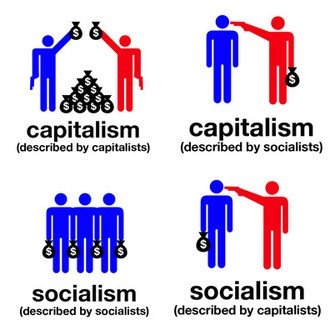
Capitalism vs. Socialism vs. Distributism
Capitalism vs. Socialism vs. Distributism by Bryan J. Neva, Sr. Since ancient times, people have bought, sold, and traded land,...
-
 Whose Ox Is Being Gored? by Bryan J. Neva, Sr. You've probably heard the old cliché, "It all depends on whose ox is...
 -
 The Parable of the Lost Coin LUKE 15 8 “Or what woman, having ten silver coins, if she loses one coin, does not light a lamp and sweep ...
 -
 What Business can Learn from Sheep Herding by Bryan J. Neva, Sr. Business can learn a lot from the business of sheep herding. Sheep her...
 -
Loving Your Enemies by Fritz Chery, Feb 15, 2015, biblereasons.com Bible verses about loving your enemies This topic is something w...
-
 Capitalism vs. Socialism vs. Distributism by Bryan J. Neva, Sr. Since ancient times, people have bought, sold, and traded land,...
 -
 Elijah by Bryan Neva “Shout louder, Baal may be meditating, or retired, or on vacation, or asleep and needs to be awoken.” The grea...
 -
 The Leash Theory of Management by Bryan J. Neva, Sr. Have you ever heard a manager use phrases like, "I have to keep them on a sho...
 -
 The Parable of the Lost Son LUKE 15: 11 And he said, “There was a man who had two sons; 12 and the younger of them said to his fat...
 -
Thing 7 Free-market policies rarely make poor countries rich by Dr. Ha Joon Chang (Book Excerpt from 23 Things They Don't Tel...